

How to Start Affirmations: Simple Steps for Daily Success
How To Start Affirmations
Many people want to change their mindset, feel more confident, or build positive habits. Yet, they often struggle to find a simple tool that works. Affirmations are one of the easiest and most powerful ways to help your mind focus on what you want and believe in yourself. If you’re new to affirmations, you may feel unsure where to start or wonder if they really work. This guide will show you exactly how to begin using affirmations, step by step, so you can see real changes in your life.
Affirmations are not just “positive thinking. ” They are statements you repeat to yourself to shift your beliefs and thoughts. When used correctly, they can help reduce stress, improve your mood, and make you feel more in control. You don’t need any special tools or training.
Anyone can start, no matter your background or language skills. By following the advice in this article, you’ll learn how to create, use, and grow your own affirmation practice. You’ll also discover common mistakes to avoid and practical tips to make affirmations work for you.
What Are Affirmations?
Affirmations are simple, positive statements that you say or write to yourself. The goal is to replace negative thoughts with positive beliefs. For example, instead of thinking “I’m not good enough,” you repeat “I am worthy and capable.”
How Affirmations Affect Your Mind
When you repeat an affirmation, your brain starts to accept it as true. This is called neuroplasticity—your mind changes based on what you focus on. Over time, affirmations can help you:
- Build self-confidence
- Reduce anxiety or stress
- Improve motivation
- Change negative habits
Research has shown that using affirmations regularly can increase feelings of self-worth and lower stress levels. For example, people who use affirmations before a job interview often feel calmer and perform better.
Common Misunderstandings
Some people believe affirmations are just “wishful thinking. ” In reality, they work best when combined with action. Saying “I am healthy” is powerful, but it’s more effective when you also eat well and exercise. Affirmations are not magic, but they do help your mind focus on positive goals.
Why Start Affirmations?
Starting affirmations can change how you see yourself and your future. Here are some real benefits:
- Improved Self-Esteem: You feel more confident in your abilities.
- Better Mental Health: You reduce stress and anxiety.
- Stronger Focus: You pay attention to what matters.
- Positive Relationships: You treat others—and yourself—with more kindness.
- Greater Motivation: You feel ready to take action.
A study from Carnegie Mellon University found that people who used self-affirmations before stressful tasks had lower cortisol (stress hormone) levels. This means their bodies responded better to challenges.
You don’t need a perfect life to start affirmations. Many people begin when they feel stuck or stressed. Affirmations can help you move forward, even if things seem difficult.
How To Create Your Own Affirmations
Making affirmations is simple, but there are important steps to follow. Here’s how to write your own:
Step 1: Choose Your Focus Area
Think about what you want to improve. It could be:
- Confidence
- Health
- Relationships
- Work performance
- Stress management
Pick one area at a time. This helps your mind focus and makes affirmations more effective.
Step 2: Use Positive Language
Affirmations must be positive. Instead of “I will stop being lazy,” say “I am energetic and motivated. ” Focus on what you want, not what you don’t want.
Step 3: Write In The Present Tense
Use present tense, as if your goal is already true. “I am confident” works better than “I will be confident. ”
Step 4: Make It Personal
Use “I” or “my.” The statement should feel like it’s about you. Example: “I am learning every day.”
Step 5: Keep It Simple
Short affirmations are easier to remember. Aim for one sentence.
Step 6: Be Specific
General affirmations like “I am happy” are good, but specific ones like “I am proud of my work today” help you focus.
Example Affirmations:
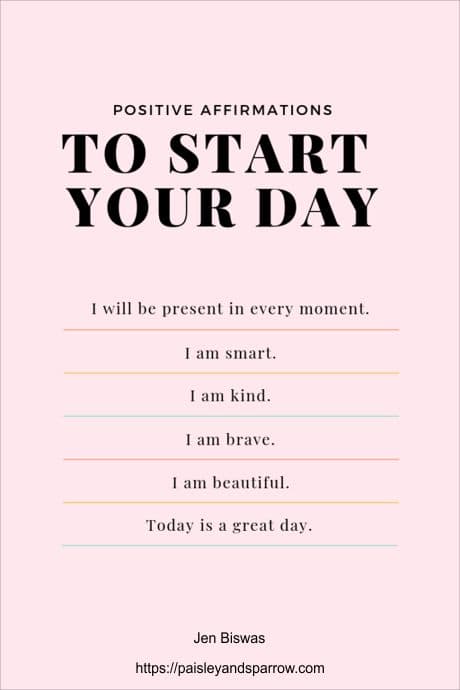
- “I am strong and resilient.”
- “I trust myself to make good decisions.”
- “I am attracting new opportunities.”
- “I am grateful for my healthy body.”
Common Mistakes Beginners Make
- Writing negative statements: Avoid words like “not,” “never,” or “stop.”
- Being too vague: Specific affirmations help your mind focus.
- Using future tense: Stick to the present.
- Copying others’ affirmations: Personalize them for your needs.
- Making them too long: Short is powerful.
Best Ways To Practice Affirmations
How you practice affirmations matters. Here are proven methods to get results:
Speaking Aloud
Say your affirmations out loud, ideally in front of a mirror. This helps you connect with the words and feel their meaning.
Writing Them Down
Write your affirmations in a notebook every morning or evening. Writing helps your brain remember and believe the words.
Listening To Recordings
Record yourself saying affirmations and play them during the day. Hearing your own voice makes the affirmations stronger.
Visual Reminders
Place sticky notes with your affirmations where you can see them: bathroom mirror, desk, or phone screen.
Combining With Other Habits
Link affirmations to your daily routine. For example, say them while brushing your teeth or before bed.
Using Affirmation Apps
Apps can remind you to practice and help track your progress. Some apps even let you customize your own affirmations.
How Often Should You Practice?
Most experts recommend repeating affirmations at least twice a day—morning and night. If you’re busy, once a day is fine. The key is consistency. Choose a time that fits your lifestyle.
Practical Example
Let’s say you want to improve your confidence. You write: “I am confident in my abilities.” You say it aloud every morning while looking in the mirror. You also write it in your journal before bed. After a few weeks, you notice you feel more comfortable speaking in meetings.
Credit: motivateus.com
How Affirmations Work: Science And Data
Many people want proof that affirmations really work. Let’s look at some key data and studies.
Research Findings
- Self-affirmation theory: Studies show that affirmations help people handle stress and threats. When you affirm your values, your brain feels safer and more open to learning.
- In a study published in the journal Social Cognitive and Affective Neuroscience, participants who used affirmations showed more activity in the reward centers of the brain.
- Affirmations have been used in therapy for depression and anxiety. People who practice daily affirmations report lower negative thoughts and better self-image.
Table: Affirmation Impact Data
| Benefit | Percentage of Improvement | Research Source |
|---|---|---|
| Reduced Stress | 32% | Carnegie Mellon University |
| Increased Self-Esteem | 21% | Psychology Today |
| Better Focus | 15% | Journal of Experimental Social Psychology |
These numbers show that affirmations are more than just words—they have a real effect on how you feel and behave.
Non-obvious Insight
Most people think affirmations only help mood, but studies show they can improve problem-solving and performance under pressure. If you have a big test or presentation, affirmations can help you think clearly and act confidently.
Choosing The Right Affirmations For Your Goals
Not all affirmations work the same for everyone. Choosing the right ones is important. Here’s how to pick affirmations for different goals:
For Confidence
- “I trust myself.”
- “I am comfortable speaking my ideas.”
For Health
- “I am making healthy choices.”
- “My body feels strong and energized.”
For Relationships
- “I am a caring friend.”
- “I give and receive love freely.”
For Work Or School
- “I am focused and productive.”
- “I learn quickly and easily.”
For Stress
- “I am calm and relaxed.”
- “I handle challenges with grace.”
You can customize these to fit your own situation. If you want to improve your English, try “I am improving my English skills every day. ”
Table: Affirmations By Goal
| Goal | Sample Affirmation |
|---|---|
| Confidence | I believe in myself |
| Health | My body is healthy and strong |
| Relationships | I build positive connections |
| Work/School | I am successful in my tasks |
| Stress | I am calm and centered |
Non-obvious Insight
Many beginners focus only on “big” goals like wealth or success. But affirmations for small daily actions (like “I am patient during traffic”) can help you build lasting habits. Small changes add up to big results.

Credit: www.zebrapen.com
Affirmation Methods Compared
There are several ways to practice affirmations. Let’s compare the most common methods so you can choose what fits you best.
| Method | Ease of Use | Effectiveness | Best For |
|---|---|---|---|
| Speaking Aloud | Easy | High | Building confidence |
| Writing | Moderate | Medium | Memory and focus |
| Listening (recordings) | Easy | Medium | Busy schedules |
| Visual reminders | Very easy | Low to medium | Habit building |
| Apps | Easy | Medium | Tech lovers |
If you’re not sure, start with speaking aloud and writing. These are the most effective for beginners.
Tips For Making Affirmations Work
Starting affirmations is simple, but making them work takes practice. Here are proven tips:
- Be Consistent: Repeat affirmations daily, at the same time.
- Feel the Words: Try to believe what you’re saying, even if it feels strange at first.
- Visualize Success: Picture yourself achieving your goals as you say your affirmation.
- Combine with Action: Take small steps toward your goal while using affirmations.
- Track Progress: Write down your feelings and changes each week.
- Update Affirmations: Change your statements as your goals evolve.
- Practice Patience: Results take time. Give yourself at least 2–4 weeks.
- Use Reminders: Set phone alarms or sticky notes.
- Share with Others: Practicing with a friend can boost motivation.
- Celebrate Small Wins: Notice and enjoy each improvement.
Example: Action + Affirmation
If your affirmation is “I am healthy,” combine it with a daily walk or choosing a healthy meal. This helps your brain connect words and actions.
Common Challenges And How To Overcome Them
Many people start affirmations but face problems. Here’s how to handle them:
Challenge: Not Believing The Affirmation
Solution: Start with statements that feel true. Instead of “I am rich,” try “I am learning to manage my money.”
Challenge: Forgetting To Practice
Solution: Use reminders—phone alarms, notes, or apps.
Challenge: Feeling No Change
Solution: Give it time. It usually takes 2–4 weeks to notice changes. Track your mood and progress.
Challenge: Boredom
Solution: Change your affirmations or the way you practice. Try new methods like recording your voice.
Challenge: Negative Self-talk Returns
Solution: When a negative thought appears, repeat your affirmation or write it down. Over time, positive thoughts will become stronger.
Non-obvious Insight
Some beginners think affirmations should always feel comfortable. In reality, the best affirmations often feel a little challenging or strange at first. This means your mind is growing.
Real-life Examples And Stories
Hearing real stories can help you believe in the power of affirmations. Here are a few examples:
Example 1: Building Confidence
Maria felt nervous before giving presentations at work. She started saying, “I am confident and prepared” every morning. After one month, her anxiety decreased, and she spoke more comfortably.
Example 2: Improving Health Habits
John wanted to eat better. He used the affirmation, “I make healthy choices every day. ” He placed this on his fridge and repeated it before meals. Over time, he chose more fruits and vegetables.
Example 3: Reducing Stress
Sara struggled with stress during exams. She used “I am calm and focused. ” By repeating it before studying, she noticed fewer negative thoughts and performed better.
Example 4: Learning A New Skill
Ali was learning English but felt shy. He began saying, “I am improving my English skills. ” After a few weeks, he felt more confident speaking with friends.
These stories show how simple affirmations can lead to real change. The key is practice and patience.
Mistakes To Avoid When Starting Affirmations
Many beginners make simple mistakes. Avoid these to get the best results:
- Skipping Days: Consistency is important.
- Choosing Unrealistic Affirmations: Start with believable statements.
- Using Negative Language: Always use positive words.
- Practicing Without Emotion: Try to feel the meaning.
- Not Personalizing: Make affirmations fit your life.
- Expecting Instant Results: Change takes time.
- Comparing to Others: Focus on your own progress.
- Ignoring Small Wins: Celebrate each improvement.
Non-obvious Insight
Many people use affirmations only for “big” goals. Using them for small, daily improvements (like patience or gratitude) creates lasting change.
How To Grow Your Affirmation Practice
Once you feel comfortable, you can expand your practice:
Experiment With New Methods
Try meditation, music, or group affirmations.
Set New Goals
As you reach one goal, write new affirmations for other areas of life.
Teach Others
Share your affirmations with friends or family. Teaching boosts your own confidence and helps others.
Join Online Communities
Connect with others who use affirmations. You can share tips and learn together. For a deeper understanding of affirmation science, visit Wikipedia.
Review And Reflect
Each month, review your progress. Update affirmations as needed.

Credit: interiorloveaffair.com
Frequently Asked Questions
What Are Affirmations, And How Do They Work?
Affirmations are positive statements you repeat to yourself. They help your mind believe new ideas and shift away from negative thoughts. By repeating them regularly, your brain starts to accept these beliefs, making you feel more confident and motivated.
How Often Should I Practice Affirmations?
Most experts suggest practicing twice a day—morning and night. Consistency matters more than the exact number. If you’re busy, once a day is fine. The key is making affirmations a habit.
Do Affirmations Work For Everyone?
Yes, affirmations can help anyone, but results may vary. Some people notice changes quickly; others need more time. The best results come from personalizing your affirmations and combining them with action.
Can I Use Affirmations In My Native Language?
Absolutely. Affirmations work in any language. The important part is that you understand and believe the statement. If English is difficult, use your own language or mix both.
What Should I Do If I Don’t Feel Any Change?
Be patient. It can take 2–4 weeks to notice changes. Track your mood and progress. If you don’t feel any difference, try new affirmations or change your practice method.
Starting affirmations may feel small, but the impact can be life-changing. By creating positive statements, repeating them daily, and combining them with action, you’ll see real improvements in how you feel and behave. Remember, the journey starts with one simple step—believing in yourself.
Make affirmations a regular part of your routine, and watch your mindset and confidence grow.
