

How to Do Morning Affirmations for a Positive Start
How To Do Morning Affirmations
Starting your day with a positive mindset can change everything. Many people struggle with stress, self-doubt, or lack of motivation as soon as they wake up. But what if you could train your mind to be more confident, grateful, and focused, right from the moment you open your eyes? Morning affirmations are a simple tool that can help. These short, positive statements encourage you to believe in yourself and set the tone for a successful day.
In this article, you’ll learn exactly how to practice morning affirmations, why they work, and how to build a routine that fits your life. We’ll cover practical steps, examples, mistakes to avoid, and even some science behind affirmations. Whether you are new to affirmations or you want to refine your practice, you’ll find everything you need to start strong.
What Are Morning Affirmations?
Morning affirmations are positive statements you say to yourself at the beginning of the day. Their goal is to encourage positive thinking, boost self-esteem, and help you focus on what matters. For example, you might say, “I am confident,” “Today will be productive,” or “I am grateful for my opportunities.”
Unlike general positive thinking, affirmations are specific and intentional. They challenge negative thoughts and replace them with empowering beliefs. The idea is to repeat these phrases until your mind accepts them as truth.
How Affirmations Work
Affirmations use neuroplasticity—the brain’s ability to change and adapt. When you repeat positive statements, your brain starts to form new pathways. Over time, these pathways make it easier to feel confident, motivated, or calm.
Research suggests that affirmations can reduce stress, improve performance, and boost self-esteem. One study found that people who practiced affirmations felt less anxious and more focused before important tasks. Another showed that affirmations can help you recover from setbacks faster.
Common Types Of Morning Affirmations
- Self-confidence: “I believe in my abilities.”
- Gratitude: “I am thankful for today.”
- Motivation: “I am ready to face any challenge.”
- Health: “I make healthy choices.”
- Success: “I am capable of reaching my goals.”
The best affirmations are personal and meaningful. They should connect with your own values or challenges.
Why Morning Affirmations Matter
Morning is a powerful time for shaping your day. When you wake up, your mind is clear and open. This makes it easier to influence your thoughts and feelings.
Psychological Benefits
- Reduces stress: Starting with positive statements lowers anxiety.
- Builds self-esteem: Affirmations remind you of your strengths.
- Creates focus: You set clear intentions for the day.
- Improves resilience: You recover from setbacks more easily.
Real-life Results
Many successful people use morning affirmations to stay motivated. Athletes, entrepreneurs, and artists often start their day by repeating empowering statements. This simple habit can help you perform better, feel happier, and make decisions with confidence.
Data On Affirmations
Studies show that affirmations can improve mental health. For example, in one experiment, people who practiced affirmations daily reported a 25% increase in positive feelings after two weeks. Another survey found that 68% of participants felt more motivated when they used morning affirmations.
How To Start Morning Affirmations
Building a new habit can be challenging. But with the right approach, morning affirmations can become a natural part of your routine.
Step 1: Choose Your Affirmations
Start by picking 3–5 statements that fit your goals. Make sure they are:
- Positive: Focus on what you want, not what you fear.
- Present tense: Say “I am,” not “I will be.”
- Personal: Use words that connect with your life.
Examples:
- “I am strong and capable.”
- “Today, I choose happiness.”
- “I am worthy of love and respect.”
If you struggle to write your own, use common affirmations at first. Later, adjust them to fit your needs.
Step 2: Set Your Routine
Consistency is key. Decide when and where you’ll do your affirmations. Many people choose:
- Right after waking up
- During a shower
- While getting dressed
- Before breakfast
Try to link affirmations with another habit. This makes it easier to remember.
Step 3: Say Affirmations Out Loud
Speaking your affirmations out loud is more effective than silent repetition. Hearing your voice gives extra power to the words and makes them feel real. If you prefer, you can write them down or repeat them in your mind.
Step 4: Use Emotion
Don’t just repeat words. Feel the meaning behind them. Imagine yourself as confident, grateful, or motivated. This emotional connection helps your brain accept the statements.
Step 5: Repeat Daily
Affirmations work best with daily repetition. Over time, your mind starts to believe the statements, and your actions change to match your beliefs.
Making Affirmations Effective
Not all affirmations work equally well. Here are ways to make yours more powerful.
Personalize Your Affirmations
Generic statements like “I am happy” might not feel real. Create affirmations that speak to your unique situation. For example:
- If you struggle with self-doubt: “I trust myself to make good decisions.”
- If you want to be healthier: “I enjoy nourishing my body with good food.”
Keep It Realistic
Affirmations should be positive but believable. If you say, “I am the best in the world,” your mind may reject it. Instead, try, “I am improving every day,” or “I have skills that make me valuable. ”
Combine With Visualization
Imagine yourself living the affirmation. If you say, “I am confident,” picture yourself speaking clearly in a meeting or walking with purpose. Visualization adds power to your practice.
Write Affirmations Down
Writing helps you focus and remember your statements. Keep a journal or sticky notes with your affirmations. Some people find that writing them every morning makes the habit stronger.
Use Affirmations For Specific Goals
If you have a big meeting or exam, create affirmations for that event. For example:
- “I am prepared and calm for my interview.”
- “I will show my best skills in today’s presentation.”
Data Table: Affirmation Effectiveness
Here’s a comparison of affirmation methods and their effectiveness:
| Method | Effectiveness | Recommended For |
|---|---|---|
| Speaking Out Loud | High | Building confidence |
| Writing in Journal | Medium | Clarity, focus |
| Silent Repetition | Low–Medium | Quick practice |
| Visualization | High | Goal achievement |

Credit: sproutingzen.com
Examples Of Morning Affirmations
If you’re not sure what to say, here are examples for different situations:
For Self-confidence
- “I believe in myself.”
- “I am proud of who I am.”
- “I trust my decisions.”
For Gratitude
- “I am grateful for this new day.”
- “I appreciate the people around me.”
- “I value every opportunity.”
For Motivation
- “I am ready to take action.”
- “I welcome challenges as chances to grow.”
- “I am focused and determined.”
For Health
- “I care for my body and mind.”
- “I make healthy choices.”
- “I am full of energy.”
For Success
- “I am capable of achieving my goals.”
- “I attract opportunities.”
- “I am persistent and resilient.”
Common Mistakes And How To Avoid Them
Many beginners make mistakes that weaken their affirmations. Here’s how to spot and fix them.
Mistake 1: Using Negative Words
Affirmations should be positive. Avoid statements like “I am not afraid. ” Instead, say “I am brave. ”
Mistake 2: Being Too Vague
Specific affirmations are more effective. “I am successful” is less powerful than “I will finish my tasks today. ”
Mistake 3: Forgetting Consistency
Doing affirmations once in a while won’t help. Make it a daily habit, even if you only spend 2 minutes.
Mistake 4: Ignoring Feelings
Repeating words without emotion is less effective. Take a moment to feel the truth behind your statements.
Mistake 5: Not Believing The Affirmation
If you don’t believe what you’re saying, try softer statements. For example, “I am learning to be confident,” instead of “I am confident. ”
Mistake 6: Overdoing It
Using too many affirmations at once can feel overwhelming. Start with 3–5, and add more as you grow comfortable.

Credit: thechiclife.com
Building A Sustainable Routine
A routine helps you turn affirmations into a lasting habit. Here’s how to make your practice stick.
Set A Reminder
Use your phone or a sticky note to remind yourself each morning. Linking affirmations to another habit—like brushing your teeth—makes it easier to remember.
Create A Dedicated Space
Find a quiet spot where you can focus. This might be your bedroom, bathroom, or a corner in your living room.
Use Technology
Apps and audio recordings can guide your practice. Some apps let you record your affirmations and play them back each morning.
Track Your Progress
Keep a journal of your affirmations and note any changes you feel. After a few weeks, you might notice more confidence, gratitude, or motivation.
Data Table: Routine Options
Compare different ways to build your routine:
| Routine | Time Needed | Benefits |
|---|---|---|
| Affirmations with Meditation | 10–15 minutes | Deep focus, calm |
| Affirmations with Exercise | 5–10 minutes | Energy, motivation |
| Affirmations during breakfast | 5 minutes | Easy to combine |
| Quick affirmations before leaving home | 2–3 minutes | Simple, fast |
Advanced Tips For Morning Affirmations
Once you’re comfortable, you can try advanced strategies to make affirmations even more powerful.
Pair Affirmations With Action
Affirmations work best when you back them up with action. If you say, “I am healthy,” follow up by eating a good breakfast or taking a walk.
Change Affirmations As You Grow
Your needs will change over time. Update your affirmations to match your new goals or challenges.
Use Affirmations For Difficult Days
When you feel stressed or low, use targeted affirmations. For example, “I am calm and in control,” or “I can handle anything that comes my way. ”
Share Affirmations With Others
Practicing affirmations with friends or family can create support and motivation. You might share your favorite statements or encourage each other.
Combine Affirmations With Gratitude
Gratitude and affirmations work well together. After saying your affirmations, list three things you are grateful for. This boosts positive feelings.
Data Table: Advanced Affirmation Techniques
Here’s how advanced techniques compare:
| Technique | Effect | Best For |
|---|---|---|
| Pairing with action | Strengthens belief | Building habits |
| Sharing with others | Support, motivation | Families, groups |
| Gratitude + affirmation | Boosts positivity | Daily happiness |
| Changing affirmations | Personal growth | Long-term practice |
Science And Research Behind Morning Affirmations
Many people wonder if affirmations are just wishful thinking. But there’s real science supporting their benefits.
How Affirmations Affect The Brain
Affirmations activate the reward centers in the brain. This is similar to what happens when you receive praise or achieve a goal. The brain releases dopamine, which makes you feel good and motivates you to keep going.
Research Findings
A study showed that affirmations can reduce stress in high-pressure situations. Participants who used affirmations before public speaking felt less anxious and performed better. Another experiment found that affirmations improve problem-solving under stress.
Limitations Of Affirmations
Affirmations are not magic. They work best when you also take action and believe in their truth. If you have deep doubts or negative beliefs, it may take longer for affirmations to help.
External Research
For more detailed scientific information, see this Wikipedia article.
Real-life Stories: How Morning Affirmations Changed Lives
Hearing about others’ experiences can inspire you to start. Here are a few stories:
Sarah: Overcoming Anxiety
Sarah struggled with anxiety every morning. She started using the affirmation, “I am safe and calm. ” After a month, she felt less stressed and more in control of her emotions.
Carlos: Boosting Confidence At Work
Carlos wanted to be more confident in meetings. He chose, “I am prepared and confident. ” Soon, he noticed he was speaking up more and feeling less nervous.
Priya: Focusing On Health
Priya used “I make healthy choices” as her morning affirmation. She found herself picking better foods and exercising more often.
Non-obvious Insights
- Affirmations can change your environment. When you believe in yourself, you make better choices, and people treat you differently.
- Affirmations reveal hidden beliefs. If a statement feels uncomfortable, it might show a deeper issue you need to address.
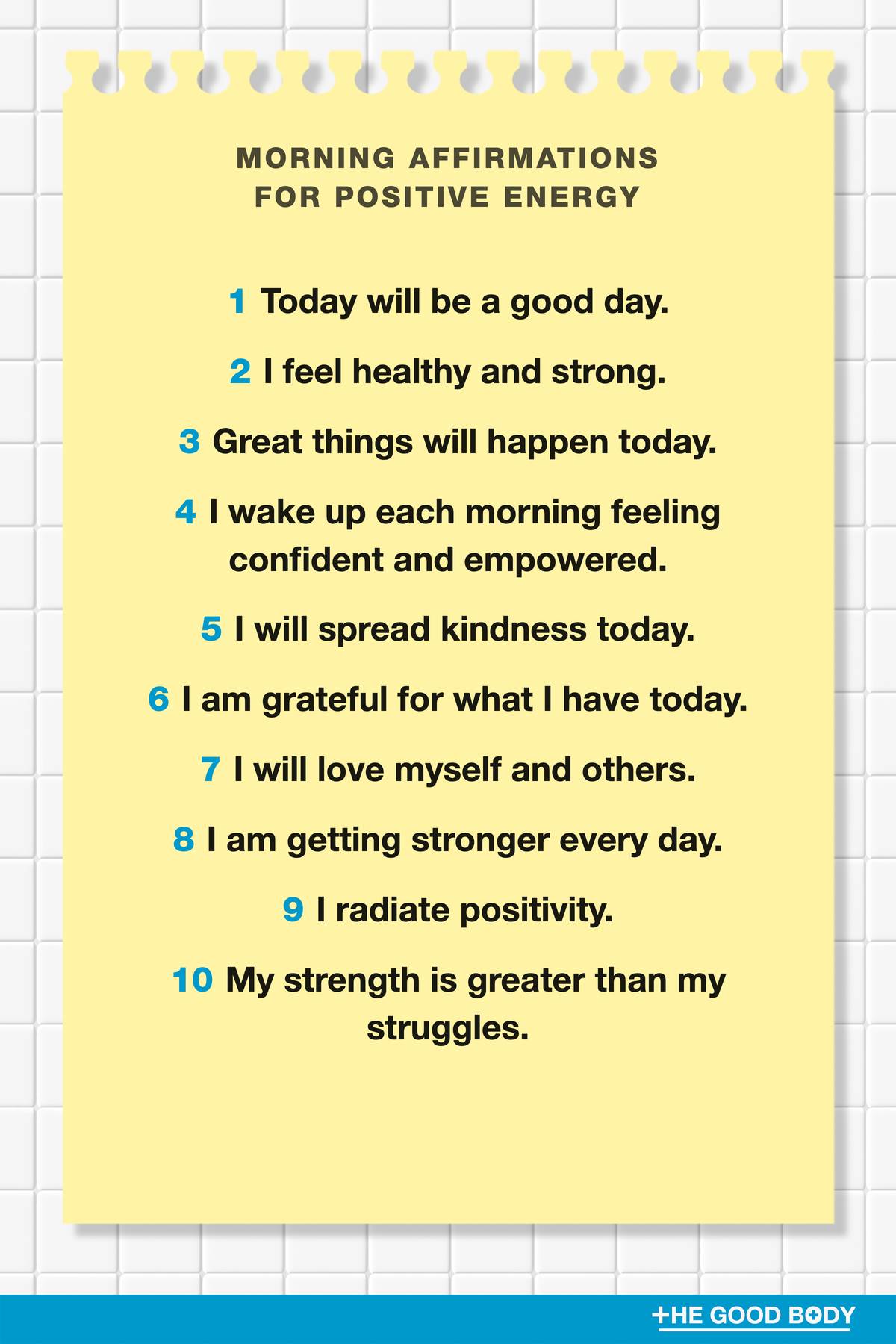
Credit: www.thegoodbody.com
Frequently Asked Questions
What Is The Best Time To Do Morning Affirmations?
The best time is right after waking up. Your mind is clear and open to new ideas. If that’s not possible, try during another morning routine, like showering or eating breakfast.
How Many Affirmations Should I Use?
Start with 3–5 affirmations. This is enough to make an impact without feeling overwhelming. You can add more as you get comfortable.
Do I Have To Say Affirmations Out Loud?
Saying them out loud is most effective, but you can also write them down or repeat them silently. Choose the method that feels natural for you.
How Long Does It Take To See Results?
Most people notice changes in 2–4 weeks of consistent practice. The key is daily repetition and genuine belief in the statements.
Can Affirmations Help With Specific Problems Like Anxiety Or Low Confidence?
Yes, affirmations can target specific problems. Choose statements that address your challenges. For anxiety, try “I am calm and in control.” For low confidence, use “I trust myself.”
Starting your day with morning affirmations is simple, but the impact can be deep. You don’t need special tools or skills—just a few minutes and a willingness to believe in yourself. Over time, you’ll notice more confidence, better focus, and a happier mood.
Affirmations are not magic, but they are a powerful way to shape your thoughts and actions. Try them for a month, and you might be surprised at how much your mornings—and your life—improve.
