

How to Affirmations Self Love: Boost Confidence and Happiness
How To Affirmations Self Love
Self-love is often misunderstood as selfishness, but it is actually the foundation for a healthy and fulfilling life. When you value and care for yourself, you can handle stress better, build strong relationships, and feel more confident. One simple but powerful way to develop self-love is by practicing affirmations. These are positive statements you repeat to yourself to encourage a better mindset. You may have heard about affirmations, but many people don’t know how to use them effectively. This guide will help you understand what self-love affirmations are, why they work, and how to make them a daily habit.
Let’s explore how you can use affirmations to build a stronger sense of self-love, improve your well-being, and transform your daily life.
Understanding Self-love And Affirmations
Before you start using affirmations, it’s important to understand what self-love means and how affirmations help.
Self-love is about accepting yourself, treating yourself with kindness, and respecting your own needs. It does not mean ignoring your flaws, but rather, it means accepting all parts of yourself and being patient as you grow. People with strong self-love set healthy boundaries and don’t rely only on others for their happiness.
Affirmations are short, positive statements that you say or write to yourself. The goal is to change negative thinking patterns. For example, if you often think, “I’m not good enough,” you can use an affirmation like, “I am worthy and capable.” Over time, these statements can help reshape how you see yourself.
How Affirmations Work
Affirmations work by influencing your subconscious mind. When you repeat something often, your brain starts to accept it as truth. This is called neuroplasticity—your brain’s ability to change and adapt. If you keep telling yourself positive things, you build new pathways in your brain that support confidence and happiness.
Research shows that self-affirmation can reduce stress and even improve academic performance. But it’s not just about saying words; the way you use affirmations matters. They must be believable, personal, and repeated regularly.
Why Self-love Affirmations Matter
Many people struggle with negative self-talk. This inner critic can make you feel unworthy, unlovable, or not good enough. Over time, these thoughts become habits that affect your mood, actions, and relationships. Self-love affirmations help you break this cycle.
Here’s why affirmations are important for self-love:
- Replace negative thoughts: Affirmations help you notice negative self-talk and replace it with kinder words.
- Build confidence: Positive statements remind you of your strengths and value.
- Reduce stress: Self-love helps you handle challenges with more calm and patience.
- Encourage growth: When you believe in yourself, you are more likely to try new things and take care of your needs.
Many people think that affirmations are just “wishful thinking. ” In reality, consistent use of affirmations can change your daily habits and your entire approach to life.
How To Create Powerful Self-love Affirmations
Writing your own affirmations is more effective than using generic ones. Here’s how you can create affirmations that work for you:
1. Keep It Positive
Affirmations should focus on what you want, not what you don’t want. Instead of “I am not a failure,” say, “I am successful in my own way. ”
2. Make It Present Tense
Use the present tense to help your mind believe it’s happening now. For example: “I am deserving of love,” not “I will be deserving of love.”
3. Be Specific
General statements are less powerful. Instead of “I am happy,” try, “I am grateful for my unique talents. ”
4. Keep It Short
A simple, clear affirmation is easier to remember and repeat.
5. Make It Personal
Use words that feel right for you. If “I am powerful” feels too strong, try “I am growing stronger every day. ”
6. Feel The Meaning
Don’t just say words—try to connect emotionally. Imagine what the affirmation would feel like if it were true.
Non-obvious insight: Many people create affirmations that sound good but don’t feel real to them. If an affirmation feels too far from your current belief, try one that feels just a little bit better than where you are now.
Examples Of Self-love Affirmations
If you’re not sure where to start, here are some self-love affirmations you can use or adapt:
- I am worthy of love and respect.
- I accept myself exactly as I am.
- I am proud of how far I have come.
- I trust myself to make good choices.
- I deserve to be happy and healthy.
- I forgive myself for past mistakes.
- I am enough, just as I am.
- I honor my needs and feelings.
- I am learning and growing every day.
- I choose to be kind to myself.
You can pick a few that resonate with you, or write your own. The most important thing is that the affirmation feels meaningful and authentic.
How To Practice Self-love Affirmations Daily
Simply reading affirmations once in a while will not change your mindset. You need a daily practice to make them effective. Here’s how you can add affirmations to your routine:
Morning Routine
Start your day by repeating your affirmations. You can say them out loud, write them in a journal, or even record yourself and listen.
Mirror Work
Look in the mirror and say your affirmation while making eye contact. This can feel strange at first, but it helps you connect with the words emotionally.
Journaling
Write your affirmations every day. This reinforces the message in your mind and helps you track your progress.
Visual Reminders
Place sticky notes with your affirmations on your bathroom mirror, computer, or refrigerator. Seeing them often helps keep you focused.
During Stressful Moments
When you notice negative thoughts, pause and repeat your affirmation. This helps you shift your mindset in real time.
Practical tip: Set a reminder on your phone to practice your affirmations. Consistency is more important than perfection.
Common Mistakes When Using Affirmations
Many people give up on affirmations because they don’t see results right away. Here are some common mistakes to avoid:
- Expecting instant change: Affirmations take time to work. Be patient and keep practicing.
- Choosing unrealistic statements: If your affirmation feels unbelievable, your mind will reject it. Start with something that feels possible.
- Not connecting emotionally: Affirmations are not just words. You need to feel the message as you say it.
- Inconsistent practice: Skipping days or forgetting about your affirmations makes them less effective.
Non-obvious insight: If an affirmation triggers strong negative reactions, it’s often a sign of a deep-rooted belief. Instead of forcing the affirmation, explore where the resistance comes from. This can help you address the root issue.
The Science Behind Affirmations And Self-love
Understanding the science can help you believe in the power of affirmations. Research shows that positive self-statements can activate the reward centers in your brain, making you more open to change.
A study from the University of Pennsylvania found that self-affirmation can reduce stress and improve problem-solving under pressure. Another study showed that people who used affirmations had better health outcomes and were more likely to stick to positive behaviors.
However, scientists also warn that affirmations are not magic. They work best when combined with action. For example, saying “I am healthy” is more effective when you also eat well and exercise.
Comparing Affirmations To Other Self-love Practices
Here’s a simple comparison of affirmations and other common self-love practices:
| Practice | Focus | Best For |
|---|---|---|
| Affirmations | Changing thoughts | Building confidence, breaking negative habits |
| Meditation | Calming mind, awareness | Reducing stress, improving focus |
| Journaling | Exploring feelings | Understanding emotions, tracking growth |
| Self-care routines | Physical well-being | Relaxation, showing self-respect |
As you can see, affirmations are especially helpful for changing your thinking patterns and building inner strength.
Customizing Affirmations For Different Needs
Not everyone has the same challenges or goals. You can adjust affirmations for your unique situation.
For Body Image
If you struggle with how you look, try:
- I appreciate my body for all it does for me.
- My worth is not based on my appearance.
For Setting Boundaries
If you find it hard to say no, try:
- My needs are important, and I honor them.
- It is safe for me to set healthy boundaries.
For Career Confidence
If you doubt your skills at work, try:
- I am skilled and capable in my job.
- I trust my abilities to handle new challenges.
For Healing After Hurt
If you are healing from a breakup or loss, try:
- I deserve love and happiness.
- I am healing and growing stronger each day.
Practical tip: Adjust the words until the affirmation feels true or at least possible for you. This makes it more effective.
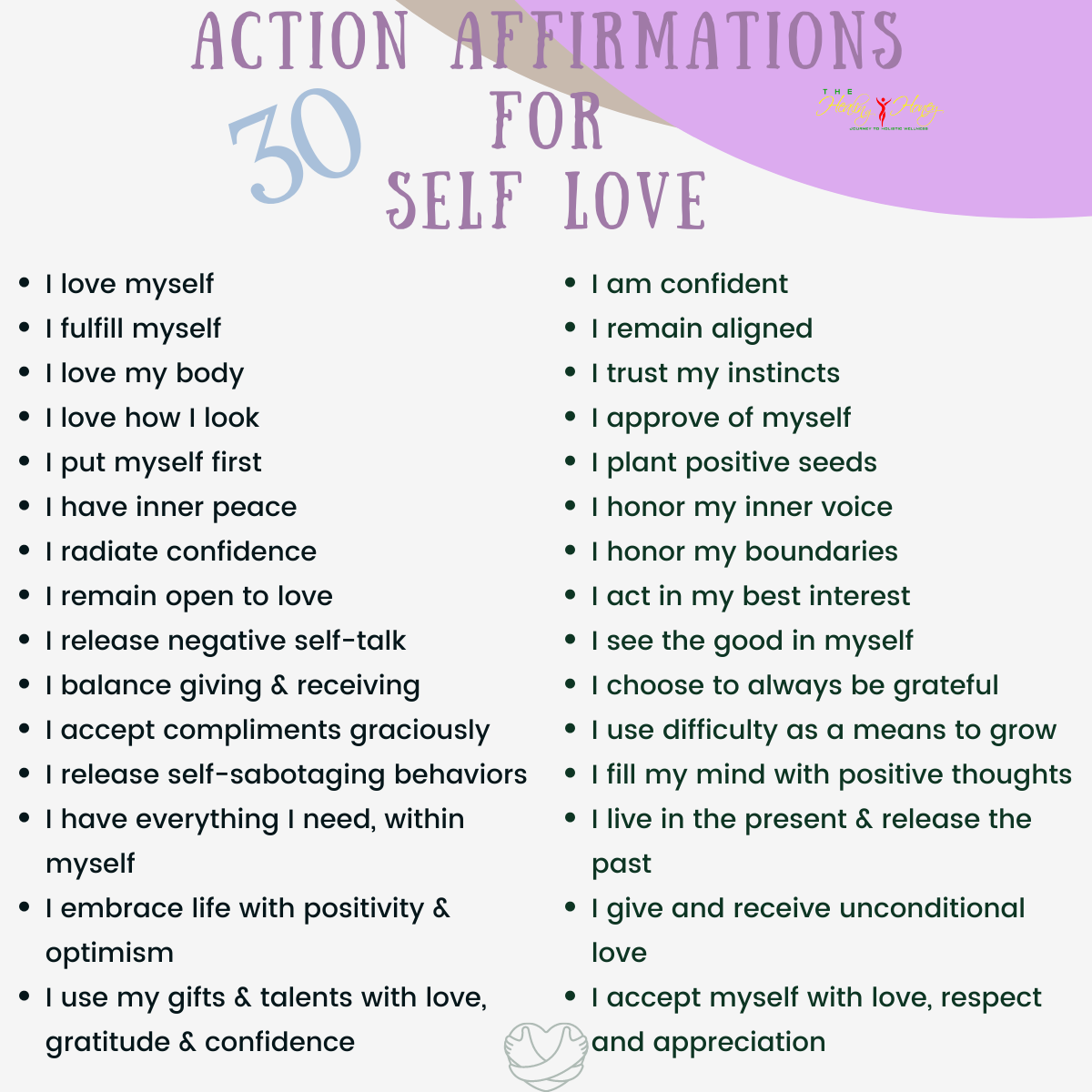
Credit: www.thehealinghoney.com
How To Measure Your Progress
It can be hard to know if affirmations are working. Here are signs to look for:
- You notice less negative self-talk.
- You feel more confident in daily life.
- You handle stress with more calm.
- You are kinder to yourself after mistakes.
Try keeping a journal to track changes in your thoughts and feelings. Over time, you may be surprised at how much you’ve grown.
Progress Tracking Table
Here’s a simple way to track your self-love journey:
| Week | Affirmation Practiced | Positive Changes Noticed |
|---|---|---|
| 1 | I am enough | Less self-criticism |
| 2 | I honor my needs | Set a healthy boundary at work |
| 3 | I am proud of myself | Celebrated a small win |
This approach helps you stay motivated and see how affirmations are making a difference.
Combining Affirmations With Other Tools
Affirmations are powerful, but they are even more effective when combined with other self-love strategies.
Meditation
Spend a few minutes meditating on your affirmation. Imagine what your life would be like if the statement were true.
Visualization
Close your eyes and picture yourself living out your affirmation. For example, if your affirmation is “I am confident,” imagine yourself speaking confidently in a meeting.
Gratitude Practice
Write down things you are grateful for along with your affirmations. Gratitude helps shift your focus from what’s missing to what’s good in your life.
Support Groups
Share your affirmations with a friend or support group. Saying affirmations together can make them feel more powerful.

Credit: www.selfloverainbow.com
Overcoming Resistance And Doubt
It’s normal to feel silly or uncomfortable when you start using affirmations. Sometimes, your mind will argue back or remind you of failures. Here’s how to handle resistance:
- Acknowledge the doubt: Notice the negative voice but don’t fight it. Say, “I hear you, but I’m choosing a new path.”
- Start small: If a big affirmation feels fake, choose a smaller one you can believe.
- Celebrate small wins: Every time you notice a positive change, celebrate it. This builds confidence.
- Be patient: It took years to build your old beliefs. Give yourself time to create new ones.
Non-obvious insight: Sometimes, the most resistance comes right before a big breakthrough. Stick with your affirmations even when it feels hardest.
Real-life Examples: People Who Used Affirmations For Self-love
Hearing real stories can help you believe in the power of affirmations.
Maria’s story: Maria always felt she wasn’t good enough. She started with one simple affirmation: “I am worthy of love.” At first, it felt uncomfortable. But after a month of daily practice, she noticed she was less critical of herself. She spoke up more at work and felt happier in her relationships.
James’s story: James struggled with body image. He chose the affirmation, “My body is strong and valuable.” He put sticky notes on his bathroom mirror. Over time, he stopped comparing himself to others and started enjoying exercise for fun, not punishment.
These stories show that small changes, practiced daily, can have a big impact over time.
Myths About Affirmations And Self-love
Many people have doubts or misunderstandings about affirmations. Let’s clear up some common myths:
- Myth: Affirmations are just wishful thinking.
- Truth: When practiced consistently, affirmations help change the way you think and act.
- Myth: You have to believe affirmations 100% for them to work.
- Truth: Even if you don’t believe them fully at first, your mind can start to shift with practice.
- Myth: Affirmations are only for people with low self-esteem.
- Truth: Everyone can benefit from affirmations, even confident people.
- Myth: Affirmations replace the need for therapy.
- Truth: Affirmations are a helpful tool but not a cure-all. For deep issues, professional help is important.
Making Affirmations A Lifelong Habit
Turning affirmations into a habit makes them more powerful. Here’s how you can keep the practice going:
- Connect affirmations to daily routines: Pair affirmations with brushing your teeth, making coffee, or another daily activity.
- Refresh your affirmations: Change them as you grow. If one becomes easy, try a new one that challenges you.
- Share with others: Teaching or sharing affirmations with friends can deepen your commitment.
- Stay flexible: Some days will be easier than others. Don’t give up if you miss a day—just start again.
When To Seek Extra Support
Affirmations are helpful, but sometimes you need more support. If you struggle with deep sadness, anxiety, or self-harm thoughts, talk to a mental health professional. Affirmations are not a replacement for therapy or medical care, but they can be a helpful part of your healing.
For more on the science of affirmations, you can visit this Psychology Today guide.
Frequently Asked Questions
How Long Does It Take For Affirmations To Work?
Everyone is different, but most people start to notice small changes after a few weeks of daily practice. The key is consistency. Some changes happen quickly, while deeper shifts may take longer.
Can I Use Affirmations For Specific Problems, Like Anxiety Or Body Image?
Yes, you can create affirmations for any area of your life. The more specific your affirmation, the more powerful it can be. For example, “I am calm and in control” for anxiety, or “I respect my body” for body image.
What If I Don’t Believe My Affirmation?
It’s normal to feel doubt at first. Try adjusting the affirmation to make it more believable, or use phrases like “I am learning to…” or “I am open to…” This makes it easier for your mind to accept.
How Many Affirmations Should I Use At Once?
Quality is better than quantity. Start with 1-3 affirmations that feel important to you. Focus on these until you feel a change, then add or change as needed.
Can Children Or Teenagers Use Self-love Affirmations?
Absolutely. Affirmations are helpful for all ages. For children, use simple language and encourage them to repeat positive statements daily. This builds a strong foundation for self-esteem.
Self-love affirmations are a simple, powerful way to change your thinking and your life. Start small, be patient, and remember that every positive step counts. Over time, these small changes will help you build a deeper sense of love and respect for yourself, making every part of life a little brighter.

Credit: www.amazon.com
