

How Many Daily Affirmations Should You Have for Success?
How Many Daily Affirmations Should You Have
Affirmations have become a popular self-help tool for people who want to grow, change habits, or boost confidence. The idea is simple: repeat positive statements about yourself or your goals every day. Still, one question often comes up: how many daily affirmations should you have? Some people say one is enough, others suggest dozens. The real answer depends on your goals, your routine, and even your personality.
If you’re new to affirmations or trying to refine your practice, this article will guide you. We’ll look at what research and real-life experience suggest, how to choose the right number, and how to create a routine that works. We’ll also clear up common misunderstandings and share tips to make your affirmation practice more effective.
Whether you want to use affirmations for stress, work, relationships, or self-esteem, you’ll find practical advice here.
Why People Use Daily Affirmations
Daily affirmations are short, positive statements you say to yourself. People use them to change the way they think and feel. For example, saying, “I am capable of handling challenges,” can help build confidence. The main idea is that by repeating these statements, your mind starts to believe them.
Science Behind Affirmations
Research shows that affirmations can influence beliefs and behaviors. A study from Carnegie Mellon University found that self-affirmation activities can reduce stress and improve problem-solving. Another insight is that affirmations work better when they are linked to your personal values and goals.
But it’s not just about repeating random phrases. The words must feel true or at least possible to you. If you don’t believe what you’re saying, the effect is weaker or even negative.
Emotional And Practical Benefits
People use affirmations for many reasons:
- Building self-confidence
- Reducing anxiety
- Improving focus
- Motivating action
- Changing negative thinking patterns
- Supporting recovery or healing
Affirmations can also help you set the tone for your day or calm your mind before sleep. The benefits come from regular practice, not just occasional use.
Common Myths
One myth is that more affirmations always mean better results. Some people collect long lists, thinking quantity will create change. In reality, too many affirmations can become overwhelming and lose impact.
Another myth is that affirmations must be spoken out loud. In truth, you can write, think, or listen to them. The key is attention and intention, not volume.
How Many Affirmations Are Too Many?
There’s no “one-size-fits-all” answer, but understanding the risks of too many affirmations can help you find your balance.
Cognitive Overload
The brain can only focus on a few ideas at once. If you try to remember and repeat 20 or 30 affirmations, it becomes a memory exercise, not a meaningful practice. You may start to rush through them without feeling their meaning. This is called cognitive overload.
Quality Over Quantity
A small number of well-chosen affirmations have more power than a long, unfocused list. If you’re repeating statements that don’t connect to your real goals or feelings, your mind might ignore them. Focus on what matters most right now.
Signs You Have Too Many
- You feel bored or distracted during your practice.
- You can’t remember your affirmations without reading them.
- You say them quickly just to finish.
- You stop believing in their power.
If you notice these signs, try reducing your list.
What Is The Ideal Number Of Daily Affirmations?
Most experts and experienced users suggest a daily range of 3 to 10 affirmations. This number is small enough to remember and repeat with meaning but large enough to cover different life areas.
Breaking Down The Range
- 1–2 affirmations: Good for beginners or times of crisis. Simple and focused.
- 3–5 affirmations: Covers a few key goals (for example: health, confidence, career).
- 6–10 affirmations: Useful if you have different areas of growth or want to address both short-term and long-term goals.
Anything more than 10 usually reduces focus and makes it hard to create a routine.
Example Table: Number Of Affirmations By User Type
Here’s how people at different stages might choose their number of affirmations:
| User Type | Recommended Number | Reason |
|---|---|---|
| Beginner | 1–3 | Easy to remember, builds habit |
| Intermediate | 3–5 | Can handle more focus areas |
| Advanced/Committed | 5–10 | Clear goals in different life areas |
Personalization Matters
Some people find that one affirmation can be enough if it speaks to their core need. Others like a small set for morning and another for night. The “right” number is the one you can practice with full attention.
Factors That Affect Your Ideal Number
Several factors can help you decide how many affirmations to use each day. It’s not just about following advice, but understanding your own needs.
1. Your Goals
Are you focusing on one big goal, or do you want to improve in several areas? If you’re trying to change one habit, one or two affirmations may be enough. If you have goals in health, work, and relationships, a few more are helpful.
2. Time Available
Consider how much time you can spend. If you only have two minutes, keep your list short. If you enjoy a longer routine, you might use more, but never at the cost of quality.
3. Emotional Readiness
If you’re feeling stressed or overwhelmed, a long list might feel like pressure. In these times, focus on fewer, comforting statements.
4. Experience With Affirmations
If you’re just starting, keep it simple. As you build the habit, you can add more or adjust as needed.
5. Life Changes
Sometimes, life brings new challenges. Your affirmation list might grow or shrink as your needs change. Flexibility is important.
How To Choose Your Affirmations
Selecting the right affirmations is more important than the number. Each statement should feel personal and relevant.
Steps To Choose Effective Affirmations
- Identify what you want to change or improve. Focus on real, current goals.
- Write in the present tense. For example: “I am calm and focused,” not “I will be calm.”
- Keep them positive. Focus on what you want, not what you fear.
- Make them believable. If an affirmation feels too far from reality, soften it. For example: “I am learning to be confident” instead of “I am always confident.”
- Test how they feel. Say them out loud or write them. Do they feel right?
Example: Building A Short List
Suppose you want to focus on self-confidence and health. Your list might look like:
- I am confident in my abilities.
- I choose healthy foods every day.
- I am worthy of success.
This covers two areas without being overwhelming.
Structuring Your Daily Affirmation Routine
How you use affirmations can matter as much as how many you use. A good routine helps make affirmations a habit.
Morning, Midday, Evening
Some people repeat their list three times a day. Others pick one time. Here’s a simple routine:
- Morning: Set your intention for the day.
- Midday: Take a short break to repeat affirmations.
- Evening: Reflect and repeat affirmations before sleep.
You can repeat each affirmation 3–5 times, or focus on one at a time. Quality is more important than speed.
Practical Example: Daily Routine Table
Here’s how a routine might look for a person with five affirmations:
| Time of Day | Affirmations | Repetitions |
|---|---|---|
| Morning | All 5 | 3 times each |
| Midday | Top 2 (most needed) | 2 times each |
| Evening | All 5 | 3 times each |
You can adjust this to fit your life.
Using Technology
Many people use apps, reminders, or sticky notes. These can help you remember your affirmations and make them part of your day.
Making Affirmations More Effective
Choosing the right number is only one part. The way you use affirmations changes their power. Here are ways to make your practice stronger.
Visualization
While saying your affirmation, visualize the result. For example, if your affirmation is “I am calm in meetings,” picture yourself sitting confidently at a table. This links words to emotion.
Feeling The Emotion
Repeating affirmations with flat emotion does less. Try to feel the meaning behind the words. Imagine what life would be like if the affirmation were true.
Writing Affirmations
Writing by hand connects your mind and body. Some people keep a journal and write their affirmations each day.
Speaking With Intention
Say your affirmations clearly, not just as background noise. This helps your mind take them seriously.
Consistency Is Key
Affirmations need time to work. Repeating them daily, even when you don’t see quick results, builds new thinking patterns.
Review And Adjust
Every few weeks, review your affirmations. Are they still relevant? Do you need to change or remove some? Keep your practice fresh.
Common Mistakes When Using Affirmations
Beginners often fall into traps that reduce the power of affirmations. Here are mistakes to avoid:
Too Many Affirmations
As discussed, a long list leads to distraction. If you can’t remember your affirmations, you have too many.
Choosing Generic Statements
Affirmations like “I am happy” are too broad. Make them specific to your goals and life.
Ignoring Emotions
If you repeat affirmations without feeling, they won’t work as well. Engage your emotions.
Inconsistent Practice
Skipping days or not making time means slower results. Make affirmations part of your daily life.
Expecting Instant Change
Affirmations are not magic. They take time to shift thinking patterns. Be patient.
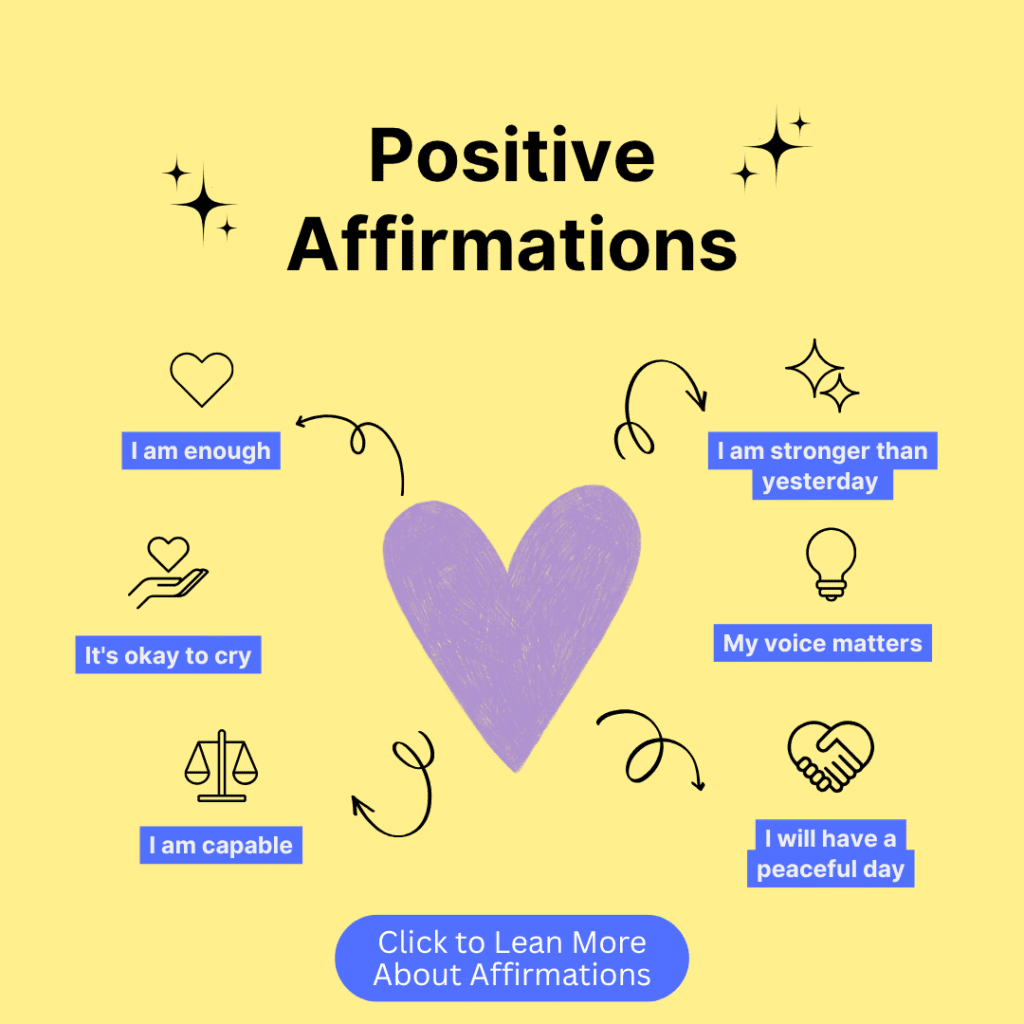
Credit: aapsychiatry.com
How To Know If Your Affirmations Are Working
It’s not always easy to see results right away. Here’s how to track your progress.
Signs Of Progress
- You remember your affirmations without effort.
- You start to believe the statements.
- You notice changes in behavior (such as speaking up more).
- Your mood improves.
- You feel more positive about challenges.
Tracking Your Progress
Some people keep a journal. Each week, write about any changes you notice. This helps you see growth, even if it’s slow.
Adjusting As You Grow
As you reach goals, you can change your affirmations. This keeps your practice meaningful.
Comparing Affirmation Practices: Minimalist Vs. Extensive
Some people prefer a very short list, while others like a larger set. Here’s a comparison to help you choose.
| Approach | Number of Affirmations | Pros | Cons |
|---|---|---|---|
| Minimalist | 1–3 | Easy to remember, strong focus, fast routine | May not cover all goals, can become repetitive |
| Balanced | 3–7 | Covers main life areas, keeps practice simple | May need regular review to avoid overload |
| Extensive | 8–15 | Addresses many goals, detailed focus | Can feel overwhelming, risks losing meaning |
Real-life Stories: How People Use Affirmations
Looking at how others use affirmations can be inspiring and help you find what works for you.
Story 1: Simple And Focused
A young professional wanted to build confidence at work. She chose one affirmation: “I trust my skills and knowledge.” She repeated this every morning before meetings. After a month, she noticed she was speaking up more often.
Insight: One affirmation, used with focus, can change behavior.
Story 2: Covering Different Goals
A student struggled with anxiety and low energy. He used four affirmations:
- I am calm and in control.
- I finish tasks on time.
- I have energy for my studies.
- I am kind to myself.
He repeated them each morning and night. Over two months, he felt less anxious and started enjoying his work more.
Insight: A small set can cover different needs without overload.
Story 3: Too Many At Once
A person new to affirmations found a list online with 20 statements. She tried to repeat them all, but soon felt lost and unmotivated. After reducing her list to five, she enjoyed the practice again.
Insight: Less can be more. Personal connection matters.
Non-obvious Insights For Beginners
Many guides repeat basic advice, but here are two insights that new users often miss:
1. Affirmations Can Change With Your Life
Don’t feel you must use the same affirmations forever. As your needs change, your affirmations should too. Sticking to old statements can hold back growth.
2. Mixing Affirmations With Action
Affirmations support change, but do not replace effort. If your affirmation is “I am healthy and active,” pair it with small actions like a daily walk. This builds trust in your words.
How To Make Affirmations Part Of Your Routine
The best affirmation practice is the one you can stick with. Here’s how to make it part of your day:
- Connect it to an existing habit. For example, say your affirmations after brushing your teeth.
- Use reminders. Phone alarms or sticky notes can help.
- Practice with a friend or group. Sharing affirmations builds support.
- Record your voice. Listen during commutes or walks.
- Celebrate progress. Notice changes and reward yourself.
The Role Of Skepticism
It’s normal to feel skeptical about affirmations. You may wonder if repeating words can really help. Research shows that belief grows with practice. If you feel uncomfortable, use softer language (“I am learning to believe in myself”) and focus on progress, not perfection.
For more on the science behind affirmations, see the Wikipedia page on self-affirmation.
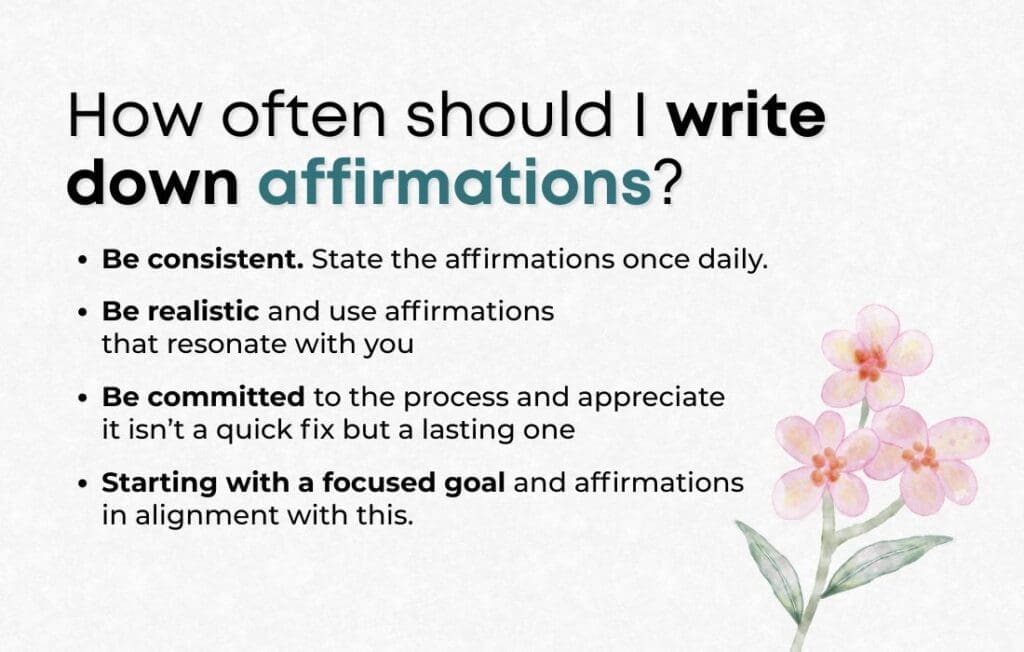
Credit: tiffanywoodfield.com
Frequently Asked Questions
How Many Daily Affirmations Are Best For Beginners?
Most beginners do well with 1 to 3 affirmations. This keeps things simple and helps you build a habit without feeling overwhelmed.
Can I Change My Affirmations Every Day?
You can, but it’s better to keep the same set for at least a few weeks. This gives your mind time to accept and believe the statements.
Is It Better To Say Affirmations Out Loud Or In My Mind?
Both work. Saying them out loud can add energy, but repeating them in your mind is also effective. The key is focused attention.
What If I Don’t Believe My Affirmations?
Start with statements that feel possible. For example, “I am learning to be confident” instead of “I am always confident. ” Over time, as you see small changes, your belief will grow.
How Long Does It Take For Affirmations To Work?
It varies for each person. Some notice changes in a few weeks, others need more time. Consistency is important. Affirmations work best as part of a daily routine.
Final Thoughts
Finding the right number of daily affirmations is personal. Most people benefit from a small set—enough to cover key goals but not so many that the practice loses meaning. Quality always matters more than quantity. With attention, emotion, and consistency, affirmations can support real change in your thinking and life.
Start small, adjust as you grow, and make your practice your own.

Credit: www.springhealth.com
