

How Many Affirmations Should I Write a Day for Best Results?
How Many Affirmations Should I Write A Day
The practice of writing affirmations has become a powerful tool for many people seeking personal growth, confidence, and a positive mindset. But as you start, one key question often comes up: how many affirmations should I write a day? Should you fill pages with positive statements, or will just a few carefully chosen words do the job? There’s a lot of advice online, but the real answer depends on your goals, your lifestyle, and how your mind responds to repetition and intention.
This guide breaks down everything you need to know about daily affirmation writing. You’ll learn the science behind affirmations, the benefits of different approaches, and practical methods to find your ideal number. Along the way, you’ll discover mistakes to avoid, expert tips, and real examples that help you get the most from this practice.
What Are Affirmations?
Affirmations are positive statements that you write, say, or think to influence your mindset and behavior. The idea is simple: by repeating supportive words, you start to believe them, and they help shape your actions and emotions. For example, writing “I am confident in my abilities” can gradually help you feel more self-assured.
There are two main types:
- General affirmations: Statements that apply to many areas, like “I am worthy.”
- Specific affirmations: Focused on a goal, such as “I enjoy public speaking.”
Research shows that affirmations can reduce stress, increase motivation, and even help you perform better in challenging situations.
The Science Behind Affirmations
You may wonder if affirmations really work. Studies in psychology suggest that self-affirmation activates parts of the brain linked to self-processing and rewards. For example, a study published in the journal *Social Cognitive and Affective Neuroscience* found that people who practiced affirmations showed more activity in the brain’s valuation areas, which are linked to positive feelings and motivation.
Also, affirmations support a concept known as neuroplasticity. This means your brain can change and form new connections, even as an adult. Regularly repeating positive statements helps create new mental pathways, making it easier to think and act positively over time.
Why Does The Number Of Affirmations Matter?
It’s easy to assume that more is always better. If one affirmation is good, why not write twenty? But the truth is, there’s a balance. Writing too few might not have much impact, while too many can become a chore and lose meaning.
The ideal number depends on factors like your attention span, goals, and daily routine.
Here are some important points:
- Quality vs. quantity: A few well-chosen affirmations can be more powerful than many random ones.
- Consistency: Writing daily matters more than the exact number.
- Personalization: The number should fit your needs, not someone else’s routine.
Common Advice On How Many Affirmations To Write
If you search for guidance, you’ll find suggestions ranging from one to fifty affirmations per day. Some popular approaches include:
- One affirmation per day: Focuses all your energy on a single positive idea.
- Three to five affirmations: Allows variety but remains manageable.
- Ten or more affirmations: Covers multiple areas of life or goals.
A survey of affirmation practitioners found that most people write three to ten affirmations each day. This range strikes a balance between focus and flexibility.

Credit: jackcanfield.com
Factors To Consider When Choosing Your Number
Not everyone will benefit from the same number of daily affirmations. Here are key factors to help you decide:
1. Your Purpose
Ask yourself why you want to write affirmations. Is it for self-confidence, overcoming a specific fear, improving your health, or something else? If you have one clear goal, one or two affirmations may be enough. For broader growth, more statements might help.
2. Time Commitment
Writing affirmations should not feel stressful or rushed. Think about how much time you can realistically spend. Some people dedicate five minutes in the morning, while others prefer a longer journaling session.
3. Depth Of Focus
Repeating one affirmation many times can help it sink in deeply. However, writing several different affirmations lets you address multiple areas, like work, relationships, and health.
4. Emotional Impact
If you feel energized and inspired after writing a few affirmations, you may not need more. If you notice your energy dropping or you start to lose focus, that’s a sign you’ve written enough for the day.
5. Experience Level
Beginners often start with one to three affirmations. As you get comfortable, you might increase the number to suit your needs.
The Power Of Repetition
One thing often overlooked is the value of repeating the same affirmation. Instead of always writing new statements, you can write the same one several times. This technique is used in practices like affirmation journaling, where you might write the same sentence ten or even twenty times to reinforce it.
For example, writing “I am calm and in control” ten times helps your mind absorb the message better than writing ten different affirmations once.
.jpg%3Falt%3Dmedia%26token%3D7b2583cb-cd00-4eb0-b03b-bb1489a427c2&w=1920&q=75)
Credit: www.amahahealth.com
Popular Daily Affirmation Routines
Here are three well-known daily routines and what they offer:
1. The One-affirmation Method
You choose one statement and write it several times, focusing deeply on its meaning. This approach is great for those with a single important goal or for beginners who want to build the habit.
Example:
- “I am worthy of happiness.” (Write it ten times with attention.)
2. The Three-to-five Affirmation Method
You select three to five affirmations that cover different areas of your life. This is the most common routine because it’s easy to maintain and doesn’t take much time.
Examples:
- “I am confident at work.”
- “I am healthy and strong.”
- “I am surrounded by support.”
3. The Ten-affirmation Method
This routine is for those who like a detailed approach. You write ten affirmations, often touching on every area you want to improve. It requires more time, but it can be very motivating.
Examples:
- “I am a creative thinker.”
- “I am patient with myself.”
- “I am financially secure.”
- (Continue with seven more, tailored to your goals.)
Comparing Affirmation Routines
To help you decide, here’s a comparison of these three popular routines:
| Routine | Number of Affirmations | Time Needed | Best For |
|---|---|---|---|
| One-Affirmation | 1 (repeated multiple times) | 2-5 minutes | Beginners, focused goals |
| Three-to-Five Affirmation | 3-5 | 5-10 minutes | General self-improvement |
| Ten-Affirmation | 10 | 10-20 minutes | Advanced users, multiple goals |
How To Write Effective Affirmations
It’s not just the number of affirmations that matters—how you write them is even more important. Here are tips for writing affirmations that work:
- Use the present tense: Say “I am” instead of “I will be.”
- Keep them positive: Focus on what you want, not what you don’t want.
- Make them personal: Use “I” statements.
- Be specific: “I am confident speaking in meetings” is stronger than “I am confident.”
- Use simple language: Easy words stick better in your mind.
Sample Daily Affirmation Plans
Below are examples of how you might structure your daily affirmation practice depending on your needs.
For Beginners
- Choose one affirmation that matters most.
- Write it five times, slowly, focusing on each word.
For Busy Professionals
- Select three affirmations: One for work, one for health, one for relationships.
- Write each once or twice, using clear and positive language.
For Personal Transformation
- Write ten affirmations, each targeting a different area of life.
- Repeat the practice each day, reviewing and adjusting your statements as needed.
How Many Affirmations Do Experts Recommend?
Most coaches and psychologists agree that three to five affirmations per day is ideal for most people. This number allows you to focus without feeling overwhelmed. However, some experts suggest that writing even one affirmation with full attention can have more power than many written out of habit.
A study published by the National Institutes of Health suggested that the effectiveness of affirmations comes from consistency and emotional engagement, not just the total number. So, focus on what feels meaningful rather than aiming for a high number.
Mistakes To Avoid When Writing Affirmations
Even with the best intentions, some common mistakes can reduce the impact of your affirmations.
1. Writing Too Many
If you write twenty or more affirmations, you may lose focus and struggle to remember them. It’s better to write a few and keep them in mind throughout the day.
2. Being Too Vague
“I want to be happy” is not as effective as “I am grateful for the good things in my life. ” Specific affirmations create a clearer path for your mind.
3. Using Negative Words
Avoid statements like “I am not afraid. ” The mind focuses on the word “afraid. ” Instead, say “I am brave. ”
4. Not Believing Your Words
If you don’t believe your affirmation, it won’t be effective. Start with statements that feel possible and gradually build up to bigger goals.
5. Changing Affirmations Too Often
Consistency matters. If you switch your affirmations every day, your mind doesn’t have time to absorb their meaning.
How To Know If Your Affirmations Are Working
It’s natural to wonder if your affirmations are making a difference. Here are signs that your practice is effective:
- You start to feel more positive in your daily life.
- You notice small changes in your thoughts and actions.
- You feel less resistance or doubt when writing your affirmations.
- You achieve goals or improvements in the areas you’re focusing on.
Track your progress by journaling about your feelings and results. This helps you see patterns and adjust your affirmations as needed.
Should You Write Affirmations Or Say Them Aloud?
Writing and speaking are both effective, but they work in different ways.
- Writing: Helps you slow down and focus. The physical act of writing makes the affirmation feel real.
- Speaking aloud: Involves your voice and hearing, which can make the message even stronger.
Some people combine both—writing affirmations, then reading them aloud.
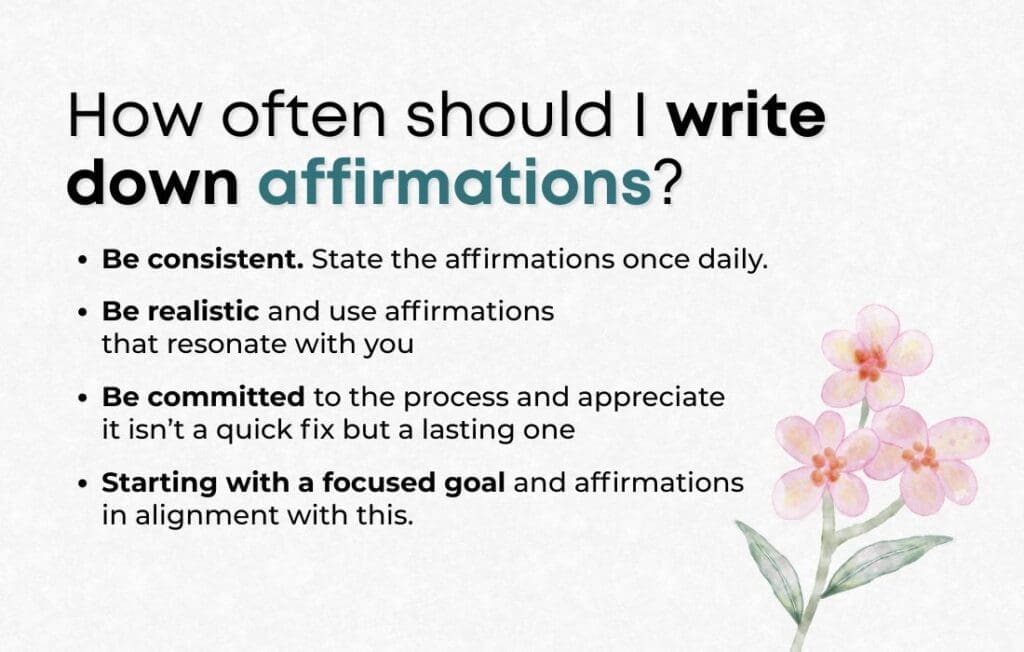
Credit: tiffanywoodfield.com
The Role Of Visualization
When you write affirmations, try to visualize the positive outcome. Picture yourself living the words you’re writing. This technique activates more areas of your brain and makes the affirmation more powerful.
For example, as you write “I am calm under pressure,” imagine yourself handling a stressful situation with ease.
How To Fit Affirmations Into Your Day
Consistency is key, but your routine should match your schedule. Here are ways to make affirmations a daily habit:
- Morning routine: Write affirmations as soon as you wake up.
- Before bed: Reflect on your day and write affirmations for tomorrow.
- During breaks: Take a few minutes at lunch or in the afternoon.
- Habit stacking: Link affirmation writing to an existing habit, like after brushing your teeth.
Using Affirmations For Different Goals
The number of affirmations you write may change based on your focus area.
For Confidence
Start with one or two affirmations and repeat them often. Confidence grows through repetition.
For Health
Write three affirmations: one for your body, one for your mind, and one for your energy.
For Relationships
Use two or three statements that focus on kindness, understanding, and connection.
For Success
Pick five affirmations that align with your goals, such as “I finish what I start” or “I welcome new opportunities. ”
Advanced Techniques For Affirmation Writing
If you’ve been practicing for a while, you can try advanced methods to deepen the impact.
1. Layered Affirmations
Start with a simple affirmation and build on it each day. For example:
- Day 1: “I am confident.”
- Day 2: “I am confident speaking in meetings.”
- Day 3: “I am confident speaking in meetings and sharing my ideas.”
2. Affirmation Journaling
Dedicate a notebook to your affirmations. Write each statement, then add a short reflection about why it matters to you and how you feel.
3. Combining Affirmations With Gratitude
After each affirmation, write one thing you’re grateful for. This boosts the positive effect.
Tracking Your Progress
Many people find it helpful to keep a log of their affirmations and results. Here’s a simple way to organize your practice:
| Date | Affirmations Written | Feelings/Notes |
|---|---|---|
| Monday | 3 | Felt positive, more confident at work |
| Tuesday | 5 | Motivated, less stress during meetings |
| Wednesday | 2 | Calm, focused on health goals |
Review your log every week to see which affirmations are most effective.
Adapting Your Practice Over Time
As you grow, your affirmation needs may change. Here’s how to adjust:
- If you feel bored, try new affirmations or increase variety.
- If you feel overwhelmed, reduce the number and focus on quality.
- If you reach a goal, celebrate, then set new intentions.
Remember, your affirmation practice should feel inspiring, not like a chore.
How To Make Affirmations A Lasting Habit
Building any new habit takes time. Here are tips to make affirmation writing a regular part of your life:
- Set a reminder: Use your phone or a sticky note.
- Keep your materials ready: Have a notebook and pen in a spot you see daily.
- Start small: Begin with one affirmation and increase as you get comfortable.
- Celebrate progress: Notice and appreciate small changes in your mindset or actions.
Non-obvious Insights Most Beginners Miss
- Emotion is more important than repetition: Writing the same affirmation many times won’t help if you don’t feel connected to it. Focus on statements that move you emotionally.
- Personal language increases impact: Use your own words. Don’t just copy affirmations from the internet—customize them to sound like you.
- Affirmations reveal limiting beliefs: Sometimes, affirmations feel uncomfortable. This shows where you have self-doubt, and it’s a chance to work through it.
Example: Finding Your Ideal Number
Let’s say you have a busy job and want to boost confidence and reduce stress. You start with three affirmations:
- “I handle challenges calmly.”
- “I am skilled and valuable at work.”
- “I balance work and rest with ease.”
After one week, you notice you remember the first two, but forget the third. You decide to focus on just two. This helps you stay consistent and feel the impact. Over time, you may add more as your routine becomes natural.
The Role Of Environment
Where you write affirmations can affect their power. Choose a quiet, comfortable spot. Some people light a candle or play soft music. The key is to reduce distractions and focus on the words.
Group Affirmation Practice
Some people write or share affirmations with friends, family, or in support groups. This adds accountability and makes the practice more enjoyable. You can try writing one affirmation together each day and discuss how it affects you.
Digital Vs. Paper Affirmations
Both methods are effective. Writing by hand can feel more personal and memorable. Using a digital app or document offers convenience and easy tracking. Choose what fits your lifestyle.
Here’s a quick comparison:
| Method | Pros | Cons |
|---|---|---|
| Handwriting | Personal, memorable, calming | Slower, less portable |
| Digital | Convenient, easy to edit, track progress | Less personal, more distracting |
How Affirmations Fit Into A Bigger Growth Plan
Remember, affirmations are one tool among many. Combine them with other habits for best results:
- Set clear goals.
- Practice gratitude.
- Take practical steps toward your aims.
- Reflect on your progress regularly.
Affirmations support your mindset, but action brings results.
Real-life Examples
Many successful people use affirmations. For example, athletes write statements about their abilities before a game. Business leaders use affirmations to boost confidence before big meetings. Students use them to reduce test anxiety. The common thread is consistency and belief in the process.
If you want more inspiration, consider reading about self-affirmation research at the Wikipedia Self-Affirmation page.
Frequently Asked Questions
How Many Affirmations Should I Write Each Day For Best Results?
Most people see good results with three to five affirmations each day. This number is enough to cover different goals without feeling overwhelming. The key is to focus on quality and consistency, not just quantity.
Can I Write The Same Affirmation Multiple Times?
Yes, repeating the same affirmation is a powerful method. Writing one statement several times helps your mind absorb it. This is especially useful if you have a specific goal or want to reinforce a belief.
Is It Better To Write Or Say Affirmations Aloud?
Both methods are effective. Writing helps you slow down and focus, while saying affirmations aloud adds the power of your voice. Many people combine both for the strongest effect.
What Should I Do If I Don’t Believe My Affirmation?
Start with statements that feel possible. For example, instead of “I am always confident,” try “I am learning to be more confident. ” As your belief grows, you can make your affirmations stronger.
How Long Does It Take To See Results From Affirmations?
Most people notice changes within a few weeks if they practice daily. Results vary depending on your mindset and the effort you put in. The most important thing is to be patient and keep going, even if changes feel slow at first.
Writing affirmations each day is a simple but powerful tool for personal growth. By choosing the right number, focusing on quality, and practicing with intention, you can shape your thoughts, actions, and your future.
