

How Long Should You Say Affirmations for Maximum Results?
How Long Should You Say Affirmations
Many people use affirmations to build confidence, change habits, and improve their mindset. But a common question appears: How long should you say affirmations? If you repeat an affirmation for a few seconds, is that enough? Should you spend ten minutes every day? Does it matter if you do it in the morning or before sleep? Finding the right answer is not always simple. In this guide, you’ll discover everything you need to know about affirmation timing, frequency, and what really works—so you can get the most from your practice.
What Are Affirmations And Why Do They Matter?
Affirmations are positive statements you say to yourself, often to influence your thoughts, feelings, and actions. For example, “I am confident in social situations” or “I choose healthy foods every day.” The idea is that your mind can learn new patterns and beliefs through repetition.
Research shows that self-affirmation can reduce stress, support better decision-making, and even improve academic or work performance. This happens because your brain starts to accept the new messages you give it. Over time, these repeated statements shape your attitude and behavior.
But saying affirmations just once or twice rarely creates change. Like building a muscle, you need consistent effort for results. That’s why timing and duration matter.
How Long Should You Say Affirmations Each Day?
There is no single answer that fits everyone. However, most experts and experienced users agree on a minimum range for effectiveness. Here is what to consider:
Typical Duration Ranges
Most people find results by repeating affirmations for 3 to 10 minutes per session. Some prefer shorter sessions (just a few minutes), while others spend 10 minutes or more. The key is to find a balance between focus and practicality—long enough to make an impact, but short enough to fit your life.
Why Duration Matters
When you say an affirmation, your mind needs time to absorb the meaning. If you only spend 10 seconds, your brain may not notice any change. Repeating a statement for several minutes helps it sink in. However, going too long can lead to boredom or distraction.
A good guideline is: 3-5 minutes is enough for most people to feel engaged and focused. If you have more time and energy, you can go up to 10 minutes.
Sample Daily Routine
Let’s compare different durations for a daily affirmation session:
| Duration | Typical Outcome | Best For |
|---|---|---|
| 1 minute | Quick mood boost, limited impact | Busy mornings, beginners |
| 3-5 minutes | Clear focus, noticeable mindset shift | Most users, daily practice |
| 10+ minutes | Deep emotional effect, more commitment | Advanced users, deep change |
How Many Times Should You Repeat Each Affirmation?
Repeating an affirmation once is rarely enough. Repetition helps your brain accept new ideas and create lasting change.
Common Recommendations
Most experts suggest 10 to 20 repetitions per affirmation. For example, if your affirmation is “I am calm and in control,” say it at least 10 times in a row. You can do this out loud, silently, or by writing it down.
Why Repetition Works
The brain learns through repetition. This is true for affirmations, language learning, or any new skill. If you repeat a phrase enough, it starts to feel familiar and true. This is why many personal growth books recommend repeating affirmations several times in each session.
Example: Repeating Multiple Affirmations
If you use three different affirmations, you might repeat each one 10 times. That’s 30 repetitions total. This usually takes about 3-5 minutes, which fits well with the recommended daily duration.
How Long Should You Keep Using The Same Affirmations?
Changing habits or beliefs takes time. You may wonder: How many days or weeks should I keep saying the same affirmation?
Minimum Time For Results
Most people need at least three to four weeks of daily practice to see clear results. This matches what we know about habit formation—it usually takes about a month for new patterns to take hold.
When To Change Affirmations
Stick with the same affirmation until you feel a real shift in your thoughts or actions. If you notice the statement feels true, or you start behaving differently, you can switch to a new affirmation or add another one.
However, avoid changing too soon. Many beginners swap affirmations after a few days if they don’t see results. But like physical training, consistency is more important than variety.
Real-life Example
Imagine you want to become more confident at work. You use the affirmation, “I speak up with confidence in meetings. ” After three weeks, you notice you feel less nervous and contribute more often. This is a sign your affirmation is working, and you can either continue or start a new one for a different goal.
Does It Matter When You Say Affirmations?
Timing can make a difference. Some moments during the day are more powerful for affirmations.
Best Times To Practice
- Morning: Right after you wake up, your mind is fresh and open to new ideas. Morning affirmations can set a positive tone for the whole day.
- Evening: Before sleep, your brain processes the day’s events. Affirmations at night can help plant positive thoughts in your subconscious.
- Transitions: Use affirmations before important events (like an interview or meeting) to boost confidence.
- During Stress: When you feel anxious or upset, a quick affirmation can help you refocus.
You don’t have to limit yourself to one time. The most important thing is regular practice.
Example Daily Schedule
| Time | How to Use Affirmations |
|---|---|
| Morning (after waking) | Stand in front of a mirror, repeat for 5 minutes |
| Mid-day (lunch break) | Quietly repeat in your mind or write in a notebook |
| Evening (before sleep) | Say affirmations while relaxing or lying in bed |
Should You Say Affirmations Out Loud Or Silently?
Both methods can work, but each has unique benefits.
Saying Affirmations Out Loud
- Stronger focus: Speaking out loud helps you pay attention and believe the words.
- Engages more senses: Hearing your voice adds power.
- Best for: Private moments, mirror work.
Silent Affirmations (in Your Mind)
- More private: Good for public places or busy times.
- Flexible: You can do them anytime, anywhere.
- Best for: Commuting, stressful situations.
Writing Affirmations
Some people write their affirmations by hand. This adds physical movement, which helps your brain remember the message. For many, writing an affirmation 10 times in a journal is as effective as speaking it.
Combining Methods
You don’t have to choose just one. Try saying affirmations out loud in the morning, then silently during the day. Write them at night to reinforce the message.
How To Know If Your Affirmation Practice Is Working
It’s common to wonder if you’re spending the right amount of time. Here’s how to measure progress.
Signs Of Success
- Your mood improves after saying affirmations.
- Negative thoughts appear less often.
- You act differently, such as feeling more confident or less stressed.
- The affirmation feels true or natural.
What If You Don’t See Results?
If you don’t notice a change after several weeks, consider these points:
- Are your affirmations believable? If not, make them more realistic. For example, instead of “I love public speaking,” try “I am becoming more comfortable with public speaking.”
- Are you practicing daily? Consistency is key.
- Are you focusing during practice? Avoid rushing or thinking about other things.
Common Mistakes When Using Affirmations
Many people give up because they don’t see quick results. Here are mistakes to avoid:
1. Changing Affirmations Too Often
Stick with each affirmation for at least three weeks. New habits take time.
2. Using Negative Words
Affirmations should be positive. Say “I am calm” instead of “I am not stressed. ”
3. Not Believing The Statement
If an affirmation feels impossible, make it more believable. “I am learning to be confident” is better than “I am the most confident person in the world. ”
4. Skipping Days
Daily repetition is essential. If you miss a day, just continue the next day.
5. Saying Affirmations Without Emotion
Feel the meaning behind the words. This helps your brain accept the message.
6. Trying To Rush The Process
Saying affirmations quickly, just to finish, reduces their power. Take your time and focus.
How To Personalize Your Affirmation Practice
Not everyone’s mind works the same way. Personalizing your routine can improve results.
Adjusting Time And Frequency
If 10 minutes feels too long, start with 2-3 minutes. If you enjoy the process, add more time. If you prefer several short sessions, try three 2-minute sessions throughout the day.
Matching To Your Goals
Some goals need more repetition. For example, overcoming deep fears may require longer practice. For small changes, shorter sessions can work.
Using Reminders And Tools
Use phone reminders, sticky notes, or affirmation apps to stay consistent. You can also record your voice and listen to your affirmations while driving or walking.
Example: Affirmation Personalization
| Goal | Recommended Practice |
|---|---|
| Reduce anxiety | Say or write affirmations before stressful events, 2-3 times per day |
| Build self-confidence | Repeat affirmations in the mirror each morning, 5-10 minutes |
| Improve sleep | Calm affirmations before bed, silently for 5 minutes |
Non-obvious Insights About Affirmation Timing
Many guides repeat the same advice, but a few insights can help you go further:
1. Emotional State Matters More Than Exact Time
Repeating affirmations when you feel calm and open has a bigger impact than just checking off a box. If you’re stressed, take a few deep breaths before starting.
2. Small Sessions Beat Inconsistent Long Ones
Practicing for 2 minutes every day is better than 20 minutes once a week. The brain changes with regular, repeated input.
3. Link Affirmations To Habits
Attach your affirmations to daily routines (like brushing teeth or making coffee). This makes it easier to remember and builds the habit.
4. Visualize While Repeating
Imagine the outcome as you say your affirmation. For example, picture yourself speaking confidently while repeating “I am confident. ” This boosts the effect.
5. Use Affirmations To Interrupt Negative Patterns
If you catch yourself thinking negatively, immediately use an affirmation as a reset. Over time, this weakens old habits.
How Science Supports Affirmation Practice
Affirmations are not just positive thinking. Scientific research supports their benefits. For example, studies show that self-affirmation can reduce stress, improve academic performance, and even help with health behaviors. Brain scans show changes in neural pathways when people repeat positive statements.
According to Wikipedia, self-affirmation theory explains that reflecting on personal values and strengths helps people handle threats and challenges. This is why regular practice (for several minutes a day, over weeks) is effective.
Can You Say Affirmations Too Much?
It’s possible to overdo affirmations, especially if you use them as a way to avoid real problems. If you spend hours each day but see no change, it may be a sign to adjust your approach.
Balance is important. A few focused minutes, practiced consistently, are usually enough. If you notice yourself feeling tired or stressed by the process, reduce the time.
When Affirmations Might Not Work
Affirmations are a powerful tool, but they are not magic. They may not be effective if:
- The affirmation feels completely unbelievable to you.
- You use them to avoid action (instead of supporting real change).
- You repeat them without any emotion or attention.
If you struggle with serious mental health issues, affirmations can be supportive, but not a replacement for professional help.
Practical Tips To Maximize Results
- Start with short sessions (2-3 minutes). Increase as you feel comfortable.
- Repeat each affirmation 10-20 times for best effect.
- Choose a regular time (morning, night, or both).
- Focus on the feeling behind the words.
- Track progress in a journal.
- Personalize your affirmations to your needs.
- Use reminders to stay on track.
- Visualize success as you repeat your affirmations.

Credit: daniellelaporte.com
Frequently Asked Questions
How Long Does It Take To See Results From Affirmations?
Most people notice some change in 2 to 4 weeks with daily practice. However, small shifts in mood or self-talk can happen sooner. Consistency is more important than doing long sessions.
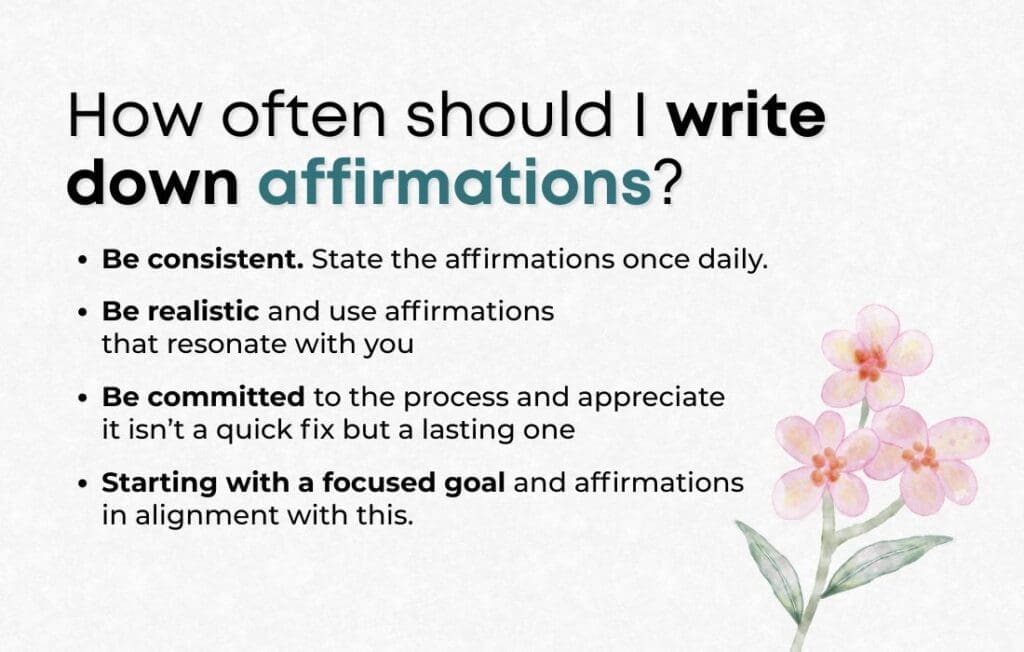
Credit: tiffanywoodfield.com
Can I Say Affirmations More Than Once A Day?
Yes, you can repeat affirmations several times a day. For example, do a morning session and a short session before bed. The key is regular, focused practice rather than quantity.
Is It Better To Say Affirmations Out Loud Or Silently?
Both methods work. Saying affirmations out loud can be more powerful because you hear the words. Silent affirmations are useful for public places or busy times. Many people combine both.

Credit: www.amazon.com
What If I Don’t Believe My Affirmation?
If you don’t believe your affirmation, make it more believable. For example, instead of “I am always confident,” try “I am learning to feel more confident every day. ” Gradually adjust as your belief grows.
Should I Stop Saying An Affirmation Once It Starts Working?
If an affirmation feels true and you see real change, you can reduce repetition or switch to a new goal. However, some people like to keep a few core affirmations as a daily habit for ongoing support.
Getting the most from affirmations is not about saying them for hours, but about consistent, focused practice. Start small, adjust your routine, and notice the changes in your life. With time and patience, affirmations can be a simple but powerful tool for personal growth.
