

How Do You Write Affirmations That Actually Work?
How Do You Write Affirmations
Everyone has moments when negative thoughts take over. Sometimes, you feel stuck or unsure about your abilities. But what if you could change your mindset with simple, daily words? That’s where affirmations come in. These are positive statements you write and repeat to yourself. They help you build confidence, focus, and even improve your mood. Many people use affirmations to reach their goals, manage stress, and feel better about life. But writing effective affirmations is not always easy. You need to know the right approach, avoid common mistakes, and understand how to use them for real results. In this article, you’ll learn how to write affirmations that actually work, see practical examples, and discover tips that most beginners miss. Whether you’re new to affirmations or want to make yours stronger, this guide will help you start—and stick—with positive self-talk.
What Are Affirmations?
Affirmations are short, positive statements that help you focus on your goals and beliefs. They are meant to change your thoughts and feelings by repeating them often. For example, saying “I am confident” every morning can help you feel more confident over time.
The idea is that your mind starts to believe what you tell it, and this shapes your actions.
Many psychologists and coaches use affirmations in their practice. Studies show that regular use of affirmations can lower stress, increase motivation, and improve performance. But not all affirmations work the same way. To get results, you need to write them in the right way and use them consistently.
Why Affirmations Matter
Affirmations help you manage your thoughts. Negative thinking can limit your actions and keep you from reaching your goals. If you always think “I can’t do this,” you may not even try. But if you tell yourself “I can handle this,” you build mental strength.
Research shows that people who use affirmations regularly can change their behavior and mood. One study found that students who used affirmations before a test felt less anxious and performed better. Another survey showed that people who practice daily affirmations are more likely to set and achieve goals.
Here’s why affirmations are powerful:
- They help you replace negative thoughts with positive ones.
- They build self-confidence.
- They encourage you to take action.
- They improve your focus and motivation.
- They help reduce stress and anxiety.

Credit: www.lomyrick.com
Key Elements Of Effective Affirmations
Writing affirmations is not about just saying nice words. The way you write them affects how well they work. Here are the main elements you need:
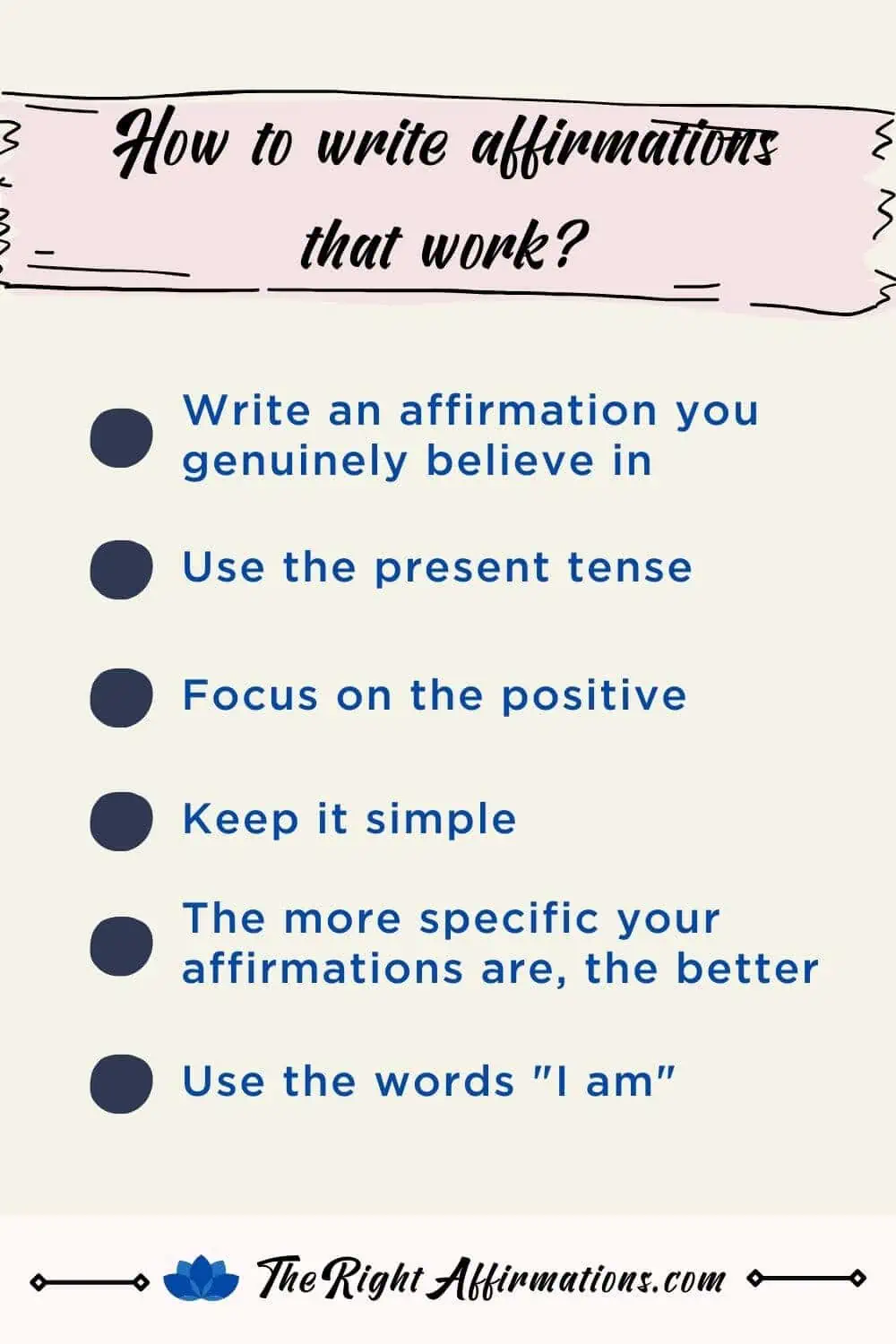
- Positive language: Always use positive words. For example, “I am calm” is better than “I am not stressed.”
- Present tense: Write as if the change is happening now. Say “I am successful” instead of “I will be successful.”
- Personal: Use “I” or “my.” The affirmation should feel like it’s about you.
- Specific: Be clear and focused. “I am healthy and strong” works better than “I am OK.”
- Believable: Choose words you can accept. If “I am rich” feels false, try “I am improving my finances.”
Here’s a quick comparison between weak and strong affirmations:
| Weak Affirmation | Strong Affirmation |
|---|---|
| I wish I was confident | I am confident and capable |
| I hope I get healthy | I am healthy and energetic |
| I will try to be happy | I am happy and grateful today |
How To Write Your Own Affirmations
Creating affirmations takes practice. Follow these steps for writing ones that fit your needs:
Step 1: Identify Your Goal
Start by thinking about what you want to change or improve. This could be your mood, your confidence, your health, or your work performance. Write down a clear goal, like “I want to feel more confident at work. ”
Step 2: Find The Negative Thought
What negative thought is holding you back? Maybe it’s “I’m not good enough,” “I always fail,” or “I’m too shy. ” Write this down, too.
Step 3: Turn It Into A Positive Statement
Flip the negative thought into a positive, present-tense statement. For example, if your negative thought is “I’m not good enough,” your affirmation could be “I am skilled and valued at work. ”
Step 4: Make It Personal And Specific
Use “I” or “my. ” Be specific about what you want. Instead of “I am happy,” try “I am happy and calm in stressful situations. ”
Step 5: Keep It Simple
Your affirmation should be short and easy to remember. One sentence is enough.
Step 6: Check If It Feels Right
Say your affirmation out loud. Does it feel believable? If not, adjust it. You can add words like “I am learning to…” or “I am becoming…” if that helps.
Step 7: Repeat And Use Daily
Write your affirmation somewhere you’ll see it every day. Repeat it in the morning, before bed, or whenever you need a boost.
Here are examples for different goals:
- For confidence: “I am confident in my abilities.”
- For stress: “I am calm and relaxed.”
- For health: “I am strong and healthy.”
- For success: “I am focused and ready for success.”
Examples Of Effective Affirmations
Sometimes, seeing real examples makes things clearer. Here are affirmations for different areas:
Self-confidence
- “I am confident and sure of myself.”
- “I trust my decisions.”
- “I am proud of my achievements.”
Stress Management
- “I am calm and in control.”
- “I breathe deeply and relax.”
- “I handle challenges with ease.”
Health And Fitness
- “I am healthy and full of energy.”
- “I make good choices for my body.”
- “I enjoy exercise and movement.”
Success And Motivation
- “I am productive and focused.”
- “I reach my goals easily.”
- “I am motivated to succeed.”
Relationships
- “I am loved and respected.”
- “I communicate clearly.”
- “I build strong connections.”
Money And Finances
- “I manage my finances well.”
- “I am open to new opportunities.”
- “I attract abundance.”
Notice how all these affirmations are positive, present tense, personal, and specific.
Common Mistakes When Writing Affirmations
Many beginners make mistakes that stop affirmations from working. Here are some of the most common ones:
- Using negative words: Saying “I am not stressed” still focuses on stress. Always use positive words.
- Writing in the future: “I will be happy” puts happiness out of reach. Write “I am happy.”
- Making it too vague: “I am OK” is not clear enough. Specify what you want.
- Choosing unrealistic affirmations: If you don’t believe it, your mind will reject it. Start with something you can accept.
- Forgetting to repeat: Affirmations only work if you use them often.
Here’s a comparison to help spot mistakes:
| Mistake | Correction |
|---|---|
| “I will be successful someday” | “I am successful today” |
| “I am not afraid” | “I am brave” |
| “I am rich beyond belief” (if not believable) | “I am improving my financial situation” |
How To Use Affirmations For Maximum Impact
Writing affirmations is just the start. Using them correctly makes all the difference. Here’s how to get the most from your affirmations:
Repeat Regularly
Consistency is key. Say your affirmation at least twice a day—once in the morning, once before bed. Some people repeat theirs every hour, especially when facing a challenge.
Speak Out Loud
Saying the affirmation out loud helps your mind believe it. If you feel shy, whisper it or write it down.
Visualize
When you say your affirmation, picture yourself living it. If your affirmation is “I am confident,” imagine yourself speaking clearly in a meeting.
Write It Down
Writing your affirmation makes it stronger. Keep a journal or sticky notes where you’ll see them often.
Use Triggers
Link your affirmation to a daily habit. Repeat it while brushing your teeth, walking, or during lunch. This makes it easier to remember.
Adjust Over Time
As you grow, change your affirmations. If “I am learning to be confident” starts to feel true, upgrade to “I am confident. ”
Science Behind Affirmations
Many people wonder if affirmations really work. Science suggests they do—if used properly. Studies show that self-affirmation can reduce stress and improve performance. For example, one experiment found that students who wrote affirmations before a test felt less nervous and did better.
Brain research shows that repeating positive statements can change the way your brain reacts to stress. Affirmations activate the parts of the brain linked to positive thinking and self-control. This helps you manage emotions and make better choices.
But science also shows that affirmations work best when they are believable and linked to real goals. If you say something you don’t believe, your mind may resist it. That’s why writing affirmations carefully is important.
You can read more about affirmation research at Positive Psychology.
Real-life Examples: How People Use Affirmations
Seeing how others use affirmations can inspire you. Here are a few real-life stories:
Anna, a teacher, felt nervous before speaking in front of her class. She started using the affirmation “I am calm and clear when I speak.” After a few weeks, she noticed she was less anxious and spoke with more confidence.
Mike, a runner, wanted to improve his performance. He used “I am strong and fast” every morning before training. He said it helped him push harder and stay positive during difficult runs.
Sara, a student, struggled with self-doubt. Her affirmation was “I am smart and capable.” She repeated it before studying and before exams. Over time, she felt more focused and less afraid of failure.
These stories show how simple statements can change your mindset and actions.
How To Make Affirmations Work Faster
Some people want results quickly. While affirmations are not magic, you can speed up their impact with these tips:
- Combine affirmations with actions. If your affirmation is “I am healthy,” start making healthy choices.
- Use emotional words. “I am excited and proud of my progress” is stronger than “I am progressing.”
- Set reminders. Use phone alarms or sticky notes so you don’t forget.
- Share with a friend. Saying affirmations together can make them feel more real.
- Practice gratitude. Adding “I am grateful for my health” makes your affirmation more powerful.
Advanced Techniques For Writing Affirmations
If you want to go beyond basic affirmations, try these advanced methods:
Use Power Words
Power words are strong, emotional words like “confident,” “successful,” “peaceful,” or “energized. ” Choose words that make you feel something.
Add Visualization
Combine your affirmation with a mental image. If your affirmation is “I am confident,” picture yourself speaking in public with ease.
Use Affirmation Stacking
Stack several affirmations together for more impact. For example, “I am confident, calm, and ready for success. ”
Try Question Affirmations
Instead of a statement, ask yourself a positive question. For example, “Why am I so confident today? ” This makes your mind look for answers.
Use Sensory Details
Add details about how you feel, see, or hear your goal. “I am calm, feeling the gentle breeze and peace within me. ”
Comparing Affirmations To Other Mindset Tools
Affirmations are just one tool for positive thinking. Here’s how they compare to other methods:
| Method | How It Works | Best For | Key Difference |
|---|---|---|---|
| Affirmations | Repeat positive statements | Building confidence, changing habits | Simple, easy to start |
| Visualization | Picture yourself achieving goals | Boosting motivation | Focuses on mental images |
| Gratitude Journaling | Write things you are thankful for | Improving mood | Focuses on existing positives |
| Meditation | Calm your mind | Reducing stress | Focuses on relaxation |
Affirmations work best when combined with other tools. For example, you can use affirmations during meditation or after writing in your gratitude journal.
Credit: www.reddit.com
How Many Affirmations Should You Use?
Beginners often wonder how many affirmations to use. There’s no fixed rule, but here are some guidelines:
- Start with 1–3 affirmations. Too many can feel overwhelming.
- Focus on your main goal. For example, if your priority is confidence, stick with related affirmations.
- Change or add new affirmations as you progress.
If you use more than three, make sure you can remember and repeat them daily.
Tracking Your Progress
To see if affirmations are working, track your progress. Keep a simple journal where you write:
- The affirmation you use
- How you feel before and after repeating it
- Any changes in your mood, confidence, or actions
After a week or two, review your notes. You may notice patterns or improvements. If not, adjust your affirmations.
Non-obvious Insights For Beginners
Most guides miss these important points:
- Believability matters more than positivity. If you don’t believe your affirmation, your mind may fight against it. Start with “I am learning to…” or “I am getting better at…” if needed.
- Link affirmations to real actions. Saying “I am healthy” works better when you pair it with healthy habits like exercise or good nutrition.
Mistakes To Avoid With Affirmations
Even advanced users sometimes get stuck. Watch out for these pitfalls:
- Changing affirmations too often. Stick with one for at least a week.
- Forgetting to repeat. Affirmations need daily use.
- Using affirmations only when things go wrong. Use them even on good days.
- Ignoring feelings. If your affirmation feels wrong, adjust it.
How Affirmations Can Help Different Groups
Affirmations are useful for everyone, but certain groups see special benefits:
Students
Students can use affirmations to boost confidence before exams, manage stress, and improve focus. Try “I am prepared and confident for my exam. ”
Athletes
Athletes use affirmations to stay motivated and overcome self-doubt. For example, “I am strong and ready for victory. ”
Professionals
Working adults often use affirmations to increase productivity, handle stress, and build leadership skills. Try “I am skilled and calm under pressure. ”
Parents
Parents can use affirmations to manage stress and build patience. “I am patient and loving with my children. ”
Seniors
Older adults use affirmations to stay positive and healthy. “I am active and enjoying life. ”
How To Personalize Affirmations For Yourself
Personalizing affirmations makes them stronger. Here’s how:
- Use your name: “I, Maria, am confident and successful.”
- Add your specific goal: “I am focused on growing my business.”
- Mention your unique situation: “I am calm during busy mornings.”
Personalized affirmations feel more real and help you connect emotionally.
Should You Write Or Speak Affirmations?
Some people prefer writing, others speaking. Both methods work, but here’s a quick comparison:
| Method | Benefits | Best For |
|---|---|---|
| Writing | Helps remember, creates record | People who like journaling |
| Speaking | Builds confidence, emotional impact | People who need a quick boost |
| Both | Stronger effect, combines benefits | Most users |
Try both and see which works best for you.
How To Start And Stay Consistent
Starting is easy, but staying consistent can be hard. Here are practical ways to make affirmations a daily habit:
- Set a reminder on your phone.
- Use sticky notes on your mirror or desk.
- Pair affirmations with another habit, like brushing your teeth.
- Join a group or share with a friend.
- Keep a journal of your progress.
Consistency is what makes affirmations powerful. Even if you miss a day, just start again.
How Affirmations Help Overcome Challenges
Life brings challenges. Affirmations can help you face them with a positive mindset. For example, if you lose your job, repeating “I am resilient and open to new opportunities” can help you stay hopeful and take action.
During tough times, affirmations remind you of your strengths and help you focus on solutions instead of problems.
Using Affirmations For Children
Children can benefit from affirmations, too. Make them simple and fun:
- “I am kind.”
- “I can learn new things.”
- “I am brave.”
Parents can repeat affirmations with their kids or use them as part of bedtime routines.
Credit: unfinishedsuccess.com
How To Adjust Affirmations Over Time
As you change, your affirmations should change too. If your confidence grows, update your affirmation from “I am learning to be confident” to “I am confident. ” If your goals shift, write new affirmations that fit your needs.
Review your affirmations every month. Make sure they match your current goals and feelings.
Frequently Asked Questions
What Is The Best Time To Repeat Affirmations?
The best times are morning and night. Repeating affirmations when you wake up sets a positive tone for your day. Saying them before bed helps your mind focus on positive thoughts while you sleep. You can also use affirmations during stressful moments or before important events.
How Long Does It Take For Affirmations To Work?
It depends on the person and the affirmation. Some people feel a change in a few days, others need weeks or months. The key is consistency. Most experts recommend repeating affirmations daily for at least 21 days. If you don’t see results, adjust your affirmation or add new ones.
Can Affirmations Help With Anxiety Or Stress?
Yes, affirmations can reduce anxiety and stress. Positive statements like “I am calm and relaxed” help shift your focus from worries to solutions. Combine affirmations with breathing exercises or meditation for even better results.
Should Affirmations Be Written Or Spoken?
Both methods work. Writing affirmations helps you remember them and creates a record. Speaking them builds confidence and emotional impact. Many people use both. Try each method and see which feels right for you.
What Should I Do If I Don’t Believe My Affirmation?
If your affirmation feels untrue, adjust it. Use softer statements like “I am learning to…” or “I am becoming…” This makes it easier for your mind to accept. Over time, as your belief grows, make your affirmation stronger.
Final Thoughts
Writing affirmations is a simple but powerful way to change your mindset, build confidence, and reach your goals. Start with clear, positive, present-tense statements that feel real to you. Use them daily, combine them with action, and adjust as you grow.
Avoid common mistakes, track your progress, and keep your affirmations personal. Whether you want to feel better, achieve more, or handle stress, affirmations can help. Make them part of your routine and watch how your thoughts—and your life—start to change.
