

How Do You Do Affirmations: Simple Steps for Lasting Change
How Do You Do Affirmations
Every day, millions of people talk to themselves—sometimes out loud, often in their minds. These inner conversations can shape how we feel, act, and think about ourselves and the world. This is where affirmations come in. Affirmations are positive statements you say or think, designed to challenge and overcome negative thoughts. Many people use affirmations to build self-confidence, reduce stress, improve focus, or change habits.
But how do you actually do affirmations? Is it as simple as repeating words? Or is there a right and wrong way? This guide will show you exactly how to create, practice, and get results from affirmations, even if you’re new to the idea.
You’ll learn the science behind affirmations, how to craft your own, and how to avoid common mistakes. By the end, you’ll know how to use affirmations as a real tool—not just wishful thinking.
What Are Affirmations?
Affirmations are short, positive statements that you repeat to yourself. They focus your mind on what you want to believe or achieve. Instead of thinking “I can’t do this,” you might say, “I am able and strong.” The idea is to replace negative self-talk with helpful, positive thoughts.
People often use affirmations to:
- Build confidence
- Reduce anxiety
- Reach goals
- Overcome bad habits
- Improve relationships
- Manage stress
Affirmations are not magic. They don’t change your life overnight. But by repeating them, you can train your brain to think differently over time.
The Science Behind Affirmations
Many people wonder if affirmations are just “feel good” phrases or if they really work. In fact, there is real science behind them.
When you repeat positive statements, you activate certain neural pathways in your brain. Over time, this can change how you think and feel. This process is known as neuroplasticity—your brain’s ability to adapt and form new connections.
Research shows that affirmations can:
- Reduce stress and rumination (overthinking)
- Increase self-worth and motivation
- Help people stick to health goals, like exercising or quitting smoking
A study published in “Social Cognitive and Affective Neuroscience” found that self-affirmation activates the brain’s reward centers, making people more open to positive change. Another review in “Psychology Today” highlights that people who use affirmations are more likely to take action toward their goals.
However, affirmations work best when you believe them, and they are connected to real actions. Simply repeating something you don’t believe may not help, or could even make you feel worse.

Credit: sproutingzen.com
Why Do People Use Affirmations?
There are many reasons people turn to affirmations. Some want to break free from a pattern of negative thinking. Others use them to stay motivated, especially when facing tough challenges.
Some common reasons include:
- Building Self-Esteem: If you often doubt yourself, affirmations can help you focus on your strengths.
- Changing Habits: Affirmations make it easier to stick to new routines, like eating healthy or studying.
- Managing Stress: Positive statements can calm your mind and help you handle pressure.
- Improving Performance: Athletes, speakers, and students use affirmations to boost focus and confidence.
- Healing Emotional Wounds: They can help replace old, hurtful beliefs with new, positive ones.
The key is to use affirmations in a way that fits your needs and goals.
How To Create Powerful Affirmations
Not all affirmations are equally effective. If your statements are too general or unrealistic, they might not work. Here’s how to create affirmations that actually help you grow.
1. Make It Personal
Use “I” statements. Affirmations should feel like they belong to you. For example:
- “I am confident in my abilities.”
- “I choose to be calm and positive.”
2. Keep It Positive
Focus on what you want, not what you’re trying to avoid. Instead of saying, “I am not anxious,” use, “I am calm and relaxed. ” Your brain responds better to positive language.
3. Use The Present Tense
State your affirmation as if it’s happening now, not in the future. Say, “I am healthy” rather than “I will be healthy. ” This helps your mind accept the statement as true.
4. Make It Specific
Vague affirmations like “I am happy” are less effective. Try to be clear and detailed:
- “I am proud of my progress at work each day.”
- “I treat my body with respect and care.”
5. Keep It Short
Long, complicated sentences are hard to remember and repeat. Aim for one simple sentence.
6. Add Emotion
Statements with feeling are more powerful. Use words that inspire you:
- “I am excited about new opportunities.”
- “I feel grateful for my supportive friends.”
7. Make It Believable
If your affirmation feels too far from your current reality, your mind may resist. Start with something you can accept or grow into:
- “I am learning to feel confident speaking in public.”
- “I am open to feeling happier each day.”
Examples Of Strong Affirmations
- I am worthy of love and respect.
- I am growing stronger and wiser each day.
- I trust myself to make good decisions.
- I am calm in stressful situations.
- I am open to learning new things.
How To Practice Affirmations Effectively
Knowing how to do affirmations is more than just making a list and reading it once. Practice is key to making them work for you.
1. Set A Regular Time
Choose a time each day for your affirmations. Many people do them in the morning to set a positive tone, or at night to reflect on their day. You can also use them before important events, like a job interview or exam.
2. Repeat Them Out Loud
Saying affirmations out loud engages your mind and body. Speak clearly and with feeling. If you’re shy, try whispering or saying them in your head. But using your voice often makes them more powerful.
3. Use A Mirror
Looking at yourself while saying affirmations can boost their impact. This is called mirror work. It may feel awkward at first, but it helps you connect with your words.
4. Write Them Down
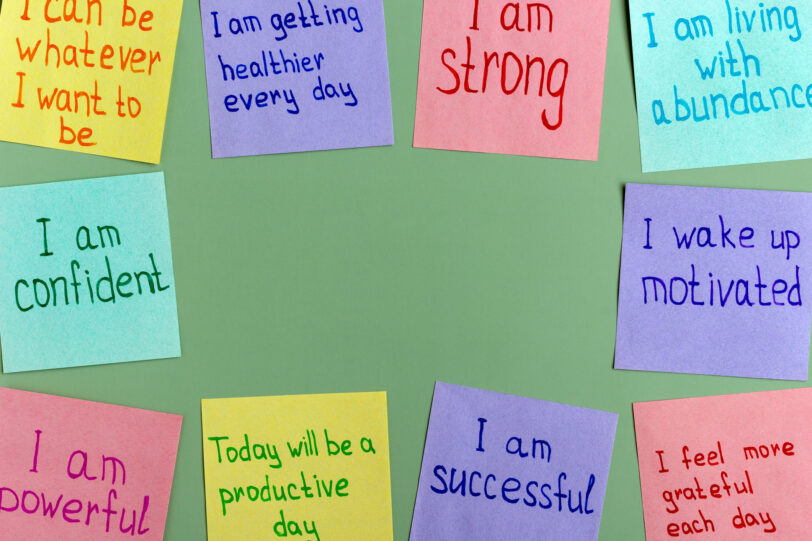
Writing affirmations by hand makes them more real. Keep a notebook or sticky notes where you’ll see them every day. Some people write the same affirmation several times to reinforce it.
5. Visualize The Outcome
As you say or write your affirmation, imagine what it would look and feel like if it were true. Visualization strengthens the message in your mind.
6. Combine With Deep Breathing
Take a deep breath before and after each affirmation. This calms your body and helps you focus.
7. Practice Regularly
Consistency matters more than perfection. Even just five minutes a day can make a difference over time.
8. Pair With Action
Affirmations work best when you back them up with real steps. If you affirm, “I am healthy,” try to eat well or go for a walk. Actions make your affirmations believable.
Different Ways To Use Affirmations
There’s no single right way to practice affirmations. Here are some popular methods to find what suits you best:
Speaking Affirmations
Say your affirmations out loud, with energy and belief. This is the classic method, often used by athletes and performers to boost confidence.
Writing Affirmations
Journaling your affirmations daily can help you process and remember them. Some people write new affirmations each day, while others repeat the same ones.
Listening To Recordings
Record yourself saying affirmations and listen to them during your commute, while exercising, or before sleep. Hearing your own voice can be powerful.
Using Affirmation Apps
There are many apps that remind you to practice affirmations or offer ready-made statements. This can be helpful if you have a busy schedule.
Group Affirmations
Some people share affirmations with friends, family, or support groups. Saying them together builds a sense of community and accountability.
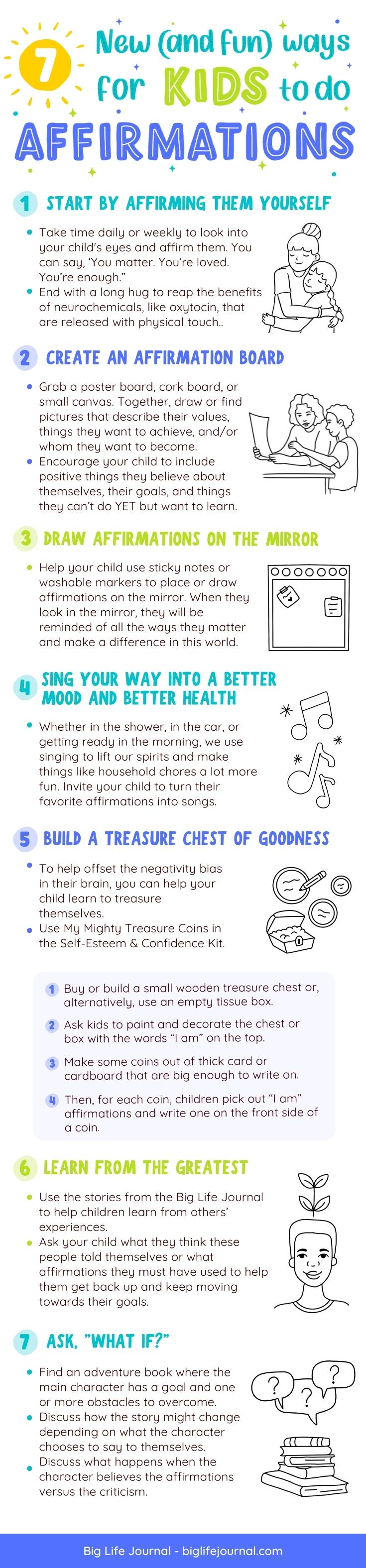
Visual Affirmations
Create vision boards or use images that match your affirmations. Pairing words with pictures can make the message stronger.
Credit: biglifejournal.com
Common Mistakes And How To Avoid Them
Many beginners struggle with affirmations because of a few common errors. Knowing these can save you time and frustration.
1. Choosing Unrealistic Statements
If you say something you completely don’t believe, your mind may push back. For example, saying “I am a millionaire” when you’re struggling with money can feel fake. Instead, try “I am learning to manage my money better. ”
2. Using Negative Words
Even if you want to avoid something, focus on the positive. “I am not afraid” is less effective than “I am brave. ”
3. Being Inconsistent
Sporadic practice weakens the effect. Set a schedule and stick to it as much as possible.
4. Ignoring Feelings
If you repeat affirmations without feeling or belief, they become empty words. Take a moment to connect emotionally.
5. Expecting Instant Results
Affirmations are a tool for change, not a quick fix. Give them time to work.
6. Skipping Actions
Words alone are not enough. Use affirmations to inspire real steps toward your goals.
Affirmations And The Subconscious Mind
One special thing about affirmations is how they influence your subconscious mind. This part of your mind controls many habits and beliefs, often without you realizing it.
By repeating affirmations, you can:
- Replace old, negative beliefs with new, helpful ones
- Train your mind to expect good outcomes
- Build habits that support your goals
For example, if you grew up believing “I’m not good enough,” repeating “I am worthy of success” helps rewrite that old message. Over time, your subconscious starts to accept the new belief.
Affirmations For Different Goals
Affirmations can be tailored to almost any area of life. Here are some examples to help you get started:
For Self-confidence
- I believe in myself and my abilities.
- I am proud of who I am becoming.
- I trust my decisions.
For Stress Relief
- I am calm and in control.
- I let go of what I cannot change.
- I choose peace over worry.
For Success And Goals
- I am focused and determined.
- I achieve what I set my mind to.
- I welcome new opportunities.
For Health
- I honor my body with healthy choices.
- I am strong and full of energy.
- I listen to my body’s needs.
For Relationships
- I give and receive love freely.
- I communicate with kindness and respect.
- I attract positive, caring people into my life.
For Gratitude
- I am grateful for all I have.
- I notice and appreciate small joys.
- I focus on what is good in my life.
Real-life Examples And Stories
Hearing how others use affirmations can make the practice feel more real and possible. Here are some examples:
Student Using Affirmations For Exams
Maria, a student who struggled with test anxiety, started saying, “I am prepared and calm during exams. ” She repeated this every morning and before each test. Over time, her nervousness dropped, and her grades improved.
Athlete Boosting Performance
A runner preparing for a big race used the affirmation, “I am fast, focused, and ready. ” Saying this daily helped him train harder and feel more confident at the starting line.
Overcoming Social Anxiety
Tom felt nervous in social situations. He practiced, “I am comfortable meeting new people. ” Along with small actions, like starting conversations, this helped him feel more relaxed and make new friends.
Credit: www.cheservices.com
Data: How People Use Affirmations
To understand how people practice affirmations, here’s a simple comparison:
| Method | Percentage of Users | Best For |
|---|---|---|
| Speaking Out Loud | 40% | Building confidence, motivation |
| Writing/Journaling | 30% | Reflection, memory |
| Listening to Recordings | 15% | Busy schedules, relaxation |
| Using Apps | 10% | Reminders, consistency |
| Group Affirmations | 5% | Support, community |
This shows there’s no single best way—choose what fits your lifestyle.
Affirmations Versus Other Self-help Tools
People often wonder how affirmations compare to other popular tools like visualization, meditation, or journaling. Each has its own strengths.
| Tool | Main Focus | Best For | Unique Benefit |
|---|---|---|---|
| Affirmations | Positive self-talk | Changing beliefs, boosting confidence | Quick, adaptable |
| Visualization | Imagining success | Goal setting, motivation | Creates strong mental images |
| Meditation | Mindfulness, calm | Reducing stress, focus | Deep relaxation |
| Journaling | Self-reflection | Processing emotions | Tracks progress over time |
Affirmations can be used alone or with these tools for best results.
How Long Does It Take To See Results?
Many people ask how quickly affirmations work. The answer depends on your mindset, the statements you choose, and how regularly you practice.
Most people notice small shifts in their thinking after a few weeks of daily practice. Bigger changes in habits or confidence can take several months. The key is to stay patient and consistent.
It’s helpful to track your progress. Write about how you feel now, and check back every few weeks. Notice any changes in your thoughts, mood, or behavior. Even small steps forward are signs your affirmations are working.
Two Insights Most Beginners Miss
Here are two things many new users of affirmations do not realize:
- Affirmations Are a Skill, Not a Quick Fix: Like exercise or learning a language, you get better with regular practice. At first, you may not feel much. But over time, your mind becomes more open to positive change.
- The Power of Small Steps: You do not need to believe your affirmation 100% on day one. Start with small, believable statements and grow from there. As you gain confidence, you can create bigger affirmations.
Tips To Make Affirmations Work Faster
If you want to see results more quickly, try these proven strategies:
- Combine affirmations with a daily habit, like brushing your teeth or commuting.
- Use reminders—set alarms or sticky notes to prompt practice.
- Involve your senses—say affirmations aloud, visualize, and even move your body.
- Share your affirmations with a friend for support and accountability.
- Change your affirmations as your needs and goals evolve.
Frequently Asked Questions
What Is The Best Time To Do Affirmations?
Morning Is A Popular Time For Affirmations Because It Sets A Positive Tone For The Day. However, The Best Time Is When You Can Focus And Make It A Habit. Some People Prefer Evening, Before Sleep, Or Right Before Important Events.
Do Affirmations Really Work For Everyone?
Affirmations Are Helpful For Most People, But They Are Not Magic. They Work Best When You Choose Realistic, Positive Statements And Combine Them With Real Actions. If You Have Deep Or Long-lasting Negative Beliefs, You May Also Benefit From Talking To A Counselor Or Therapist.
How Many Affirmations Should I Use At One Time?
It’s Best To Focus On 1-3 Affirmations At A Time. This Makes It Easier To Remember And Practice Them With Intention. Too Many Can Dilute Your Focus And Make The Habit Harder To Keep.
Can I Use Affirmations For Children?
Yes, Affirmations Are Great For Children. Use Simple Words And Keep Statements Short, Like “i Am Kind,” Or “i Can Do Hard Things.” Practicing Together Can Help Build Their Self-esteem And Resilience.
Where Can I Find More About Affirmations?
For Deeper Information, You Can Read Research And Guides From Trusted Sources Like positive Psychology. These Offer Detailed Explanations And Examples For All Ages.
Affirmations are a powerful, flexible tool for building self-belief and changing your mindset. With daily practice, patience, and the right approach, you can use affirmations to support your goals and improve your life in lasting ways. Start small, stay consistent, and notice the positive shifts in your thoughts and actions over time.
