

How Do You Do Affirmations: Simple Steps for Daily Success
How Do You Do Affirmations: A Complete Guide for Beginners and Beyond
Have you ever wished you could change the way you think or feel with just a few words? Many people struggle with negative thoughts, low confidence, and doubts about their future. But what if there was a simple way to train your mind for success and happiness? That’s where affirmations come in. These are positive statements you repeat to yourself, and with practice, they can help shape your beliefs, habits, and even your reality.
Whether you’re new to affirmations or have tried them before, this guide will show you exactly how to do affirmations correctly, avoid common mistakes, and get the real benefits. You’ll learn practical steps, see real examples, and discover science-backed tips that most people miss.
Let’s unlock the power of your words and help you create the mindset you want.
What Are Affirmations?
Affirmations are positive phrases or sentences you say to yourself, usually out loud or in your mind. The goal is to change negative thinking patterns, boost your self-esteem, and support your goals. For example, instead of thinking “I can’t do this,” you use an affirmation like “I am capable and strong.”
Affirmations work by influencing your subconscious mind. When repeated regularly, they help to overwrite old, unhelpful beliefs and replace them with new, empowering ones. People use them for many reasons: to improve confidence, heal from past hurts, attract success, or simply feel happier every day.
The Science Behind Affirmations
Some people wonder if affirmations are just wishful thinking. But research shows there’s more to it. Studies using brain scans have found that self-affirmation activates the reward centers in the brain. This can make you more open to change and help you manage stress.
For instance, one famous study found that people who practiced self-affirmations before a stressful event showed lower levels of stress and performed better. Another study showed that affirmations can improve problem-solving skills under pressure. While affirmations alone cannot solve all life problems, they can make it easier to take positive actions.
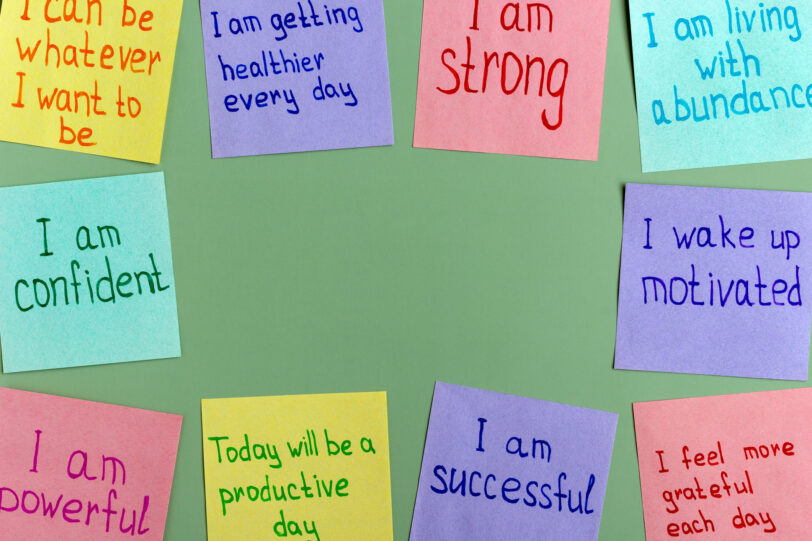
Credit: www.cheservices.com
Why Do Affirmations Work?
Affirmations work for a few main reasons:
- They help rewire your brain. The more you repeat a thought, the stronger the neural pathways become. Over time, your mind starts to accept these new beliefs as true.
- They break negative cycles. If you often think, “I’m not good enough,” this becomes a habit. Affirmations interrupt these thoughts with something better.
- They boost motivation. Positive self-talk can make you feel more confident and willing to try new things.
- They change your emotional state. Hearing yourself say something positive can lift your mood, even on a tough day.
A non-obvious insight is that affirmations are most powerful when they support real action. Saying “I am healthy” works best when paired with healthy choices. The words are a starting point—your actions complete the process.
How To Create Effective Affirmations
Not all affirmations are equal. Some are too vague or unrealistic, while others are clear and effective. Here’s how to make affirmations that work:
Use The Present Tense
Affirmations should be stated as if they are true right now. For example, say “I am successful” instead of “I will be successful. ” This helps your mind accept the new belief.
Make Them Positive
Focus on what you want, not what you want to avoid. Say “I am confident” rather than “I am not afraid. ”
Keep Them Short And Clear
Simple statements are easier to remember and repeat. “I choose happiness” is better than a long, complex sentence.
Be Specific
The more specific your affirmation, the more powerful it is. Instead of “I am doing well,” try “I am improving my skills every day. ”
Add Emotion
Include words that make you feel something. For example, “I am filled with energy and excitement” has more impact than “I have energy. ”
Believe In Your Affirmation
Choose affirmations that feel at least a little bit true to you. If your mind strongly rejects the statement, try a softer version like, “I am learning to be confident. ”
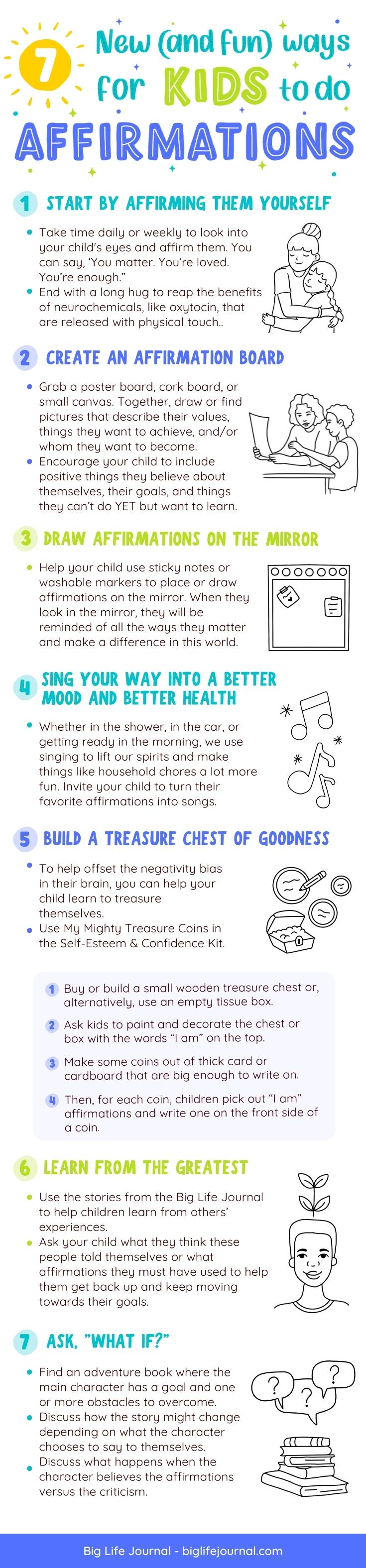
Credit: biglifejournal.com
Examples Of Powerful Affirmations
Here are some examples of affirmations for different situations:
- For confidence: “I am worthy of love and respect.”
- For stress: “I am calm and in control.”
- For motivation: “I take positive steps every day.”
- For health: “I care for my body with kindness.”
- For abundance: “Opportunities come to me easily.”
You can create your own based on your needs. Remember, the best affirmations are personal and meaningful to you.
Step-by-step: How To Do Affirmations
Knowing the right way to practice affirmations is just as important as the words you choose. Here’s a clear, step-by-step guide:
1. Choose Your Affirmations
Pick 1-3 statements that match your goals or the area you want to improve. Don’t overload yourself with too many at once.
2. Set Aside A Regular Time
The best times are usually in the morning after waking up and at night before sleeping. These moments are when your mind is most open to suggestion.
3. Find A Quiet Place
Sit or stand somewhere you won’t be disturbed. This helps you focus and connect with the words.
4. Say Your Affirmations Out Loud
Speak slowly and clearly. Use a strong, confident voice. If you can’t speak out loud (for example, in public), you can repeat them silently in your mind.
5. Repeat Each Affirmation Several Times
Most experts suggest 5-10 repetitions per affirmation. Focus on the meaning, not just the words.
6. Visualize As You Speak
Picture yourself living the affirmation. If you say, “I am confident,” imagine yourself standing tall, smiling, and feeling strong.
7. Feel The Emotion
Try to really feel the emotion behind the statement. This makes it more powerful and helps your brain accept it as true.
8. Practice Daily
Consistency is key. Even 2-3 minutes a day can make a big difference over time.
9. Adjust As Needed
If an affirmation doesn’t feel right, change it. Your needs may shift as you grow.
10. Pair Affirmations With Action
Affirmations are most effective when combined with real steps toward your goals. If you say, “I am healthy,” also make healthy choices.
How Long Does It Take To See Results?
Most people want to know how fast affirmations will work. The answer depends on several factors: how often you practice, your belief in the statements, and whether you back them up with action.
Some people notice changes in a few days, like feeling more positive or motivated. For deeper changes, it may take several weeks. One study suggests that 21 to 66 days of daily repetition is needed to form a new habit or belief.
It’s important not to judge your progress too soon. Trust the process and keep going, even if the results are slow at first.
Common Mistakes To Avoid
Many beginners make mistakes that reduce the power of affirmations. Here are some to watch out for:
- Being too negative: Avoid statements like “I am not afraid” or “I don’t fail.” Focus on the positive outcome instead.
- Using future tense: “I will be happy” keeps happiness in the future. Use “I am happy” instead.
- Choosing unrealistic affirmations: If the affirmation feels impossible, your mind may reject it. Start with something believable.
- Being inconsistent: Skipping days or forgetting to practice reduces results.
- Expecting instant miracles: Affirmations are not magic. They work best as part of a bigger plan for growth.
A non-obvious insight: Sometimes people use affirmations to avoid real problems. If you’re struggling with deep pain or trauma, consider combining affirmations with professional help.
Advanced Techniques For Affirmations
Once you’re comfortable with basic affirmations, you can try some advanced techniques for even better results.
Mirror Work
Stand in front of a mirror and say your affirmations while looking into your own eyes. This can feel strange at first, but it strengthens the connection between your words and your self-image.
Writing Affirmations
Write your affirmations by hand in a journal each day. The physical act of writing helps reinforce the message in your mind.
Recording And Playback
Record yourself saying your affirmations and listen to the recording several times a day. This can be helpful if you’re busy or want to hear them in your own voice.
Affirmation Cards
Create small cards with your favorite affirmations and place them where you’ll see them often: your desk, bathroom mirror, or wallet.
Pairing With Meditation
After repeating your affirmations, sit quietly for a few minutes and focus on your breath. Let the positive feelings from your affirmations sink in.
How Affirmations Compare To Other Self-help Methods
Affirmations are just one tool for self-improvement. How do they compare to other popular methods like visualization, journaling, and goal setting?
Here is a simple comparison:
| Method | Main Focus | Typical Practice | Best For |
|---|---|---|---|
| Affirmations | Changing beliefs | Repeating positive statements | Self-confidence, mindset |
| Visualization | Imagining success | Seeing goals in your mind | Motivation, sports, performance |
| Journaling | Self-reflection | Writing thoughts and feelings | Emotional processing, clarity |
| Goal Setting | Planning action | Setting and tracking goals | Productivity, achievement |
You can combine these methods for the best results. For example, use affirmations to boost confidence, then visualize your goal and write about your progress in a journal.
Real-life Examples: Affirmations In Action
Many successful people use affirmations daily. For example, famous athletes like Muhammad Ali often repeated, “I am the greatest,” before matches. Oprah Winfrey has shared that she used affirmations to overcome self-doubt and build her media empire.
A practical example: Sarah, a new manager, struggled with public speaking. She started using the affirmation, “I speak clearly and confidently in meetings.” After a month of daily practice and some small speaking opportunities, she noticed she felt less nervous and more sure of herself.
Another example: John wanted to lose weight but kept thinking, “I always fail at diets.” He changed his affirmation to, “I make healthy choices every day.” Combined with small changes in his routine, he started seeing progress and felt more motivated.
Affirmations For Different Life Areas
Affirmations are not just for confidence. You can use them in almost any area of life:
For Relationships
- “I attract loving and supportive people.”
- “I communicate my needs with honesty and respect.”
For Career
- “I am skilled and valued at my job.”
- “Opportunities for growth are always available to me.”
For Health
- “I listen to my body and care for its needs.”
- “I am grateful for my strong, healthy body.”
For Money
- “I am open to abundance and prosperity.”
- “I use money wisely and attract more every day.”
For Personal Growth
- “I learn and grow with each experience.”
- “I am becoming the best version of myself.”
You can tailor these to your own situation. The key is to use words that inspire you and match your goals.
How To Measure Your Progress
It’s easy to wonder if your affirmations are working. Here’s how to track your progress:
Notice Changes In Your Thoughts
Are you less self-critical? Do you catch negative thoughts and replace them with positive ones? Small shifts are a good sign.
Watch For Changes In Behavior
Are you taking more positive actions, even small ones? For example, speaking up in meetings, applying for jobs, or making healthier choices.
Keep A Journal
Write down your daily affirmations and any changes you notice. Over time, you’ll see patterns and growth.
Ask For Feedback
Sometimes, other people notice changes before you do. Ask a trusted friend or mentor if they see new confidence or positivity in you.
Be Patient
Progress can be slow and sometimes hard to see. Trust that small changes add up over time.
Are Affirmations Right For Everyone?
Most people can benefit from affirmations, but they are not a cure-all. If you struggle with deep mental health issues, affirmations alone may not be enough. They work best as part of a bigger plan that can include therapy, support from others, and real-life changes.
A surprising insight: If affirmations feel uncomfortable or fake at first, that’s normal. It often means you’re challenging a long-held belief. With practice, the discomfort usually fades.
Sample Daily Affirmation Routine
If you’re ready to start, here’s a simple daily routine:
- Morning: After waking, stand in front of a mirror and say your chosen affirmations 5-10 times.
- Midday: Take a short break, close your eyes, and repeat your affirmations silently.
- Evening: Before sleep, write your affirmations in a journal and visualize them coming true.
You can adjust this routine to fit your schedule and needs.
Comparing Popular Affirmation Practices
Let’s look at how different affirmation practices compare in terms of effort and effectiveness.
| Practice | Effort Level | Potential Impact | Best For |
|---|---|---|---|
| Speaking Out Loud | Medium | High | Building confidence |
| Writing by Hand | High | Very High | Deep belief change |
| Listening to Recordings | Low | Medium | Busy schedules |
| Mirror Work | Medium | High | Self-image, self-love |
Try different methods and see what feels best for you. Some people combine two or three for stronger results.
Affirmations And The Subconscious Mind
Much of our daily behavior is controlled by the subconscious mind. These are beliefs and habits formed over many years, often outside of our awareness. Affirmations work because they target this deep part of the mind.
When you repeat an affirmation, you send a new message to your subconscious. At first, you may feel resistance. But with repetition, your mind starts to accept the new idea. This is why affirmations can be so powerful for changing habits, attitudes, and even emotions.
A key tip: If you want to reach your subconscious more effectively, use affirmations when you are relaxed. This could be right before sleep or after meditation.
How To Personalize Your Affirmations
Personal affirmations are much more powerful than generic ones. Here’s how to make them unique to you:
- Identify your main challenge or goal. What do you want to change or achieve?
- Write a positive statement about the desired outcome.
- Use your own language. The words should feel natural to you.
- Test how it feels. If you feel inspired or hopeful, you’re on the right track.
- Adjust as you grow. Your affirmations can change over time as your needs change.
For example, if you want to overcome fear of public speaking, you might use, “I enjoy sharing my ideas with others and feel calm while speaking. ”

Credit: sproutingzen.com
The Role Of Repetition And Consistency
One of the most common beginner mistakes is giving up too soon. The real secret to success with affirmations is consistency. Just like exercise, the benefits build up over time.
Psychologists call this neuroplasticity—the brain’s ability to change and adapt. Each time you repeat your affirmation, you help your brain build a new pathway. The more you practice, the stronger it becomes.
Set a reminder or use habit-tracking apps to help you stay on track. Even on busy days, take a minute to repeat your affirmation. The long-term results are worth it.
When To Change Your Affirmations
Sometimes, you outgrow your affirmation, or it stops feeling right. Here’s when and how to update them:
- When you’ve achieved the goal. Celebrate and pick a new one.
- If it feels stale or boring. Try new words or a different focus.
- If your life situation changes. Adjust your affirmation to match your new needs.
- If you feel stuck. Choose a softer or more believable statement.
Flexibility is key. Your affirmations should grow with you.
The Power Of Group Affirmations
Did you know that saying affirmations in a group can boost their effect? In some cultures and support groups, people repeat positive statements together. This creates a sense of community and shared energy.
For example, in some recovery groups, members recite affirmations like “I am strong, and I am not alone. ” The group support makes the words even more powerful.
If you have friends or family who are interested, try practicing affirmations together. You can also find online groups or classes.
How To Use Technology For Affirmations
Today, there are many apps and tools to help you remember and practice affirmations. Here are some ideas:
- Affirmation apps: These send daily reminders and offer libraries of affirmations.
- Voice recorders: Record your own voice and listen during your commute or workout.
- Digital sticky notes: Place affirmations on your phone or computer screen.
These tools make it easier to build a daily habit, especially if you have a busy lifestyle.
Are Affirmations Supported By Science?
While affirmations are popular in self-help, they also have support in psychology. Studies have found that self-affirmation reduces stress and improves performance in challenging situations. For example, students who wrote affirmations before a test performed better than those who did not.
For more information on the science behind affirmations, you can read this Wikipedia entry on self-affirmation.
Frequently Asked Questions
What If My Affirmations Feel Fake Or Uncomfortable?
This is very common, especially at first. It usually means you are challenging an old belief. Keep practicing, and try softer versions like “I am learning to…” or “I am open to…” until the statement feels more natural.
How Many Affirmations Should I Use At Once?
Start with 1-3 affirmations. Too many can be overwhelming and make it hard to focus. Once you’re comfortable, you can add more or rotate them as needed.
Can Affirmations Replace Therapy Or Professional Help?
No, affirmations are a helpful tool but not a replacement for therapy, medication, or professional support. If you have deep or ongoing struggles, it’s important to seek help from qualified experts.
Do I Have To Say Affirmations Out Loud For Them To Work?
Saying them out loud can make them more powerful, but it’s not required. You can repeat them silently, write them down, or listen to recordings. The key is to focus and feel the meaning behind the words.
How Do I Know If My Affirmations Are Working?
Look for small changes in your thoughts, feelings, and behaviors. You might feel more positive, take new actions, or notice less negative self-talk. Keep a journal to track your progress over time.
Affirmations are a simple yet powerful way to shape your mindset and move toward your goals. By practicing them daily, using the right techniques, and staying patient, you can create real change in your life. Remember, your words have power.
Use them wisely, and watch your life begin to shift.
