

Good Morning Affirmations for Women: Empower Your Day
Good morning affirmations are simple but powerful statements you say to yourself at the start of your day. For many women, these affirmations are more than words—they are a way to build confidence, focus, and self-love. You might be surprised how a few positive sentences each morning can shape your mood and mindset.
In this article, you will discover how good morning affirmations work, why they matter for women, practical examples, and tips to make them part of your daily routine. Whether you are new to affirmations or looking to deepen your practice, you will find guidance, real-life insights, and answers to common questions.
Let’s explore how these small rituals can make a big impact.
Why Morning Affirmations Matter For Women
Starting your day with intention is important, especially for women who face unique challenges and expectations. Morning affirmations help build inner strength and resilience. They are not just motivational quotes—they are tools for mental health and personal growth.
Emotional Benefits
Women often juggle multiple roles: professional, caretaker, friend, partner, and more. This can lead to stress, self-doubt, or feeling overwhelmed. Saying positive affirmations in the morning helps:
- Reduce anxiety and negative thinking
- Increase confidence and self-worth
- Boost motivation and energy
- Develop a sense of calm and control
Research shows that daily affirmations can lower stress and improve emotional well-being. According to a study from the National Institutes of Health, self-affirmation activities reduce cortisol levels (a stress hormone) and help people manage challenges better.
Building Self-identity
Affirmations are also a way to shape your self-identity. Many women struggle with imposter syndrome or compare themselves to others. Morning affirmations help you focus on your strengths, values, and goals. This is especially important if you are starting a new job, leading a team, or balancing family and work.
Creating Positive Habits
When you repeat affirmations daily, you train your mind to look for the positive. Over time, this builds lasting habits. You start to notice opportunities instead of obstacles. You respond to setbacks with confidence. This shift is not instant—it comes from consistent practice.
How Morning Affirmations Work
Affirmations work by changing your thoughts and beliefs. They are based on the idea that your mind listens to what you say. If you tell yourself “I am strong,” your brain starts to believe it. This is called self-talk.
The Science Behind Affirmations
Positive self-talk activates parts of the brain linked to reward and motivation. It can help you take action, make decisions, and stay focused. Neuroscience research shows that repeating affirmations rewires neural pathways, making positive thoughts easier to access.
A practical example: If you wake up feeling anxious about a big meeting, saying “I am prepared and confident” helps reduce fear. Your body relaxes, your mind clears, and you perform better.
Common Mistakes
Many beginners struggle with affirmations because they:
- Use vague or unrealistic statements
- Forget to repeat them daily
- Don’t believe the words they are saying
The key is to choose affirmations that feel true and meaningful. If you don’t believe the statement, your mind will resist it. Start with small, believable affirmations and build from there.
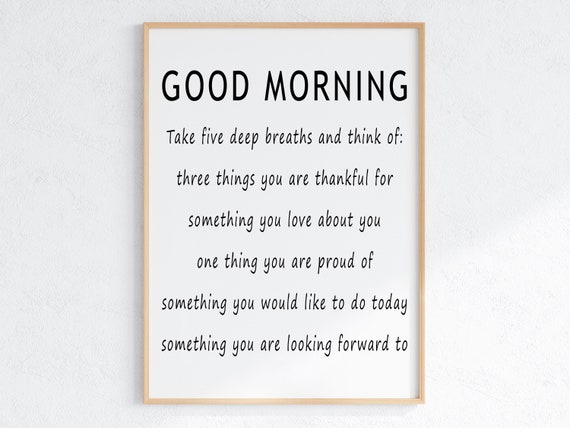
Credit: www.etsy.com
Crafting Effective Morning Affirmations
Making your own affirmations is simple, but there are some guidelines to follow. An affirmation should be:
- Positive: Focus on what you want, not what you fear.
- Present tense: Say “I am” instead of “I will be.”
- Personal: Use “I” or “my” to make it about you.
- Specific: Avoid general phrases like “I am happy.” Try “I am grateful for my health.”
Examples Of Good Morning Affirmations For Women
Here are some effective morning affirmations you can try:
- I am worthy of love and respect.
- I am strong and capable of handling today’s challenges.
- My body is healthy, and I honor it every day.
- I attract positive energy and kind people into my life.
- I am confident in my abilities.
- I trust myself to make good decisions.
- I am grateful for this new day and its opportunities.
- I choose happiness and peace today.
- I deserve success and abundance.
- I forgive myself for past mistakes and focus on the present.
You can personalize these affirmations based on your needs. For example, if you are struggling with self-esteem, try “I am proud of who I am becoming. ” If you need motivation, use “I am excited to achieve my goals. ”
Comparison Table: Generic Vs. Personalized Affirmations
To help you understand the difference, see the table below:
| Type | Example | Impact |
|---|---|---|
| Generic | I am happy | May feel empty or forced |
| Personalized | I am grateful for my supportive friends | Feels genuine, increases positivity |
Personalized affirmations create stronger emotional responses and are more likely to stick.
Integrating Affirmations Into Your Morning Routine
A good morning routine doesn’t have to be complicated. The goal is to make affirmations a regular habit, not just a one-time thing. Here are practical ways to add affirmations to your day:
1. Say Affirmations Out Loud
Speaking affirmations aloud makes them more powerful. Your brain pays more attention to spoken words. Try standing in front of a mirror and saying your chosen affirmation with confidence.
2. Write Them Down
Writing affirmations in a journal helps reinforce their meaning. You can also write them on sticky notes and place them where you will see them—on your bathroom mirror, refrigerator, or computer.
3. Use Digital Reminders
Set reminders on your phone with your affirmations. This is helpful if you are busy or forget to practice.
4. Pair With Other Habits
Combine affirmations with other morning activities, like drinking water, stretching, or meditating. This links the new habit to an existing routine, making it easier to remember.
Example: Morning Routine With Affirmations
Here’s an example of a simple routine:
- Wake up and stretch for 2 minutes
- Drink a glass of water
- Stand in front of the mirror and say three affirmations
- Write one affirmation in your journal
- Take three deep breaths before starting your day
This routine takes less than 10 minutes and can make a noticeable difference in your mindset.
Advanced Tips For Women Using Morning Affirmations
Once you are comfortable with basic affirmations, you can make your practice stronger. Here are some advanced tips:
1. Align Affirmations With Your Goals
Tailor affirmations to match your current goals. If you want to improve your career, use “I am capable of achieving professional success. ” If your goal is better health, say “I make healthy choices every day. ”
2. Visualize The Outcome
Combine affirmations with visualization. Imagine yourself achieving what you are affirming. If you say “I am confident,” picture yourself speaking clearly in a meeting or social event.
3. Use Affirmations For Specific Challenges
Affirmations can help with specific struggles, such as anxiety, self-doubt, or fear. For example, before a difficult conversation, use “I am calm and respectful in communication. ”
4. Track Your Progress
Keep a record of your affirmations and notice changes in your mood, confidence, and actions. This helps you see which affirmations work best for you.
Data Table: Common Affirmation Goals For Women
Different women use affirmations for different reasons. Here’s a comparison:
| Goal | Sample Affirmation | Benefits |
|---|---|---|
| Self-confidence | I believe in myself | Reduces self-doubt, builds assurance |
| Career growth | I am successful at work | Motivates professional action |
| Stress reduction | I am calm and peaceful | Decreases anxiety, improves focus |
| Health | I take care of my body | Encourages healthy habits |
Real-life Examples And Success Stories
Hearing how other women use affirmations can inspire your own practice. Here are real-life examples:
Sarah, Entrepreneur
Sarah starts her day with “I am capable of growing my business. ” She writes this in her journal every morning. Over time, she noticed higher confidence and better decision-making. She says affirmations helped her handle setbacks with resilience.
Mia, New Mom
Mia uses “I am patient and loving” as her morning affirmation. She repeats it while feeding her baby. This helps her stay calm during stressful moments and feel more connected to her child.
Priya, Student
Priya was nervous about exams and social situations. She started saying “I am prepared and confident. ” Within a few weeks, she felt less anxious and performed better in class.
These stories show that affirmations are not just theory—they make a real difference in daily life.
Common Challenges And Solutions
Affirmations are simple, but you may face obstacles. Here are common challenges and how to solve them:
Challenge 1: Feeling Silly Or Awkward
Many women feel uncomfortable saying affirmations, especially out loud. This is normal. Try starting with written affirmations or whispering them until you feel more confident.
Challenge 2: Forgetting To Practice
Busy mornings can make you forget to say affirmations. Set reminders or pair affirmations with another habit, like brushing your teeth.
Challenge 3: Not Believing The Words
If you don’t believe your affirmation, it won’t work. Start with statements you can accept, like “I am learning to love myself. ” Gradually increase the challenge as your confidence grows.
Challenge 4: Lack Of Results
Results may take time. Track your mood and actions for a month to see changes. Adjust your affirmations if needed.
Popular Morning Affirmations For Women
There are many affirmations women use around the world. Here are some of the most popular:
- I am grateful for a new day.
- I am enough just as I am.
- I welcome happiness into my life.
- I am brave and courageous.
- I attract abundance and success.
- I am surrounded by love and support.
- I am in control of my thoughts and emotions.
- I deserve peace and joy.
- I am resilient and resourceful.
- I trust the journey of my life.
You can use these as a starting point, or mix and match to fit your needs.
Comparing Affirmation Techniques
There are different ways to practice affirmations. Each technique has its own benefits. Here is a comparison:
| Technique | Description | Best For |
|---|---|---|
| Mirror work | Say affirmations in front of a mirror | Building self-esteem |
| Writing | Write affirmations in a journal | Reflection and clarity |
| Audio recording | Record and play affirmations | Auditory learners |
| Visualization | Picture yourself achieving the affirmation | Goal setting and motivation |
Choose the method that fits your personality and lifestyle.
Affirmations For Different Life Stages
Women’s needs change at different stages of life. Affirmations can help with transitions and challenges.
For Young Women
Young women often face peer pressure, academic stress, and self-doubt. Affirmations like “I am proud of my achievements” or “I am unique and valuable” build confidence.
For Working Women
Career demands can cause stress and burnout. Try “I am successful in my profession” or “I balance work and rest with ease. ”
For Mothers
Motherhood brings joy and challenges. “I am a loving and patient mother” or “I trust my instincts” are useful affirmations.
For Older Women
Aging can affect self-image and health. Affirmations such as “I embrace my wisdom” or “I am grateful for my life experiences” support positive aging.

Credit: thechiclife.com
Combining Affirmations With Other Practices
Affirmations work well with other wellness habits. Here are some ways to combine them:
Meditation
Start your meditation with a positive affirmation. This calms your mind and sets a positive intention.
Yoga
Use affirmations during yoga poses. For example, while holding a pose, repeat “I am strong and balanced. ”
Gratitude Journaling
Write one affirmation and one thing you are grateful for each morning. This doubles the positive effect.
Exercise
Say affirmations while running or walking. Physical activity makes your brain more receptive to positive words.
How To Measure Your Progress
It’s important to know if your affirmations are working. Here’s how to measure progress:
- Keep a mood journal. Rate your mood before and after affirmations.
- Notice changes in behavior. Are you more confident, calm, or motivated?
- Ask for feedback from friends or family.
- Track your goals. Are you reaching milestones faster?
Non-obvious Insights
- Sometimes, the most effective affirmation is not the one you say, but the one you feel. Pay attention to which statements create emotion.
- Changing your affirmation every few weeks keeps your practice fresh and prevents boredom.

Credit: www.audible.com
The Role Of Affirmations In Mental Health
Affirmations are not a cure for serious mental health issues, but they can support well-being. Many therapists recommend affirmations as part of cognitive-behavioral therapy. They help challenge negative beliefs and create new patterns.
If you struggle with depression, anxiety, or trauma, affirmations can be one tool among many. Professional support may be needed for deeper challenges. For more information, you can visit the Psychology Today website.
Frequently Asked Questions
What Are Good Morning Affirmations For Women?
Good morning affirmations are positive statements women say to themselves at the start of the day. Examples include I am worthy of love, I am strong, and I welcome happiness. They help build confidence, motivation, and self-love.
How Do I Choose The Right Affirmation?
Choose affirmations that feel true, specific, and personal. Think about your current goals or challenges. If you want more confidence, try I believe in myself. If you seek calm, use I am peaceful and relaxed.
How Long Does It Take For Affirmations To Work?
Results vary by person. Most women notice changes within a few weeks of daily practice. Consistency is key. Track your mood and actions to see progress.
Can I Use More Than One Affirmation Each Morning?
Yes, you can use several affirmations. Some women say three to five statements each morning. Choose the ones that fit your needs and rotate them as needed.
Are Morning Affirmations Backed By Science?
Yes, research supports the benefits of positive self-talk and affirmations. Studies show they can reduce stress, improve mood, and build self-confidence when practiced regularly.
Morning affirmations are a powerful tool for women. They help you start your day with purpose, build resilience, and create lasting positive habits. Whether you use them for confidence, stress relief, or personal growth, affirmations work best when they are consistent, personal, and meaningful.
Take time each morning to speak or write your affirmations. Notice how your mood, actions, and self-esteem change over time. With patience and practice, you will discover the lasting benefits of this simple ritual.
