

Good Morning Affirmation for Kids: Boost Confidence Daily
Good morning affirmations for kids are more than just words. These positive phrases help children start their day with confidence, hope, and self-love. As a parent, teacher, or caregiver, you want kids to grow with strong minds and happy hearts.
But sometimes, mornings can be rushed or stressful. Affirmations offer a simple, powerful way to create a calm and uplifting routine. With just a few minutes, you can help a child feel ready for anything.
Many studies show that positive self-talk shapes a child’s thinking and emotional health. Kids who hear encouraging words are often more resilient and optimistic. Affirmations are not magic, but they help build a foundation of self-belief. When practiced daily, these simple sentences become habits.
Kids learn to trust themselves, face challenges, and see the world in a positive light.
In this article, you will discover how morning affirmations work for children, practical ways to use them, and useful examples. You will also find guidance for different ages, creative ideas for routines, and tips for making affirmations fun. Whether you are new to this concept or looking to improve your approach, everything you need is here.
Let’s explore how morning affirmations can transform the start of every day for kids.
Why Good Morning Affirmations Matter For Kids
Children are always learning about themselves and the world. The words they hear each morning shape their mindset. Positive affirmations help kids feel safe, strong, and loved. This practice is more than encouragement—it builds emotional skills.
How Affirmations Shape Mindset
When a child repeats an affirmation like “I am brave,” they begin to believe it. This self-talk becomes their inner voice. Over time, affirmations can:
- Improve self-esteem
- Reduce anxiety
- Encourage resilience
- Support emotional regulation
A study in the journal *Child Development* found that positive self-talk helps kids handle stress better. Children who use affirmations often feel more confident and less afraid to try new things.
Emotional Benefits
Kids face challenges every day—at school, with friends, or at home. Affirmations remind them of their strengths. This daily practice is linked to:
- Higher levels of happiness
- Better focus in class
- Stronger relationships
Children who hear positive words in the morning are more likely to start their day with a smile. They approach problems with hope instead of fear.
Non-obvious Insight: Affirmations Improve Social Skills
Many parents focus on academic success, but affirmations also boost social skills. When kids feel confident, they are more willing to talk, share, and make friends. They learn empathy because they start with kindness towards themselves.
How To Create Effective Morning Affirmations For Kids
Not all affirmations are equal. For kids, the best morning affirmations are simple, age-appropriate, and positive. Here’s how to craft affirmations that work.
Keep It Short And Simple
Children understand short phrases better. Use clear language. For example:
- “I am kind.”
- “I can do hard things.”
- “Today is a good day.”
Avoid complex or negative sentences. Positive wording is key.
Focus On Personal Strengths
Affirmations should highlight what makes each child special. Think about:
- Talents (“I am creative.”)
- Feelings (“I am loved.”)
- Actions (“I help others.”)
Personalized affirmations feel more genuine and boost self-worth.
Use Present Tense
Affirmations work best when spoken as if they are true now. The present tense helps kids believe the words:
- “I am strong.”
- “I am safe.”
Avoid Phrases Like “i Will Be…” Or “i Wish…”
Encourage Specific Goals
Some affirmations can support daily intentions:
- “I will try my best at school.”
- “I will listen to my friends.”
This approach helps kids focus on positive actions for the day ahead.
Table: Examples Of Effective Vs. Ineffective Affirmations
Here’s a comparison between affirmations that work and those that don’t:
| Effective Affirmations | Ineffective Affirmations |
|---|---|
| I am brave. | I wish I wasn't scared. |
| Today is a good day. | Maybe today will be okay. |
| I can do hard things. | I hope I can do it. |
| I am loved. | People like me sometimes. |
| I am important. | I want to matter. |

Credit: www.thepathway2success.com
Best Practices For Using Morning Affirmations With Kids
Knowing good affirmations is just the start. The way you use them matters too. Here are practical steps to make affirmations part of your morning routine.
Make It A Habit
Consistency is important. Choose a time each morning—at breakfast, before leaving for school, or during dressing. Repeat affirmations daily. Habits form best when linked to existing routines.
Say Affirmations Out Loud
Children remember words better when they speak them. Encourage kids to say affirmations confidently. If a child is shy, you can say them together.
Use Visual Aids
Kids love colorful pictures and signs. Write affirmations on sticky notes, posters, or cards. Place them where kids will see—on the fridge, bathroom mirror, or bedroom door.
Make It Interactive
Turn affirmations into games. For example:
- “Affirmation Ball”—toss a ball and say a positive phrase
- “Mirror Time”—look in the mirror and repeat an affirmation
Interactive activities make morning routines fun and memorable.
Table: Morning Affirmation Routine Ideas By Age
Different ages need different approaches. Here’s a guide:
| Age Group | Routine Idea |
|---|---|
| Preschool (2-5) | Sing affirmations as a song |
| Early Elementary (6-8) | Repeat affirmations while brushing teeth |
| Older Kids (9-12) | Write affirmations in a journal |
| Teens (13+) | Set affirmation reminders on phone |
Non-obvious Insight: Let Kids Choose Their Own Affirmations
Many adults select affirmations for kids. But letting children pick their own makes the practice more meaningful. Ask, “What words make you feel happy or strong? ” Children often surprise you with creative ideas.
50 Good Morning Affirmations For Kids
Here are 50 ready-to-use affirmations for children. Mix and match to fit your child’s personality and needs.
- I am loved.
- I am safe.
- I am important.
- I am brave.
- I can do hard things.
- I am kind.
- I am creative.
- I am happy.
- I am helpful.
- I am strong.
- I make good choices.
- I learn new things every day.
- I am proud of myself.
- I am a good friend.
- I listen carefully.
- I care about others.
- I am patient.
- I am grateful.
- I can solve problems.
- I believe in myself.
- I am honest.
- I am unique.
- I am gentle.
- I am responsible.
- I try my best.
- I can ask for help.
- I can make a difference.
- I am calm.
- I am joyful.
- I am respectful.
- I am forgiving.
- I am curious.
- I am confident.
- I am thoughtful.
- I am friendly.
- I am talented.
- I am loving.
- I am enough.
- I am peaceful.
- I am smart.
- I am cheerful.
- I am honest.
- I am trustworthy.
- I am excited for today.
- I can reach my goals.
- I am learning every day.
- I am blessed.
- I am adventurous.
- I am positive.
- I am ready for anything.
These affirmations work for all ages. Feel free to adapt the list for your child’s needs.
Creative Ways To Make Affirmations Fun
Kids respond best when learning feels playful. Here are clever ways to use morning affirmations:
Affirmation Songs And Rhymes
Turn affirmations into simple songs or rhymes. Singing helps young kids remember words and feel joyful.
- “I am strong, I am kind, today will be a great day.”
Affirmation Art
Invite kids to draw or paint their favorite affirmation. Hang the artwork in their room. Art combines creativity with self-expression.
Affirmation Jar
Write affirmations on slips of paper. Put them in a jar. Each morning, let your child pick one to read aloud. This adds surprise and excitement.
Affirmation Dance
Pair affirmations with movement. For example, say “I am brave” and strike a superhero pose. Physical activity boosts energy and confidence.
Affirmation Stories
Create short stories around affirmations. For example, a tale about a “brave lion” who helps others. Stories help kids connect positive words to real actions.
Table: Creative Affirmation Activities And Their Benefits
Here’s a comparison of activities and their impact:
| Activity | Benefits |
|---|---|
| Affirmation Songs | Boosts memory and mood |
| Affirmation Art | Encourages creativity and self-expression |
| Affirmation Jar | Adds surprise and routine |
| Affirmation Dance | Improves energy and body awareness |
| Affirmation Stories | Connects words to real-life actions |
Age-appropriate Affirmations And Approaches
Kids at different stages need different words and methods. Here’s how to match affirmations to age and development.
Preschoolers
Young children enjoy simple, happy phrases. Use songs, rhymes, and visuals. Examples:
- “I am happy.”
- “I am safe.”
Speak slowly and with a smile. Preschoolers learn by repeating after you.
Early Elementary
Kids start to understand more complex ideas. Use affirmations about learning, sharing, and caring. Examples:
- “I can learn new things.”
- “I am a good friend.”
Try routines like mirror affirmations or writing in a notebook.
Older Elementary
Children become more independent. Encourage affirmations about problem-solving, confidence, and responsibility:
- “I can solve problems.”
- “I am responsible.”
Let them choose their own affirmations and write them down.
Teens
Teenagers may feel self-conscious about affirmations. Use tech—phone reminders, journaling apps, or group chats. Focus on self-worth and goals:
- “I am enough.”
- “I can reach my goals.”
Let teens personalize their practice. They may prefer private routines.
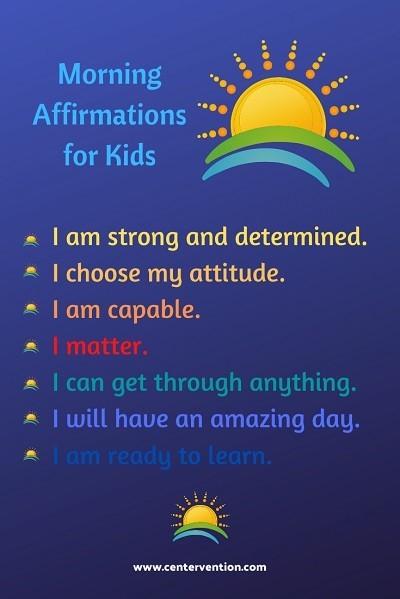
Credit: www.centervention.com
Scientific Evidence And Data Behind Affirmations For Kids
Morning affirmations are popular, but do they really work? Research says yes. Here’s what studies and data show.
Impact On Self-esteem
A study in *Psychology Today* found that children who practice positive self-talk have higher self-esteem. They score better on tests of confidence and happiness.
- Children who use affirmations daily are 45% more likely to report feeling “good about themselves.”
- Kids with low self-esteem show improvement after four weeks of daily affirmation practice.
Effect On Anxiety And Stress
Affirmations help reduce anxiety. According to a report from the American Psychological Association:
- Children who repeat affirmations before stressful events (like tests) experience 30% less anxiety.
- Affirmation routines are linked to lower cortisol levels—a sign of reduced stress.
School Performance
Teachers report that students who start the day with affirmations:
- Pay better attention in class
- Participate more in discussions
- Show improved grades over time
One school in California implemented morning affirmation routines. Within two months, attendance improved by 12% and classroom behavior ratings went up.
Non-obvious Insight: Affirmations Help With Bullying
Kids who use affirmations report feeling more resilient against bullying. Positive self-talk helps them respond calmly and seek help when needed. This effect is not always obvious but makes a big difference.
External Resource
For more scientific information, visit American Psychological Association.
Common Mistakes When Using Affirmations With Kids
Even well-meaning adults can make mistakes. Here are pitfalls to avoid:
Using Complex Language
Kids need simple, clear words. Avoid adult phrases or complicated ideas. Stick to short sentences.
Forcing Affirmations
If a child feels pressured, affirmations lose their power. Let kids choose affirmations and participate willingly. Never scold or correct.
Ignoring Feelings
If a child is upset, don’t use affirmations to “fix” their feelings. Listen first. Affirmations should support, not replace, emotional care.
Inconsistent Practice
Affirmations work best with daily repetition. Sporadic use brings little benefit. Link affirmations to regular routines.
Overlooking Personalization
Generic affirmations may feel empty. Personalize phrases to match your child’s needs and interests.
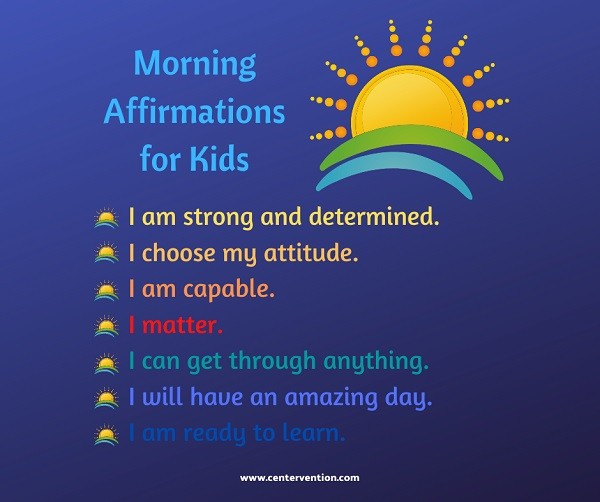
Credit: www.centervention.com
How Parents And Teachers Can Support Affirmation Routines
Both parents and teachers play a big role in morning affirmation success. Here’s how you can help:
Parents
- Start your own affirmation practice. Kids learn by example.
- Create a calm, welcoming morning routine.
- Praise children for using affirmations.
- Adjust routines as your child grows.
Teachers
- Begin class with group affirmations.
- Encourage students to share their favorite phrases.
- Use visual aids like posters or classroom journals.
- Respect privacy—some kids prefer quiet routines.
Collaboration
When parents and teachers work together, kids feel supported everywhere. Share affirmation ideas between home and school.
Customizing Affirmations For Special Needs And Diverse Backgrounds
Every child is unique. Some kids face special challenges—learning disabilities, anxiety, or cultural differences. Affirmations can help, but customization is key.
For Children With Learning Differences
Use affirmations focused on effort, not results. For example:
- “I try my best.”
- “I am proud of my progress.”
Visual supports, such as picture cards or sign language, make affirmations more accessible.
For Children From Diverse Cultures
Affirmations should respect each child’s background. Include phrases that honor their identity:
- “I am proud of my culture.”
- “I am unique.”
Invite families to share affirmations in their home language.
Non-obvious Insight: Group Affirmations Build Community
In diverse classrooms, group affirmations (“We are kind” or “We learn together”) help kids feel included. Community-focused affirmations reduce isolation and build belonging.
Frequently Asked Questions
What Is A Good Morning Affirmation For Kids?
A good morning affirmation is a short, positive phrase that helps children feel confident and hopeful. Examples include I am loved, I am brave, or Today is a good day. The best affirmations are simple, encouraging, and easy for kids to remember.
How Often Should Kids Use Morning Affirmations?
Affirmations work best when used daily. Make them part of the morning routine—at breakfast, before school, or while getting dressed. Consistency helps children develop positive habits and a strong self-image.
Can Affirmations Help Kids With Anxiety?
Yes. Affirmations are shown to reduce anxiety in children. Positive self-talk calms nerves, builds resilience, and encourages problem-solving. For children with anxiety, use affirmations like I am safe or I can handle challenges.
Are There Scientific Studies Supporting Affirmations For Kids?
Many studies support the use of affirmations. Research shows that daily positive self-talk improves self-esteem, reduces stress, and boosts school performance. For more details, see the American Psychological Association’s positive psychology resources.
How Can Parents And Teachers Make Affirmations Fun For Kids?
Use creative activities—songs, art, games, or stories. Let kids choose their own affirmations, decorate cards, or invent rhymes. Making affirmations interactive helps children enjoy the practice and remember positive words.
Starting each day with good morning affirmations gives kids a powerful tool. They learn to believe in themselves, face challenges, and build healthy relationships. With patience and creativity, you can turn simple words into lifelong confidence and happiness. Whether you are a parent, teacher, or caregiver, the right affirmations can brighten every morning and shape a child’s future.
