

Can You Write Affirmations That Really Work? Expert Tips Inside
Can You Write Affirmations
Most people have heard about affirmations. You might see them in books, on social media, or even on sticky notes in someone’s home. But can you write your own affirmations? If you’re wondering how to create statements that help you feel more confident, positive, or motivated, you’re in the right place. Understanding how to write affirmations can change the way you see yourself and your life. Let’s explore what affirmations really are, why they work, and how you can start writing powerful ones for yourself.
What Are Affirmations?
Affirmations are simple, positive statements. They describe what you want to believe or achieve. For example, “I am strong,” or “I can handle anything.” These phrases are repeated to help you change your mindset or behavior. Many people use affirmations for self-confidence, stress management, or to reach goals.
Research shows that repeating positive statements can help you feel better and act more positively. But affirmations are not magic. They work best when you believe what you’re saying and use them regularly.
Affirmations are a way to train your mind. When you say a positive phrase again and again, your brain starts to accept the idea as true. This can lead to new ways of thinking and behaving. For example, someone who repeats “I am capable” may start to notice small successes, and feel more able to handle problems.
Another detail: affirmations can be written, spoken, or even thought quietly in your mind. Some people find that writing affirmations in a journal helps them remember and focus. Others like to say them out loud, sometimes in front of a mirror. The method you use can depend on your personality and what feels comfortable.
Why Do Affirmations Work?
Affirmations help you focus on your strengths and possibilities. This can improve your mood and your actions. The brain gets used to hearing these positive phrases, and over time, starts to believe them. When you change your thoughts, your feelings and behaviors can also change.
Studies from psychology suggest that self-affirmation can reduce stress and improve performance. For example, one study found that people who used affirmations before a test did better than those who didn’t. The reason? Affirmations activate the parts of the brain linked to self-worth and motivation.
But here’s a non-obvious insight: affirmations work best when they match your values and goals. If you say something you don’t believe, your brain may ignore it. The best affirmations feel true and possible to you.
Another important point: affirmations can help you break negative thinking cycles. If you often think, “I am not good enough,” your mind starts to believe this. Changing the message to “I am learning and growing” shifts your focus. Over time, this can change your emotions and actions.
Some people think affirmations are only for motivation, but they are also useful for healing and recovery. For example, someone recovering from illness may use, “My body is healing every day. ” This can help them stay hopeful and patient.
Common Uses For Affirmations
People use affirmations for many reasons. Here are some popular ways:
- Building self-esteem: Statements like “I am worthy” help people feel better about themselves.
- Managing stress: Phrases such as “I am calm and relaxed” can reduce anxiety.
- Improving motivation: “I can achieve my goals” keeps you focused on what matters.
- Changing habits: “I make healthy choices every day” supports new behaviors.
- Improving relationships: “I communicate clearly and kindly” can help you connect better with others.
Some people use affirmations for spiritual growth or healing. Others use them in therapy or coaching sessions. You can write affirmations for almost any area of life.
Affirmations are also used in sports and performance settings. Athletes might repeat, “I am strong and focused,” before a game. This helps them concentrate and perform better. Teachers sometimes encourage students to use affirmations before exams to build confidence and reduce nerves.
In workplaces, affirmations are becoming popular. Leaders encourage teams to use statements like, “We work together and find solutions. ” This can build trust and teamwork.
Can Anyone Write Affirmations?
Absolutely. You do not need special skills or training to write affirmations. The most important thing is to make them personal and positive. You are the expert on your own thoughts and feelings.
Here’s another insight: writing your own affirmations gives you more control. Ready-made affirmations may not fit your needs. When you create them yourself, you choose words that speak to you.
Even if English is not your first language, you can write affirmations. You can use simple words or translate them into your own language. What matters most is that the statement feels right for you.
Some people worry, “I’m not good at writing. ” But affirmations do not need to be fancy. Simple phrases like “I am learning every day” or “I am strong” are just as powerful as longer sentences.
How To Write Effective Affirmations
Writing affirmations is simple, but a few guidelines can help. Here are some steps to follow:
1. Choose A Focus
Think about what you want to change or improve. Do you want more confidence? Less stress? Better health? Pick one area at a time.
To make your focus clear, ask yourself: “What do I need most right now?” Maybe you want to feel more motivated at work, or you want to improve your health. Choosing one focus helps your affirmation feel stronger.
2. Keep It Positive
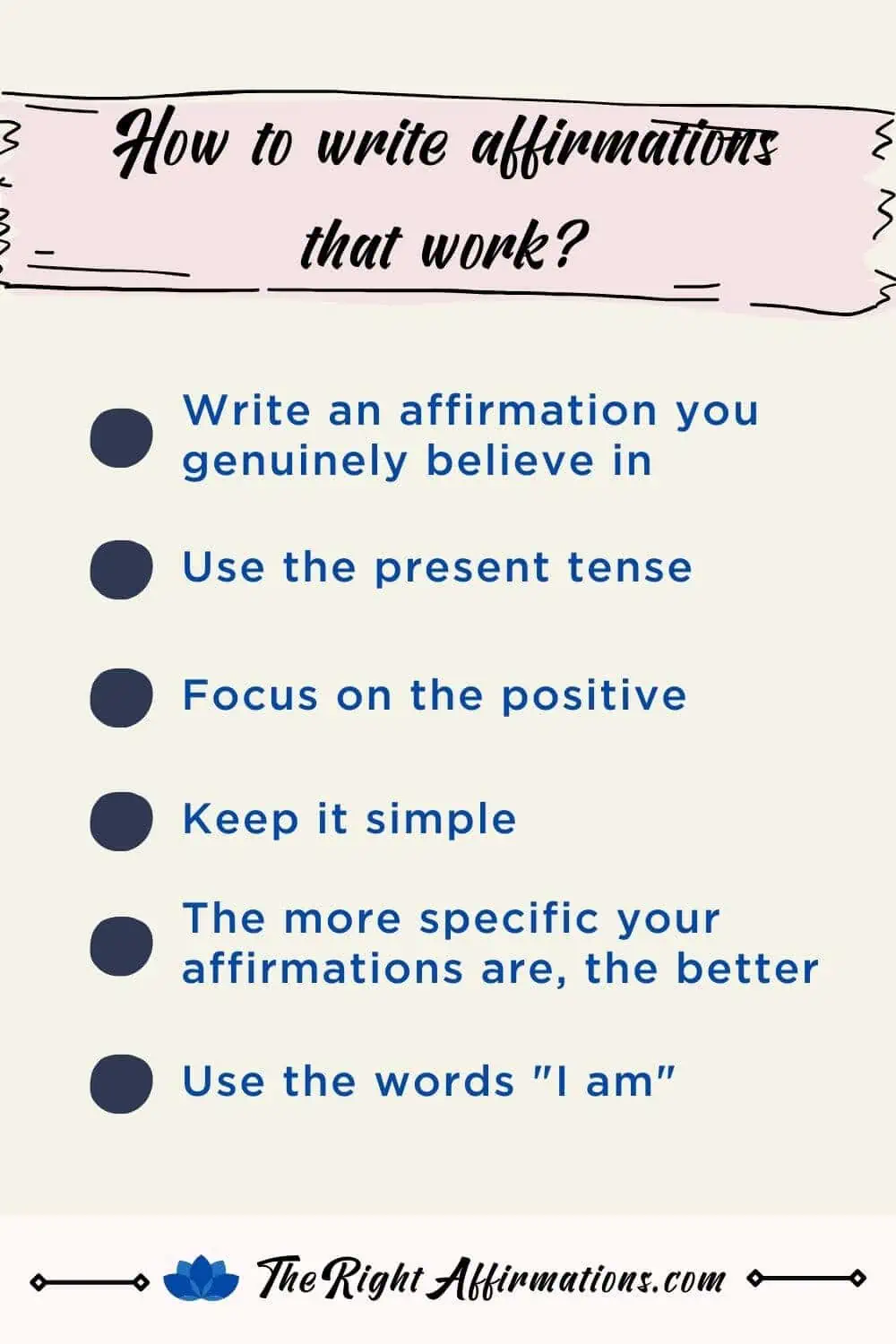
Affirmations should focus on what you want, not what you want to avoid. Instead of “I am not afraid,” write “I am brave. ” Positive words help your brain see possibilities.
Another example: Instead of “I don’t make mistakes,” try “I learn from every experience.” This shift in language turns your attention to growth, not fear.
3. Use Present Tense
Write your affirmation as if it’s already true. “I am successful” is stronger than “I will be successful. ” This helps your mind accept the statement.
Present tense sends your brain a message: this is happening now. It makes the affirmation feel real. Even if you don’t fully believe it yet, present tense helps you practice the feeling.
4. Make It Personal
Use “I” or “my” in your statement. This makes it direct and meaningful.
Personal affirmations connect deeply with your mind. “I am confident” is more effective than “People are confident. ” The focus on yourself boosts your motivation.
5. Keep It Short And Simple
Your affirmation should be easy to remember. One sentence is usually enough.
If your affirmation is too long, you might forget it or feel confused. Short statements are easy to repeat during the day. For example, “I am calm and strong” is quick and powerful.
6. Add Feeling
If possible, include a word that describes how you want to feel. For example: “I am confident and calm.”
Adding feelings to your affirmation makes it more powerful. “I am joyful and grateful” is stronger than “I am happy. ” Feelings connect your words to your emotions.
Example Affirmations
- “I am healthy and energetic.”
- “I trust myself to make good decisions.”
- “I am proud of my progress.”
- “I attract positive opportunities.”
You can adjust these examples to fit your own needs. For example, “I am patient with myself,” or “I am creative in solving problems. ”
Mistakes To Avoid When Writing Affirmations
Many beginners make mistakes that weaken their affirmations. Here are a few:
- Using negative words: Avoid phrases like “I am not sad.” Your brain can focus on the negative part.
- Making it too long: Short affirmations are easier to repeat and remember.
- Choosing statements you don’t believe: If your affirmation feels impossible, it won’t help. Start with something believable.
- Forgetting to repeat: Affirmations only work if you use them often.
Another common mistake: copying affirmations that don’t match your values. If you use a statement like “I am rich and famous,” but you don’t care about fame, your mind may reject it. Always choose what feels right for you.
Comparing Ready-made Vs. Personal Affirmations
Let’s look at how ready-made affirmations compare to personal ones. Here’s a quick view:
| Ready-Made Affirmations | Personal Affirmations |
|---|---|
| Easy to find and use | Created for your needs |
| May not feel personal | Feel authentic and motivating |
| Sometimes too general | Specific to your goals |
| Can lack emotional power | Include your feelings and values |
Personal affirmations are usually more powerful. They speak to your heart and can help you make real changes.
A practical example: If you find a ready-made affirmation, “I am successful,” but you struggle with self-doubt, you might change it to, “I am learning to succeed in my own way.” This small change makes the statement fit your experience.
Examples Of Affirmations For Different Areas
If you’re not sure where to start, here are examples for different goals:
Confidence
- “I am confident in my abilities.”
- “I face challenges with courage.”
Confidence affirmations help you handle new situations or difficult tasks. Try repeating these before a big event, like a job interview.
Health
- “I choose healthy foods every day.”
- “I enjoy moving my body.”
Health affirmations support good habits. You can use them before meals, workouts, or when you feel tired.
Relationships
- “I listen with care and respect.”
- “I am a loving partner.”
Relationship affirmations help you connect with others. You can use them to improve your friendships or family bonds.
Work
- “I am focused and productive.”
- “I learn quickly and grow every day.”
Work affirmations boost motivation and help you handle stress. Try repeating them at the start of your workday.
Stress
- “I am calm even in difficult times.”
- “I handle stress with ease.”
Stress affirmations can be used during tough moments. They remind you to breathe and stay balanced.
You can also create affirmations for creativity, learning, or spiritual growth. For example: “I am creative and open to new ideas,” or “I am peaceful and centered.”

Credit: jackcanfield.com
How Often Should You Use Affirmations?
There is no strict rule. Some people repeat affirmations every morning. Others use them before important events or during stressful moments. The key is consistency. If you use affirmations daily, your brain starts to accept them as true.
Some experts suggest saying your affirmation three times each session. You can also write them in a notebook or say them out loud. Find a routine that works for you.
Another tip: Try using affirmations in different situations. For example, before a big meeting, repeat, “I am calm and ready.” During your daily walk, say, “I enjoy taking care of my body.” This helps affirmations become part of your routine.
If you forget, don’t worry. Just start again. The most important thing is regular practice. Over time, your mind will remember the positive statements.
Practical Tips For Writing And Using Affirmations
Here are some useful ideas:
- Write your affirmation on paper and keep it where you see it often.
- Say your affirmation out loud with energy.
- Use your affirmation during meditation or relaxation.
- Create a reminder on your phone.
- Combine affirmations with deep breathing.
A non-obvious tip: If you feel resistance to your affirmation, adjust it. For example, if “I am successful” feels untrue, try “I am learning to be successful.” This can help you believe the statement more easily.
Another practical suggestion: Record your affirmation and listen to it. Hearing your own voice can make the message stronger. You can also use affirmation cards, placing them in your wallet or bag.
If you want to involve others, share your affirmation with a friend or family member. They can remind you or use the statement with you.
The Science Behind Affirmations
Research shows that affirmations can help in many ways. They can:
- Lower stress
- Improve performance
- Boost motivation
- Help with habit change
A study by Carnegie Mellon University found that self-affirmation can help people deal with stress better. When you use affirmations, your brain can become more open to positive change.
However, affirmations are not a cure-all. They work best with other healthy habits, such as goal setting, self-care, and problem-solving.
A less-known fact: affirmations can help people recover from setbacks. After a failure, repeating “I am resilient and learning” can reduce feelings of shame or frustration. This makes it easier to try again.
Common Questions About Affirmations
Many people ask questions when starting with affirmations. Here are some typical concerns:
Are Affirmations Only For Positive Thinking?
No. Affirmations help you focus your mind, but they are not just positive thinking. They encourage you to believe in your abilities and take action.
What If I Don’t Believe My Affirmation?
This is common. Start with a statement that feels possible. As you use it, your belief can grow. You can also add “I am learning to…” or “I am becoming…” to make it easier.
Can Affirmations Change My Life?
Affirmations can help you change your thoughts and actions. Over time, this can lead to big changes. But affirmations alone are not enough. You need to act on your goals.
How Long Does It Take To See Results?
Most people notice changes in mood or attitude within a few weeks. But lasting change takes time and practice.
Are Affirmations Backed By Science?
Yes. Many studies show that affirmations can help with stress, confidence, and performance. For example, see this Wikipedia article for more information.
One more insight: if you use affirmations alongside other practices, like mindfulness or journaling, results may come faster.
Comparing Affirmation Quality: What Makes A Good One?
Not all affirmations are equal. Here’s a comparison of weak and strong affirmations:
| Weak Affirmation | Strong Affirmation |
|---|---|
| I am not sad. | I am joyful and grateful. |
| I will be confident someday. | I am confident now. |
| I want to be healthy. | I am healthy and active. |
| I hope to succeed. | I am successful in my work. |
Strong affirmations use positive words, present tense, and describe what you want to feel. Weak affirmations focus on the negative or use future tense.
A real-life tip: If your affirmation feels weak, rewrite it using the guidelines above. Try “I am learning and improving every day,” instead of “I hope I improve.”
How To Test If Your Affirmation Works
After you write your affirmation, check it:
- Does it feel possible?
- Is it positive?
- Is it in the present tense?
- Does it inspire you?
- Is it easy to remember?
If your answer is “yes” to most, your affirmation is strong. If not, adjust it.
A practical tip: Try saying your affirmation out loud. If it feels uncomfortable, change the words until it feels right.
You can also ask a trusted friend for feedback. Sometimes another person can help you find the best words.
Credit: unfinishedsuccess.com
Using Affirmations With Other Tools
Affirmations are powerful alone, but they work even better with other tools. Here are some combinations:
- Vision boards: Put your affirmation next to a picture of your goal.
- Journaling: Write your affirmation and reflect on your progress.
- Meditation: Use your affirmation during mindfulness exercises.
- Goal setting: Connect your affirmation to a specific goal.
Combining methods can make your affirmations more effective.
For example, after creating a vision board, repeat your affirmation while looking at the images. Or, after writing your goals, add an affirmation that supports them.
How Affirmations Affect The Brain
When you use affirmations, your brain changes how it works. Positive statements activate the part of the brain that controls self-worth. This is called the ventromedial prefrontal cortex. Over time, this helps you feel more confident and motivated.
Here’s a comparison of how the brain responds to negative vs. positive statements:
| Negative Statement | Positive Affirmation | Brain Response |
|---|---|---|
| I can't do this. | I can handle any challenge. | Positive statements activate self-worth and motivation centers. |
| I am not good enough. | I am valuable and capable. | Negative statements can trigger stress; positive affirmations build confidence. |
This is why repeating affirmations can help you feel better and act with more confidence.
Another detail: scientists believe that repeated positive messages can change the way your brain responds to stress. This means you may become more calm and resilient over time.
Examples Of Real-life Affirmation Success
Many people have used affirmations to make changes. Here are two stories:
- Maria wanted to feel more confident at work. She wrote, “I am skilled and ready for new challenges.” After repeating this daily, she felt more comfortable speaking in meetings. Her coworkers noticed her confidence.
- James struggled with stress. He created, “I am calm and in control.” He repeated it during stressful moments. Over time, he became less anxious and handled problems with ease.
These examples show that affirmations can help in real life, especially when combined with action.
In another case, a student named Li used “I am prepared and confident for exams. ” After a month of daily repetition, he noticed less nervousness and improved scores.
Frequently Asked Questions
What Is The Best Time To Use Affirmations?
The best time is when you feel calm and focused. Many people use affirmations in the morning or before sleep. You can also use them during stressful moments.
Can I Use Affirmations For Any Goal?
Yes. Affirmations work for confidence, health, relationships, work, or any area you want to improve.
How Many Affirmations Should I Use At Once?
Start with one or two. Too many can be confusing. Once you are comfortable, you can add more.
Do Affirmations Work For Children?
Affirmations are helpful for children, too. Simple, positive statements can build confidence and help them handle challenges.
Should I Write Or Say My Affirmations?
Both are useful. Saying affirmations out loud can make them more powerful. Writing them can help you focus and remember.
Can Affirmations Help With Overcoming Fears?
Yes. You can use affirmations like, “I am brave and strong,” or “I face my fears with courage. ” Repeating these can help reduce fear over time.
Writing your own affirmations is a simple tool, but it can make a big difference. By choosing positive, personal statements, you guide your mind toward success and happiness. Start small, repeat often, and adjust your affirmations as you grow. Over time, you may notice more confidence, less stress, and new possibilities in your life.
Affirmations are not magic, but with practice, they can help you become the person you want to be.
Credit: www.reddit.com
