

Can Affirmation Be Negative? Understanding the Hidden Dangers
Can Affirmation Be Negative
Thinking about affirmations, you might imagine positive self-talk, inspiring quotes, or phrases that help you feel good. Many people use affirmations to improve their mood, build confidence, or reach goals. But a question often comes up: Can affirmation be negative? This is not as simple as it first seems. While affirmations are usually positive, they can sometimes have the opposite effect. Understanding this is important for anyone who wants to use affirmations effectively, avoid common mistakes, and get real benefits.
Let’s explore the world of affirmations. We’ll look at how they work, why negative affirmations exist, how they affect our minds, and what you can do to use affirmations wisely. Along the way, you’ll find research, real-life examples, and practical advice to help you decide how to use affirmations in your own life.
What Is An Affirmation?
An affirmation is a statement you repeat to yourself, usually to influence your thoughts, feelings, or actions. Most affirmations are designed to be positive. For example, “I am confident” or “I can handle any challenge.” The idea is that repeating these statements can help reshape your mindset and change your behavior.
Affirmations are often used in self-help, therapy, sports, and education. They are simple but powerful tools for mental change. You can say them out loud, write them down, or even think them silently.
How Affirmations Work
The main reason affirmations work is because of self-suggestion. When you repeat a phrase, it can influence your subconscious mind. Over time, your thoughts start to match the message of the affirmation. This process is called cognitive restructuring.
Here’s a simple example: If you often say, “I am good at public speaking,” your brain may start to believe it, even if you felt nervous at first. You begin to act more confidently, and your performance improves.
Research shows that affirmations can activate parts of the brain linked to reward and self-processing. One study found that people who practiced self-affirmations had more activity in the ventromedial prefrontal cortex, a region related to self-value and motivation. This suggests that affirmations can help you see yourself in a more positive way.
However, this mechanism has a flip side. If you use the wrong kind of affirmation, or repeat negative phrases, you can also influence your mind in a harmful way. This is where negative affirmations come in.
Understanding Negative Affirmations
A negative affirmation is any statement you repeat that has a harmful or limiting message. Sometimes, people use negative affirmations without realizing it. They might say things like:
- “I always mess things up.”
- “I am not good enough.”
- “Nobody cares about me.”
- “I can’t do this.”
While these are not meant to be affirmations in the traditional sense, they work in the same way. By repeating negative messages, you reinforce negative beliefs about yourself or the world.
Accidental Vs. Intentional Negative Affirmations
Most negative affirmations happen by accident. People repeat negative thoughts out of habit, stress, or self-criticism. Over time, these thoughts become mental scripts that shape behavior.
In rare cases, negative affirmations are used on purpose. For example, some people might use them in a misguided attempt to motivate themselves (“If I tell myself I’m lazy, maybe I’ll work harder”). But research shows this usually backfires, leading to worse performance and lower self-esteem.
The Science Behind Affirmations: Positive And Negative
Many studies have tested the effects of affirmations. While most research focuses on positive affirmations, some studies have also looked at negative self-talk.
Positive Affirmations And Their Benefits
Positive affirmations have been linked to many benefits:
- Higher self-esteem: Repeating positive statements can help people feel better about themselves.
- Reduced stress: Self-affirmation can lower stress responses, especially before difficult tasks.
- Improved performance: Athletes and students using affirmations often do better in competitions or exams.
- Better mental health: Positive self-talk is linked to lower levels of depression and anxiety.
A well-known study published in the journal *Psychological Science* found that self-affirmation improved problem-solving under pressure, especially in people who were stressed.
Negative Affirmations And Their Effects
Negative affirmations can have the opposite effects:
- Lower self-confidence: Repeating negative statements can damage your belief in yourself.
- More stress and anxiety: Negative self-talk can increase feelings of worry and fear.
- Worse performance: People who use negative affirmations tend to do worse at tasks, especially under pressure.
- Reinforced limiting beliefs: Negative phrases create mental barriers that make it harder to change or grow.
A classic experiment by Dr. Claude Steele, a leading psychologist, showed that negative self-affirmation increased stress and reduced motivation in students facing difficult tasks.
Why Do People Use Negative Affirmations?
You might wonder why anyone would use negative affirmations, especially if they know the risks. There are several reasons:
- Habit: Many people grow up hearing negative messages from parents, teachers, or society. They internalize these ideas and repeat them without thinking.
- Perfectionism: Some believe that criticizing themselves will push them to do better.
- Fear of disappointment: By expecting the worst, people try to protect themselves from failure or rejection.
- Low self-esteem: Those who feel unworthy often use negative self-talk as a reflection of their beliefs.
- Cultural influences: In some cultures, humility is taught through negative self-talk or downplaying achievements.
These patterns can be hard to break, especially if someone is not aware they are using negative affirmations.
The Difference Between Negative Affirmations And Realism
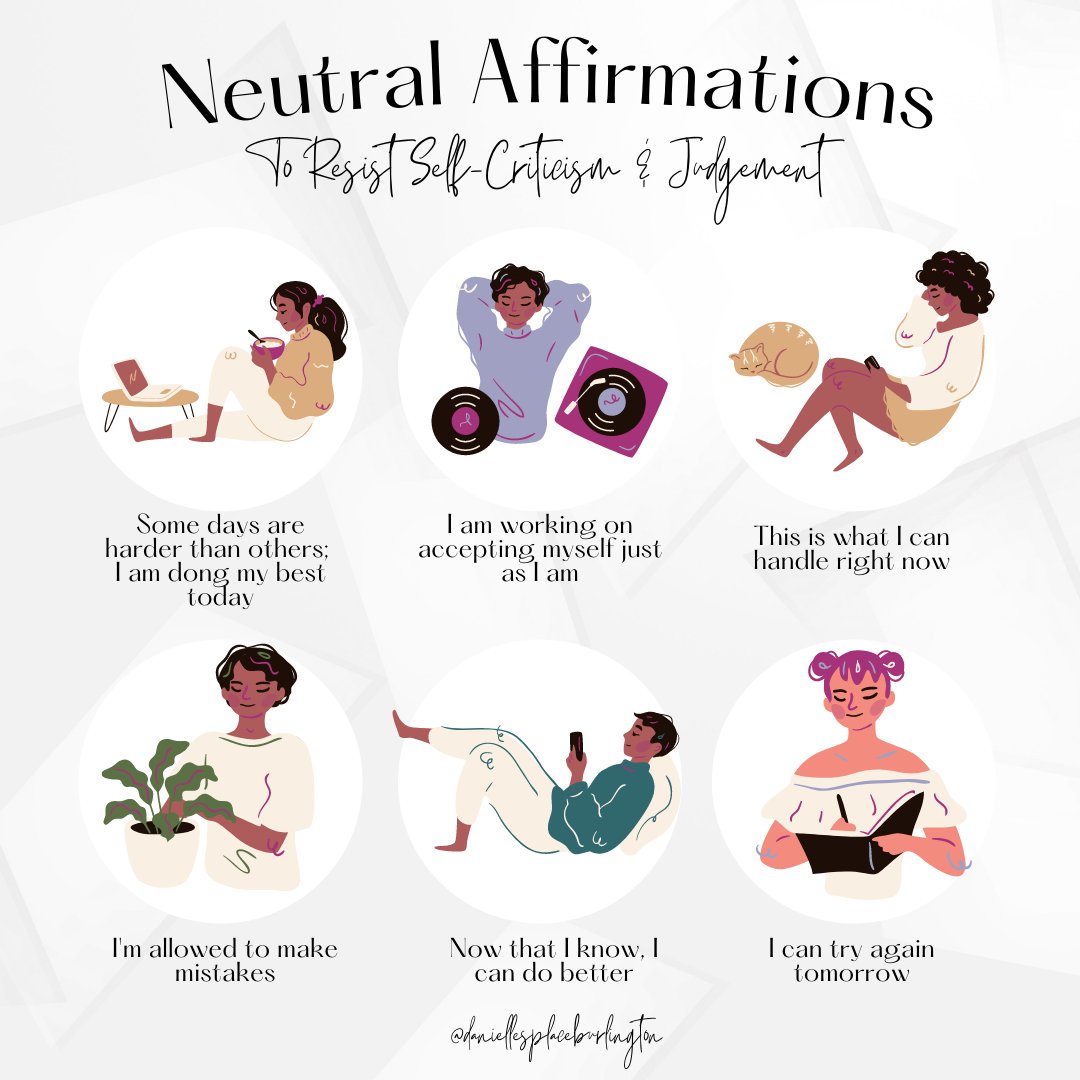
It’s important to understand that being realistic is not the same as using negative affirmations. Realism is about seeing things as they are, without sugar-coating or exaggeration.
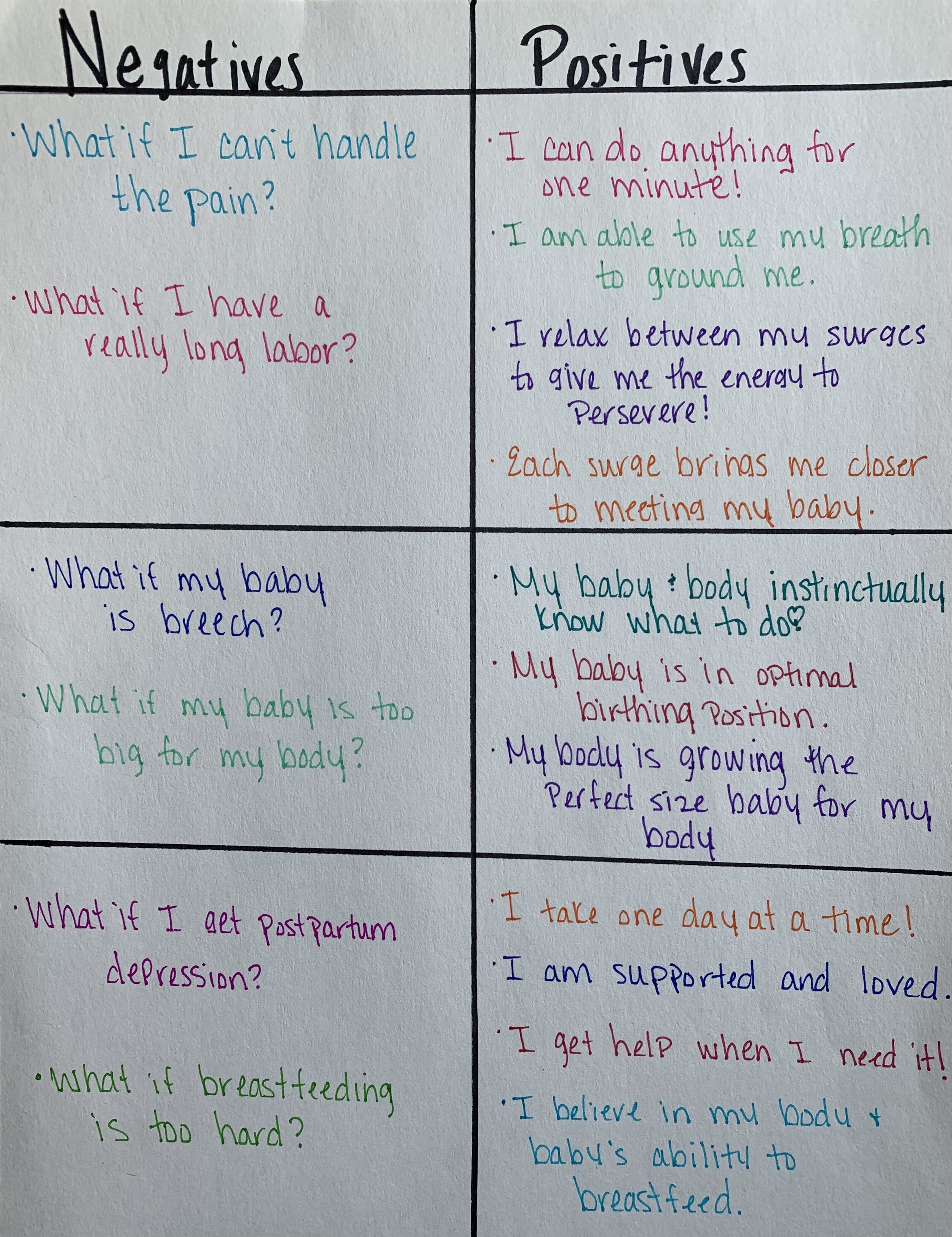
For example, saying “I need to practice more to improve” is realistic. But saying “I’ll never get better, no matter what” is a negative affirmation.
Key difference: Realism focuses on growth and learning, while negative affirmations focus on limits and failure. Realism helps you plan, while negative affirmations hold you back.
Credit: mindfulbirth.com
Common Examples Of Negative Affirmations
Negative affirmations can be very subtle. Here are some examples that people often use without realizing:
- “I’m just not good at math.”
- “I’ll never find a good job.”
- “I always say the wrong thing.”
- “Nothing ever works out for me.”
- “I don’t deserve to be happy.”
Over time, these messages can become part of your identity. They shape your choices and your future.
How Negative Affirmations Affect The Brain
When you repeat any affirmation, your brain creates new neural pathways. This is called neuroplasticity. If you repeat positive affirmations, you strengthen positive pathways. If you repeat negative ones, you reinforce negative patterns.
Brain scans show that negative self-talk activates areas linked to sadness, anxiety, and even physical pain. Over time, this can lead to:
- More negative emotions
- Lower motivation
- Greater risk of depression
Interestingly, research also shows that the brain can’t always tell the difference between real and imagined experiences. So, repeating negative affirmations can have real effects, even if you “don’t mean it. ”
Social And Cultural Roots Of Negative Affirmation
Negative affirmations are not just personal habits. They are shaped by society, culture, and even language. For example:
- In some workplaces, criticism is used more than praise, leading people to focus on their flaws.
- Certain cultures value modesty, so people use negative affirmations to avoid sounding arrogant.
- Media and advertising sometimes use negative messages (“Don’t be left behind!”) to create anxiety and sell products.
Understanding the roots of negative affirmation can help you spot these patterns and choose a healthier approach.
Can Affirmations Be Harmful?
Affirmations are not always helpful. In some cases, they can do more harm than good. Here’s how:
When Positive Affirmations Turn Negative
Some people try to use positive affirmations that feel untrue. For example, someone with low self-esteem might repeat, “I am lovable,” but deep down, they don’t believe it. This gap between the affirmation and belief can create cognitive dissonance—an uncomfortable feeling when your thoughts and beliefs don’t match.
Studies show that for people with low self-esteem, positive affirmations can actually make them feel worse. They start to argue with themselves, focusing even more on their flaws.
Toxic Positivity
Another problem is toxic positivity. This happens when people use positive affirmations to deny real problems or avoid difficult feelings. For example:
- “Everything is fine” (when it’s not)
- “Just be happy” (when you’re struggling)
Toxic positivity can make people feel guilty for having normal emotions, and stop them from seeking real help.
Negative Affirmations In Therapy And Self-help
Some self-help systems encourage people to face their fears by stating them out loud. While this can be useful in small doses (for example, exposure therapy), repeating negative affirmations without guidance can reinforce anxiety or hopelessness.
Recognizing Negative Self-talk In Daily Life
Negative affirmations are often automatic. You may not notice when you’re using them. Here are some signs to watch for:
- You criticize yourself more than you praise yourself.
- You expect the worst outcome in most situations.
- You use words like “never,” “always,” or “can’t” about yourself.
- You feel stuck or hopeless, even when others see your strengths.
- You downplay your achievements or focus only on mistakes.
If you recognize these signs, you might be using negative affirmations without realizing it.
Transforming Negative Affirmations Into Positive Ones
It’s possible to change your self-talk. Here are some steps that can help:
- Notice your negative affirmations: Pay attention to the phrases you repeat. Write them down.
- Challenge the message: Ask yourself, “Is this really true?” Look for evidence.
- Reframe the statement: Turn negative phrases into positive or realistic ones. For example, change “I always fail” to “Sometimes I struggle, but I can learn and improve.”
- Practice regularly: Repeat your new affirmations daily. The more you practice, the stronger your new mental pathways will become.
Example Transformation
- Negative: “I’m terrible at presentations.”
- Positive: “I can improve my presentation skills with practice.”
This approach is more believable, and it encourages growth.
Risks Of Ignoring Negative Affirmations
If you ignore negative affirmations, they can become stronger over time. This can lead to:
- Chronic self-doubt
- Anxiety disorders
- Depression
- Missed opportunities
Some people avoid affirmations altogether because they fear “lying to themselves. ” But the real problem is not the affirmation itself; it’s the type of message you repeat.
When Affirmations Don’t Work
Affirmations are not a magic cure. Sometimes they don’t work, especially if:
- The affirmation feels fake or unrealistic.
- You repeat it without emotion or belief.
- You use it to avoid real problems instead of facing them.
Experts suggest that affirmations work best when combined with action. Saying “I am healthy” is helpful, but it works even better if you also eat well and exercise.
Data On Affirmation Effectiveness
To understand the impact of affirmations, let’s look at some data comparing positive and negative self-talk:
| Type of Affirmation | Effect on Performance | Effect on Mood | Long-Term Result |
|---|---|---|---|
| Positive | Improves focus and results | Boosts mood | Better mental health |
| Negative | Reduces performance | Increases anxiety | Higher risk of depression |
| Neutral/Realistic | Stable or slight improvement | Balanced mood | Steady progress |
This table is based on a review of psychological studies and shows how different types of affirmations affect us in daily life.
Common Myths About Affirmations
Many myths surround affirmations. Let’s clear up a few:
- “Affirmations are always positive.” False. Any repeated phrase, positive or negative, can shape your mind.
- “Negative affirmations don’t matter if I don’t believe them.” Not true. Repetition matters more than belief at first.
- “You can’t change your self-talk.” Research shows that anyone can learn to change negative affirmations with practice.
- “Affirmations are only for weak people.” In fact, top athletes, leaders, and performers use affirmations to boost their results.
- “Affirmations work instantly.” Like any habit, they require time and effort.
How To Build Effective Affirmations
If you want to use affirmations in a healthy way, here are some tips:
- Make them believable: Use words that feel true or possible for you.
- Keep them short and simple: Easy phrases are easier to remember and repeat.
- Use the present tense: “I am learning” works better than “I will learn.”
- Focus on growth: Choose statements that encourage progress, not perfection.
- Add emotion: Say your affirmations with feeling, not just words.
Sample Effective Affirmations
- “I am learning new skills every day.”
- “I handle challenges calmly.”
- “I am worthy of respect and kindness.”
- “My efforts lead to progress.”
Comparing Affirmations And Other Self-talk Techniques
Affirmations are just one way to shape your thinking. Here’s a comparison with other popular techniques:
| Technique | Main Focus | Strength | Weakness |
|---|---|---|---|
| Affirmations | Self-belief | Easy to use | Can feel fake if not personal |
| Visualization | Imagining success | Builds motivation | Requires focus and time |
| Journaling | Reflecting on thoughts | Increases self-awareness | Time-consuming |
| Mindfulness | Noticing thoughts without judgment | Reduces stress | Takes practice to master |
Each method has its own benefits. You can combine them for better results.
The Role Of Affirmations In Therapy
Therapists often use affirmations as part of cognitive-behavioral therapy (CBT). They help clients spot negative self-talk and replace it with healthier messages. This can be especially helpful for:
- Anxiety
- Depression
- Low self-esteem
- Phobias
However, therapists are careful to avoid affirmations that feel false or unrealistic. Instead, they focus on realistic and actionable statements.
Non-obvious Insights About Affirmations
Here are two insights that many beginners miss:
- Your environment matters: If you’re surrounded by negative people or messages, positive affirmations will be harder to believe. Try to spend time with supportive people and limit exposure to negativity.
- Affirmations can be specific: Generic affirmations (“I am happy”) are less effective than specific ones (“I am proud of how I handled today’s meeting”). The more concrete your affirmation, the stronger its impact.

Credit: x.com
Mistakes To Avoid With Affirmations
People often make these mistakes:
- Using negative phrases by accident
- Creating affirmations that are too broad or unrealistic
- Expecting quick results without effort
- Ignoring real problems in favor of repeating affirmations
- Not reviewing or updating affirmations as life changes
If you avoid these mistakes, you’ll get more benefit from your self-talk.
When To Seek Help
If negative affirmations are deeply rooted or linked to depression, anxiety, or trauma, it may help to talk to a mental health professional. They can guide you in changing your self-talk and offer other support.
For more on the science and practice of affirmations, you can visit this Wikipedia article.
Frequently Asked Questions
What Is A Negative Affirmation?
A negative affirmation is any repeated statement that has a limiting or harmful message. For example, “I always fail” or “I’m not good enough. ” These phrases, when repeated, can shape your beliefs and actions in a negative way.
Credit: www.revivalkent.co.uk
Are Negative Affirmations More Powerful Than Positive Ones?
Negative affirmations can feel more powerful, especially if they match your current beliefs. This is because the brain tends to focus more on threats or negative information. However, with practice, positive affirmations can become just as strong.
How Can I Stop Using Negative Affirmations?
The first step is to notice when you use them. Write down negative phrases you often say. Then, challenge their truth and replace them with positive or realistic alternatives. Practicing this daily helps change your self-talk over time.
Can Positive Affirmations Ever Be Bad?
Yes, if a positive affirmation feels fake or impossible, it can cause discomfort or even lower your self-esteem. It’s best to use affirmations that are believable and focus on growth rather than perfection.
Do I Need To Say Affirmations Out Loud For Them To Work?
Saying affirmations out loud can make them more powerful, but it’s not required. You can also write them down or think them silently. The most important thing is to repeat them regularly and with intention.
Using affirmations is a personal journey. They can shape your thoughts for better or worse. By understanding how negative affirmations work—and how to replace them—you can build a healthier, more confident mindset. Choose your words wisely; over time, your mind will follow.
