

Best Morning Affirmations for Success: Transform Your Day Fast
Success is not just about skills or opportunities. It often begins in the mind. The way you think each morning can shape your actions and, over time, your results. Morning affirmations—short, positive statements repeated out loud—are a simple yet powerful tool for programming your mind for success.
Many high achievers use them daily to boost confidence, focus, and motivation. But affirmations are not just for famous entrepreneurs or athletes. Anyone can use them to start the day with a winning attitude.
This article will help you discover the best morning affirmations for success, explain why and how they work, and guide you to build your own practice. Whether you are a student, a professional, or chasing personal goals, these affirmations can give your mornings a strong start.
You will also learn tips, common mistakes, and practical insights that most beginners miss. Let’s explore how a few spoken words each morning can transform your day—and your life.
Why Morning Affirmations Matter For Success
Morning is a unique time. Your mind is fresh, open, and less distracted. This is when you can plant the seeds of positive thinking and set the right tone for the entire day. When you use affirmations, you are telling your brain what you want to believe. Over time, your thoughts begin to match your words.
Science supports this. Studies show that repeating positive statements can help reduce stress, increase motivation, and improve performance. For example, researchers found that self-affirmation activates reward centers in the brain. This makes it easier to stay focused and overcome challenges.
Another benefit is that affirmations can help replace negative self-talk. Many people wake up thinking about problems or doubts. Affirmations interrupt these patterns with hope and purpose. Instead of “I’m not ready for today,” you say, “I am prepared for every challenge.” This small change can lead to better decisions and more energy.
Morning affirmations are not magic, but they prepare your mind for action. When you believe in your goals, you are more likely to work toward them. Consistency is key—the effect grows as you practice daily.
How To Use Morning Affirmations Effectively
Many people try affirmations but give up quickly. Why? They repeat words without feeling or do not know the best way to practice. Here’s how to get real results from your morning affirmations:
- Choose affirmations that feel personal. The best statements match your goals and values.
- Speak them out loud. Hearing your own voice makes the message stronger.
- Stand tall and breathe deeply. Good posture and deep breaths help your brain absorb the message.
- Visualize success. Imagine yourself living the affirmation—see and feel it.
- Repeat with emotion. Don’t just say the words. Feel their meaning.
- Practice daily. Consistency matters more than length. Even five minutes is enough.
Common beginner mistake: Saying too many affirmations at once. Start with 3-5 statements. Focus brings better results than quantity.
25 Best Morning Affirmations For Success
Here are some of the most effective morning affirmations for success. These cover confidence, focus, motivation, resilience, and gratitude—the main areas that drive achievement.
- I am ready to achieve my goals today.
- Success comes easily to me because I am prepared.
- I am confident in my skills and abilities.
- Every challenge is an opportunity to grow.
- I attract positive opportunities and people.
- I am focused, clear, and persistent.
- I believe in my vision and take action every day.
- My mind is calm, and my body is energized.
- I am worthy of success and happiness.
- I learn from mistakes and move forward stronger.
- I am grateful for all I have and all that’s coming.
- I create my own success story.
- Today, I will do my best in everything.
- I trust the process and keep going.
- My potential is limitless.
- I welcome new challenges with courage.
- I control my attitude and reactions.
- I am focused on solutions, not problems.
- I celebrate my progress, no matter how small.
- I inspire others through my actions.
- I am disciplined and consistent.
- I deserve the rewards of my hard work.
- I am surrounded by support and inspiration.
- I see possibilities everywhere.
- I am becoming a better version of myself every day.
You do not need to use all these at once. Pick the ones that feel right for you. Over time, change or add new affirmations as your goals grow.
Building Your Own Personalized Affirmations
While lists are helpful, the most powerful affirmations are personal. Here’s how you can craft your own:
- Start with “I am” or “I.” This makes the statement active and present.
- Keep it positive. Focus on what you want, not what you want to avoid.
- Be specific if possible. Instead of “I am successful,” try “I am a confident leader at work.”
- Use strong, clear words. Avoid “maybe” or “try.” Use words like “create,” “achieve,” “welcome.”
- Imagine the feeling. If it does not make you feel good, rewrite it.
Here are examples of how to personalize:
- General: “I am confident.”
Personal: “i Am Confident Sharing My Ideas In Meetings.”
- General: “I am productive.”
Personal: “I complete my top three tasks with focus and energy.”
Personalized affirmations connect better with your mind. They address your unique situation and goals. If you struggle to write your own, try thinking about what you wish someone would tell you each morning. Turn that into an affirmation.
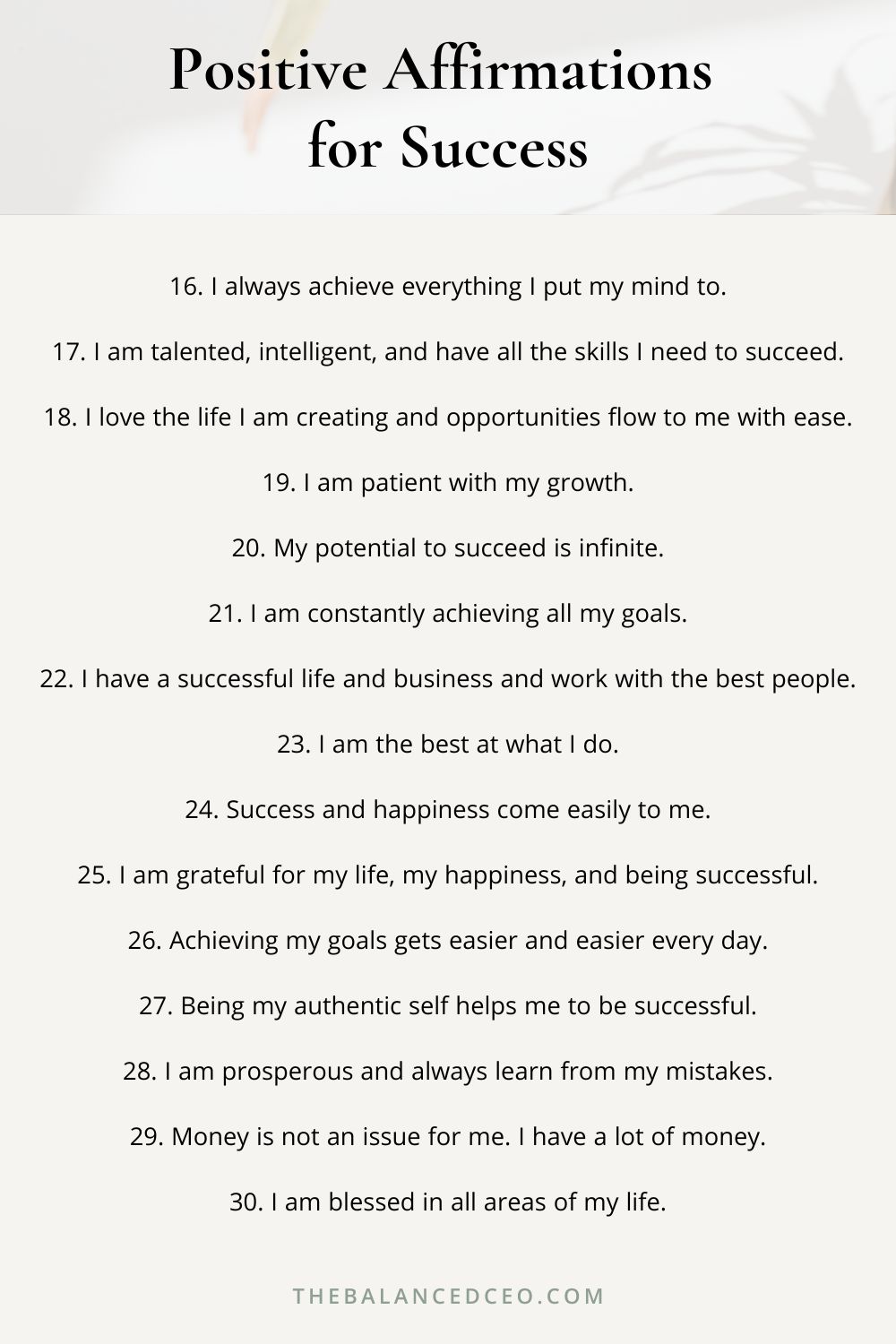
Credit: thebalancedceo.com
Comparing Different Types Of Affirmations
Not all affirmations serve the same purpose. Some are for confidence, some for motivation, and others for gratitude or resilience. Here’s a simple comparison to help you choose:
| Type | Main Focus | Example |
|---|---|---|
| Confidence | Belief in self | I am confident in my skills. |
| Motivation | Drive to act | I am excited to start my day. |
| Resilience | Overcoming setbacks | I grow stronger with every challenge. |
| Gratitude | Appreciating life | I am grateful for today’s opportunities. |
| Focus | Concentration | I stay present and productive. |
Choose 1-2 types that match your current needs. For example, if you feel nervous before work, start with confidence and focus affirmations.
Real-life Examples: Success Stories With Morning Affirmations
Many successful people credit affirmations as part of their routines. Here are a few real-life examples that show how this simple practice can make a difference:
- Professional athletes often use affirmations before games to boost confidence. One Olympic swimmer said, “I tell myself I am fast, I am strong, I am ready,” before every race.
- Business leaders like Oprah Winfrey have shared that positive self-talk each morning helps them stay centered and motivated.
- Students and job seekers who practice affirmations report feeling less anxiety and more focus during exams or interviews.
One not-so-obvious insight: The most successful users of affirmations do not just repeat words; they link affirmations to clear goals. For example, instead of “I am successful,” they say, “I am building a successful business by helping others solve problems.”
Another key: They review their affirmations regularly. As their goals change, their affirmations change too. This keeps the practice fresh and powerful.
Common Mistakes With Morning Affirmations (and How To Avoid Them)
Affirmations are simple, but some mistakes can reduce their impact. Here’s what to watch out for:
- Repeating statements you do not believe. If an affirmation feels false, your mind may reject it. Start with words that feel possible and build up.
- Being too vague. “I am successful” is nice, but “I am focused and complete important tasks” is more useful.
- Practicing without emotion. Saying words flatly does not engage your mind. Feel the energy as you speak.
- Skipping days. Like exercise, results need regular practice. Try setting a reminder.
- Giving up too soon. Change takes time. Most people need a few weeks to notice benefits.
A practical tip: If you struggle to believe an affirmation, add “I am becoming…” For example, “I am becoming more confident every day.” This feels more honest and is easier for your mind to accept.
Combining Affirmations With Other Morning Success Habits
Affirmations work best when combined with other positive morning habits. Here are some simple ways to strengthen your routine:
- Journaling: Write your affirmations and a few things you are grateful for.
- Exercise: Movement wakes up your body and makes affirmations more powerful.
- Visualization: After saying your affirmations, close your eyes and picture the day’s success.
- Breathing exercises: Deep breaths reduce stress and help you focus.
Here’s a sample morning routine for success:
- Wake up and drink a glass of water.
- Stand tall, take three deep breaths.
- Say your 3-5 affirmations out loud.
- Visualize a successful day for one minute.
- Write down your top three tasks.
- Stretch or do a short exercise.
These steps take less than 10 minutes but can change your whole day.
The Science Behind Affirmations And Success
Affirmations are not just “wishful thinking.” There is real science behind how they work. Research shows that positive self-statements can:
- Activate the prefrontal cortex, the part of the brain responsible for decision-making and goal setting.
- Lower cortisol, the stress hormone, especially when facing challenges.
- Build resilience by training the brain to expect positive outcomes.
One study found that people who practiced affirmations before stressful tasks had better results and less anxiety. Another key insight: Affirmations are most effective when paired with actions. Saying “I am focused” works best if you also create a distraction-free workspace.
A common mistake is to expect instant results. Like learning a new skill, affirmations need repetition. Over time, they rewire your brain’s patterns, making positive thinking your default.
For a deeper look at the brain science, you can visit this Wikipedia page on self-affirmation.
Tailoring Affirmations For Different Success Goals
Success means different things to different people. Your affirmations can change based on your main goal. Here are examples for common situations:
For Career Success
- I am a valuable member of my team.
- My work has meaning and impact.
- I attract new opportunities for growth.
- I am focused and efficient with my time.
For Academic Success
- I am a quick learner and remember what I study.
- I enjoy learning new things every day.
- I stay calm and confident during exams.
- I ask for help when I need it.
For Personal Growth
- I am open to new ideas and experiences.
- I forgive myself and move forward.
- I am patient with my progress.
- I celebrate every small win.
For Financial Success
- I manage my money wisely and attract abundance.
- I see new ways to increase my income.
- I am responsible and grateful for my resources.
- I create value and receive fair rewards.
You can mix and match or write your own. The key is to keep them clear, positive, and connected to your real desires.

Credit: thechiclife.com
Tracking Your Progress With Morning Affirmations
How do you know if affirmations are working for you? Tracking progress helps you stay motivated and make changes when needed. Here are simple ways to measure your results:
- Journaling: Write down your affirmations and how you feel after saying them each day. Note any changes in mood, focus, or results.
- Habit trackers: Use an app or a paper chart to check off each day you practice. This builds consistency.
- Reflect weekly: Ask yourself, “What went well this week? Did my attitude or actions change?”
- Notice your self-talk: As you practice, negative thoughts should decrease. You may catch yourself thinking more positively.
Here’s a practical tool to help:
| Day | Affirmations Used | Mood Before | Mood After | Notes/Results |
|---|---|---|---|---|
| Monday | 1, 3, 5 | Anxious | Calm | Felt more focused at work |
| Tuesday | 2, 6, 9 | Tired | Energized | Completed tasks early |
Even small positive changes show that affirmations are working. If you do not notice changes after a few weeks, try new affirmations or add visualization.
Morning Affirmations For Success: Myths Vs. Reality
Many myths surround affirmations. Here are facts to clear up common misunderstandings:
- Myth: Affirmations are just “happy talk.”
Reality: When practiced with belief and action, affirmations change thoughts and behaviors.
- Myth: You must believe every word 100% for them to work.
Reality: It’s normal to feel some doubt at first. With practice, belief grows.
- Myth: Affirmations work instantly.
Reality: Like building a muscle, results come with time and repetition.
- Myth: Affirmations are only for “positive” people.
Reality: Anyone can benefit, even if you are naturally skeptical.
A less obvious insight: Affirmations are not a replacement for action. They prepare your mind, but you still need to make decisions and take steps toward your goals.

Credit: vishakablone.com
10 Quick Tips For Making Affirmations A Lasting Habit
- Pick a regular time. Right after waking up works best for most people.
- Pair with another habit. Say your affirmations while making coffee or brushing your teeth.
- Write them down. Written words make a stronger impression on your mind.
- Change them as you grow. Update your affirmations every few weeks.
- Keep them visible. Place sticky notes on your mirror or phone.
- Say them with feeling. Emotion makes affirmations stick.
- Practice with a friend. Share your top affirmation for accountability.
- Record and listen. Play your own voice on your way to work.
- Don’t rush. Take a few seconds to focus on each statement.
- Celebrate progress. Notice small wins and give yourself credit.
Frequently Asked Questions
What Is The Best Time To Say Morning Affirmations?
The best time is right after waking up, before your day gets busy. Your mind is most open and relaxed then. If that’s not possible, choose a quiet moment before starting work or study. The key is consistency.
How Long Does It Take For Affirmations To Work?
Most people notice small changes in 2-4 weeks if they practice daily. For bigger changes, it can take longer. The effect grows with regular use, just like exercise. Be patient and trust the process.
Can I Write My Own Affirmations?
Yes, you can—and you should. Personalized affirmations are more powerful because they match your real goals and feelings. Use the tips in this article to create statements that inspire you.
Do Affirmations Really Change Behavior?
Affirmations help by changing your thoughts and feelings. This makes it easier to act in positive ways. But you also need to take action. Affirmations prepare your mind, but real change happens when you combine them with effort.
What If I Don’t Believe My Affirmations At First?
This is common. Start with statements that feel possible, like “I am becoming more confident. ” As you practice, your belief will grow. Adjust your affirmations as needed to match your comfort level.
Morning affirmations are a simple tool, but their effects can be deep and lasting. By choosing the right words and practicing each day, you give yourself a head start toward success. Remember, it’s not about repeating magic words—it’s about shaping your mindset for action and growth.
With patience and practice, these small daily steps can lead to big changes in your life.
