

Best Affirmations for Women: Empower Your Mind and Life
Best Affirmations For Women
Every woman faces moments of doubt, stress, and self-criticism. Sometimes, these feelings come from the outside world—social expectations, work pressure, or family roles. Other times, they come from within. In these moments, affirmations can be a powerful tool. Affirmations are positive statements you repeat to yourself. They help shift your mindset, build confidence, and support emotional well-being. Many women use affirmations each day to set a positive tone, overcome anxiety, and create healthy beliefs about themselves.
But not all affirmations are equally effective. Some sound good but feel empty. Others strike a deep chord, helping you break old patterns and step into your best self. In this article, you’ll discover how affirmations work, how to use them, and a collection of the best affirmations for women.
Each affirmation is chosen for a specific purpose—confidence, self-love, career, relationships, and more. You’ll also learn how to make affirmations work for you, with practical tips and real examples. By the end, you’ll have a toolkit to help you build a stronger, more positive inner voice.
Why Affirmations Matter For Women
Women often juggle many roles—professional, caregiver, partner, friend, and more. Society sometimes sets harsh standards, leading to self-doubt or negative self-talk. Studies show that women are more likely than men to experience anxiety, body image issues, and self-criticism. According to the American Psychological Association, women report higher stress levels and are more affected by perfectionism.
Affirmations can help change these patterns. When you use positive statements regularly, you start to believe them. This isn’t just wishful thinking—research in psychology has found that affirmations can rewire the brain, making it easier to break old habits and form new beliefs. For example, repeating “I am worthy” can counter years of feeling “not good enough.”
The effects go beyond just feeling better. Women who use affirmations are more likely to set healthy boundaries, pursue their goals, and maintain self-esteem during hard times. Affirmations are also linked to lower stress and better physical health. They are not magic—life still brings challenges—but they help you meet those challenges with a stronger mindset.
How Affirmations Work
Affirmations use the power of repetition and self-talk. When you repeat a positive statement, your brain starts to accept it as true—even if at first you don’t fully believe it. This process is called neuroplasticity. It means your mind can change and adapt.
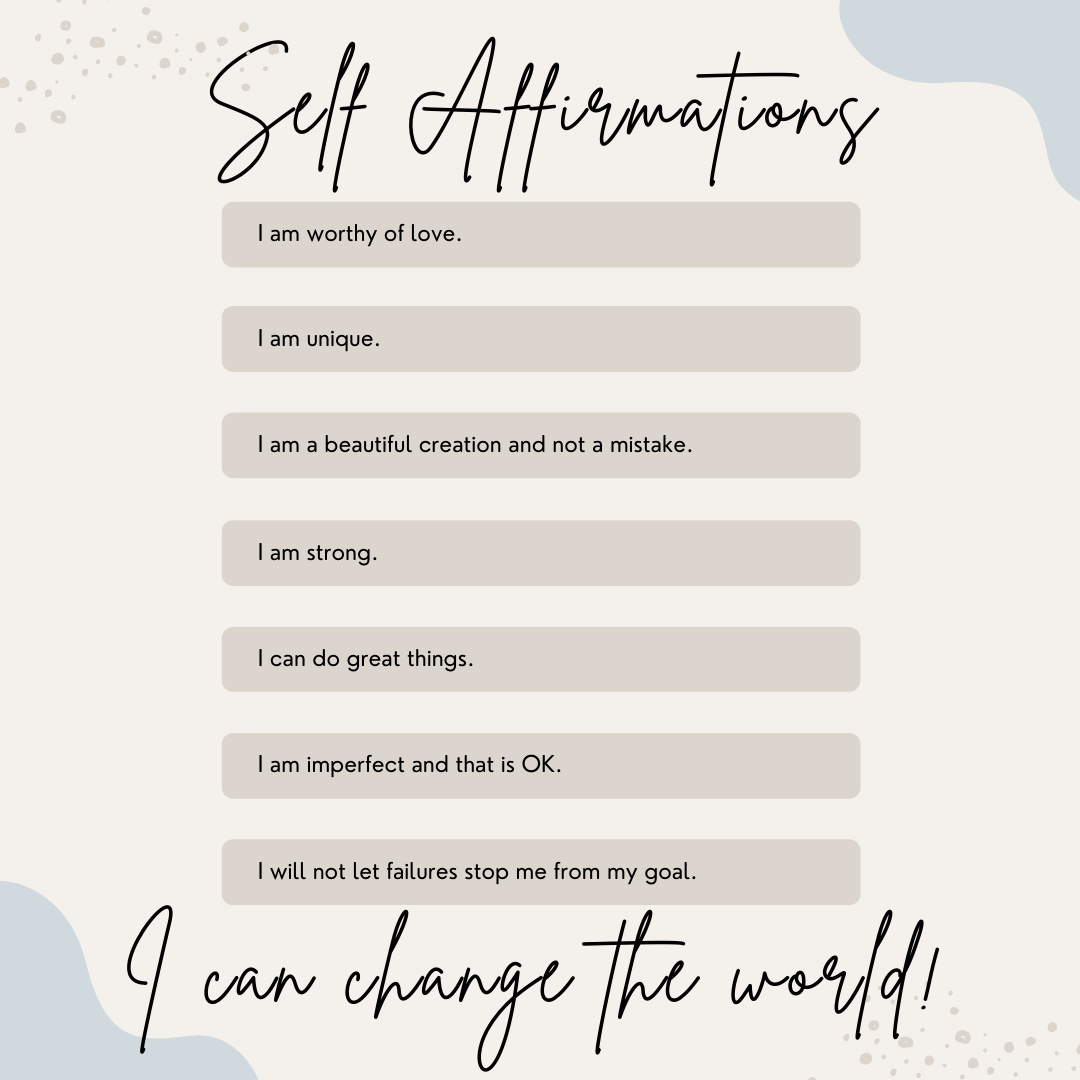
Think of your thoughts as pathways in a forest. The more you walk a path, the clearer it gets. Negative self-talk makes the “I can’t” path strong. Affirmations help you build new paths—“I am capable,” “I deserve happiness. ” Over time, these new paths become your go-to thoughts.
It’s important to use affirmations that feel real for you. If you say “I am a millionaire” but don’t believe it, your mind will resist. Instead, choose statements that are positive but believable, like “I am open to new opportunities.
” With practice, you can expand your affirmations as your confidence grows.
Credit: thatssoyummy.com
How To Use Affirmations Effectively
Affirmations are simple, but getting results takes more than just repeating phrases. Here are practical steps to make affirmations work for you:
- Be Consistent: Repeat your affirmations daily. Morning routines work well because they set the tone for your day. You can also use them before a meeting, during a break, or at bedtime.
- Say Them Out Loud: Speaking affirmations out loud has more impact than just thinking them. Hearing your voice makes them feel real.
- Look in the Mirror: Saying affirmations while looking into your own eyes can feel uncomfortable at first, but it makes the message stronger.
- Write Them Down: Journaling your affirmations helps you reflect and remember. Some women write affirmations on sticky notes and place them on their mirror or computer.
- Feel the Words: Don’t just say the words—try to feel them. Imagine the confidence or peace you want to have.
- Stay Patient: Results take time. If an affirmation feels awkward, adjust it until it fits you. Your goal is to build belief, not to force fake positivity.
Many beginners miss two key points: First, the importance of emotion—affirmations work best when you connect them with real feelings. Second, the need to customize—personal affirmations are more powerful than generic ones. Start with examples, but feel free to change the wording to match your life.
50 Best Affirmations For Women
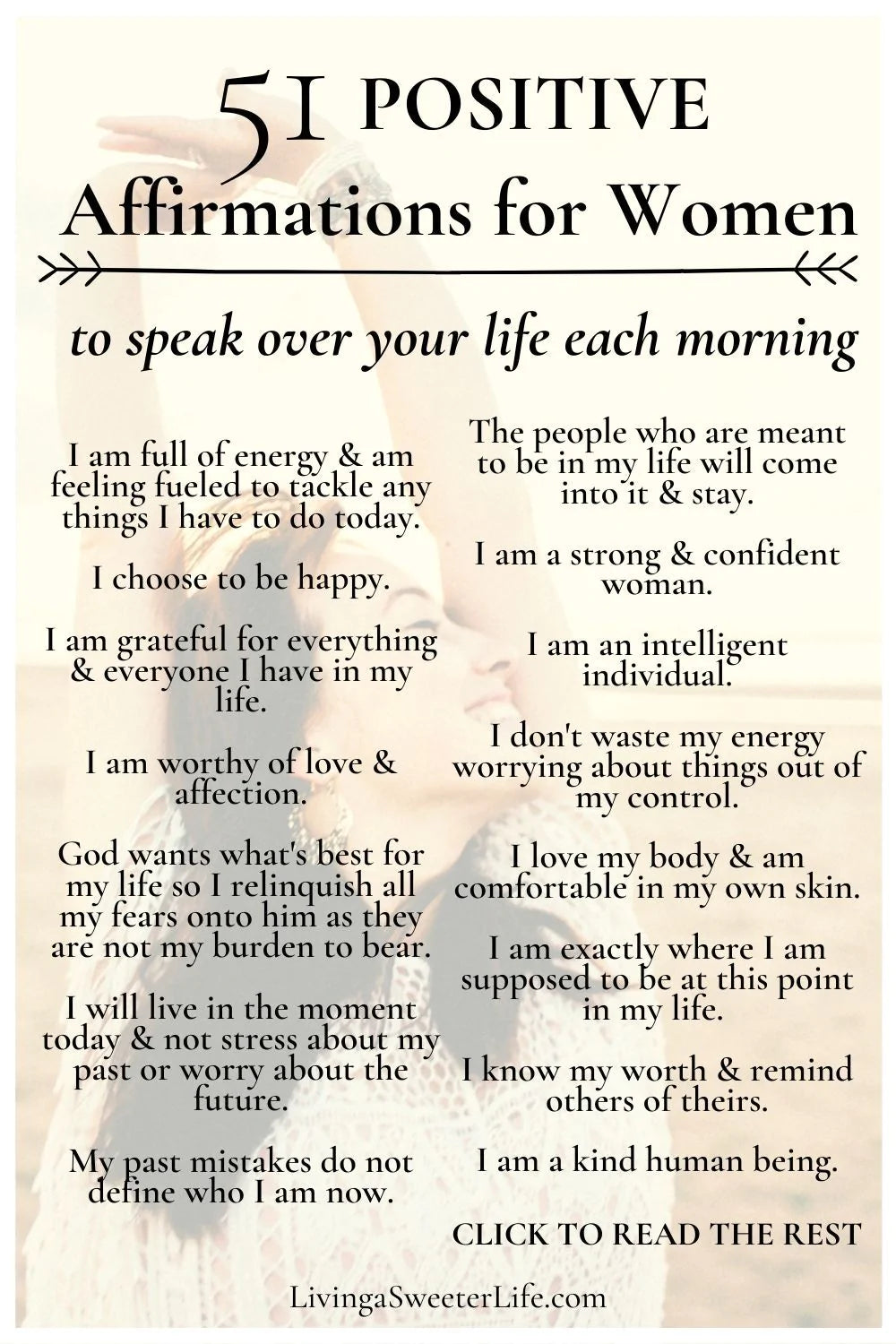
Here is a collection of powerful affirmations, grouped by theme. Use these as a starting point and adjust them to fit your needs.
Confidence And Self-worth
- I am worthy of love and respect.
- I believe in myself and my abilities.
- I am proud of who I am becoming.
- My voice matters.
- I trust myself to make good choices.
- I am enough, just as I am.
- I celebrate my strengths and learn from my mistakes.
- I am not afraid to stand up for myself.
- My confidence grows every day.
- I accept compliments with grace.
Self-love And Acceptance
- I love myself unconditionally.
- I honor my body and take care of it.
- I forgive myself for past mistakes.
- I am gentle with myself when I need it.
- My self-worth does not depend on others.
- I am deserving of happiness.
- I am proud of my unique journey.
- I give myself permission to rest.
- I am at peace with who I am.
- I am my own best friend.
Success And Career
- I am capable of achieving my goals.
- I am open to new opportunities.
- My hard work leads to success.
- I am a valuable member of my team.
- I handle challenges with grace.
- I attract positive outcomes.
- I am creative and resourceful.
- I learn and grow every day.
- I celebrate my achievements.
- I am a leader in my field.
Relationships And Love
- I attract healthy, loving relationships.
- I communicate my needs clearly.
- I set boundaries that honor me.
- I am loved for who I am.
- I give and receive love freely.
- I choose partners who respect and support me.
- I am grateful for the people in my life.
- I bring kindness to my relationships.
- I trust the process of love.
- I am open to deep connections.
Stress And Resilience
- I am stronger than my challenges.
- I trust myself to handle anything that comes my way.
- I choose calm over worry.
- I release what I cannot control.
- I am resilient and adaptable.
- I breathe in peace and breathe out stress.
- I find solutions even in tough times.
- I am patient with myself and others.
- I let go of perfectionism.
- I focus on what I can change.
Creating Your Own Affirmations
While ready-made affirmations are helpful, the most powerful ones are personal. Creating your own lets you focus on what matters most to you. Here’s how:
- Identify Your Needs: Think about where you need support. Is it confidence? Self-love? Stress?
- Use Present Tense: Affirmations work best when stated as if they are true now. For example, “I am confident,” not “I will be confident.”
- Keep It Positive: Focus on what you want, not what you want to avoid. Say, “I choose peace,” instead of “I am not stressed.”
- Make It Believable: If “I love myself” feels too hard, try “I am learning to love myself.”
- Be Specific: The more personal, the better. “I am a supportive friend” is stronger than “I am good.”
- Test and Adjust: Try out your affirmation for a week. If it doesn’t feel right, change it.
Here are some examples:
- For anxiety about public speaking: “I speak with confidence and clarity.”
- For body image: “I honor and appreciate my body for all it does.”
- For work stress: “I handle challenges with calm and focus.”
Common Mistakes With Affirmations
Affirmations are simple, but people often make mistakes that limit their impact. Here are some common pitfalls—and how to avoid them:
1. Choosing Unrealistic Affirmations
If your affirmation feels completely untrue, your mind may reject it. For example, saying “I am always happy” when you feel sad can make you feel worse. Instead, try “I am open to feeling better each day. ”
2. Being Inconsistent
Saying an affirmation once or twice won’t change your mindset. Consistency is key. Make it a daily habit, like brushing your teeth.
3. Ignoring Emotions
Affirmations without emotion are just words. Connect your statement to a real feeling or a goal you care about.
4. Expecting Instant Results
Change takes time. Affirmations build new beliefs slowly. Don’t give up if you don’t see results right away.
5. Using Only Generic Affirmations
Personalized affirmations are more powerful. Start with common examples, but adapt them to fit your life.
When And Where To Practice Affirmations
You can use affirmations almost anytime, but some moments are especially powerful. Here are practical times to practice:
- Morning Routine: Start your day with 3–5 affirmations. This sets a positive tone.
- Before Challenges: Use affirmations before a meeting, interview, or difficult conversation.
- During Stress: Repeat calming affirmations when you feel anxious.
- Before Bed: End your day with gentle affirmations to relax and let go.
- While Exercising: Combine movement with affirmations for a confidence boost.
Many women find it helpful to set reminders on their phone or keep a list in their planner.
Real-life Examples: Women Who Use Affirmations
It’s helpful to see how other women use affirmations in daily life. Here are three real examples:
Sara, a Marketing Manager: Sara struggled with imposter syndrome at work. She started using the affirmation, “I am qualified and prepared for this role.” After a few weeks, she noticed she spoke up more in meetings and felt less nervous about sharing ideas.
Anita, a New Mother: Anita felt overwhelmed by new responsibilities. She began saying, “I am doing my best, and that is enough.” This reminder helped her release guilt and appreciate her efforts.
Lina, a College Student: Lina dealt with body image issues. Her affirmation was, “My worth is not defined by my appearance.” Over time, she became kinder to herself and stopped comparing herself to others.
These stories show that affirmations are not just words—they can change how you see yourself and your world.

Credit: notesbythalia.com
The Science Behind Affirmations
Affirmations are not just “feel-good” phrases. There is real science behind their power. Research from Carnegie Mellon University found that people who practiced self-affirmation had lower stress and better problem-solving skills. Another study published in the journal “Social Cognitive and Affective Neuroscience” showed that affirmations activate the brain’s reward centers.
Here’s how affirmations affect your mind and body:
- Reduce Stress: Affirmations can lower levels of cortisol, the stress hormone.
- Boost Self-Esteem: Regular practice helps build a more positive self-image.
- Improve Performance: People using affirmations perform better in school, sports, and work.
- Encourage Healthy Habits: Affirmations can support goals like exercise, healthy eating, or quitting smoking.
But affirmations work best as part of a larger self-care plan. Combine them with other practices, like mindfulness or therapy, for even better results.
Comparing Affirmations And Other Self-help Tools
Women have many options for self-improvement. How do affirmations compare to other popular tools? The table below highlights the strengths and weaknesses of each:
| Tool | Strengths | Weaknesses | Best For |
|---|---|---|---|
| Affirmations | Simple, quick, can do anywhere, boosts mindset | Needs consistency, may feel awkward at first | Daily confidence, stress management |
| Journaling | Helps process feelings, tracks growth | Takes more time, needs privacy | Self-reflection, emotional clarity |
| Meditation | Reduces anxiety, improves focus | Requires practice, some find it hard to sit still | Anxiety, focus, relaxation |
| Therapy | Professional help, deep healing | Can be expensive, not always accessible | Serious issues, trauma, life transitions |
Affirmations are easy to add to any routine, but they work best when combined with other tools.
The Most Powerful Affirmations For Women
While all affirmations can be helpful, some stand out for their impact. Here are five of the most powerful affirmations, with explanations on why they work:
- I am enough: This simple statement challenges the core belief of “not enough,” which many women struggle with. It helps you accept yourself as you are, even when you’re growing or changing.
- I am worthy of love and respect: This affirmation is powerful for building self-esteem, especially if you’ve experienced criticism or rejection.
- I trust myself: Self-doubt can hold you back in relationships, work, and life. This affirmation builds confidence in your own choices.
- I choose peace: In a busy world, choosing peace is an act of self-care. This statement helps you focus on calm, not chaos.
- I am resilient: Life brings challenges. Reminding yourself of your strength helps you recover and keep moving forward.
Use these as anchors during hard times. You can repeat them daily or when you need extra support.
Affirmations For Specific Moments
Life brings many different situations—some joyful, some hard. Here are affirmations for common moments women face:
Before A Job Interview
- I am prepared and confident.
- I bring unique value to this role.
During A Breakup
- I am whole, with or without a partner.
- I deserve healthy, loving relationships.
When Feeling Overwhelmed
- I take things one step at a time.
- I give myself permission to pause and breathe.
After A Mistake
- I learn and grow from every experience.
- I forgive myself and move forward.
Before A Big Presentation
- My ideas are worth sharing.
- I speak with clarity and passion.
Adjust these to fit your own life. The more personal they are, the more effective.
Measuring The Impact Of Affirmations
Many women wonder: How do I know if affirmations are working? Here are some signs to look for:
- More Positive Self-Talk: You catch yourself thinking kinder thoughts.
- Less Stress: You recover faster from setbacks.
- Greater Confidence: You try new things or speak up more often.
- Improved Relationships: You set healthier boundaries and communicate better.
Some women keep a journal to track their progress. Each week, write down any changes you notice—even small ones count. It can also help to rate your mood or confidence on a scale from 1–10 before and after using affirmations.
Here’s a simple way to track your feelings over time:
| Week | Confidence Level (1–10) | Notes |
|---|---|---|
| 1 | 4 | Started affirmations; feels awkward |
| 2 | 5 | Feeling a bit more positive |
| 3 | 6 | Spoke up in a meeting |
| 4 | 7 | Less self-doubt, more motivation |
Tracking small changes helps you stay motivated and see real results.
Tips For Making Affirmations A Daily Habit
Building a new habit can be hard. Here are some tips to help affirmations become part of your routine:
- Pair with Existing Habits: Say affirmations while brushing your teeth or making coffee.
- Set Reminders: Use your phone or sticky notes to remind yourself.
- Keep It Simple: Start with 1–3 affirmations and add more as you get comfortable.
- Get Support: Share your practice with a friend or join an online group.
- Celebrate Progress: Notice and celebrate small wins. This keeps you motivated.
- Be Flexible: If you miss a day, don’t give up. Start again the next day.
One insight beginners often miss: It’s normal to feel silly or awkward at first. This feeling goes away with practice. The key is to stick with it, even when it feels strange.
Using Technology For Affirmations
Technology can make practicing affirmations easier and more fun. Here are some tools and apps you can try:
- Affirmation Apps: Apps like ThinkUp or I Am send daily affirmation reminders.
- Voice Recordings: Record yourself saying affirmations and listen to them during your commute.
- Online Communities: Join groups for support and new ideas.
- Digital Journals: Use a note-taking app to track your affirmations and progress.
Some apps let you create custom reminders or choose from a library of affirmations. These tools keep you motivated and make it easy to fit affirmations into busy days.
For more on the science and benefits of affirmations, check out this Psychology Today article.
Frequently Asked Questions
What Are Affirmations And How Do They Work?
Affirmations are positive statements you repeat to yourself. They help change negative thoughts and build new, healthy beliefs. When you repeat affirmations often, your brain starts to accept them as true, which can improve confidence, reduce stress, and support mental well-being.
How Long Does It Take For Affirmations To Work?
Results vary from person to person. Some women notice changes in a few weeks, while for others it takes a few months. The key is consistency—repeat your affirmations daily and look for small changes in your thoughts and feelings.
Can Affirmations Help With Anxiety Or Depression?
Affirmations can support mental health, but they are not a cure for anxiety or depression. They work best as part of a larger self-care plan. If you struggle with serious symptoms, it’s important to seek help from a mental health professional.
Are There Times When Affirmations Don’t Work?
Affirmations may not work if they feel completely untrue, if you use them only once in a while, or if you ignore deeper issues. They are a helpful tool, but not magic. Personalizing your affirmations and using them alongside other practices increases their power.
How Many Affirmations Should I Use Each Day?
It’s best to start with 1–3 affirmations that matter most to you. As you get comfortable, you can add more. Quality matters more than quantity—choose affirmations that fit your needs and repeat them with feeling.
Affirmations are a simple but powerful way for women to build self-worth, overcome challenges, and create a positive mindset. By choosing meaningful statements and practicing them daily, you can change the way you see yourself and your life. Whether you’re looking for more confidence, peace, or joy, the right affirmation can be a small step toward big change.
With time, patience, and practice, your words can shape your reality.
Credit: livingasweeterlife.com
