

Best Affirmations for Exam Success: Boost Confidence and Focus
Best Affirmations For Exam Success
Exams can be stressful for anyone. Sometimes, the pressure feels so heavy that you doubt your abilities. But what if there was a simple way to boost your confidence, reduce anxiety, and focus your mind? Affirmations are short, positive statements you repeat to yourself.
They help you believe in your skills, calm your nerves, and stay motivated. For students and exam takers, affirmations can be a powerful tool. This article explores the best affirmations for exam success and how to use them effectively. You'll also learn practical tips, real examples, and surprising insights that most beginners miss.
Whether you're preparing for school tests, professional certifications, or competitive exams, you'll find guidance here to help you perform at your best.
Why Affirmations Matter For Exam Success
Stress and self-doubt often affect performance during exams. When anxiety takes over, your memory and focus suffer. Research shows that positive self-talk can reduce anxiety and improve academic results. Affirmations work by rewiring your brain to believe positive messages. They help you develop a growth mindset, build resilience, and stay calm under pressure.
A study published in the journal "Educational Psychology" found that students who practiced self-affirmation before tests scored higher than those who did not. The reason is simple: affirmations encourage your mind to focus on strengths, not weaknesses. This shift can make a big difference, especially when it comes to high-stakes exams.
Most students think affirmations are just "feel-good" phrases. In reality, they are tools for mental training. When used correctly, affirmations can help you:
- Increase confidence before exams
- Reduce stress and anxiety
- Stay motivated throughout your study sessions
- Improve concentration and memory
- Recover quickly from mistakes or setbacks
How Affirmations Work
Affirmations are not magic. They work through repetition and belief. When you say positive statements often, your brain starts to accept them as true. This process is known as "neuroplasticity," which means your brain can change and adapt.
Imagine you repeat, "I am prepared and confident" every day. Over time, your mind starts to believe it. During exams, this belief helps you stay calm and focused. The key is to choose affirmations that feel right for you and repeat them regularly.
Some people worry that affirmations are only helpful for those who already feel positive. But even if you struggle with self-doubt, affirmations can help shift your mindset. They are most effective when combined with action—like studying and practicing exam questions.
Top 20 Affirmations For Exam Success
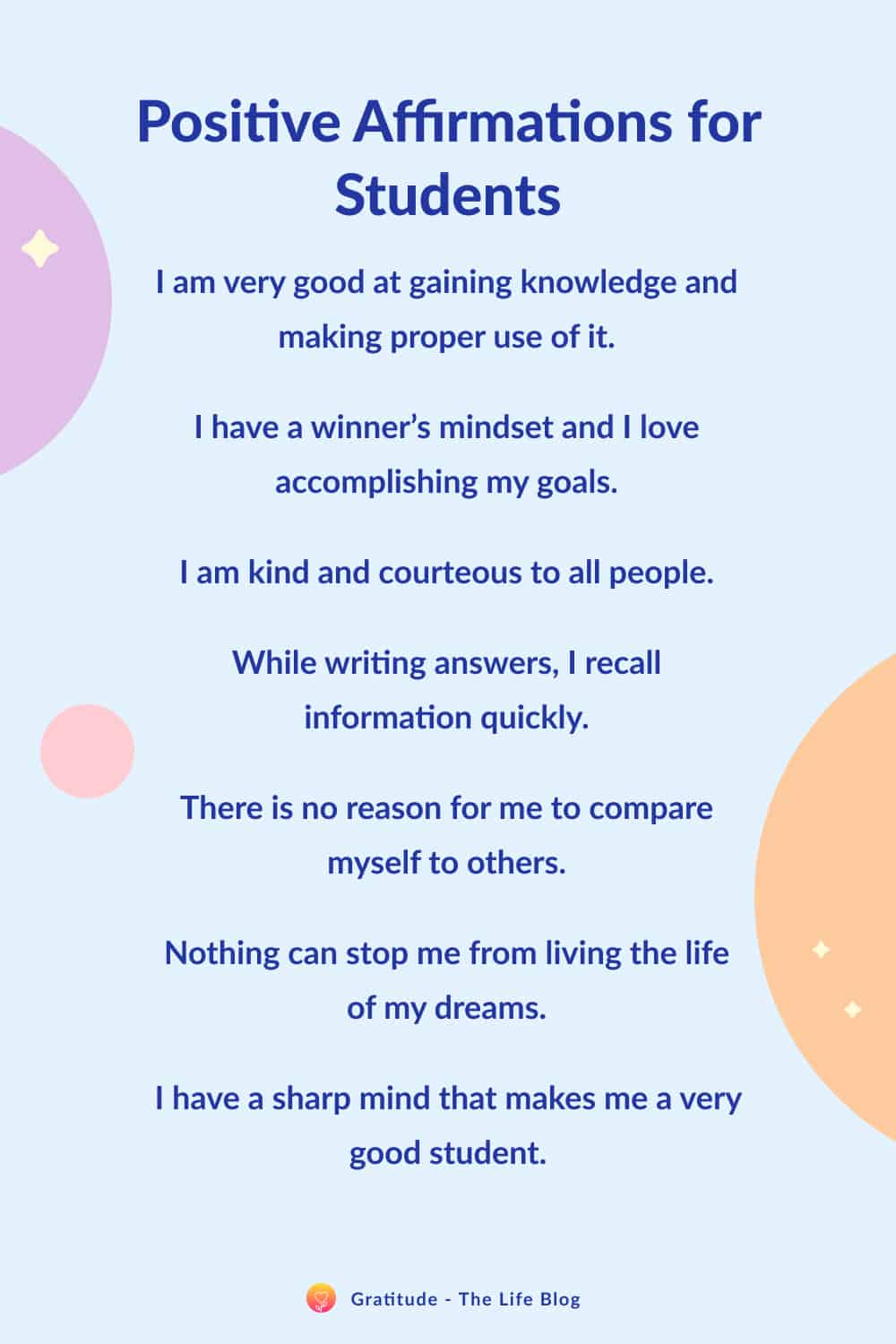
Here are twenty of the best affirmations for exam success. You can use them as they are or adjust them to fit your needs.
- I am fully prepared for this exam.
- I trust my memory and recall information easily.
- I stay calm and focused during exams.
- I am confident in my abilities.
- I overcome challenges with ease.
- I believe in myself and my skills.
- I learn from mistakes and improve each day.
- I manage my time wisely in the exam.
- I am relaxed and clear-minded.
- I welcome difficult questions as opportunities.
- I finish my exam with confidence.
- I am proud of my effort and progress.
- I focus on the present moment.
- I read questions carefully and answer accurately.
- I let go of stress and trust myself.
- I deserve success and work hard for it.
- I handle exam pressure with grace.
- I remember everything I studied.
- I approach exams with a positive attitude.
- I celebrate my achievements, big and small.
You don't need to use all twenty at once. Pick a few that speak to you and repeat them daily. Saying them aloud is best, but you can also write them down or listen to recordings.
Using Affirmations Effectively
Repeating affirmations once is not enough. For real benefits, you need a routine. Here are practical steps to make affirmations work for you:
1. Choose Your Affirmations
Pick three to five affirmations that fit your situation. For example, if you struggle with test anxiety, choose statements about calmness and focus.
2. Repeat Daily
Say your affirmations every morning and evening. You can also repeat them before study sessions and right before the exam starts.
3. Visualize Success
As you say your affirmations, imagine yourself succeeding in the exam. Picture yourself feeling confident, recalling answers easily, and finishing strong.
4. Write Them Down
Writing affirmations in a notebook can deepen their effect. Some students tape them to their desk or mirror to see them often.
5. Combine With Action
Affirmations alone won't guarantee results. Use them alongside effective study habits, practice tests, and good sleep.
6. Adjust As Needed
If an affirmation feels too unrealistic, change it to something believable. For example, "I am prepared" can become "I am becoming more prepared every day. "
7. Be Patient
It takes time to notice changes. Keep using your affirmations even if you don't see results immediately.
Credit: blog.gratefulness.me
Common Mistakes Beginners Make
Many students use affirmations incorrectly. Here are mistakes to avoid:
- Using vague statements: Affirmations should be specific. "I will do better" is less effective than "I answer questions with confidence."
- Not believing the words: If you don't believe your affirmation, it won't help. Adjust the statement until it feels true enough to repeat.
- Repeating too many: More is not always better. Focus on a few powerful affirmations.
- Skipping consistency: Using affirmations only on exam day is not enough. Practice daily.
- Ignoring action: Affirmations must be paired with real preparation.
Real-life Examples
Let's see how affirmations helped actual exam takers.
Example 1: Maria was preparing for a professional certification. She often felt overwhelmed by the amount of material. She started repeating, "I am capable and organized," and "I manage my time wisely." Over two months, Maria noticed she felt calmer while studying. On exam day, she recalled her affirmations and finished with confidence.
Example 2: Ahmed struggled with test anxiety. He used, "I am calm and focused" every morning, and visualized himself answering questions easily. When he faced a tough question in the exam, he paused, repeated his affirmation, and was able to think clearly.
Example 3: Priya felt unsure about her math skills. She chose, "I learn from mistakes and improve each day." This helped her see errors as part of learning, not proof of failure. After weeks of practice, her scores improved.
These examples show that affirmations are more than words—they change how you approach challenges.
Data: Affirmations And Exam Performance
Research backs up the benefits of affirmations. Here is a comparison of student performance with and without affirmations based on a study from a university psychology department.
| Group | Average Score (%) | Reported Anxiety Level | Confidence Rating (1-10) |
|---|---|---|---|
| Used Affirmations | 81 | Low | 8 |
| No Affirmations | 72 | High | 5 |
Students who used affirmations scored higher, felt less anxious, and rated their confidence higher. This suggests that affirmations are not just motivational—they have real effects.
Affirmations Vs. Other Study Strategies
Affirmations are helpful, but they work best with other strategies. Here’s a side-by-side comparison of affirmations and common study techniques.
| Method | Main Benefit | Best Use | Weakness |
|---|---|---|---|
| Affirmations | Boosts confidence, reduces anxiety | Before exams, daily practice | Needs belief and repetition |
| Practice Tests | Improves recall, shows gaps | After studying, close to exam | Can cause stress if overused |
| Group Study | Encourages discussion, fills gaps | When struggling alone | Can distract, needs focus |
| Mind Maps | Visualizes concepts, connects ideas | For complex subjects | Time-consuming for basics |
| Flashcards | Quick review, memory boost | Last-minute revision | Limited for deep understanding |
Affirmations complement these methods. For best results, combine positive self-talk with active learning.
Powerful Ways To Personalize Your Affirmations
Affirmations are most effective when they match your personality and needs. Here are ways to make them more personal:
1. Use Your Name
Including your name in the affirmation makes it feel more direct. For example, "I, Alex, am prepared for my exam. "
2. Connect To Goals
Tie your affirmation to your goals. "I am focused because I want to earn a scholarship. "
3. Address Specific Challenges
If you fear a subject, create an affirmation for it. "I understand math concepts with clarity. "
4. Make It Visual
Write your affirmation on colorful cards. Add symbols or pictures that inspire you.
5. Record And Listen
Record yourself saying your affirmations. Listen to them before bed or while walking.
6. Involve Family Or Friends
Ask a friend to remind you of your affirmation. This adds support and accountability.
Surprising Insights Most Beginners Miss
- Affirmations can help even if you don’t fully believe them at first. The act of repeating positive statements starts to shift your mindset, even if you feel doubtful in the beginning.
- Affirmations work best when paired with relaxation techniques. Breathing exercises, meditation, or gentle stretching before saying your affirmations can make them more powerful.
- Negative self-talk can undo your progress. If you catch yourself saying, "I’ll never pass," pause and replace it with your affirmation.
- Affirmations are useful after the exam, too. If you feel uncertain about your performance, using affirmations like "I did my best" can prevent unnecessary worry.

Credit: www.etsy.com
Best Times To Use Exam Affirmations
Timing matters. Here are moments when affirmations have the strongest effect:
- Early morning: Sets a positive tone for the day.
- Before study sessions: Prepares your mind for learning.
- Right before the exam: Calms nerves and boosts confidence.
- During the exam: Reminds you to stay focused and believe in yourself.
- After the exam: Helps you stay positive regardless of the outcome.
Combining Affirmations With Healthy Habits
Affirmations alone are not enough for exam success. Combine them with healthy habits:
- Regular sleep: Helps your brain retain information.
- Balanced meals: Fuels your concentration.
- Physical activity: Lowers stress and boosts mood.
- Breaks during study: Prevents burnout.
- Hydration: Keeps your mind alert.
Students who combine affirmations with these habits report higher energy and better performance.
Scientific Evidence And High-authority Resources
Studies have shown that positive self-talk can improve exam performance. One report from the American Psychological Association highlights the role of self-affirmation in reducing performance anxiety and boosting test scores. If you want to learn more about the science behind affirmations, visit APA Education.
Comparing Popular Affirmation Apps
Many students use apps to track and repeat affirmations. Here’s a comparison of three popular affirmation apps:
| App | Features | Ease of Use | User Rating |
|---|---|---|---|
| ThinkUp | Custom recordings, reminders, categories | Simple interface | 4.7/5 |
| My Affirmations | Text affirmations, notifications, themes | Easy for beginners | 4.5/5 |
| I Am | Daily affirmations, motivational quotes | Very intuitive | 4.6/5 |
Apps can help you stay consistent and remind you to use affirmations daily.
Creating Your Own Exam Affirmations
Sometimes, the best affirmations are the ones you write yourself. Here’s how to create effective exam affirmations:
- Identify your challenge. Is it anxiety, lack of focus, or self-doubt?
- Write a positive statement. Use present tense, like "I am focused" or "I am confident."
- Make it specific. "I recall facts easily during exams."
- Keep it short. Long affirmations are harder to remember.
- Test it out. If it feels forced, adjust the wording.
Example: If you often worry about running out of time, write, "I manage my exam time efficiently."
Affirmations For Different Types Of Exams
Not all exams are the same. Here are examples for different types:
School Exams
- "I understand my lessons well."
- "I remember what I study."
- "I answer questions confidently."
Competitive Exams
- "I handle tough questions calmly."
- "I stay motivated through preparation."
- "I believe in my ability to succeed."
Professional Certification Exams
- "I apply my knowledge accurately."
- "I am ready for new challenges."
- "I am proud of my professional growth."
Language Exams
- "I communicate clearly."
- "I recall vocabulary easily."
- "I stay calm during speaking tests."
Practical/hands-on Exams
- "I perform skills with confidence."
- "I solve problems creatively."
- "I trust my training."
Affirmations For Group Study And Peer Motivation
Group study can help, but it also brings pressure. Use affirmations to boost your group’s morale:
- "We support each other’s learning."
- "We share knowledge and grow together."
- "We respect each other’s strengths."
If you feel shy, try, "I contribute confidently to group discussions. "
Parents And Teachers: How To Encourage Affirmations
Parents and teachers play a big role in shaping students' confidence. Here’s how they can help:
- Model positive self-talk. Share your own affirmations.
- Encourage regular practice. Remind students to use affirmations daily.
- Celebrate progress. Notice improvements and praise effort.
- Avoid negative language. Instead of "You’re not trying hard enough," say, "You’re making good progress."
A supportive environment increases the impact of affirmations.

Credit: winningaffirmations.com
Frequently Asked Questions
What Are Affirmations And How Do They Help With Exams?
Affirmations are positive statements you repeat to yourself. They help you believe in your abilities, reduce stress, and boost confidence during exams. When used regularly, affirmations can change your mindset and improve your performance.
How Often Should I Use Exam Affirmations?
For best results, use affirmations daily. Repeat them in the morning, before study sessions, and right before exams. Consistency is key—using them only once or twice won’t create lasting change.
Can Affirmations Work If I Don’t Believe Them?
Yes, affirmations can still help even if you feel doubtful. The act of repeating positive statements starts to shift your mindset over time. If an affirmation feels too unrealistic, adjust it to something you can believe.
Are There Scientific Studies Supporting Affirmations?
Yes. Studies from psychology departments and organizations like the American Psychological Association show that self-affirmation can reduce anxiety and improve test scores. You can find more details at APA Education.
Can I Write My Own Exam Affirmations?
Absolutely. Personalized affirmations are often the most effective. Identify your challenges, write a positive statement, and keep it short and specific. Adjust the wording until it feels right.
---
Affirmations are a simple, powerful tool for exam success. They help you build confidence, lower stress, and focus your mind. When combined with good study habits and healthy routines, affirmations can transform your exam experience. Remember, the words you say to yourself matter.
Choose affirmations that inspire you, use them daily, and watch your mindset and results improve. Even small changes in how you think can lead to big improvements in how you perform.
