

Are Affirmations Good for Anxiety? Benefits and Expert Insights
Are Affirmations Good For Anxiety
Feeling anxious is a common human experience. For some, anxiety is a passing feeling before a big presentation. For others, it’s a daily struggle that affects sleep, work, and even relationships. There are many ways to manage anxiety, from therapy to medication to lifestyle changes. In recent years, affirmations—short, positive statements you repeat to yourself—have become a popular tool. But do affirmations actually help with anxiety, or are they just another trend? In this article, we’ll explore how affirmations work, the science behind them, when they might be helpful, and when they might fall short. You’ll also get practical tips, real examples, and a balanced look at both their benefits and limitations.
Understanding Anxiety
Anxiety is more than just feeling nervous. It’s a state of worry, fear, or unease that can be mild or severe. Some people experience anxiety as a reaction to specific situations, like speaking in public. Others live with generalized anxiety disorder, where anxious thoughts are present most of the time.
Physical symptoms of anxiety can include:
- Racing heart
- Sweaty hands
- Shaking
- Stomach upset
- Shortness of breath
Mental symptoms can include:
- Excessive worrying
- Trouble focusing
- Restlessness
- Feeling overwhelmed
Anxiety can affect anyone, at any age. It’s estimated that about one in five people will experience an anxiety disorder at some point in their lives. Importantly, anxiety is not simply “all in your head. ” It involves both the mind and the body.
What Are Affirmations?
Affirmations are short, positive statements you say to yourself. The idea is to challenge negative thoughts and replace them with more helpful ones. Affirmations are often used in self-help and wellness practices.
Some examples of affirmations include:
- “I am strong and capable.”
- “I can handle whatever comes my way.”
- “This feeling is temporary.”
People use affirmations in different ways:
- Speaking them aloud
- Writing them down
- Repeating them silently in the mind
The goal is to create a shift in thinking. Instead of focusing on worries or fears, affirmations help direct your attention to more positive possibilities.
The Science Behind Affirmations
Many people wonder if affirmations are just wishful thinking. But there is research that explores how they work, especially for anxiety.
How Affirmations Affect The Brain
When you repeat affirmations, you activate certain areas in the prefrontal cortex—the part of your brain involved in planning, self-reflection, and decision-making. This process is called self-affirmation theory. It suggests that when you remind yourself of your values and strengths, you can reduce the impact of stress.
Some studies using brain scans have found that positive self-talk can lead to measurable changes in the brain. For example, repeating affirmations can reduce activity in the amygdala, the brain’s “alarm center” for fear and anxiety.
Research Findings On Affirmations And Anxiety
While affirmations can have an effect, the results are not the same for everyone. Research shows that affirmations are most helpful for people who already have some self-confidence. For people with very low self-esteem or intense anxiety, affirmations can sometimes make them feel worse.
This happens because repeating statements you don’t believe can create inner conflict.
Here is a quick comparison of what the research says:
| Affirmation Effects | People with High Self-Esteem | People with Low Self-Esteem |
|---|---|---|
| Positive Mood | Often increases | Can decrease or stay the same |
| Anxiety Reduction | Helpful | Sometimes unhelpful |
| Self-Confidence | Boosts confidence | May feel fake or forced |
Why Affirmations Sometimes Backfire
A common mistake is using affirmations that feel too far from your current reality. If you’re feeling anxious and you say, “I am completely calm and fearless,” your mind might resist. This mental pushback can actually increase anxiety.
Non-obvious insight: The effectiveness of affirmations depends on how believable they feel to you. If an affirmation feels fake, it’s better to adjust it to something more realistic, such as, “I am learning to handle my anxiety.”
How Affirmations Can Help With Anxiety
Affirmations are not a cure for anxiety, but they can be a helpful tool when used wisely. Here’s how they might support you:
1. Refocusing Attention
Anxiety often pulls your thoughts toward what could go wrong. Affirmations help shift your attention to what you can handle or control. For example, instead of worrying about a meeting, you might use the affirmation, “I am prepared and ready to give my best.
”
2. Building Self-compassion
Many people with anxiety are hard on themselves. Affirmations like, “It’s okay to feel anxious” or “I am doing my best” can help you treat yourself with more kindness.
3. Interrupting Negative Thought Loops
Repeating a positive statement can break the cycle of anxious thinking. Even a simple phrase like, “This will pass” can help create a moment of calm.
4. Boosting Resilience
Over time, affirmations can help you build more resilience. When practiced regularly, they may help you bounce back from stress more quickly.
5. Supporting Other Treatments
Affirmations work best as part of a larger anxiety management plan. They can support therapy, medication, or relaxation techniques, but should not replace them.
When Affirmations May Not Be Enough
While affirmations can be helpful, they are not a magic solution. There are times when they may not be enough on their own.
Severe Anxiety
For people with severe anxiety or panic attacks, affirmations alone are unlikely to solve the problem. Professional treatment, such as therapy or medication, is often needed.
Deeply Rooted Negative Beliefs
If you have long-standing negative beliefs about yourself, simple affirmations may not be enough to change them. In these cases, working with a mental health professional can help address the deeper issues.
Risk Of Avoiding Real Problems
Sometimes, people use affirmations to avoid dealing with real-life challenges. For example, telling yourself, “Everything is fine,” when you need to set boundaries or take action, can stop you from making needed changes.
Non-obvious insight: If affirmations feel like you are ignoring reality, try pairing them with action steps. For example, “I am learning to cope with anxiety, and I will ask for help if I need it.”
How To Use Affirmations Effectively For Anxiety
The key to making affirmations work for anxiety is to use them in a way that feels right for you. Here are some practical steps:
Step 1: Choose Affirmations That Feel Believable
Pick statements that match your current experience. If you feel overwhelmed, try something like, “I am doing the best I can,” instead of “I am never anxious. ”
Step 2: Make Them Specific
General statements like “I am happy” are less powerful than specific ones like, “I can handle my worries one step at a time. ”
Step 3: Repeat Regularly
Consistency matters more than intensity. Try repeating your affirmations every morning, before a stressful event, or whenever anxiety appears.
Step 4: Pair With Deep Breathing
Say your affirmation as you take slow, deep breaths. This helps calm your body and mind at the same time.
Step 5: Write Them Down
Some people find it helpful to write affirmations in a notebook or on sticky notes around the house.
Step 6: Visualize Success
As you say your affirmation, imagine what it would feel like if it were true. This activates more areas of your brain and can make affirmations more effective.
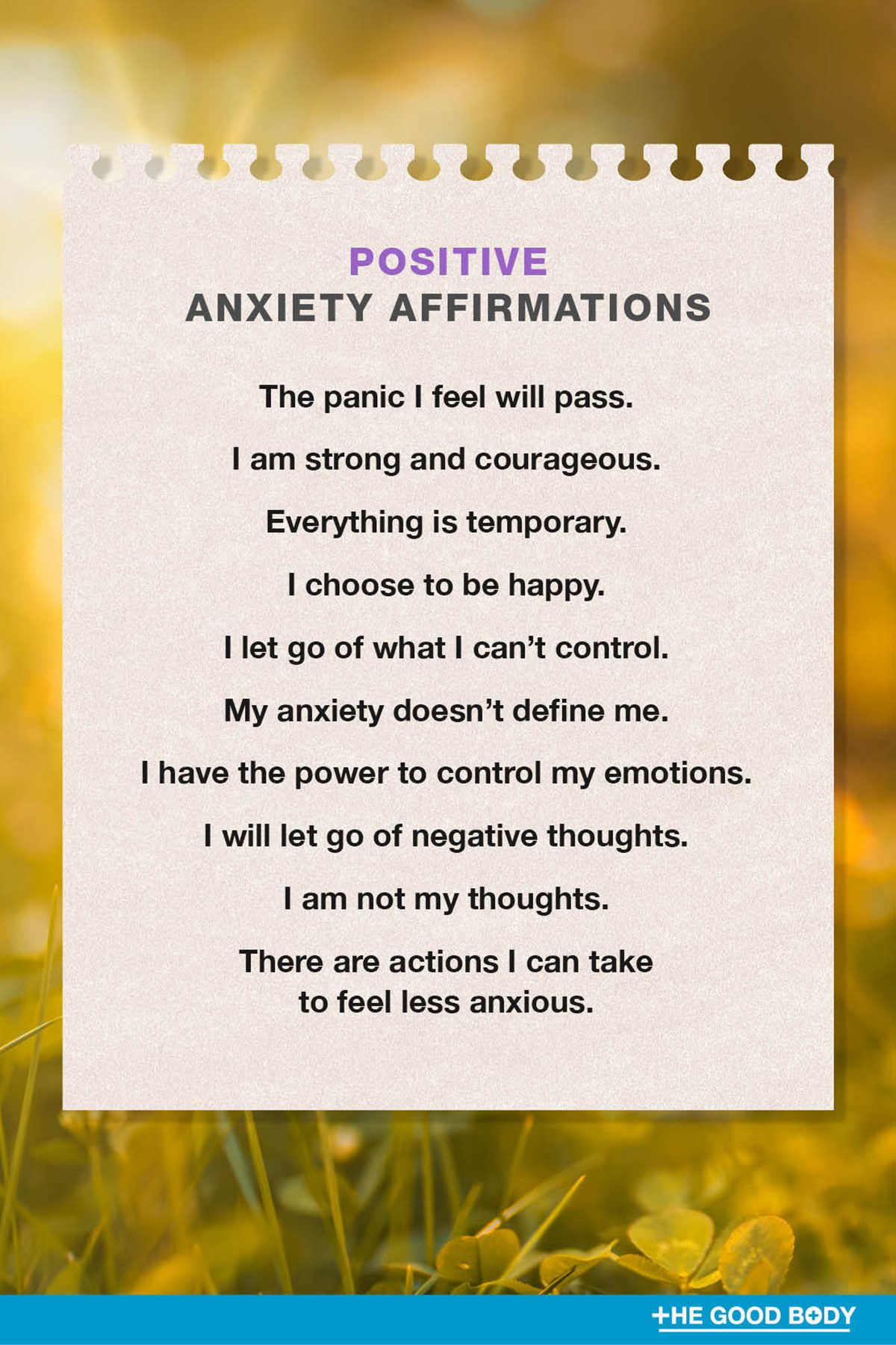
Credit: www.thegoodbody.com
Examples Of Affirmations For Anxiety
Here are some affirmations that are especially useful for managing anxiety. Feel free to adjust them to fit your needs:
- “This feeling is uncomfortable, but I can get through it.”
- “I am safe in this moment.”
- “It’s okay not to be okay.”
- “I trust myself to handle challenges.”
- “I am allowed to ask for help.”
- “My thoughts are not facts.”
- “I am learning to calm my mind.”
- “Anxiety does not define me.”
- “I can find moments of peace.”
- “I am stronger than my worries.”
Common Pitfalls When Using Affirmations
Affirmations can be powerful, but there are some common mistakes to avoid.
Using Unrealistic Statements
Affirmations should stretch your thinking, but not break it. If an affirmation feels totally untrue, your mind will resist.
Skipping Action
Affirmations work best when combined with action. For example, saying, “I am getting healthier,” is more effective if you also take steps like eating well or exercising.
Ignoring Emotions
Affirmations are not a way to suppress feelings. If you feel anxious, it’s okay to acknowledge it before using an affirmation.
Expecting Instant Results
Change takes time. Affirmations are most helpful when used regularly, not just once.
Comparing Affirmations To Other Anxiety Tools
Affirmations are just one tool in the anxiety toolbox. Here’s how they compare to other common methods:
| Tool | What It Does | Best For | Limitations |
|---|---|---|---|
| Affirmations | Shifts thinking patterns | Daily worries, mild anxiety | Less effective for severe anxiety |
| Therapy (CBT) | Addresses root causes | Moderate to severe anxiety | Requires time and commitment |
| Medication | Balances brain chemistry | Severe or persistent anxiety | Side effects, not for everyone |
| Meditation | Calms the nervous system | General stress, ongoing anxiety | Takes practice to master |
Practical tip: Try combining affirmations with other approaches for the best results. For example, use affirmations before a therapy session, or after practicing deep breathing.
The Role Of Self-talk In Anxiety
Affirmations are a form of self-talk. The way you talk to yourself matters more than most people realize. Negative self-talk, like “I can’t do this,” or “I always mess up,” can make anxiety worse. Positive self-talk, through affirmations, helps create a more supportive inner environment.
Example: Replacing Negative Self-talk
Suppose you’re worried about a job interview. Your anxious mind might say, “I’m going to fail. ” You can replace this with an affirmation like, “I am prepared and will do my best. ” Over time, this shift can help reduce anxiety.
Personal Stories: How People Use Affirmations For Anxiety
Hearing how others use affirmations can make them feel more real and practical. Here are some real-life examples:
Maria’s Story: Maria struggled with social anxiety. She used the affirmation, “I am enough just as I am,” before social events. At first, it felt awkward. But after a few weeks, she noticed she was less nervous and more willing to join conversations.
James’ Story: James dealt with panic attacks at work. He started using the affirmation, “This feeling will pass,” paired with slow breathing. He found it didn’t stop panic attacks completely, but helped him recover faster and return to his tasks.
Layla’s Story: Layla combined affirmations with therapy. Her therapist helped her create custom affirmations that addressed her specific worries, like, “I am capable of making good decisions.” She says affirmations are now a regular part of her routine.
Non-obvious insight: Creating your own affirmations, based on your unique challenges, can be more powerful than using generic ones from the internet.
When To Seek More Help
Affirmations are a valuable tool, but sometimes anxiety is too strong to manage alone. If you notice any of these signs, consider reaching out for help:
- Anxiety disrupts daily life (work, school, relationships)
- You have panic attacks or severe fears
- You can’t control your worries, even with affirmations or other tools
- You feel hopeless or think about harming yourself
A mental health professional can offer therapy, medication, or other support. Affirmations can still play a role, but don’t be afraid to ask for more help if you need it.
For information on mental health resources, you can visit the National Institute of Mental Health.
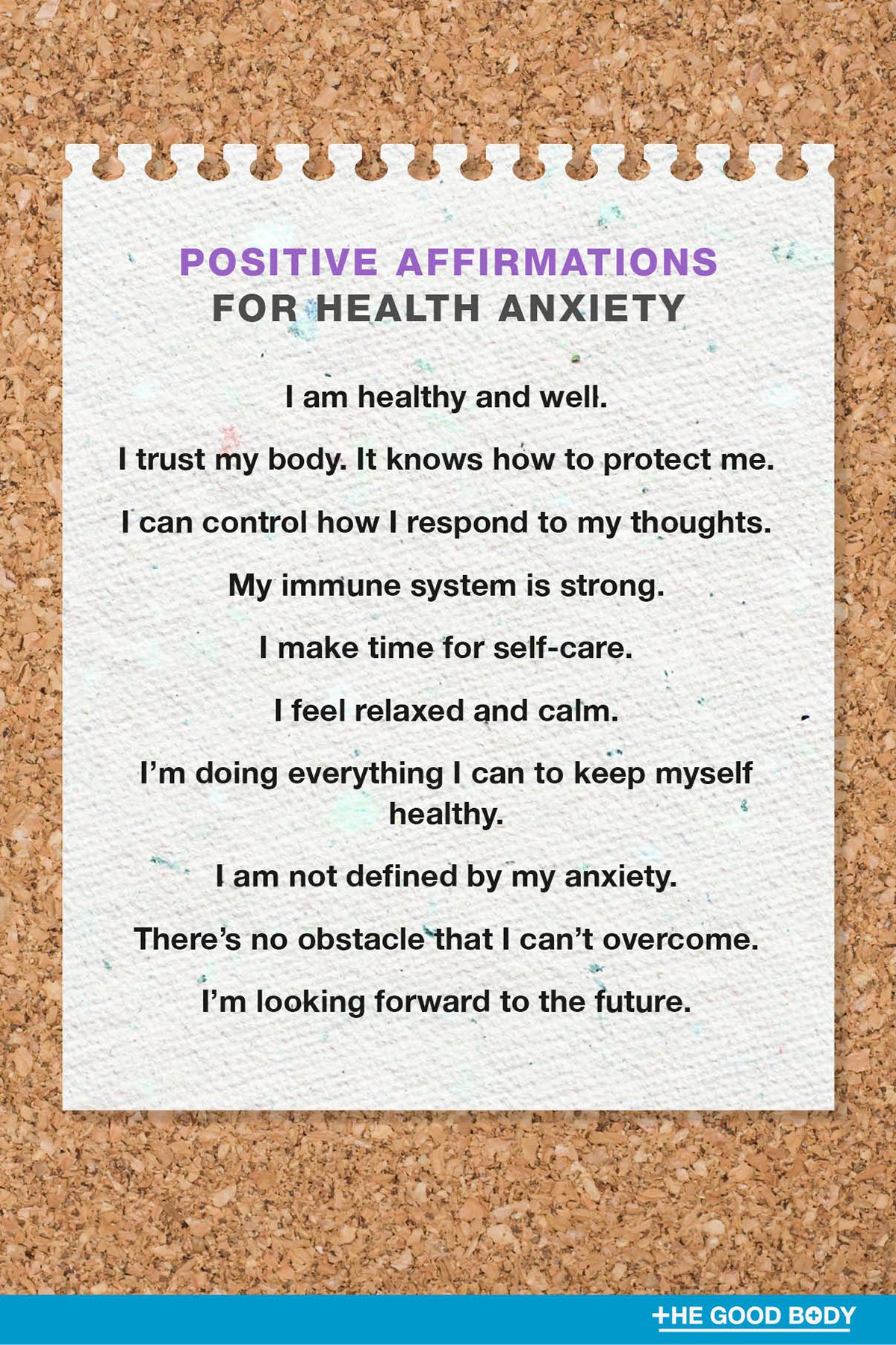
Credit: www.thegoodbody.com
Adjusting Affirmations For Maximum Impact
If you’ve tried affirmations and they haven’t worked, don’t give up yet. Here are ways to make them more effective:
Use “i Am Learning” Statements
Instead of saying, “I am calm,” try, “I am learning to stay calm in stressful situations. ” This feels more achievable and reduces inner resistance.
Add Action Steps
Pair affirmations with specific actions. For example, “I am taking steps to manage my anxiety, like talking to a friend. ”
Involve All Your Senses
Write your affirmation, say it out loud, and imagine how it feels. The more senses you involve, the stronger the effect.
Track Your Progress
Keep a journal of how you feel before and after using affirmations. Notice small changes in mood, thoughts, or behavior.
The Limits Of Positive Thinking
While affirmations are rooted in positive thinking, it’s important to recognize their limits. Positive thinking does not mean ignoring problems or pretending everything is perfect. It’s about finding a balanced perspective.
Overusing affirmations without facing real challenges can lead to toxic positivity—the belief that you must always be positive, even when things are hard. This can make people feel guilty for having normal, difficult emotions.
Practical tip: Use affirmations to support yourself, not to deny reality. It’s okay to admit when things are tough.
Best Practices For Long-term Use
To get the most from affirmations, make them a regular part of your life. Here are some best practices:
- Start small: Pick one or two affirmations to focus on.
- Be patient: It may take weeks or months to notice changes.
- Adapt as needed: Change your affirmations as your needs change.
- Combine with other tools: Use affirmations alongside therapy, exercise, or relaxation techniques.
- Practice self-kindness: Be gentle with yourself if affirmations don’t “work” right away.
Measuring The Effectiveness Of Affirmations
How do you know if affirmations are helping your anxiety? Here are some signs to look for:
- You notice less negative self-talk.
- You feel a bit calmer during stressful moments.
- You recover from anxious episodes more quickly.
- You’re more willing to try new things, even if you feel nervous.
Some people like to use rating scales to track their anxiety. For example, rate your anxiety from 1 to 10 before and after using affirmations.
Here’s a simple way to track your progress:
| Date | Affirmation Used | Anxiety Before (1-10) | Anxiety After (1-10) | Notes |
|---|---|---|---|---|
| Monday | I am safe right now | 7 | 5 | Felt calmer after repeating |
| Tuesday | I can handle this | 6 | 4 | Used with deep breathing |
Tracking progress can help you see patterns and choose the most effective affirmations for you.
Other Helpful Tools To Combine With Affirmations
Affirmations are just one part of managing anxiety. Here are other tools you can use together with affirmations:
- Mindfulness meditation: Focuses your attention on the present moment.
- Journaling: Helps you express and understand your feelings.
- Physical activity: Exercise reduces anxiety for many people.
- Progressive muscle relaxation: Tenses and relaxes muscle groups to release tension.
- Support networks: Talking with friends, family, or support groups.
Combining these tools often leads to better results than using any one method alone.
Affirmations And Cultural Differences
Not everyone responds to affirmations in the same way. Cultural background can influence how people view positive self-talk. In some cultures, talking about oneself in a positive way may feel uncomfortable or even wrong. In these cases, using affirmations focused on community, relationships, or shared values might feel more natural.
For example:
- “I am supported by people who care about me.”
- “Together, we can overcome challenges.”
Practical tip: Adjust your affirmations to fit your cultural values and beliefs.
Summary: Are Affirmations Good For Anxiety?
Affirmations can be a helpful tool for managing anxiety, especially for mild to moderate cases. They work by shifting your focus, building self-compassion, and interrupting negative thoughts. However, they are not a cure-all. The best results come when affirmations are believable, specific, and combined with other methods like therapy or relaxation techniques.
If affirmations alone are not enough, or if anxiety is severe, seek support from a mental health professional. Remember, the goal is not to eliminate anxiety completely, but to learn to manage it so you can live your life more fully.
Frequently Asked Questions
What Are The Best Affirmations For Anxiety?
The best affirmations are short, positive statements that feel believable to you. Examples include “I am safe right now,” “This feeling will pass,” and “I am doing my best. ” Adjust them to match your situation.
Can Affirmations Make Anxiety Worse?
Yes, if affirmations feel unrealistic or fake, they can increase anxiety. It’s important to choose statements that feel true or achievable. If an affirmation doesn’t help, adjust it or try a different one.
How Often Should I Use Affirmations For Anxiety?
Consistency is key. Try repeating affirmations daily, or when you notice anxiety. Some people use them in the morning, before stressful events, or whenever negative thoughts appear.
Are Affirmations A Replacement For Therapy Or Medication?
No. Affirmations are a helpful tool, but they do not replace professional treatment for severe anxiety. They work best as part of a broader anxiety management plan.
How Long Does It Take For Affirmations To Work For Anxiety?
Everyone is different. Some people notice small changes in a few days, while others need weeks or months of practice. The most important thing is to be patient and consistent.
Affirmations can be a valuable part of your journey with anxiety. Used wisely, they help you build a kinder, stronger, and more resilient mind.
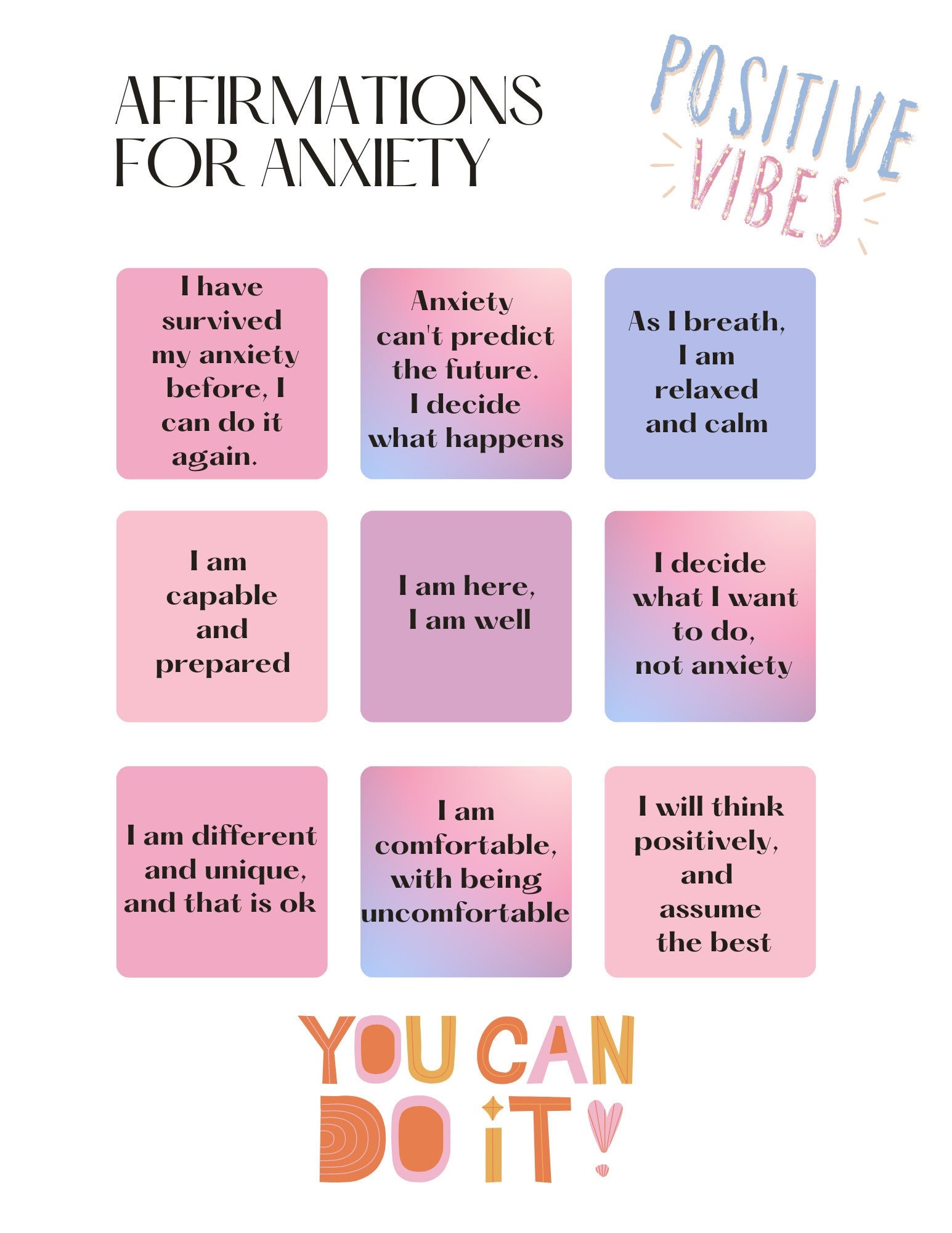
Credit: www.etsy.com
