

Affirmations for Self Love: Transform Your Mindset Daily
Affirmations For Self Love
Self love is often misunderstood. Many people think it means being selfish or arrogant. But self love is about accepting yourself, being kind to yourself, and believing you deserve happiness. When you practice self love, you build confidence, handle stress better, and improve your relationships. One of the most powerful tools for self love is affirmations. These are positive statements you repeat to yourself. They help change how you think and feel about yourself. If you struggle with low self-esteem or negative thoughts, using self love affirmations can make a real difference.
You may feel unsure about saying good things to yourself. It might seem strange at first. But research shows that daily affirmations can actually change your brain. They help you notice your strengths, forgive your mistakes, and feel more positive.
In this article, you’ll learn how affirmations work, how to use them, and which ones are most effective for self love. You’ll also see examples, practical tips, and answers to common questions.
Why Self Love Matters
Self love is the foundation for a healthy, happy life. If you don’t value yourself, you may struggle with anxiety, depression, or unhealthy relationships. You might try to please others, ignore your own needs, or feel guilty for taking care of yourself.
When you learn to love yourself, you set healthy boundaries and make better choices.
Studies show that people with high self love tend to:
- Handle stress better
- Recover faster from setbacks
- Have stronger relationships
- Make healthier decisions
A survey from the American Psychological Association found that people who practice self love report lower levels of stress and higher satisfaction in life. This doesn’t mean you never feel sad or insecure. But you learn to be gentle with yourself, even when things go wrong.
What Are Affirmations?
Affirmations are short, positive statements you say to yourself. They help you focus on your strengths and change negative beliefs. For example, instead of thinking “I always mess up,” you say, “I am learning and growing every day.” This simple shift can change your mood and your actions.
Affirmations are based on the idea that your thoughts shape your reality. If you repeat positive statements, you start to believe them. Your brain creates new connections, which makes it easier to act in ways that match your affirmations.
The Science Behind Affirmations
Research in psychology shows that affirmations can help reduce stress, improve performance, and boost self-esteem. MRI scans reveal that when people repeat positive self statements, parts of the brain linked to reward and self-processing light up. This means affirmations aren’t just “feel good” words—they actually change how you think and feel.
In one study, participants who used affirmations for two weeks felt more positive and less anxious than those who didn’t. Another study found that affirmations can help people handle criticism and failure better.
Common Myths About Affirmations
Some people believe affirmations don’t work. They think it’s just “wishful thinking.” But affirmations are not magic. They work best when you:
- Choose statements you believe or want to believe
- Repeat them regularly
- Pair them with action
If you only say “I am amazing” but never try to improve, you won’t see much change. Affirmations support your growth—they don’t replace it.
How To Use Affirmations For Self Love
Using affirmations is simple, but there are ways to make them more effective. Here’s how to get started:
- Choose affirmations that feel right. Pick statements that match your goals or needs.
- Repeat them daily. Say your affirmations in the morning, at night, or whenever you need a boost.
- Say them out loud. Speaking affirmations helps your brain notice them.
- Write them down. Keeping a journal makes affirmations more powerful.
- Visualize the meaning. Imagine yourself living the affirmation.
- Stay consistent. Change takes time. Use your affirmations every day for at least a month.
Example: Creating A Daily Affirmation Routine
Let’s say you want to improve your self love. Your routine could look like this:
- Wake up and say, “I am worthy of love and respect.”
- Write “I accept myself fully” in your journal.
- Before bed, repeat, “I forgive myself for my mistakes.”
- Whenever you feel stressed, remind yourself, “I am enough.”
Mistakes To Avoid
Many beginners make mistakes that reduce the power of affirmations. Here are some to watch for:
- Picking statements that feel fake or forced
- Saying affirmations only once and expecting quick results
- Ignoring negative feelings instead of facing them
If an affirmation feels too far from your reality, adjust it. For example, instead of “I am confident,” try “I am learning to be more confident. ”
Powerful Affirmations For Self Love
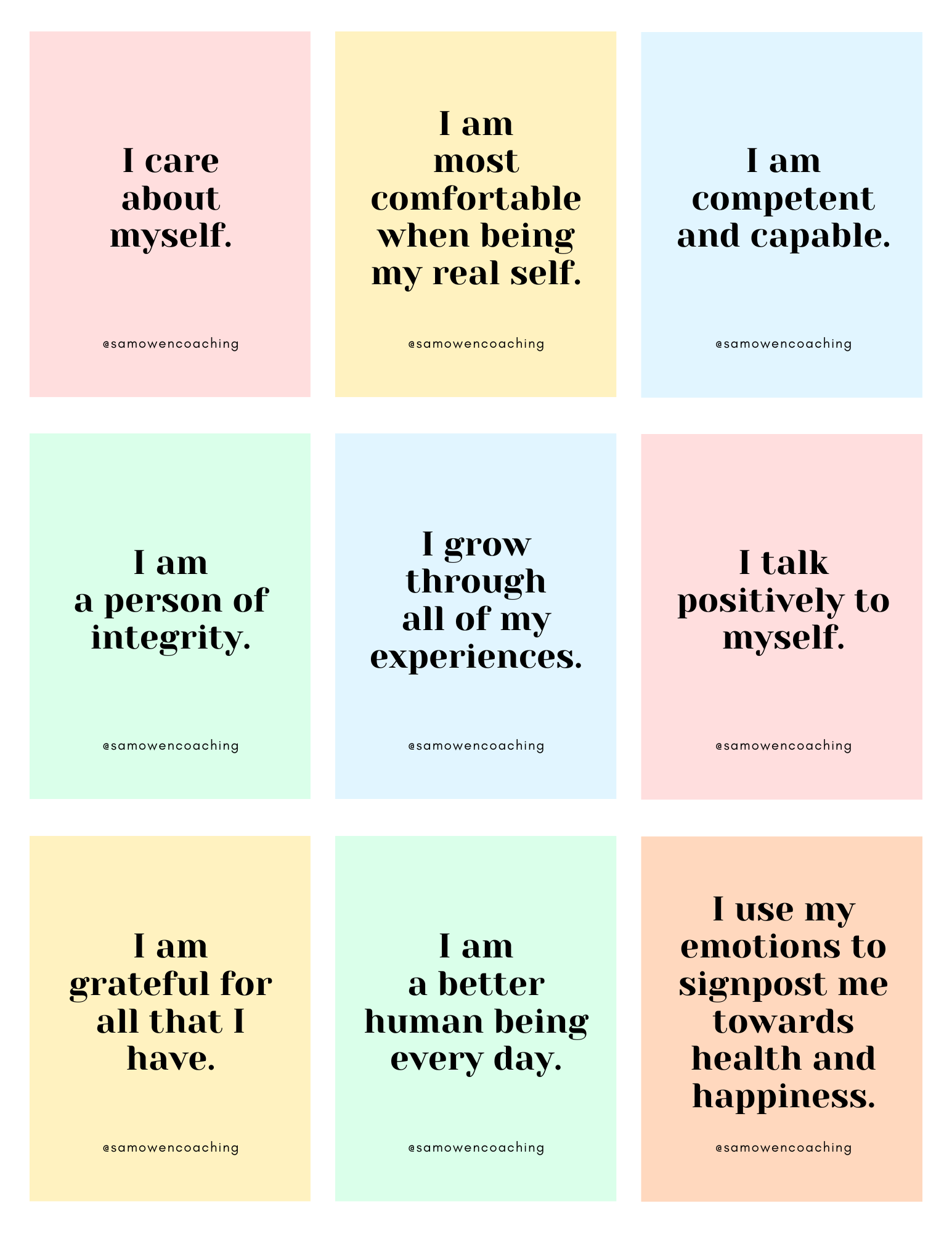
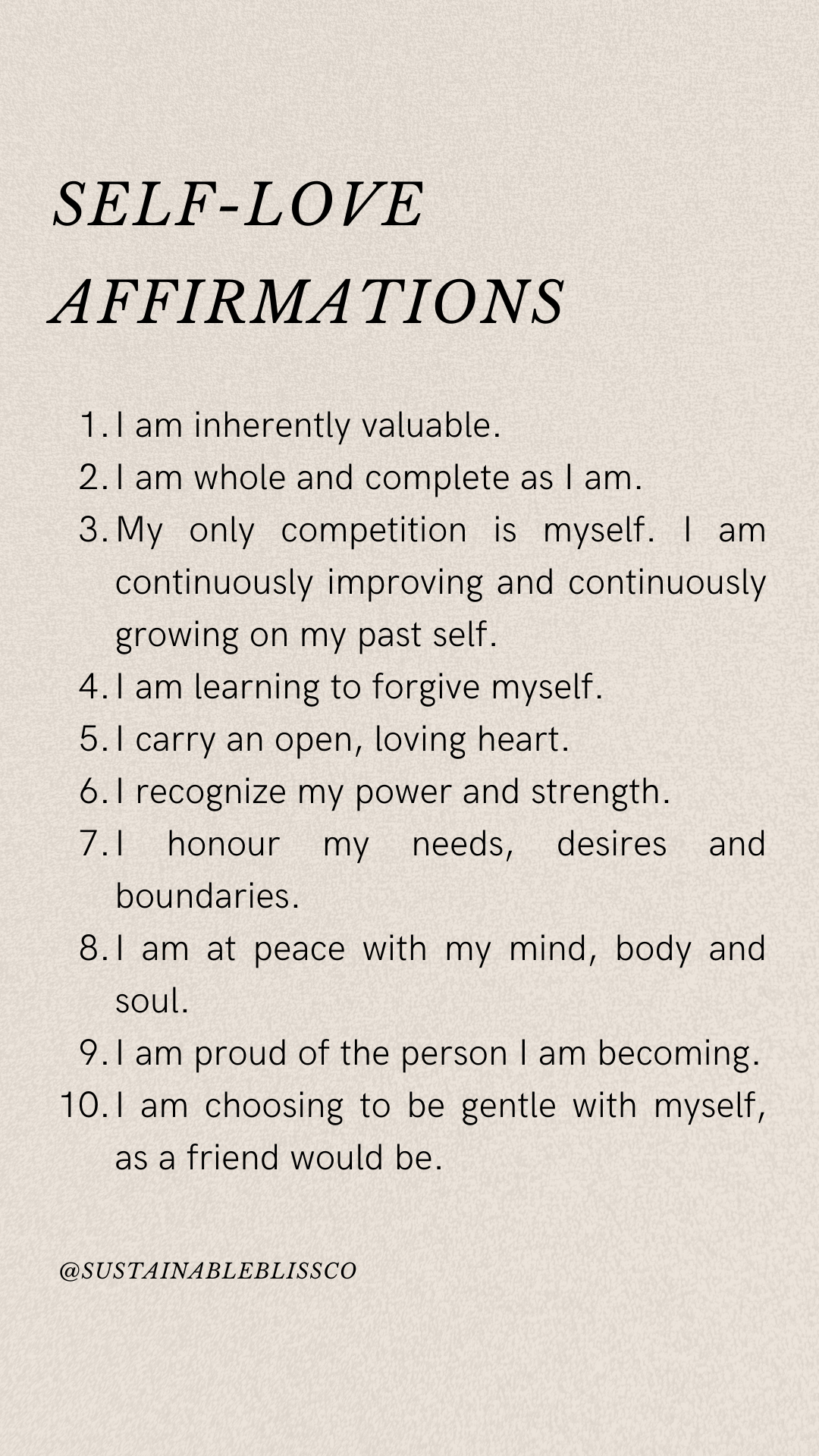
There are many affirmations for self love, but some are more effective than others. Here are 20 examples you can use. You can pick a few or try them all.
- I am worthy of love and respect.
- I accept myself just as I am.
- I forgive myself for past mistakes.
- I trust myself to make good choices.
- I am proud of who I am becoming.
- My feelings and needs matter.
- I am enough, just as I am.
- I deserve happiness and peace.
- I celebrate my strengths and achievements.
- I honor my boundaries and values.
- I choose to care for myself daily.
- I believe in my abilities.
- I am gentle with myself in tough times.
- I am not defined by my flaws.
- I am free from self-judgment.
- I trust my inner wisdom.
- I love and accept my body.
- I am open to new possibilities.
- I am grateful for who I am.
- I am a priority in my own life.
You can tailor these to your needs. For example, if you struggle with body image, focus on “I love and accept my body. ” If you feel guilty for taking breaks, use “I am a priority in my own life.
”
Credit: www.relationshipscoach.co.uk
Customizing Your Affirmations
Affirmations work best when they feel personal. Here’s how to create your own:
- Identify your biggest challenge. Maybe you feel unworthy, anxious, or guilty.
- Write a positive statement that addresses it. For example, “I am learning to trust myself.”
- Keep it short and simple. Long statements are harder to remember.
- Use present tense. Say “I am,” not “I will be.”
- Make it believable. If “I am amazing” feels too big, start with “I am learning to value myself.”
Example: Custom Affirmations
If you struggle with self-doubt, you might write:
- “I trust my decisions.”
- “I am capable and strong.”
If you battle perfectionism, try:
- “I allow myself to make mistakes.”
- “I accept myself, flaws and all.”
Comparing Affirmations To Other Self Love Tools
Affirmations are just one tool for self love. Let’s compare them to other methods:
| Method | How It Works | Strengths | Weaknesses |
|---|---|---|---|
| Affirmations | Repeat positive statements | Easy, quick, low-cost | May feel forced at first |
| Journaling | Write thoughts and feelings | Helps process emotions | Time-consuming |
| Meditation | Focus on breath and awareness | Reduces stress, improves focus | Needs practice |
| Therapy | Professional guidance | Deep healing, expert support | Can be expensive |
Affirmations can be combined with other tools. For example, you can journal about your affirmations or meditate while repeating them.
Practical Tips For Making Affirmations Work
Many people start affirmations but give up quickly. Here are some tips to help you succeed:
- Start small. Pick one or two affirmations and use them daily.
- Set reminders. Put sticky notes on your mirror or phone.
- Track your progress. Notice changes in your mood or confidence.
- Be patient. Change takes time—don’t expect instant results.
- Use affirmations during difficult moments. When you feel low, repeat your affirmation.
Examples Of Daily Affirmation Use
- Before a stressful meeting, say, “I am confident in my abilities.”
- After a mistake, remind yourself, “I am learning and growing.”
- When you feel unworthy, repeat, “I deserve love and kindness.”
How Long Does It Take?
Most experts recommend using affirmations for at least 30 days. Some people notice changes sooner, others take longer. The key is consistency.
The Impact Of Self Love Affirmations
Self love affirmations can have a big impact on your life. Here are some ways they help:
- Increase confidence: When you tell yourself you are worthy, you start to believe it.
- Reduce stress: Positive self talk calms your mind.
- Improve relationships: When you love yourself, you treat others better.
- Boost motivation: Affirmations remind you of your strengths.
- Build resilience: You handle setbacks with more grace.
Real-life Examples
Maria struggled with anxiety and low self-esteem. She started using affirmations like “I am enough” and “I trust myself. ” After three months, she felt more confident and less anxious. Her relationships improved because she set healthy boundaries.
James felt guilty for taking breaks. He used “I am a priority in my own life. ” Over time, he learned to care for himself without guilt. He became more productive and happy.
Data And Statistics
Research supports the power of affirmations. A study by Carnegie Mellon University found that people who used affirmations before stressful tasks had lower cortisol levels (the stress hormone). Another survey showed that 76% of people who practiced daily affirmations felt more positive about themselves.
Here’s a comparison of self love levels before and after using affirmations:
| Time | Average Self Love Score (1-10) | Percentage Reporting Higher Confidence |
|---|---|---|
| Before Affirmations | 4.5 | 35% |
| After 30 Days | 7.2 | 68% |
| After 60 Days | 8.1 | 76% |
These numbers show that affirmations can make a real difference if you stick with them.
Affirmations For Different Situations
Self love affirmations can be used in many situations. Here are some examples:
After A Mistake
- “I forgive myself.”
- “Mistakes help me grow.”
During Stress
- “I am calm and strong.”
- “I can handle this.”
Before A Challenge
- “I trust my abilities.”
- “I am ready for this.”
When Feeling Lonely
- “I am connected and loved.”
- “I am enough.”
Facing Criticism
- “My worth is not defined by others.”
- “I accept myself.”
Common Challenges And Solutions
Using affirmations isn’t always easy. Here are some challenges and how to solve them:
Challenge: Affirmations Feel Fake
Solution: Adjust your affirmation. If “I am confident” feels false, try “I am learning to be more confident.” Make it believable.
Challenge: Forgetting To Use Affirmations
Solution: Set reminders. Place notes where you’ll see them, like your bathroom mirror or phone.
Challenge: Negative Thoughts Return
Solution: Don’t fight them. Accept that negative thoughts happen. Use your affirmation as a gentle reminder, not a command.
Challenge: No Results
Solution: Give it time. Change can be slow. Track your progress with a journal.
Choosing The Right Affirmations
Picking the right affirmation is important. Here’s a guide to help you:
| Goal | Recommended Affirmation | Why It Works |
|---|---|---|
| Build Confidence | I believe in myself | Focuses on self-trust |
| Reduce Anxiety | I am calm and safe | Soothes worry |
| Improve Self Acceptance | I accept myself | Reduces self-judgment |
| Set Boundaries | I honor my needs | Encourages self care |
| Handle Criticism | I am enough | Protects self worth |
Choose affirmations based on your current needs. Change them as your goals shift.
The Role Of Affirmations In Healing
Self love affirmations can help heal old wounds. If you grew up with criticism or rejection, affirmations give you a new voice. They help you rewrite negative beliefs.
Therapists often use affirmations in cognitive behavioral therapy (CBT). They help clients challenge negative thoughts and build self esteem. While affirmations alone are not a cure, they support healing.
Practical Healing Example
If you were told “You’re not good enough,” use “I am worthy of love and respect. ” Over time, your brain learns to accept this new belief.
Combining Affirmations With Mindfulness
Affirmations work even better when paired with mindfulness. Mindfulness means being present and aware of your thoughts. When you notice negative thoughts, you can replace them with affirmations.
Try this:
- Take a few deep breaths.
- Notice your thoughts without judgment.
- Repeat your affirmation slowly.
- Visualize the meaning.
This helps your affirmation sink in deeper.
Affirmations And Physical Health
Self love isn’t just mental—it affects your body too. People who practice self love tend to:
- Eat healthier
- Exercise more
- Sleep better
Studies show that positive self talk lowers blood pressure and reduces stress. One study found that people who used affirmations before exercise felt more motivated and less tired.
Affirmations For Children And Teens
Self love affirmations are not just for adults. Kids and teens benefit too. They face peer pressure, bullying, and self doubt. Teaching them affirmations helps build confidence early.
Examples for children:
- “I am special.”
- “I can do hard things.”
- “I am loved.”
For teens:
- “I am unique and valuable.”
- “I trust myself.”
- “I am strong.”
Parents and teachers can encourage kids to use affirmations daily.
Using Affirmations In Relationships
Self love improves relationships. When you value yourself, you set boundaries and communicate better. Couples can use affirmations together:
- “I am worthy of love.”
- “I respect myself and my partner.”
- “I am open to growth.”
This strengthens trust and respect.
Self Love Affirmations In The Workplace
Self love isn’t just for personal life—it matters at work too. Many people struggle with self doubt in their jobs. Affirmations can help:
- “I am capable and skilled.”
- “I am valued by my team.”
- “I handle challenges with confidence.”
Using affirmations before meetings or presentations can boost performance.

Credit: www.amazon.com
Tracking Your Progress
It’s important to track your progress with affirmations. Keep a journal and write about your feelings, actions, and changes. Notice small improvements. Celebrate your wins.
You can also use a simple rating system:
- Rate your self love from 1-10 before starting affirmations
- Rate again after 30 days
- Notice the difference
Real World Success Stories
Many people have changed their lives with self love affirmations. Here are two examples:
- Anna always felt insecure. She started using “I am enough.” After two months, she felt happier and more confident. She began setting boundaries and saying no when needed.
- Ravi struggled with stress and guilt. He used “I deserve care and kindness.” Slowly, he learned to prioritize himself. He felt less anxious and more balanced.
These stories show that affirmations can create real change.
Resources And Further Reading
If you want to learn more, visit Psychology Today. You’ll find articles, guides, and expert tips on self love and affirmations.
Frequently Asked Questions
How Long Should I Use Affirmations For Self Love?
Most experts suggest using affirmations daily for at least 30 days. Some people notice changes sooner, but lasting results come with consistency. Keep using affirmations as part of your routine.
Can Affirmations Really Change How I Feel?
Yes, affirmations can help shift your thoughts and feelings. Research shows that repeating positive statements changes brain activity and boosts self esteem. They work best when paired with action and self care.
What If Affirmations Feel Unnatural Or Uncomfortable?
It’s normal for affirmations to feel strange at first, especially if you’re not used to positive self talk. Start with statements you believe or adjust them to fit your reality. With practice, they will feel more natural.
Are Affirmations Enough To Improve Self Love?
Affirmations are a helpful tool, but they work best with other practices like mindfulness, therapy, and self care. Combine affirmations with healthy habits for stronger results.
Can I Use Affirmations For Other Areas Of Life?
Absolutely. Affirmations can be used for confidence, stress, relationships, work, and more. Choose statements that match your goals and repeat them daily.
Self love affirmations are a simple but powerful way to change your life. With patience and practice, you’ll build confidence, reduce stress, and find more happiness. Start today, and notice how your world transforms from within.
Credit: www.sustainableblissco.com
