

Affirmations for Manifesting: Unlock Your Dream Life Today
Affirmations for Manifesting: How to Use Words to Shape Your Reality
Everyone wants a better life—more confidence, stronger relationships, financial freedom, or simply more happiness. But what if just using the right words every day could help you move closer to those goals? This is the idea behind affirmations for manifesting. Many people, including athletes, business leaders, and artists, use affirmations to change their mindset and attract what they desire. But how do affirmations really work? Are they just wishful thinking, or can they truly help you shape your reality? This article explores the science, practice, and power of affirmations for manifesting. You’ll learn not only how to create and use affirmations, but also how to avoid common mistakes and make your practice as effective as possible.
What Are Affirmations For Manifesting?
Affirmations are positive statements that you repeat to yourself. Manifesting means bringing something into your life through focused intention and belief. Put together, affirmations for manifesting are phrases you say or write to help bring your desires into reality.
For example, someone who wants more confidence might use the affirmation, “I am confident and capable in every situation. ” If you want to improve your finances, you could use, “Money flows easily and abundantly to me. ” The idea is that by repeating these statements, you reprogram your mind to believe them.
Over time, this can change your thoughts, emotions, and actions.
Manifesting affirmations are not just about hoping for results. They are about aligning your mind, beliefs, and actions to what you want. This alignment is what many believe helps you attract and create what you desire.
The Science Behind Affirmations
It’s easy to dismiss affirmations as just “positive thinking.” But research shows there is more going on beneath the surface. When you repeat affirmations, you are using a process called self-affirmation. This activates certain areas of the brain linked to self-processing and reward.
A study published in the journal *Social Cognitive and Affective Neuroscience* found that self-affirmation lights up the brain’s ventromedial prefrontal cortex. This area is involved in how we view ourselves and our values. When this part is active, people are more open to positive change.
Affirmations also affect your reticular activating system (RAS). This is a bundle of nerves in your brainstem that filters information. If you keep repeating, “I am successful,” your RAS starts to notice opportunities and information that match this belief. It’s as if your brain becomes a magnet for what you focus on.
But affirmations alone are not magic. They work best when combined with real action and belief. If you simply repeat words you don’t believe, or never take steps toward your goals, affirmations won’t be very effective.
How Manifesting Affirmations Work
The basic idea behind manifesting affirmations is that your thoughts shape your reality. This doesn’t mean you can wish for anything and have it appear instantly. Instead, affirmations help you:
- Change your mindset: They shift your thoughts from negative to positive.
- Build new habits: When you believe something is possible, you’re more likely to act.
- Attract opportunities: You become more aware of things that can help you.
- Boost confidence: Positive statements reduce self-doubt and increase motivation.
Think of affirmations like planting seeds. Each time you repeat an affirmation, you water the seed. Over time, with care and action, it can grow into real change.
Creating Effective Manifesting Affirmations
Not all affirmations are equally powerful. The words you choose and how you use them matter. Here are some key tips for creating affirmations that work:
1. Use The Present Tense
Say your affirmation as if it’s already true. For example: “I am healthy and full of energy,” not “I will be healthy.”
2. Keep It Positive
Avoid negative words like “don’t,” “won’t,” or “can’t. ” Focus on what you want, not what you’re avoiding. For example, “I am calm and focused,” instead of “I am not anxious. ”
3. Make It Personal
Use “I” or “my” to make the affirmation about you. This helps your mind connect to the statement.
4. Be Specific
Vague affirmations are less effective. Instead of “I am successful,” try “I am confident and capable at my job. ”
5. Keep It Short And Simple
Long, complicated affirmations are hard to remember and repeat. Simple statements are easier for your mind to absorb.
6. Add Emotion
If possible, include a feeling in your affirmation. For example, “I feel happy and grateful as I achieve my goals. ”
Common Beginner Mistakes
Many beginners fall into a few traps:
- Using future tense (“I will be rich”) which keeps the goal always out of reach.
- Repeating statements you don’t believe at all, which can make you feel worse.
- Neglecting action. Affirmations work best when paired with real steps toward your goal.
Popular Affirmations For Different Goals
People use manifesting affirmations for many areas of life. Here are some examples you can use or adapt:
For Confidence
- I am confident in my abilities.
- I trust myself to make the right choices.
- I am worthy of respect and kindness.
For Love And Relationships
- I attract healthy, loving relationships.
- I am open to giving and receiving love.
- I am deserving of true love and happiness.
For Money And Abundance
- Money flows easily and abundantly to me.
- I am open to new sources of income.
- I am financially free and secure.
For Health
- My body is healthy, strong, and full of energy.
- Every cell in my body is thriving.
- I treat my body with care and respect.
For Success And Motivation
- I am focused and determined to reach my goals.
- Every day, I am getting better and better.
- I am a magnet for success and positive outcomes.
When And How To Use Affirmations
The best time to use affirmations is when your mind is most open—usually right after waking up or before going to sleep. You can also use them:
- During meditation or mindfulness practice
- Before a big event (like a job interview or exam)
- When you notice negative self-talk
- Throughout the day, as a reminder
There are several ways to use affirmations:
- Speak them aloud: Saying affirmations out loud makes them more real.
- Write them down: Journaling affirmations helps reinforce them in your mind.
- Repeat them silently: You can do this anywhere, like during a commute or waiting in line.
- Record and listen: Hearing your own voice repeating affirmations can boost their effect.
Comparing Affirmation Methods
Different people find success with different techniques. Here’s a comparison of popular methods:
| Method | Pros | Cons | Best For |
|---|---|---|---|
| Speaking Aloud | Builds confidence, reinforces belief | May feel awkward in public | Private spaces, boosting energy |
| Writing/Journaling | Deepens focus, tracks progress | Time-consuming | Reflective people, goal-setters |
| Silent Repetition | Easy, discreet | Less emotional impact | Busy schedules, public places |
| Audio Recording | Reinforces with voice, easy repetition | Requires technology | Auditory learners, multitaskers |
Why Affirmations Sometimes Don’t Work
Many people try affirmations and give up quickly, thinking they don’t work. Here are a few reasons why affirmations might fail:
- Lack of belief: If you repeat a statement you truly don’t believe, your subconscious mind may resist.
- No emotional connection: Flat, robotic repetition has little power.
- Inconsistent practice: Saying an affirmation once or twice won’t change much.
- No supporting action: Affirmations should inspire you to act, not replace action.
One insight many beginners miss is the importance of emotional intensity. It’s not just the words, but the feeling behind them that creates change. When you repeat an affirmation, try to feel the emotion as if your goal is already real.
Another common oversight is ignoring small results. Manifesting often starts with little changes—mood shifts, new ideas, or small opportunities. Noticing and celebrating these helps build belief and momentum.
The Role Of Visualization
Pairing affirmations with visualization—mentally picturing your desired outcome—can make them even more powerful. When you imagine yourself living your affirmation, your brain creates new neural pathways. This helps your mind accept your affirmation as possible and motivates you to act.
For example, if your affirmation is, “I am a confident public speaker,” visualize yourself on stage, speaking clearly, and receiving applause. The more details you add, the more real it feels to your mind.
Combining Affirmations With Other Practices
Affirmations work best as part of a bigger self-growth routine. Here are a few practices that boost their effect:
- Gratitude journaling: Writing things you are grateful for shifts your focus to abundance.
- Meditation: Calms your mind and makes you more open to positive suggestions.
- Goal setting: Clear goals help you create focused, relevant affirmations.
- Mindful breathing: Deep breaths before affirmations help you relax and focus.
Combining these practices helps you build a positive mindset and take real steps toward your goals.

Credit: selfhealjourney.com
10 Steps To A Powerful Manifesting Affirmation Routine
Building a daily routine can make affirmations much more effective. Here’s a simple, step-by-step guide:
- Choose Your Focus: Pick one area you want to change (confidence, money, relationships, etc. ).
- Write Your Affirmations: Use the tips above to make them specific and positive.
- Set a Time: Decide when you will practice (morning, night, or both).
- Find a Quiet Space: Reduce distractions so you can focus.
- Take Deep Breaths: Calm your mind and body.
- Speak, Write, or Listen: Use your chosen method to repeat your affirmations.
- Visualize Success: Picture your affirmation as real.
- Feel the Emotion: Let the feeling of success wash over you.
- Take Action: Do something small each day that matches your affirmation.
- Track Progress: Notice changes, celebrate wins, and adjust your affirmations as needed.
Data: How People Use Affirmations
Survey data shows that affirmations are popular around the world. According to a recent survey of 2,000 adults:
- 62% have used affirmations at some point.
- 43% use affirmations weekly or daily.
- 81% of regular users say affirmations help them feel more positive.
- 39% report real-life improvements in at least one area (work, relationships, health).
Here’s a quick look at the most common reasons people use affirmations:
| Reason | Percentage of Users |
|---|---|
| Boosting self-confidence | 54% |
| Reducing stress/anxiety | 48% |
| Improving motivation | 41% |
| Attracting wealth/abundance | 29% |
| Finding love/relationships | 19% |
The Power Of Consistency
Consistency is key when using affirmations for manifesting. Just like going to the gym, one workout doesn’t bring instant results, but regular effort does. Set a realistic goal—such as five minutes each day—and stick to it. Over time, you may notice:
- Improved mood and optimism
- Increased motivation to take action
- Greater awareness of opportunities
- Small, positive changes adding up
It’s normal to have days when you doubt the process. When that happens, remind yourself that change takes time. Even small, positive shifts are proof that your mind is adapting.
Real-life Examples Of Manifesting With Affirmations
Many people have used affirmations to create real change. Here are a few examples:
- A student who struggled with anxiety used the affirmation, “I am calm and prepared for my exams.” She practiced daily, visualized herself succeeding, and saw her test scores improve as her nerves faded.
- An entrepreneur repeated, “I attract clients who value my work.” He noticed more inquiries and higher-paying clients after a month of consistent use.
- A single parent used, “I am strong and capable of handling any challenge.” Over time, she felt less overwhelmed and more confident in daily life.
The key in each case was not just saying words, but believing them, feeling them, and taking action.
Advanced Tips For Manifesting With Affirmations
If you’ve been using affirmations for a while, or want to take your practice deeper, try these advanced strategies:
1. Use “bridge” Affirmations
If a bold affirmation feels unbelievable, use a bridge statement. For example, instead of “I am wealthy,” try “I am open to learning how to create wealth. ” This feels more true and builds belief step by step.
2. Anchor Affirmations To Habits
Pair affirmations with daily habits. For example, repeat them while brushing your teeth or before meals. This makes it easier to remember and builds a strong routine.
3. Create A Vision Board
A vision board is a collage of images and words that represent your goals. Place your affirmations on the board and look at it daily to reinforce your desires.
4. Use Affirmation Apps
There are many apps that send you daily reminders and help track your practice. Some even allow you to record and play back your affirmations.
5. Share With A Friend
Practicing affirmations with a friend or group can build accountability and support. You can encourage each other and celebrate progress together.
Measuring Your Progress
How do you know if affirmations are working? While some changes are obvious, others are subtle. Here’s how to track your progress:
- Mood journals: Note your feelings and thoughts daily.
- Goal tracking: Set small goals related to your affirmation and mark progress.
- Feedback from others: Sometimes, people notice changes in you before you do.
- Celebrating wins: Acknowledge even the smallest improvements.
It’s important to be patient and realistic. Manifesting is a gradual process. Not every affirmation will bring instant results, but with time and effort, you may see meaningful changes.
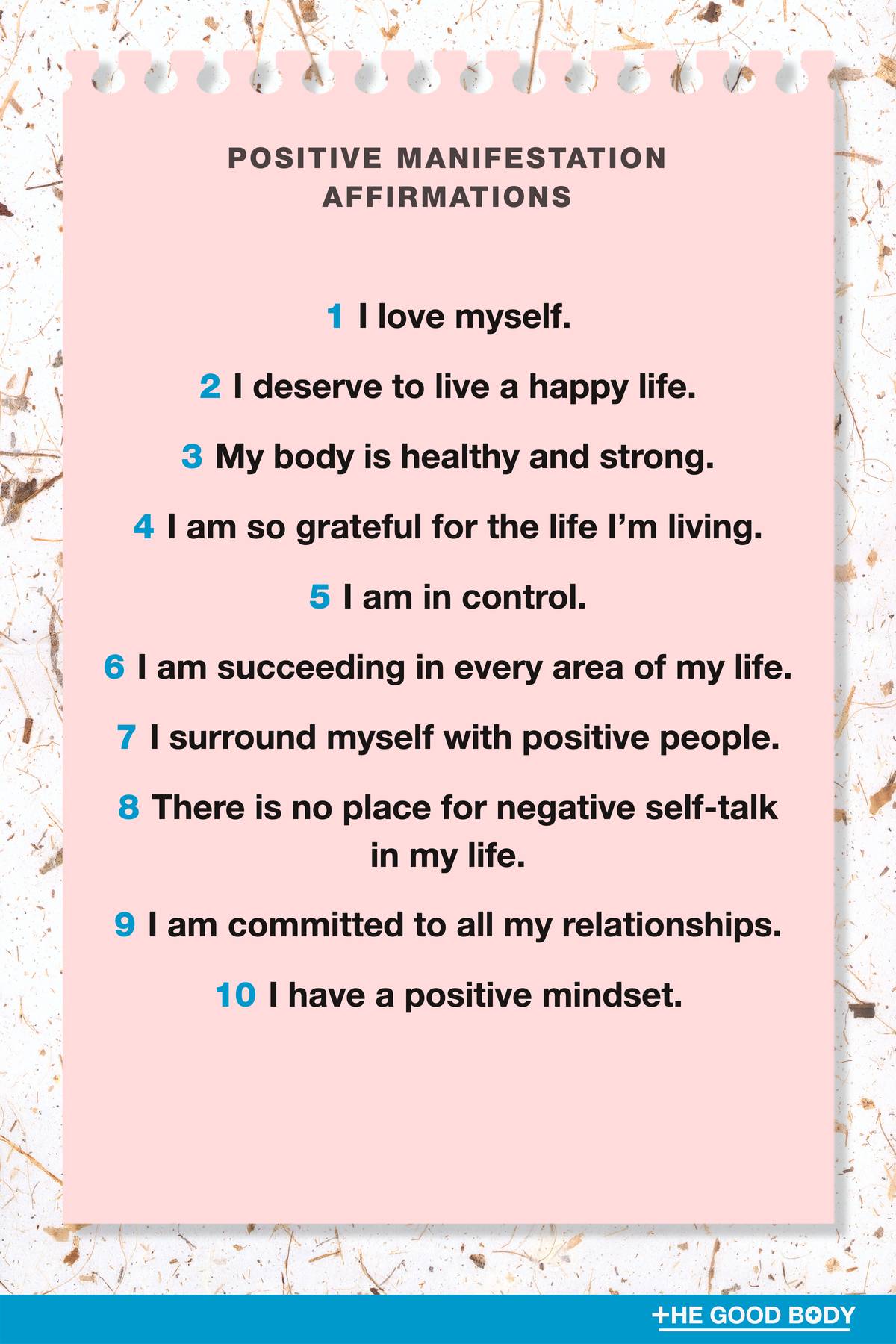
Credit: www.thegoodbody.com
Common Myths And Misunderstandings
There are many myths about affirmations and manifesting. Let’s clear up some of the most common:
- “Affirmations are just wishful thinking.” In reality, affirmations help you focus your mind and take action, which increases your chances of success.
- “If I just say affirmations, everything will happen for me.” Affirmations are a tool, not a magic wand. They work best when paired with action.
- “You have to believe 100% for them to work.” Belief helps, but even small, growing belief can create change over time.
- “You must repeat affirmations hundreds of times.” Quality matters more than quantity. Meaningful, focused repetition is better than mindless repetition.
- “Affirmations can’t help with serious problems.” While they’re not a replacement for professional help, affirmations can support mental health and well-being as part of a bigger plan.
The Link Between Affirmations And The Law Of Attraction
You may have heard about the law of attraction, which says that like attracts like. In this view, positive thoughts attract positive experiences. Affirmations are often used as a tool in this practice. By focusing on what you want, rather than what you fear or lack, you send a clear message to your mind and, some believe, to the universe.
While some aspects of the law of attraction are debated, the core idea—that your thoughts influence your actions and experiences—has strong support in psychology. Focusing on positive outcomes makes you more likely to notice opportunities, take risks, and persist through challenges.
For more on the science and debate around this topic, visit Wikipedia’s Law of Attraction page.

Credit: www.juliettekristine.com
Examples Of Affirmations For Different Life Stages
Affirmations aren’t just for adults. Children, teens, and seniors can benefit too. Here are some tailored examples:
For Children
- I am brave and can try new things.
- I am a good friend and help others.
- I am smart and learn new things every day.
For Teens
- I am proud of who I am becoming.
- I am enough, just as I am.
- I am in control of my choices and actions.
For Seniors
- I am wise and have much to offer.
- I am grateful for each day.
- I am surrounded by love and respect.
Adjusting affirmations to your age and stage of life helps them feel more relevant and believable.
Affirmations And Mental Health
Affirmations can play a supportive role in mental health. They help reduce negative self-talk, which is common in anxiety and depression. While they’re not a cure, affirmations can help you:
- Replace critical thoughts with kinder ones
- Build self-acceptance and self-worth
- Create a positive morning or evening routine
If you struggle with mental health issues, use affirmations as a gentle tool, not a pressure. And always seek professional help when needed.
The Role Of Language And Culture
The language you use for affirmations matters. Using your native language can make affirmations feel more natural and believable. In some cultures, collective affirmations (“We are strong as a family”) work better than individual ones. Adjust your practice to fit your background and what feels authentic.
A Quick Reference: Affirmations At A Glance
Here’s a summary of the key points for manifesting with affirmations:
| Key Element | What To Do | Why It Matters |
|---|---|---|
| Present Tense | Say as if true now | Makes affirmation believable |
| Positive Words | Avoid negatives | Focuses on desired outcome |
| Specific & Personal | Use “I am…” | Connects to your mind |
| Emotional Connection | Add feelings | Boosts motivation |
| Consistent Practice | Repeat daily | Builds new habits |
| Action Steps | Take small actions | Turns words into reality |
Frequently Asked Questions
What’s The Difference Between Manifesting Affirmations And Regular Affirmations?
Manifesting affirmations focus on attracting or creating something specific in your life, like a new job or relationship. Regular affirmations can be more general, such as boosting self-esteem or calming anxiety. Both types work, but manifesting affirmations are more goal-directed.
How Many Times A Day Should I Repeat Affirmations?
There’s no strict rule, but most experts suggest repeating affirmations at least twice a day—morning and night. The key is consistency and genuine feeling, not just the number of repetitions.
Can Affirmations Really Change My Life?
Affirmations alone won’t change everything, but they can shift your mindset, boost confidence, and inspire action. Many people report positive changes in mood, motivation, and even results when they use affirmations consistently with real effort.
What If I Don’t Believe My Affirmation?
If an affirmation feels too far from your current reality, try a “bridge” affirmation that feels more believable. For example, “I am open to learning how to feel confident,” instead of “I am 100% confident. ” Over time, you can build up to bigger statements.
Do I Need To Say Affirmations Out Loud?
Saying affirmations out loud can add power, but it’s not required. Writing, thinking, or listening to affirmations also works. Choose the method that feels most comfortable and effective for you.
Manifesting with affirmations is not about magic words, but about changing your thoughts, feelings, and actions. With patience and practice, you can use affirmations to unlock your potential and move closer to the life you want. Remember, the real power comes from your belief, emotion, and willingness to take action—one positive step at a time.
