

Affirmations for Employment: Boost Your Job Search Success
Affirmations For Employment
Finding and keeping a job is one of the biggest challenges in life. Many people feel stressed, worried, or uncertain about their careers. This is true whether you are searching for your first job, trying to move to a better position, or just hoping to feel more confident at work. One powerful tool that can help is affirmations. These are positive statements you repeat to yourself. They help shape your thoughts, boost your confidence, and prepare your mind for success.
Affirmations for employment are used by people all over the world. They can help you stay motivated, reduce anxiety, and believe in your abilities. In this article, you will learn how affirmations work, why they are effective, and how to use them for your job search or career growth.
You’ll also find practical examples, tips, and answers to common questions. By the end, you will have a complete understanding of how to use affirmations to improve your employment journey.
What Are Affirmations?
Affirmations are short, positive sentences you say to yourself. Their purpose is to create a better mindset and change your habits. When you repeat affirmations regularly, your brain starts to believe them. This affects your feelings, choices, and actions. For example, saying “I am capable and ready for a new job” can help you feel more confident during interviews.
Many psychologists and coaches use affirmations to help people. Research shows that positive self-talk can reduce stress and improve performance. By changing negative thoughts into positive ones, affirmations make it easier to face challenges and reach goals.
Why Affirmations Matter In Employment
Employment is not only about skills and experience. Your mindset is just as important. When you believe in yourself, you make better decisions, communicate clearly, and handle stress well. Self-doubt and negative thinking can block your progress. Affirmations help remove these mental barriers.
Some benefits of using affirmations for employment:
- Increase confidence during job interviews
- Boost motivation to apply for jobs
- Help manage stress at work
- Encourage career growth and learning
- Strengthen focus and productivity
A study from the University of Pennsylvania found that positive thinking increases job search success by up to 35%. People who use affirmations are more likely to keep trying, even after setbacks. They also handle rejection better and stay optimistic.
How Affirmations Work
Affirmations work by training your mind to focus on positive beliefs. When you repeat an affirmation, your brain gets used to this idea. Over time, you start to act in ways that match these beliefs. This is called self-fulfilling prophecy.
Here’s how it happens:
- You repeat a positive affirmation daily.
- Your brain starts to accept this belief.
- Your actions and choices change to fit the belief.
- You see results, which makes you repeat the affirmation more.
For example, if you say “I am a valuable employee,” you begin to act with confidence. You might speak up more, share your ideas, and take on new tasks. Others notice this change, and you get more opportunities.
Choosing The Right Affirmations For Employment
Not all affirmations are equally effective. The best affirmations are:
- Simple and clear
- Positive, not negative (“I am skilled” vs. “I am not unskilled”)
- Personal, using “I” or “my”
- Relevant to your goals
Avoid vague or unrealistic statements. For example, “I will be the CEO tomorrow” is not helpful. Instead, use “I am improving my leadership skills” or “I am ready for new responsibilities. ”
Here are examples of employment affirmations:
- “I am confident in my abilities.”
- “I am ready for new opportunities.”
- “I learn quickly and adapt well.”
- “I handle challenges with a positive attitude.”
- “My skills are valuable to employers.”
- “I deserve success and happiness at work.”
- “I am calm during interviews.”
- “I build strong relationships with coworkers.”
- “I am open to growth and change.”
- “I attract job offers that match my talents.”
Practical Steps To Use Affirmations
To get results, affirmations must be part of your daily routine. Here are steps to use them effectively:
- Choose 3-5 affirmations that match your employment goals.
- Write them down on paper, sticky notes, or in your phone.
- Repeat them aloud every morning and evening.
- Visualize yourself acting with confidence and success.
- Stay consistent—do this for at least 3 weeks.
Some people like to repeat affirmations before interviews or meetings. Others use them during stressful times at work. Find the routine that fits you best.
Common Mistakes When Using Affirmations
Many beginners make mistakes when starting with affirmations. Here are some to avoid:
- Being too vague: “I want a job” is less powerful than “I am ready for a job that matches my skills.”
- Using negative words: Avoid statements like “I am not afraid.” Instead, use “I am brave.”
- Skipping repetition: Affirmations work best when repeated daily.
- Lack of belief: If you don’t believe your affirmation, it won’t help. Start with statements you feel are possible.
Affirmations For Job Search
Looking for a job can be stressful. Many people worry about rejection, competition, or not finding the right fit. Affirmations can keep you motivated and focused.
Try these affirmations during your job search:
- “I am ready for new opportunities.”
- “I am confident during interviews.”
- “I will find the right job for me.”
- “My experience is valuable.”
- “I am prepared for success.”
Example: Using Affirmations Before Interviews
Imagine you have an interview tomorrow. You feel nervous and unsure. Start by repeating:
- “I am calm and confident.”
- “I communicate clearly and professionally.”
- “I am the right candidate for this job.”
Repeat these statements before your interview. Visualize yourself answering questions with confidence. Many people find that this reduces anxiety and helps them perform better.
Affirmations For Career Growth
Affirmations are not only for job seekers. They can help you grow in your current job. Whether you want a promotion, better relationships, or more skills, positive self-talk can make a big difference.
Some examples for career growth:
- “I am open to learning new things.”
- “I am a valuable member of my team.”
- “I am ready for leadership roles.”
- “I handle challenges with creativity.”
- “I inspire others with my work.”
Example: Affirmations For Promotion
If you want a promotion, repeat:
- “I am ready for more responsibility.”
- “I show leadership in my work.”
- “I am recognized for my achievements.”
These affirmations help you focus on your strengths and take action towards your goals. You may start volunteering for new tasks, speaking up in meetings, or networking with colleagues.
Affirmations For Workplace Confidence
Confidence is key to success at work. If you feel shy or unsure, you may miss opportunities. Affirmations can help you build confidence.
Try these:
- “I trust my abilities.”
- “I share my ideas with confidence.”
- “I handle feedback with a positive attitude.”
- “I am respected by my coworkers.”
Example: Overcoming Workplace Anxiety
Many people feel nervous about public speaking or giving presentations. Use affirmations to reduce anxiety:
- “I am prepared and confident.”
- “I speak clearly and with purpose.”
- “My ideas are valuable.”
Repeat these before meetings or presentations. Over time, you’ll notice less fear and more self-assurance.
Comparing Affirmations To Other Career Tools
Affirmations are not the only tool for employment success. Let’s compare them to other methods.
| Method | Purpose | Best For | Limitations |
|---|---|---|---|
| Affirmations | Build positive mindset | Confidence, motivation | Needs repetition |
| Resume/CV | Show skills & experience | Job applications | Does not affect mindset |
| Networking | Make connections | Finding jobs | Can be intimidating |
| Coaching/Mentoring | Guidance & support | Career growth | May be costly |
Affirmations work best when combined with other tools. For example, use affirmations to boost confidence before networking or interviews. Use a good resume to show your skills. Seek mentors for advice.
Data: Affirmations And Job Search Success
Let’s look at some data about affirmations and employment. Studies show that positive self-talk improves job search success and workplace performance.
| Study | Result | Impact |
|---|---|---|
| University research | Positive thinking improved job search by 35% | Higher success rate |
| Corporate survey | Employees using affirmations felt 28% more confident | Better performance |
| Personal coaching data | Clients reported less stress and more motivation | Improved well-being |
These numbers show that affirmations are not just “feel-good” statements. They can lead to real changes in behavior and results.
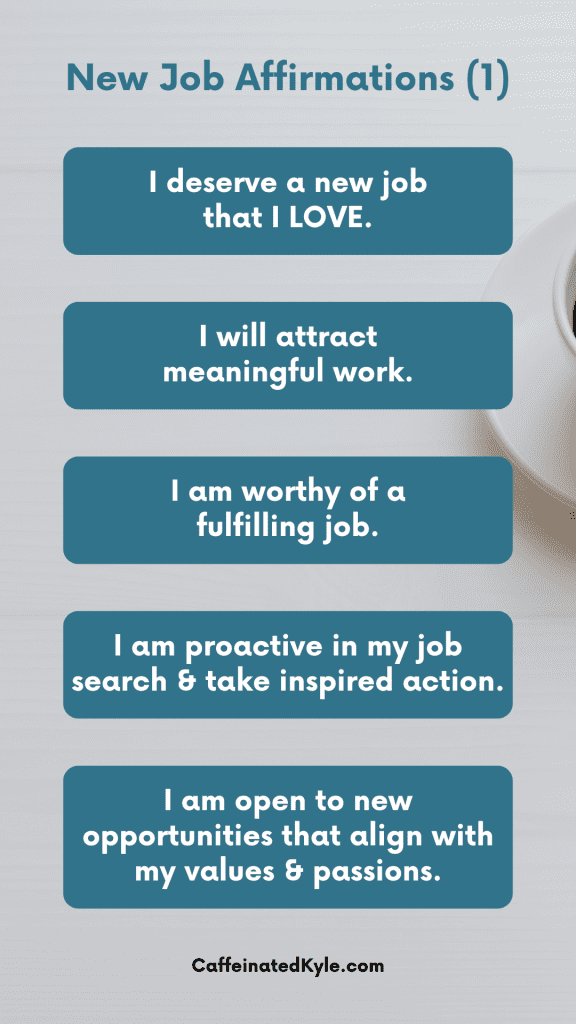
Credit: caffeinatedkyle.com
Creating Personalized Employment Affirmations
Everyone’s career journey is different. Personalized affirmations are more effective than generic ones. Here’s how to create your own:
- Identify your goal: What do you want? A new job, promotion, confidence?
- Find your strengths: What skills or qualities do you have?
- Write positive statements: Use “I” or “my” and keep it simple.
- Test your affirmation: Does it feel believable? Adjust if needed.
Example: If you want a new job and have strong communication skills, try:
- “I am confident in my communication skills.”
- “I am ready for a job where I can use my strengths.”
Personalized affirmations feel more authentic. You are more likely to believe and repeat them.
Using Affirmations With Visualization
Combining affirmations with visualization increases their power. Visualization means imagining yourself succeeding. For employment, see yourself working in your dream job, feeling confident, or getting a promotion.
Steps:
- Repeat your affirmation: “I am ready for a new job.”
- Close your eyes and picture yourself succeeding.
- Feel the emotions—confidence, happiness, pride.
- Repeat daily.
Research from sports psychology shows that visualization improves performance. Many top athletes use this technique. It works for job seekers and employees too.
How To Measure Progress With Affirmations
Affirmations are not magic. They take time and practice. Here’s how to track your progress:
- Notice changes in your thoughts and feelings. Are you more positive or confident?
- Track actions: Are you applying for more jobs, speaking up at work, or learning new skills?
- Record results: Did you get interviews, positive feedback, or promotions?
Keep a journal of your affirmations and progress. If you don’t see results after 4-6 weeks, change your affirmations or routine.
Combining Affirmations With Other Strategies
Affirmations work best with other career strategies. Here’s how to combine them:
- Resume writing: Use affirmations to boost confidence before updating your resume.
- Interview practice: Repeat affirmations before mock interviews.
- Skill development: Affirm “I am learning new skills” as you take courses.
- Networking: Use affirmations to feel confident at networking events.
Many coaches recommend combining affirmations with goal setting and action plans. This creates a balanced approach.
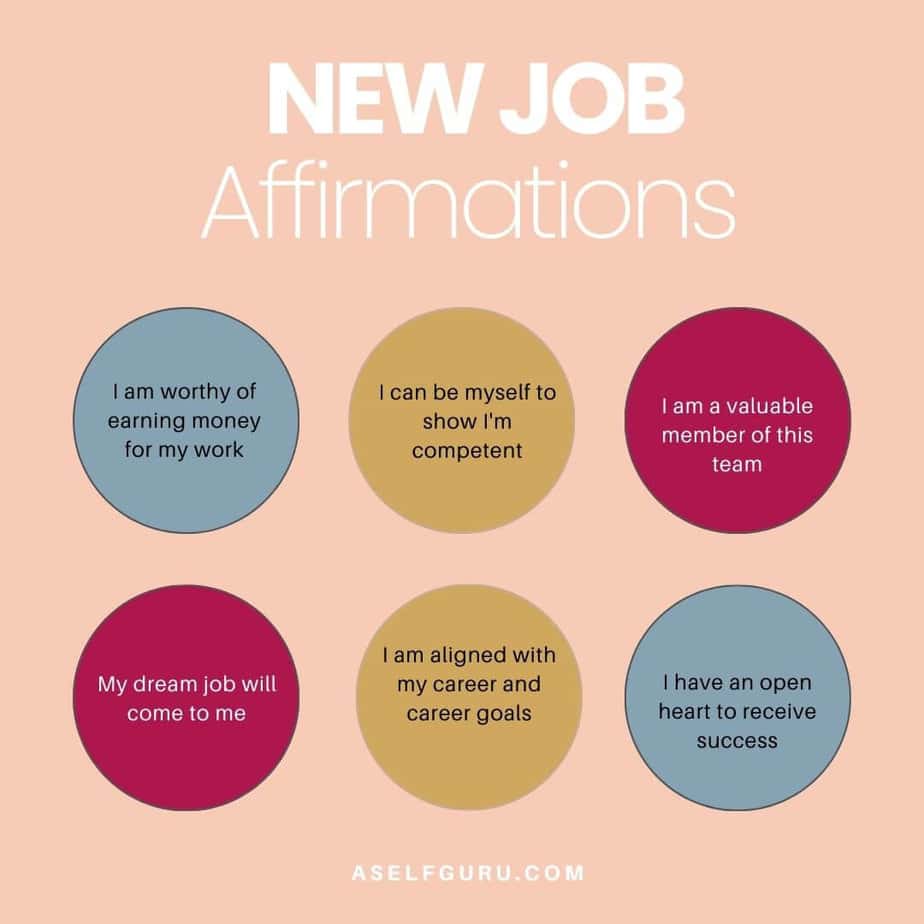
Credit: aselfguru.com
Advanced Tips: Making Affirmations More Effective
Most people know about basic affirmations. Here are some advanced tips that many beginners miss:
- Use present tense: Say “I am successful” instead of “I will be successful.” This signals to your brain that you already have this quality.
- Add emotion: Feel the affirmation as you repeat it. Emotions make affirmations stronger.
- Change your environment: Place written affirmations where you see them often—on your desk, bathroom mirror, or phone background.
- Pair with breathing exercises: Deep breaths while repeating affirmations help reduce anxiety.
- Record and listen: Record yourself saying affirmations and listen during your commute or before work.
These methods make affirmations more powerful and help them stick in your mind.
Examples Of Real Success Stories
Affirmations can sound simple, but many people have used them for real results. Here are examples:
- A job seeker who repeated “I am ready for new opportunities” every day found a job after months of rejection. The positive mindset helped them stay motivated and confident.
- An employee wanted a promotion. They used “I am recognized for my achievements” and started volunteering for new projects. Soon, their manager noticed and gave them more responsibilities.
- Someone who feared interviews repeated “I am calm and confident.” They performed better during interviews and received multiple job offers.
These stories show that affirmations work when used consistently.

Credit: www.juliettekristine.com
Common Questions And Misconceptions
Many people have doubts about affirmations. Here are answers to common questions:
Are Affirmations Just Positive Thinking?
Affirmations are more than simple positive thinking. They are focused, repeated statements that change your mindset and habits. While positive thinking is a general attitude, affirmations are specific tools for change.
Do Affirmations Work For Everyone?
Most people benefit from affirmations, but results depend on consistency and belief. If you repeat them daily and believe in their message, you are more likely to see positive results.
How Long Does It Take To See Results?
Some people notice changes in a few weeks. Others take longer. It depends on your starting mindset, the strength of your affirmations, and how often you repeat them. Most experts recommend 3-6 weeks of daily practice.
Can Affirmations Replace Other Career Strategies?
No, affirmations are one tool among many. Use them along with resumes, networking, skill development, and coaching. Affirmations boost your mindset, but action is also needed.
What If I Don't Believe My Affirmation?
If your affirmation feels unrealistic, change it to something you believe. For example, instead of “I am the best employee,” use “I am improving every day. ” Start with small, believable statements and build up.
Comparing Affirmations For Employment Vs. General Affirmations
Employment affirmations are different from general affirmations. Here’s how:
| Type | Focus | Examples | Best Use |
|---|---|---|---|
| Employment | Career, job search, workplace | “I am ready for new opportunities” | Job seekers, employees |
| General | Health, relationships, personal growth | “I am happy and healthy” | Everyday life |
Employment affirmations target specific career goals. They help you focus on job-related challenges and growth.
Frequently Asked Questions
What Are The Best Affirmations For Getting A Job?
The best affirmations for job seekers are clear and positive. Examples include “I am confident during interviews,” “I am ready for new opportunities,” and “My skills are valuable to employers. ” Choose statements that match your situation and goals.
How Often Should I Repeat Employment Affirmations?
Repeat affirmations at least twice a day—morning and evening. You can also use them before interviews, meetings, or stressful situations. Consistency is key for success.
Can Affirmations Help With Workplace Anxiety?
Yes, affirmations can reduce workplace anxiety. Statements like “I am calm and confident,” “I handle feedback positively,” and “I trust my abilities” help lower stress and improve performance.
Is It Necessary To Write Down Affirmations?
Writing affirmations makes them stronger. You can place them where you see them often—on your desk, mirror, or phone. Some people also record their affirmations and listen to them daily.
Where Can I Learn More About The Science Behind Affirmations?
Many universities and psychology experts have studied affirmations. For more details, visit Wikipedia which offers research and explanations about how affirmations work.
Using affirmations for employment is not just about repeating words. It’s about changing your mindset, habits, and actions. With consistent practice, you can build confidence, handle stress, and reach your career goals. Start today and see how positive self-talk can shape your future.
