

Affirmations Biblical: Transform Your Life With Faith-Based Declarations
Affirmations Biblical: A Practical Guide To Speaking Life With Scripture
Everyone longs for hope, strength, and guidance—especially in difficult times. Many people use affirmations as positive statements to encourage themselves. But what about those who want to ground their affirmations in faith? This is where biblical affirmations come in. Rooted in the truths of the Bible, these affirmations are more than just positive thinking. They are powerful reminders of God’s promises, helping believers align their thoughts and words with the Word of God.
If you have ever wondered how to use affirmations in a way that matches your faith, or if you want to understand why biblical affirmations matter, this guide is for you. We’ll explore what makes affirmations biblical, how they differ from general positive statements, how to use them, and the impact they can have on your life.
Whether you are new to the idea or looking to deepen your practice, you will find practical advice and real examples here.
What Are Biblical Affirmations?
Biblical affirmations are short, faith-based statements built on Bible verses or principles. Unlike regular affirmations, which focus on personal power or self-belief, biblical affirmations point to who God is, what He says about us, and His promises for our lives. They help us replace negative, doubtful thoughts with truth found in Scripture.
For example, a regular affirmation might be: “I am strong.” A biblical version could be: “I can do all things through Christ who strengthens me.” The difference is clear—the focus shifts from self alone to God’s strength and faithfulness.
Key Features Of Biblical Affirmations
- Rooted in Scripture: The foundation is always a Bible verse or teaching.
- Focus on God’s Character: They highlight God’s love, faithfulness, and power.
- Declare Identity in Christ: Remind us of who we are as believers.
- Encourage Trust: Invite us to rely on God, not just ourselves.
These affirmations remind us that we are not alone in our struggles or victories. They direct our minds toward God’s truth, which is unchanging and reliable.
Why Use Biblical Affirmations?
Life brings challenges—stress, fear, doubts, and setbacks. In these moments, our thoughts can easily become negative. Affirmations based on the Bible offer a way to fight back, helping us stay grounded in God’s promises.
Benefits Of Affirming God’s Word
1. Rewires Negative Thinking
Research shows that repeating positive statements can change the way we think and feel. When these statements are based on the Bible, they help us replace lies or doubts with truth.
2. Strengthens Faith
Speaking God’s promises out loud builds our trust in Him. It’s a way to remind ourselves of His faithfulness, even when circumstances are hard.
3. Guides Daily Actions
Biblical affirmations can shape our choices. When we remember, “I am a new creation in Christ,” we’re more likely to act in line with that truth.
4. Reduces Anxiety And Fear
God’s promises bring peace. Affirming verses like “God is with me; I will not be afraid” helps calm anxious thoughts.
5. Improves Self-image
Instead of focusing on failures or weaknesses, we see ourselves as God sees us—loved, valued, and chosen.
What Science Says
While the Bible is the main foundation for believers, science also supports the value of affirmations. Studies in psychology show that repeating positive statements can lower stress and improve mood. When these statements are tied to spiritual beliefs, the effect can be even stronger, helping people cope better with difficulties.
How Are Biblical Affirmations Different From Positive Affirmations?
It’s easy to confuse biblical affirmations with general positive affirmations, but there are important differences. Let’s compare both to see what sets them apart:
| Aspect | Positive Affirmations | Biblical Affirmations |
|---|---|---|
| Source | Self-generated, motivational | Based on Scripture |
| Focus | Personal power, self-worth | God’s power, faithfulness |
| Foundation | Human effort or mindset | God’s promises and truth |
| Result | Temporary confidence boost | Lasting hope and peace |
Biblical affirmations aren’t about denying problems or pretending everything is perfect. Instead, they’re about trusting God’s Word above our feelings or situations. This brings a deeper sense of peace and hope, because the foundation is unchanging.
How To Create Your Own Biblical Affirmations
Making your own affirmations is simple, but it works best when you are intentional. Here’s a step-by-step guide to help you get started:
1. Identify An Area Of Struggle Or Need
Think about where you need encouragement. Is it fear? Self-doubt? Temptation? Loneliness? Naming your struggle helps you find the right Scripture to address it.
2. Find A Bible Verse That Speaks To This Area
Use a Bible app, concordance, or search online for verses related to your need. For example, if you struggle with fear, look for verses about God’s protection or courage.
3. Turn The Verse Into A Personal Statement
Rewrite the verse as a declaration over your life. For example, if the verse is “The Lord is my shepherd; I shall not want,” your affirmation could be: “The Lord is my shepherd; I lack nothing.”
4. Speak It Out Loud And Repeat Regularly
Say your affirmation out loud, especially in the morning or before bed. Repetition helps the truth sink in.
5. Write It Down And Post It Where You Can See
Place your affirmation on your mirror, desk, or phone background. The more you see it, the more likely you are to remember it in tough moments.
Sample Affirmations And Their Bible Basis
- “God is with me; I will not be afraid.” (Psalm 23: 4)
- “I am God’s masterpiece, created for good works.” (Ephesians 2: 10)
- “My needs are met in Christ.” (Philippians 4: 19)
Examples Of Powerful Biblical Affirmations For Everyday Life
To make it easier for you, here are some affirmations for common life situations. Each one is tied to a Bible verse.
For Anxiety Or Worry
- “I cast all my anxiety on God because He cares for me.” (1 Peter 5: 7)
- “God’s peace guards my heart and mind.” (Philippians 4: 7)
For Strength In Difficult Times
- “I am strong in the Lord and in His mighty power.” (Ephesians 6: 10)
- “God’s grace is enough for me.” (2 Corinthians 12: 9)
For Overcoming Fear
- “God has not given me a spirit of fear, but of power, love, and a sound mind.” (2 Timothy 1: 7)
- “The Lord is with me; I will not be afraid.” (Psalm 118: 6)
For Self-worth And Identity
- “I am a child of God.” (John 1: 12)
- “I am chosen, holy, and dearly loved.” (Colossians 3: 12)
For Guidance And Wisdom
- “God gives me wisdom when I ask.” (James 1: 5)
- “The Lord directs my steps.” (Proverbs 16: 9)
For Healing
- “By His wounds I am healed.” (Isaiah 53: 5)
- “God restores my health and heals my wounds.” (Jeremiah 30: 17)
For Forgiveness
- “I am forgiven and set free.” (Romans 8: 1-2)
- “God remembers my sins no more.” (Hebrews 8: 12)
These are just starting points. The Bible is full of promises for every situation.
Practical Ways To Use Biblical Affirmations In Daily Life
Affirmations work best when they become part of your routine. Here are practical ideas to help you build the habit:
1. Morning And Night Routine
Begin and end your day with affirmations. This sets the tone for your thoughts and helps you focus on God’s truth before the day gets busy or as you wind down at night.
2. During Prayer Or Bible Study
Include affirmations as part of your quiet time. Speak them after reading Scripture, or use them to guide your prayers.
3. In Times Of Stress Or Challenge
When you feel overwhelmed, pause and repeat an affirmation. This can bring calm and remind you of God’s presence.
4. With Family Or Friends
Share affirmations with others. Declare God’s promises together, especially in group prayers or family devotions.
5. As Visual Reminders
Write affirmations on sticky notes and place them where you’ll see them often—on the fridge, bathroom mirror, or computer screen.
6. Journaling
Write affirmations in your journal each day. Reflect on how they impact your thoughts and feelings.
7. In Your Digital Life
Set daily reminders with your affirmation on your phone. Use Bible-based affirmation apps or follow social media accounts that share scriptural encouragement.
Real-life Example
Sarah, a young professional, struggled with anxiety at work. She wrote, “God’s peace guards my heart and mind,” on a card and kept it in her bag. Every time she felt nervous before a meeting, she read it and repeated it quietly.
Over time, she noticed she felt more calm and confident.
The Power Of Speaking Life: Biblical Perspective
Words have power. The Bible says, “Death and life are in the power of the tongue. ” What we speak can shape our thoughts, actions, and even our future.
What The Bible Teaches About Words
- Words Reflect the Heart: Jesus taught that our words reveal what’s in our hearts.
- Words Can Build or Destroy: Proverbs says our speech can heal or harm.
- God Spoke Creation Into Existence: The first example of the power of words is God Himself speaking the world into being.
When we speak biblical affirmations, we are agreeing with what God says. This not only encourages us, but also builds faith in others who hear us.
Dangers Of Empty Words
It’s important to note that affirmations are not magic spells. Simply repeating words without faith or understanding doesn’t bring change. The power lies in the truth of God’s Word and our trust in Him. Repeating affirmations with an open heart, seeking God’s help, brings real transformation.
Common Misunderstandings About Biblical Affirmations
Some people worry that affirmations are just wishful thinking or self-help trends. Here are a few misunderstandings, and what’s true instead:
1. “affirmations Are Just Positive Thinking”
While positive thinking is good, biblical affirmations are deeper. They are grounded in God’s promises, not just our own desires.
2. “they Ignore Real Problems”
Affirming God’s truth doesn’t mean ignoring challenges. Instead, it’s choosing to focus on God’s power in the middle of those problems.
3. “it’s About Getting What I Want”
Biblical affirmations aren’t about demanding things from God. They are about trusting His plan, even when life is hard.
4. “anyone Can Use Them Without Faith”
The real power of biblical affirmations comes from believing in God’s Word and His character—not just repeating words.

Credit: wellnessmanifest.wordpress.com
Biblical Affirmations For Different Seasons Of Life
Life has ups and downs. Here are examples of affirmations for different situations:
| Life Season | Sample Affirmation | Bible Verse |
|---|---|---|
| Times of Change | God is with me wherever I go | Joshua 1:9 |
| Grief or Loss | God comforts me in my sorrow | 2 Corinthians 1:3-4 |
| Success or Promotion | Every good gift is from God | James 1:17 |
| Waiting or Uncertainty | God works all things for my good | Romans 8:28 |
| Parenting | God gives me wisdom to guide my children | Proverbs 22:6 |
| Loneliness | God never leaves me | Hebrews 13:5 |
Using affirmations that match your current season can bring comfort and direction.
Overcoming Obstacles: When Affirmations Don’t Seem To Work
Sometimes, even when you repeat affirmations, you might not feel any change. This is normal, especially during tough seasons. Here’s what you can do:
1. Check Your Heart
Ask yourself if you truly believe the words you are saying. It’s okay to admit doubts—bring them to God in prayer.
2. Stay Consistent
Change takes time. Just like training a muscle, speaking truth daily will eventually shape your thoughts.
3. Connect With Others
Share your affirmations with a trusted friend or group. They can encourage you and pray with you.
4. Adjust As Needed
If an affirmation doesn’t feel right, find a different verse or wording that speaks to your heart.
5. Trust God’s Timing
Remember, God works in ways we can’t always see. Even if you don’t notice changes right away, keep holding onto His promises.
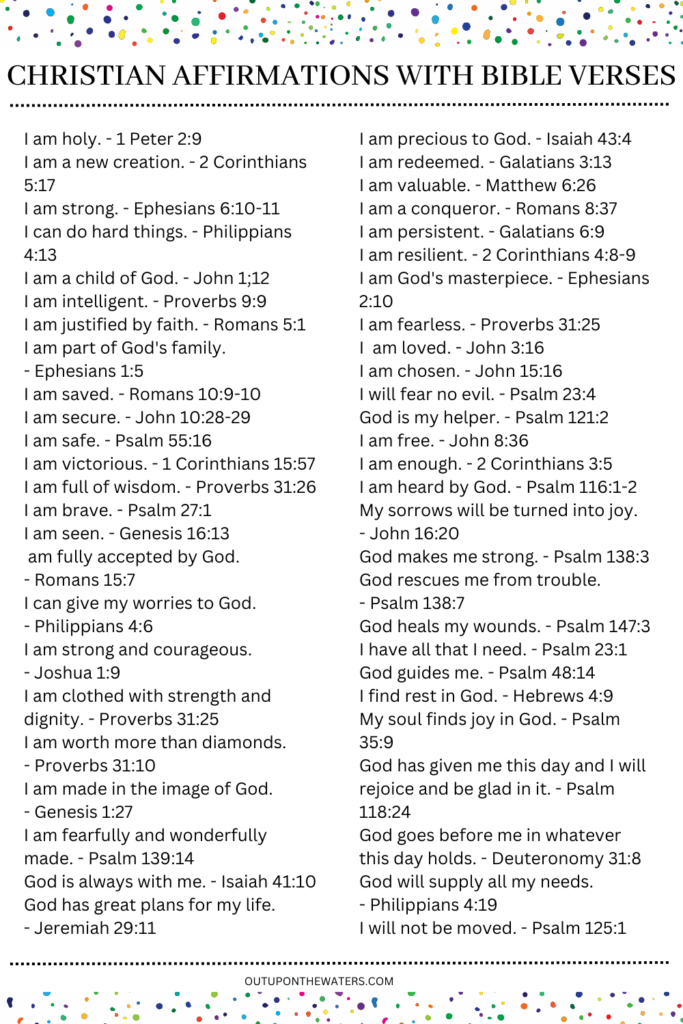
Credit: outuponthewaters.com
Non-obvious Insights About Biblical Affirmations
1. Affirmations Can Reveal Hidden Beliefs
Sometimes, saying an affirmation shows us what we don’t believe yet. For example, if “God loves me unconditionally” feels hard to say, it may point to a deeper wound. This can be a starting point for prayer and healing.
2. Community Makes Affirmations Stronger
Affirmations aren’t just for individuals. When churches or small groups speak God’s promises together, the effect multiplies. Hearing others declare the same truths builds unity and shared faith.
3. Affirmations Can Change How We Read The Bible
When you look for affirmations in Scripture, you start to notice promises, commands, and truths you might have missed before. This makes Bible reading more personal and practical.
Common Mistakes To Avoid
It’s easy to get off track with affirmations. Here are mistakes beginners often make, and how to avoid them:
- Choosing Verses Out of Context: Always read the full passage to understand what the verse means.
- Using Affirmations as a Shortcut: Don’t replace prayer, Bible study, or wise actions with affirmations alone.
- Expecting Instant Results: Growth is slow. Be patient with yourself and the process.
- Focusing Only on Self: Remember, affirmations are about God’s work in you, not just personal success.
Biblical Affirmations For Children And Teens
Starting young helps children build a strong foundation. Here are simple affirmations for kids and teens:
- “God loves me no matter what.”
- “I am never alone; God is with me.”
- “God helps me do the right thing.”
- “I am brave because God gives me courage.”
Make it fun by singing them, drawing them, or using hand motions. This helps young people remember God’s truth, even at school or with friends.
How To Teach Others To Use Biblical Affirmations
If you are a parent, teacher, or leader, you can help others build this habit:
- Model It Yourself: Let others see you use affirmations.
- Share Stories: Tell how affirmations have helped you.
- Encourage Sharing: Ask your group or family to create their own affirmations.
- Celebrate Growth: Notice and celebrate when someone uses an affirmation in a tough moment.
Biblical Affirmations And Mental Health
There is growing recognition that faith can help with mental health challenges. Biblical affirmations are one way to bring hope and strength. They can support therapy or counseling, but are not a replacement for professional help when needed.
A study published by the American Psychological Association found that spiritual practices like prayer and affirmations can reduce symptoms of anxiety and depression in people of faith. If you are struggling, consider using affirmations alongside other supports.
Resources To Help You Get Started
If you want to dive deeper, there are many Bible apps, books, and websites dedicated to affirmations. Some churches offer printable affirmation cards or daily email reminders. For more on the science and practice of affirmations, see this article from the Psychology Today website.

Credit: hunnyprints.com
Frequently Asked Questions
What Makes An Affirmation Biblical?
A biblical affirmation is based on a Bible verse or teaching, not just a positive thought. It declares what God says about a situation or person, focusing on His character and promises.
How Often Should I Use Biblical Affirmations?
There’s no strict rule. Many people find it helpful to use affirmations daily—morning, night, or whenever a negative thought appears. Consistency is key for lasting change.
Can I Write My Own Biblical Affirmations?
Yes! It’s best to personalize affirmations using Scripture that speaks to your situation. Rewrite the verse as a statement over your life. Make sure you understand the context of the verse.
Are Biblical Affirmations The Same As Prayer?
They are related but not the same. Affirmations are declarations of truth, while prayer is talking to God—asking, thanking, or seeking guidance. You can use affirmations as part of your prayer time.
Can Affirmations Replace Reading The Bible Or Going To Church?
No. Affirmations are a tool, not a substitute for spiritual growth practices. They work best when combined with Bible reading, prayer, fellowship, and wise action.
Affirming God’s truth is a simple yet powerful way to renew your mind, build faith, and face challenges with hope. Whether you whisper them in the morning, write them in a journal, or declare them with friends, biblical affirmations can help you see yourself—and your life—through God’s eyes. Start today, and let the Word of God shape your words, your thoughts, and your future.
