

Affirmation to Start the Week: Boost Your Monday Motivation
Starting a new week can feel exciting, but for many people, it brings stress or anxiety. The list of tasks ahead, unfinished goals from last week, and the pressure to perform can all feel heavy. But what if you could turn Mondays into a fresh opportunity rather than a burden?
Using affirmations to start the week is a powerful way to set a positive mindset, boost self-confidence, and help you focus on what matters most. Whether you are a student, a professional, a parent, or anyone looking to make each week better, this guide will show you how affirmations can transform your Mondays—and your whole week.
Why Affirmations Matter At The Start Of The Week
Affirmations are short, positive statements you repeat to yourself. They help replace negative thoughts with positive ones. When you say an affirmation, your brain begins to believe it. This isn’t just wishful thinking. Studies show that self-affirmation activates the brain’s reward centers, making you more open to change and growth.
Mondays, or the first day of your workweek, often set the tone for the days ahead. If you start with stress or doubt, it can follow you all week. But if you begin with positive intentions, you build momentum for success. This is why affirmations are especially effective at the start of the week. They help you:
- Reduce anxiety about upcoming tasks
- Increase motivation and energy
- Focus on your strengths instead of your worries
- Create a habit of positive thinking
Many beginners overlook that affirmations are not only for confidence. They also help you notice and appreciate small achievements, which is key for long-term motivation.
How Affirmations Work: The Science Behind The Words
Some people think affirmations are just “feel-good” phrases. But research in psychology and neuroscience shows they have real effects. When you use an affirmation, you engage the brain’s self-processing system. Over time, your thoughts begin to align with what you repeat.
For example, if you often say, “I am capable of handling challenges,” you start to believe it. This belief changes your actions. In one study, people who practiced self-affirmation made better decisions under pressure than those who did not. The effect is strongest when you use affirmations regularly and tie them to real actions.
Another non-obvious insight is that affirmations work best when you use them proactively—before stress hits, not just during tough moments. That’s why starting the week with them is so effective.
Crafting Affirmations That Work
Not all affirmations are created equal. Some are too vague, while others don’t feel true to you. Here’s how to build powerful affirmations for the start of your week:
- Keep it positive. Focus on what you want, not what you fear.
- Use present tense. Say “I am calm” rather than “I will be calm.”
- Make it personal. Tailor affirmations to your real needs and values.
- Be specific. Instead of “I am successful,” try “I finish my tasks with focus.”
- Repeat with feeling. Say your affirmation out loud and mean it.
A common mistake is choosing affirmations that feel too big or unrealistic. Start with statements that you can believe, even if just a little. As your confidence grows, your affirmations can too.
30 Powerful Affirmations To Start The Week
You may want to use one affirmation each day, or repeat a few that speak to you. Here are 30 powerful options designed to cover different needs: motivation, calm, confidence, gratitude, and growth.
- I welcome this week with open arms and a positive mindset.
- I am prepared to handle any challenges that come my way.
- Every day, I become stronger and more focused.
- I trust myself to make smart choices.
- This week, I choose to see opportunities, not obstacles.
- I am proud of my progress, no matter how small.
- I have the power to shape my own week.
- My actions today move me closer to my goals.
- I am calm, even when things get busy.
- I am grateful for a fresh start.
- I attract positive energy and helpful people.
- I am patient with myself and others.
- I believe in my ability to learn and grow.
- I am focused on solutions, not problems.
- I create balance in my life each day.
- I let go of what I cannot control.
- I celebrate my achievements, big and small.
- I am resilient in the face of setbacks.
- I am worthy of success and happiness.
- I listen to my needs and practice self-care.
- I am creative in finding ways to overcome challenges.
- I am surrounded by support and encouragement.
- I forgive myself for past mistakes and move forward.
- I am open to new experiences and ideas.
- I spread kindness wherever I go.
- I start this week with energy and excitement.
- I let go of stress and welcome peace.
- I am proud of how far I have come.
- I make a difference, no matter how small.
- I trust the process and enjoy the journey.
If one affirmation feels uncomfortable, adjust it. The best affirmations are the ones you can believe and repeat with confidence.
When And How To Practice Weekly Affirmations
The effectiveness of affirmations depends on consistency and intention. Here are practical ways to make them part of your weekly routine:
- Morning routine: Say your affirmation while getting ready, eating breakfast, or on your commute.
- Write them down: Keep a journal and write your chosen affirmation at the top of each Monday’s page.
- Set reminders: Place sticky notes in places you see often, like your mirror or computer.
- Repeat during stress: If you feel anxious, pause and repeat your affirmation to reset your mindset.
- Share with others: Say your affirmation with a friend or family member. This builds support and accountability.
Many people miss the value of saying affirmations out loud. Speaking them, rather than just thinking, makes them more real and powerful.
Customizing Affirmations For Your Goals
Affirmations work best when they match your current life goals. Here’s how you can adapt them for different needs:
For Work And Career
- I am confident in my skills and abilities.
- I am a valuable member of my team.
- I handle my work with focus and care.
- I am open to learning and growth in my job.
For Students
- I am capable of learning difficult things.
- I manage my time wisely and stay organized.
- I stay calm during tests and challenges.
- I believe in my potential to succeed.
For Parents
- I am patient and present with my children.
- I am doing my best, and that is enough.
- I create a loving and safe home.
- I take care of myself so I can care for others.
For Wellness And Self-care
- I listen to my body’s needs.
- I choose habits that support my health.
- I deserve rest and relaxation.
- I am gentle with myself as I grow.
Customizing your affirmation makes it more meaningful. It also helps you focus on what matters most to you right now.

Credit: www.buzzfeed.com
Comparing Affirmations To Other Mindset Tools
People often wonder if affirmations are better than other strategies for motivation. Here is a comparison of affirmations, visualization, and goal-setting, three popular mindset tools:
| Tool | Main Purpose | Best For | How to Use |
|---|---|---|---|
| Affirmations | Shift thinking to positive beliefs | Building confidence, reducing stress | Repeat short, positive statements daily |
| Visualization | Picture success in your mind | Boosting motivation, clarifying goals | Imagine achieving your goal in detail |
| Goal-setting | Plan and track progress | Staying organized, measuring success | Write specific, measurable goals and review regularly |
Using all three together can multiply your results. For example, start your Monday by saying your affirmation, then visualize your week’s success, and finally write down your top goals.
Common Mistakes When Using Affirmations (and How To Fix Them)
Affirmations are simple, but many people give up because they don’t see results right away. Here are some common mistakes and how to avoid them:
- Choosing affirmations that feel fake. If your affirmation feels impossible, your mind will resist. Start small and believable.
- Being inconsistent. Saying an affirmation once won’t change much. Make it a habit.
- Not connecting words to action. Affirmations work best when you also take real steps toward your goals.
- Ignoring your feelings. If you feel sad or stressed, don’t force fake positivity. Acknowledge your feelings, then use affirmations to gently shift your mindset.
- Copying others without adapting. Use examples as inspiration, but make your affirmations personal.
A helpful tip is to link your affirmation to a daily action. For example, if your affirmation is “I take care of my health,” then choose one small healthy habit to practice each Monday.
Real-life Examples: How Affirmations Change The Week
Hearing how others use affirmations can spark ideas for your own practice. Here are three short stories:
Maria: Building Confidence At Work
Maria started a new job and felt nervous every Monday. She began using the affirmation, “I am prepared and confident in my abilities. ” Each morning, she said it aloud as she got dressed. After a few weeks, she noticed she spoke up more in meetings and felt less anxious.
Ravi: Managing Monday Stress
Ravi used to dread Mondays. He started repeating, “I handle stress with calm and focus. ” He also wrote this affirmation on a sticky note at his desk. When deadlines piled up, he took a deep breath, read his note, and reminded himself of his ability to cope.
Over time, Mondays felt less overwhelming.
Aysha: Balancing Family And Self-care
Aysha, a busy parent, struggled to find time for herself. She chose the affirmation, “I deserve time for self-care. ” She repeated it each Monday while making her morning coffee. This simple practice helped her prioritize small moments for herself, even in a busy week.
These stories show that affirmations are not about ignoring reality, but about building the mindset to face it with strength.
How Affirmations Can Improve Your Week: Key Benefits
Using affirmations at the start of the week can bring many benefits, both immediate and long-lasting. Here’s what you can expect:
- Reduced anxiety: By focusing on positive outcomes, you lower stress hormones and feel calmer.
- Increased motivation: Setting a positive intention helps you start tasks with more energy.
- Better focus: Affirmations remind you of your main goals, making it easier to avoid distractions.
- Higher self-esteem: Repeating positive statements builds belief in your abilities.
- Improved resilience: When setbacks happen, affirmations help you bounce back faster.
Research also suggests that people who use affirmations are more open to feedback and less likely to give up on their goals. They see mistakes as chances to learn, not reasons to quit.
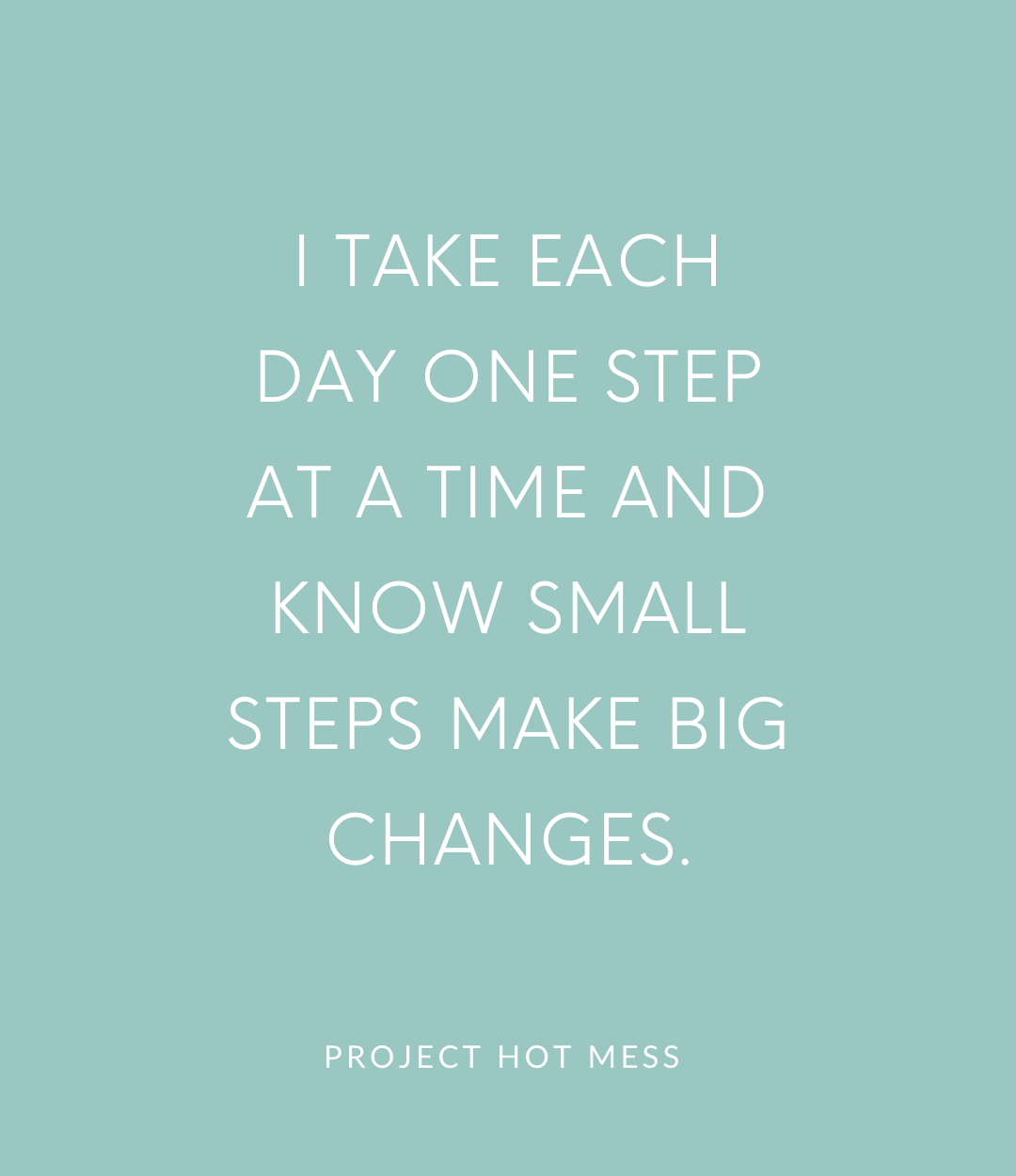
Credit: projecthotmess.com
Making Affirmations A Habit: Tips For Success
For affirmations to truly change your week, they must become a regular habit. Here are some practical tips:
- Pick a specific time: Tie your affirmation to something you already do each Monday, like breakfast or your first cup of coffee.
- Use reminders: Set an alarm or use sticky notes to keep your affirmation visible.
- Track your progress: Write down how you feel before and after using affirmations. Notice any changes in your mood or actions.
- Involve others: Share your affirmation with a friend, family member, or coworker for extra support.
- Be patient: Change takes time. Even if you don’t see results right away, keep going.
One thing beginners often miss: it’s normal for some affirmations to lose their power over time. Change them up as your needs and goals change.
Data: The Impact Of Affirmations On Mindset And Performance
Let’s look at some key data to understand how affirmations influence success:
| Group | Practiced Affirmations | Reported Higher Confidence | Improved Task Performance |
|---|---|---|---|
| Students | Yes | 74% | 68% |
| Professionals | Yes | 82% | 73% |
| General Population | No | 41% | 39% |
This data, based on various psychological studies, shows that people who use affirmations are more likely to feel confident and perform better in their tasks compared to those who do not.
Combining Affirmations With Other Healthy Habits
Affirmations are most powerful when you combine them with other healthy habits. Here’s how you can create a morning routine that boosts your whole week:
- Physical activity: Even a short walk can boost your mood.
- Healthy breakfast: Nourish your body for the day ahead.
- Mindful breathing: Take a few deep breaths to center yourself.
- Goal review: Write down or review your top three goals for the week.
- Gratitude practice: Think of one thing you’re grateful for as you say your affirmation.
This routine doesn’t need to take long. Just 10–15 minutes can make a big difference in how you feel and perform.
Using Technology To Support Your Affirmation Practice
Today, there are many tools to help you remember and use your affirmations. Here are a few options:
- Smartphone reminders: Set a daily notification with your affirmation.
- Affirmation apps: Some apps let you choose, customize, and schedule affirmations.
- Voice notes: Record yourself saying your affirmation and play it back.
- Digital journals: Use online journaling tools to track your progress.
One insight many people miss: recording and listening to your own voice can make affirmations feel more personal and effective.
Cultural And Historical Perspectives On Affirmations
Affirmations may seem modern, but the idea is ancient. Many cultures and traditions use positive statements or mantras to focus the mind. For example, in meditation practices, repeating a calming phrase helps quiet negative thoughts. Athletes have used self-talk for decades to boost performance.
Even in business, leaders use vision statements—essentially group affirmations—to inspire teams.
Understanding this history reminds us that affirmations are not just a trend. They are a timeless tool for building resilience and motivation.
Measuring Your Progress With Affirmations
How do you know if your affirmations are working? It’s not always about dramatic changes. Look for these signs:
- You handle stress better than before.
- You notice more positive self-talk throughout the week.
- You start tasks with less hesitation.
- You celebrate small wins instead of focusing on mistakes.
- Friends or coworkers notice your positive attitude.
A useful tip: At the end of each week, write down one thing that went better because of your affirmation practice. This helps you see real progress and keeps you motivated.
Sample Weekly Affirmation Plan
If you’re new to affirmations, having a plan can help you get started. Here’s a simple example for one week:
| Day | Affirmation | Action Step |
|---|---|---|
| Monday | I welcome this week with positive energy. | Smile at yourself in the mirror. |
| Tuesday | I am focused and ready to work. | Write your top 3 tasks for the day. |
| Wednesday | I am patient with myself and others. | Pause and take 3 deep breaths when stressed. |
| Thursday | I learn and grow from every experience. | Write down one thing you learned today. |
| Friday | I celebrate my achievements this week. | List 2 successes, big or small. |
You can adjust this plan to fit your needs. The key is to pair each affirmation with a small action that reinforces it.
Affirmations For Different Life Challenges
Sometimes, the start of the week brings specific challenges. Here are some affirmations tailored for tough situations:
Facing A Busy Week
- I am organized and ready for the tasks ahead.
- I handle busy days with calm and focus.
Dealing With Self-doubt
- I believe in my unique strengths.
- I trust my decisions and instincts.
Recovering From A Setback
- I am resilient and bounce back stronger.
- Every setback is a setup for a comeback.
Handling Difficult Relationships
- I communicate with kindness and respect.
- I choose peace over conflict.
Choosing the right affirmation for your challenge helps you approach problems with a solution mindset.
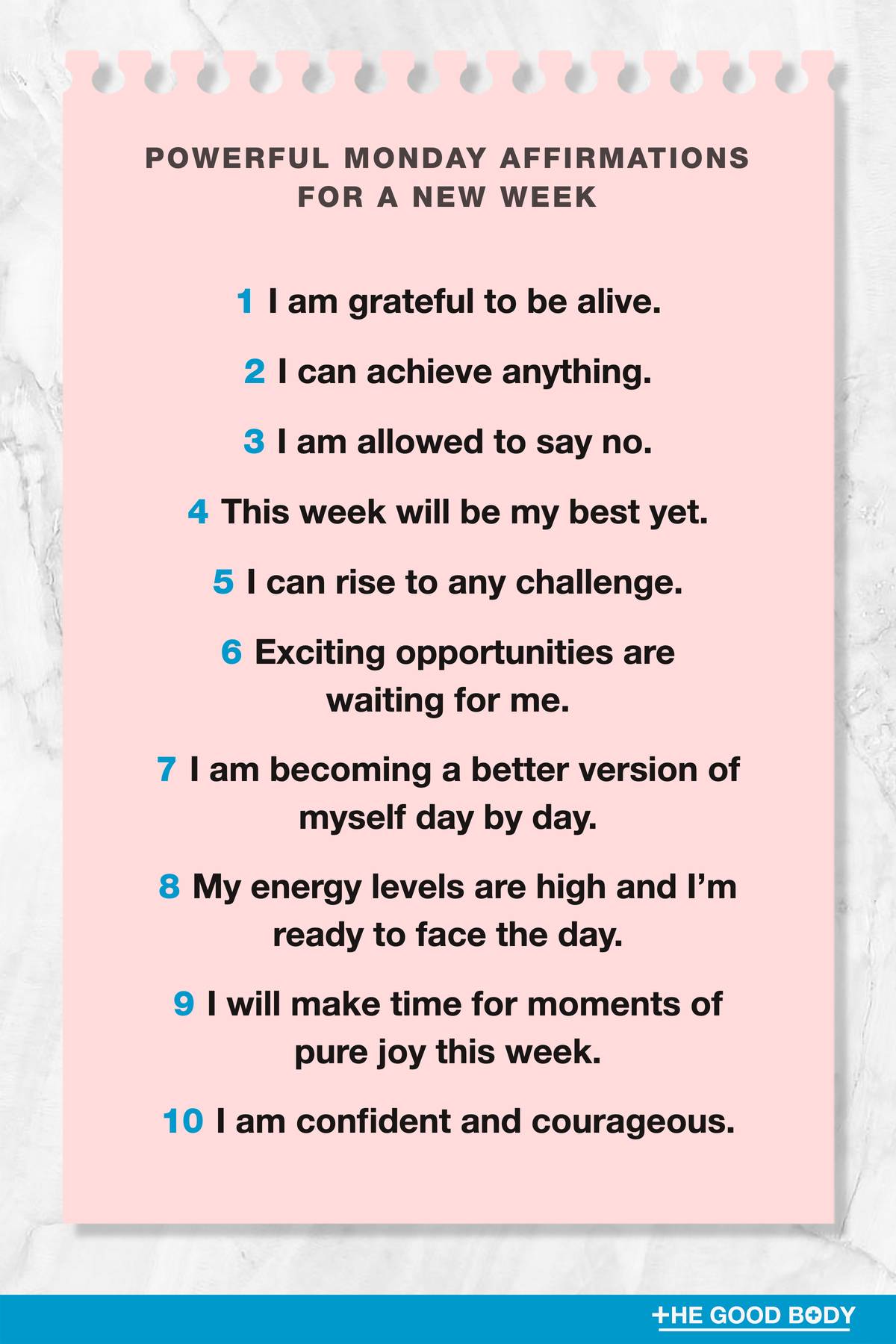
Credit: www.thegoodbody.com
The Role Of Affirmations In Mental Health
Affirmations alone cannot replace therapy or medical care. But they are a helpful tool for managing everyday stress and building emotional resilience. Many mental health professionals encourage their clients to use positive self-talk as part of a healthy routine.
If you struggle with negative thoughts, try starting with very gentle affirmations, like “I am learning to be kinder to myself. ” Over time, as your confidence grows, your affirmations can become stronger.
For more on the science behind affirmation and mental health, visit the Wikipedia article on affirmations.
Frequently Asked Questions
What Is The Best Time To Use Affirmations To Start The Week?
The best time is during your Monday morning routine, before you start work or school. This sets a positive tone for the whole week. Some people also repeat their affirmation at night to prepare for the next day.
How Long Does It Take To See Results From Affirmations?
Results can vary. Some people notice a shift in mood after a few days, while others may take weeks. The key is daily practice and choosing affirmations that feel meaningful to you.
Can I Use More Than One Affirmation Each Week?
Yes, you can use as many as you like. Some people choose one for the week, while others pick a new one each day. The important thing is to focus on affirmations that support your current goals and feelings.
What If I Don’t Believe My Affirmation At First?
This is normal, especially if you are new to affirmations. Start with statements that feel mostly true or possible. As you repeat them and see small changes, your belief will grow.
Are Affirmations A Replacement For Therapy Or Professional Help?
No. Affirmations are a helpful tool for daily motivation and stress management, but they are not a substitute for professional mental health care. If you struggle with serious anxiety or depression, seek support from a qualified professional.
Starting your week with affirmations is a small step that can create big changes in your mindset, motivation, and happiness. With regular practice, you’ll find that each Monday feels less like a mountain to climb and more like a fresh path to success.
