

Affirmation Ideas for Self Love: Transform Your Mindset Today
Affirmation Ideas For Self Love
Feeling good about yourself is not always easy. Many people struggle with self-doubt, negative thoughts, or a lack of confidence. If you often feel this way, you are not alone. But there is a simple tool that can help: affirmations. These are positive statements you repeat to yourself. Over time, they can change how you think and feel. You do not have to be perfect to love yourself. You just need to start believing that you are enough, right now.
This article is a complete guide to affirmation ideas for self love. You will learn what affirmations are, how they work, and why they are powerful. There are many examples you can use every day. We also share tips to make them more effective, common mistakes to avoid, and answers to questions people often ask. If you want to build a better relationship with yourself, read on.
What Are Affirmations And Why Do They Work?
Affirmations are short, positive phrases that you say to yourself. They focus on your strengths, worth, and potential. The goal is to replace negative thoughts with more helpful ones. For example, instead of thinking “I’m not good enough,” you say “I am worthy and capable.”
Research shows that affirmations can change your brain’s pathways. When you repeat something often, your mind starts to believe it. This is called “self-affirmation theory. ” It works best when you say things that match your values and goals. Over time, affirmations can increase your confidence and help you handle stress.
Example: If you feel anxious before a big meeting, saying “I am prepared and calm” can help shift your focus from worry to action. It is not magic, but it trains your mind to support you instead of holding you back.
Benefits Of Using Affirmations For Self Love
- Boosts Self-Esteem: Affirmations remind you of your strengths. This can help you feel better about who you are.
- Reduces Negative Self-Talk: Instead of criticizing yourself, you start to support yourself.
- Promotes Positive Behavior: When you believe you deserve good things, you are more likely to take care of yourself.
- Improves Resilience: Affirmations can make it easier to recover from setbacks.
- Encourages Self-Care: When you value yourself, you do things that are good for your body and mind.
These benefits do not come overnight. It takes time and practice, but the results are real. Many therapists, coaches, and even athletes use affirmations to improve their mindset.
Common Myths About Affirmations
- You have to believe them right away. Actually, it is normal to feel awkward at first. The belief grows with repetition.
- They are only for “positive” people. Anyone can use affirmations, even if you feel negative sometimes.
- Affirmations are a quick fix. They work best as a daily practice, not a one-time solution.
How To Create Effective Self Love Affirmations
Not all affirmations are equal. Some work better than others. Here’s how to create your own, step by step.
- Keep Them Short and Simple: Short phrases are easier to remember and repeat. For example, “I am enough” is better than a long sentence.
- Use Present Tense: Say “I am” or “I feel” instead of “I will be.” This helps your mind believe the statement is true now.
- Be Positive: Focus on what you want, not what you want to avoid. For example, say “I am strong” instead of “I am not weak.”
- Make Them Personal: Use “I” or “my.” This makes the affirmation about you, not someone else.
- Connect to Your Values: Affirmations work best when they mean something to you. If you value kindness, an affirmation like “I am kind to myself” will feel more powerful.
- Be Realistic: Choose affirmations that feel possible. If you struggle with self-esteem, “I am learning to love myself” can feel more believable than “I love myself completely.”
Examples Of How To Rewrite Affirmations
Here is a simple comparison of weak versus strong affirmations:
| Weak Affirmation | Strong Affirmation |
|---|---|
| I want to feel confident. | I am building my confidence every day. |
| I hope I can be enough. | I am enough as I am. |
| I will try not to judge myself. | I accept myself without judgment. |
Notice how the strong affirmations are present tense, positive, and personal.

Credit: www.redsolesandredwine.com
50 Powerful Affirmation Ideas For Self Love
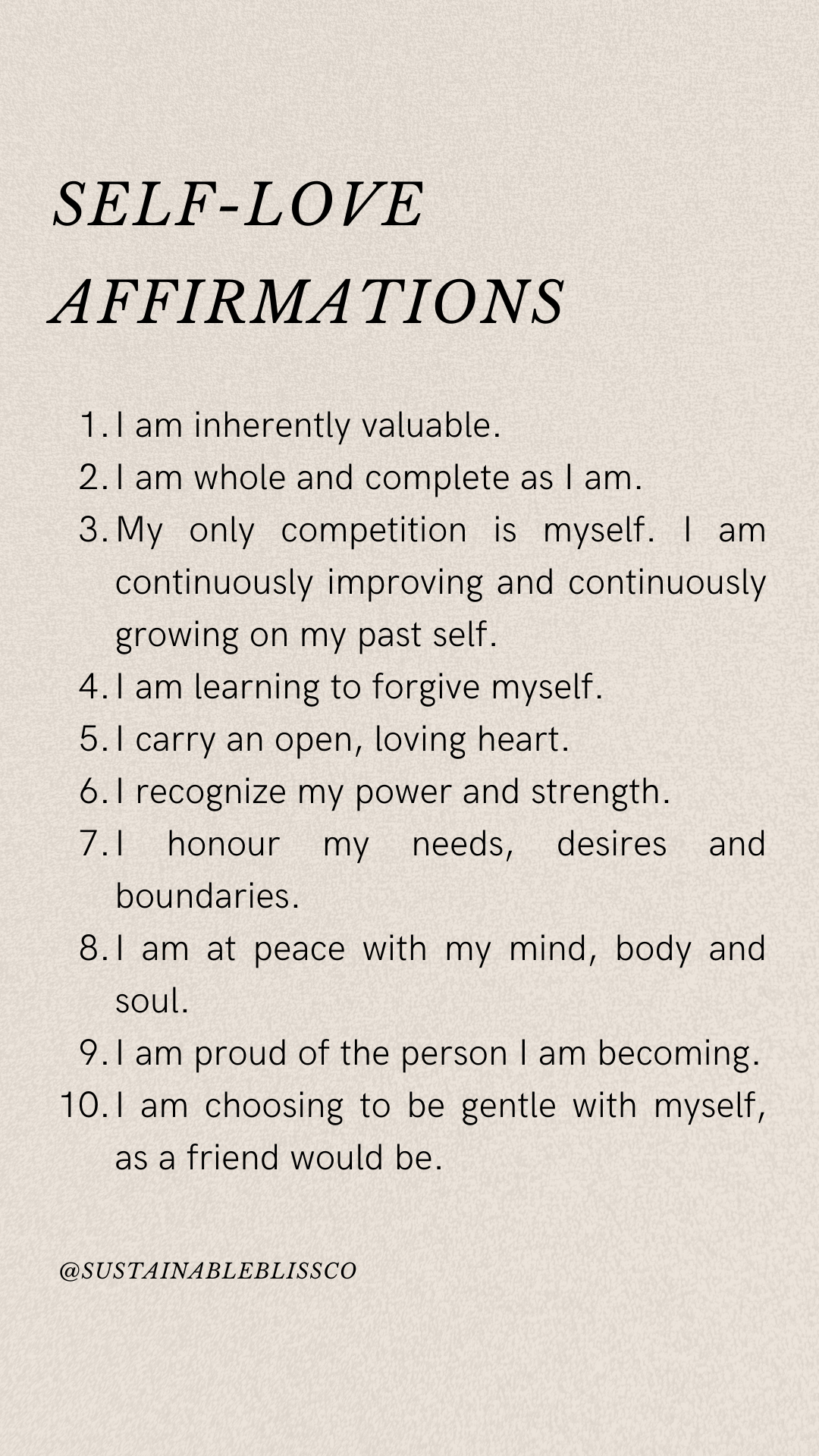
You can use these affirmations as they are, or adjust them to fit your life. Say them in the morning, before bed, or anytime you need support.
- I am worthy of love and respect.
- I accept myself as I am.
- I am proud of who I am becoming.
- I treat myself with kindness and patience.
- My feelings and needs matter.
- I choose to forgive myself for past mistakes.
- I am enough, just as I am.
- My voice deserves to be heard.
- I am learning and growing every day.
- I honor my boundaries.
- I believe in my strengths.
- I trust myself to make good decisions.
- I am gentle with myself in moments of struggle.
- My self-worth is not defined by others.
- I deserve happiness and peace.
- I allow myself to rest and recharge.
- I appreciate my unique qualities.
- I am patient with my progress.
- I am safe in my body.
- I let go of negative self-talk.
- I am grateful for all that I am.
- I choose thoughts that support me.
- I am not my mistakes.
- I am resilient and brave.
- My past does not limit my future.
- I am open to receiving love.
- I trust the process of my growth.
- I am compassionate toward myself.
- I respect my journey.
- I am deserving of care and attention.
- I accept compliments with gratitude.
- I celebrate my achievements, big and small.
- I am allowed to take up space.
- I am more than my flaws.
- I choose to see the good in myself.
- I am in charge of how I feel about me.
- I am whole and complete.
- I listen to my inner wisdom.
- I honor my emotions without judgment.
- I am a work in progress, and that is okay.
- I focus on progress, not perfection.
- I am proud of my courage.
- I give myself permission to be happy.
- I am worthy of all good things.
- I let go of comparing myself to others.
- I am exactly where I need to be.
- I trust myself to overcome challenges.
- I am a valuable person.
- I choose to love and accept myself today.
- I am free to be myself.
These affirmations cover many areas of self love: acceptance, forgiveness, growth, resilience, and self-care. Pick the ones that speak to you the most.
How To Use Affirmations For Best Results
Saying affirmations is only the first step. How you use them makes a big difference. Here are some tips from experience:
1. Set A Regular Routine
Choose a time when you can focus, even for a few minutes. Many people say affirmations in the morning or before sleep. You can also repeat them during daily activities, like brushing your teeth or walking.
2. Say Them Out Loud
Speaking affirmations out loud helps your brain remember them better. If you cannot speak, saying them quietly or writing them down also works.
3. Use A Mirror
Looking at yourself in the mirror while saying affirmations can feel powerful. It helps connect the words to your self-image.
4. Write Them Down
Journaling your affirmations makes them more real. You can write the same affirmation many times, or list a few each day.
5. Visualize The Meaning
As you say an affirmation, picture what it would look like if it were true. For example, if you say “I am confident,” imagine yourself acting with confidence.
6. Be Consistent
Repetition is key. The more often you use affirmations, the stronger their effect. It is normal for them to feel strange at first. With time, they become more natural.
7. Adjust As Needed
If an affirmation stops feeling right, change it. Your needs may shift as you grow.
8. Combine With Action
Affirmations work best when you also take positive actions. For example, “I value my health” becomes stronger if you also rest, eat well, or exercise.
9. Record Your Progress
Notice how you feel after a week or a month. Are you kinder to yourself? Do you catch negative thoughts faster? Small changes add up.
10. Use Technology
There are apps that remind you to say your affirmations or help you track your progress. This can make it easier to build the habit.
Mistakes To Avoid When Using Affirmations
Even though affirmations are simple, some common mistakes can make them less effective. Here’s what to watch out for:
- Being Too Vague: “I am happy” is less helpful than “I am learning to find joy in small moments.”
- Choosing Unrealistic Statements: If you don’t believe what you say, your mind will resist. Start with small steps, like “I am open to loving myself.”
- Repeating Without Feeling: Just saying words is not enough. Try to connect with the meaning.
- Expecting Instant Results: Change takes time. Be patient with yourself.
- Comparing Your Progress: Everyone is on a different journey. Focus on your own growth.
Many beginners miss the importance of emotion in affirmations. The more you feel the words, the more powerful they become. Also, don’t worry if you have doubts sometimes. This is normal and part of the process.
Affirmations For Specific Self Love Challenges
Some people struggle with certain areas more than others. Here are affirmation ideas for common self love challenges:
For Low Self-esteem
- I am valuable, no matter what others say.
- My worth does not depend on my achievements.
- I am proud of my progress.
For Body Image
- My body deserves kindness and care.
- I appreciate what my body can do.
- I am more than my appearance.
For Overcoming Guilt
- I forgive myself and choose to move forward.
- I am not defined by my past mistakes.
- I give myself permission to let go.
For Setting Boundaries
- My needs are important.
- It is safe for me to say no.
- I respect and protect my energy.
For Accepting Compliments
- I receive compliments with gratitude.
- I am worthy of praise.
- I celebrate my strengths.
For Handling Failure
- I learn and grow from setbacks.
- Mistakes are part of my journey.
- I am resilient and strong.
You can use these affirmations when you face these specific situations. They help you shift your thinking and build a stronger sense of self.
Why Self Love Affirmations Matter More Than You Think
Self love is not just a trendy idea. It affects every part of your life—your relationships, work, health, and happiness. People who practice self love are less likely to struggle with anxiety, depression, and stress. They are also more likely to reach their goals and feel satisfied with life.
A study shared by National Institutes of Health found that self-affirmations can lower stress and improve well-being. The key is consistency. You do not have to change everything overnight. Small, daily steps make a big difference over time.
Self Love And The Brain
Your brain is “plastic,” which means it can change with new thoughts and habits. Affirmations help create new pathways that support self love. This is why people who use affirmations often find it easier to be kind to themselves, even after years of negative thinking.
Real-life Example
Consider Maria, who always felt she was not good enough. She started saying, “I am worthy of love and respect” every morning. At first, it felt strange. But after a month, she noticed she was less harsh on herself. She started speaking up at work and setting boundaries in her relationships.
Affirmations gave her the courage to change her life.
Combining Affirmations With Other Self Love Practices
Affirmations are powerful, but they are even better when combined with other self love activities. Here are some ideas:
- Journaling: Write about your feelings, successes, and areas you want to grow.
- Gratitude Practice: List things you appreciate about yourself.
- Meditation: Focus on your breath and repeat affirmations in your mind.
- Self-Care Routines: Take time for activities that make you feel good, like baths, walks, or hobbies.
- Mindful Movement: Yoga, stretching, or gentle exercise can help you connect with your body.
Mixing these practices helps you care for yourself in many ways. The more you show yourself kindness, the more natural self love becomes.

Credit: nunziadreams.com
How To Deal With Doubts When Using Affirmations
It is normal to feel doubt or even discomfort when you start using affirmations. Your mind may argue, “This is not true,” especially if you have thought the opposite for years. Here is how to handle it:
- Acknowledge the Doubt: Notice it, but do not judge yourself.
- Start Small: Use affirmations you can almost believe, like “I am learning to accept myself.”
- Repeat Often: The more you practice, the more your brain adapts.
- Pair With Evidence: After saying an affirmation, think of a time when it was true, even in a small way.
- Be Patient: Change is possible, but it takes time.
With practice, your doubts will become quieter. The positive voice will grow stronger.
Customizing Affirmations For Your Life
The best affirmations are personal. Here’s how to make them fit your unique situation:
- Think About Your Challenges: What do you struggle with most? Confidence, self-care, boundaries, or something else?
- Use Your Own Words: If an affirmation does not sound like you, change it.
- Mix and Match: Combine two ideas if needed. For example, “I am learning to trust my own voice.”
- Update Over Time: As you grow, your affirmations may change. This is a good sign.
Custom affirmations feel more powerful and are easier to believe.
Tracking Your Progress With Affirmations
To see the real benefits, it helps to track your journey. Here is a simple way to do it:
| Day | Affirmation Used | How I Felt | Noticed Changes |
|---|---|---|---|
| Monday | I am enough. | Calm, hopeful | Caught negative thoughts |
| Tuesday | I am learning to love myself. | A little awkward | More patient with mistakes |
| Wednesday | I forgive myself. | Relieved | Less guilt about past |
Review your progress each week. Notice patterns. Celebrate small wins.
Using Affirmations In Different Settings
Affirmations are flexible. You can use them anywhere:
- At Work: Before a meeting, say “I am confident and prepared.”
- During Stress: When anxious, try “I am safe and can handle this.”
- In Relationships: Before a hard talk, repeat “My needs are important.”
- At the Gym: When exercising, say “My body is strong and capable.”
- Before Sleep: Calm your mind with “I am grateful for who I am.”
You can even write affirmations on sticky notes, keep them in your wallet, or set them as reminders on your phone.
Affirmations And Self Love For Different Ages
Self love is important at every stage of life, but the focus may shift. Here is a quick look at how affirmations can help different age groups:
| Age Group | Common Challenge | Sample Affirmation |
|---|---|---|
| Teens | Peer pressure, self-doubt | I am unique and valuable. |
| Young Adults | Uncertainty, comparison | I trust my journey. |
| Adults | Work stress, self-worth | I am proud of my achievements. |
| Seniors | Change, loss, aging | I honor my life experience. |
You can always adapt affirmations to fit your stage of life or personal needs.
Practical Tips For Making Affirmations A Daily Habit
Building a new habit can be hard. Here’s how to make affirmations part of your day:
- Start Small: Begin with one affirmation a day.
- Pair With Existing Habits: Say affirmations while making coffee, during your commute, or before sleep.
- Use Reminders: Set phone alarms or put sticky notes where you will see them.
- Get Support: Share affirmations with a friend or join a group.
- Be Patient: Habits take time. If you miss a day, just start again.
A non-obvious tip: If you struggle with consistency, record yourself saying your affirmations and listen on repeat. The sound of your own voice can make the words feel more real.
Credit: www.sustainableblissco.com
Frequently Asked Questions
What If I Feel Silly Saying Affirmations?
Feeling awkward is common, especially in the beginning. It is a sign you are trying something new. With time and repetition, the feeling usually fades. The more you practice, the more natural it will feel.
Can Affirmations Really Change My Thinking?
Yes, studies show that positive self-talk can change thought patterns in your brain. It takes time and practice, but many people see real shifts in confidence and self-worth.
How Long Should I Use The Same Affirmation?
You can use an affirmation as long as it feels helpful. Some people stick with one for weeks; others change daily. Listen to yourself—if an affirmation stops having an effect, try a new one.
Do Affirmations Work For Everyone?
Most people can benefit from affirmations, but results vary. Some may need extra support, such as therapy or coaching, especially if they have deep-rooted self-esteem issues. Affirmations are most powerful when combined with other self care practices.
Should I Write My Own Affirmations Or Use Examples?
Both ways are good. Using examples helps you get started, but writing your own makes affirmations more personal. The best affirmations are ones that feel true or possible for you.
Self love is a journey, not a destination. Using affirmations is one of the simplest and most effective ways to start. Remember, you do not have to believe every word right away. What matters is showing up for yourself, day after day.
Over time, these small moments of kindness can change your entire outlook on life.
