

Affirmation Examples for Kids: Boost Confidence and Positivity
Affirmation Examples For Kids
Positive words can shape how children see themselves and the world. When kids hear encouraging phrases, they start to believe in their own strengths. This is why affirmations for kids are much more than simple words. They are tools that help children build self-esteem, develop a growth mindset, and manage difficult emotions.
Many parents, teachers, and caregivers want children to grow up confident and happy. But the world is not always an easy place. Children face challenges at school, with friends, and even inside their own minds. Using affirmations in daily life is a simple but powerful way to help kids handle stress, improve focus, and boost resilience.
This article will guide you through the world of affirmations for kids. You'll learn what affirmations are, why they work, and how to make them part of your child's routine. You'll also find a large collection of affirmation examples for all kinds of situations—school, friendships, sports, and more.
Along the way, you'll discover tips and insights that even many adults miss. Let’s explore how the right words can help children thrive.
What Are Affirmations?
Affirmations are short, positive statements that people say to themselves. They are designed to change negative thinking into more helpful thoughts. For example, a child who says “I am brave” is using an affirmation to remind themselves of their inner strength.
Affirmations work best when they are:
- Simple
- Positive
- In the present tense (“I am” instead of “I will be”)
- Personal and meaningful
Children often repeat what they hear. If they hear negative messages, they may start to believe them. But if they hear positive words, they can build a stronger self-image.
Why Are Affirmations Important For Kids?
Children’s brains are still developing. Their beliefs about themselves and the world are not fixed. This makes affirmations very powerful for kids. Here’s why they matter:
- Boost Self-Esteem: Kids who use affirmations feel more confident and proud of who they are.
- Build Emotional Strength: Affirmations help children manage stress, anxiety, and sadness.
- Encourage a Growth Mindset: Positive phrases can help children see mistakes as learning opportunities.
- Improve Focus and Motivation: Repeating affirmations can give kids the push they need to try new things or finish hard tasks.
- Promote Kindness: Kids learn to speak kindly to themselves and others.
Research shows that children who hear affirming words are less likely to develop negative self-talk as they grow older. For example, a study published by the American Psychological Association found that positive self-statements can reduce anxiety and improve mood in children.
Even small changes in language can have a big impact over time.
How To Teach Affirmations To Kids
Teaching affirmations is not just about giving kids a list of phrases. It is about building a habit and showing them how to use positive words in daily life. Here are practical ways to get started:
Start With Simple Language
Use words that match your child’s age and understanding. Shorter phrases are easier for young children to remember. For example, “I am kind” works better than long, complex sentences.
Make It A Routine
Consistency helps. Repeat affirmations at the same time each day—maybe in the morning, before bed, or before a challenging activity. This regular practice builds confidence.
Use Visuals
Children often learn better with pictures. Write affirmations on colorful cards or posters. Place them in areas where your child spends time, like their bedroom, bathroom mirror, or school bag.
Practice Together
Kids learn by example. Say affirmations out loud with your child. It can be fun to do this together, and it shows that everyone can benefit from positive self-talk.
Connect Affirmations To Real Life
Help your child see how affirmations fit into daily situations. If they feel nervous before a test, remind them to say, “I am prepared” or “I can do hard things. ”
Encourage Creativity
Let children make their own affirmations. When kids choose words that matter to them, the practice feels more meaningful.
Non-obvious insight: Some children may not believe an affirmation at first. That’s normal. It takes time and repetition for positive statements to feel true. Encourage your child to keep trying, even if it feels strange at the beginning.
Common Mistakes When Using Affirmations With Kids
Even with good intentions, adults sometimes make mistakes with affirmations. Knowing these can help you avoid problems:
- Forcing Phrases: If you push a child to say words they do not believe or understand, they may resist or feel uncomfortable.
- Using Negative Language: Affirmations should always focus on the positive. Avoid phrases like “I am not scared.” Instead, say “I am brave.”
- Ignoring Emotions: Affirmations work best when you also listen to your child’s feelings. It’s okay if they feel sad or scared sometimes.
- Overcomplicating: Long or complex sentences can confuse younger children. Simplicity is key.
- Lack of Consistency: Using affirmations only once or twice will not make a difference. Regular practice is important.
Types Of Affirmations For Kids
There are many types of affirmations, each serving a different purpose. Here are the main categories:
- Self-Esteem: Building confidence and self-worth
- Growth Mindset: Encouraging learning and resilience
- Emotional Regulation: Managing feelings and stress
- Friendship and Kindness: Building social skills
- School and Learning: Supporting focus and motivation
- Courage and Bravery: Facing fears and challenges
- Gratitude and Happiness: Focusing on the positive
- Respect and Responsibility: Learning values
Each category has its own set of phrases that help children in different parts of life.
Self-esteem Affirmations For Kids
Children with high self-esteem feel good about themselves. They are more likely to try new things and recover from failure. Here are some affirmations that boost self-worth:
- I am important.
- I love who I am.
- I am enough.
- I am unique and special.
- I believe in myself.
- I am proud of what I can do.
- I am worthy of love and respect.
- I am smart and creative.
- I am happy to be me.
- I am a good friend.
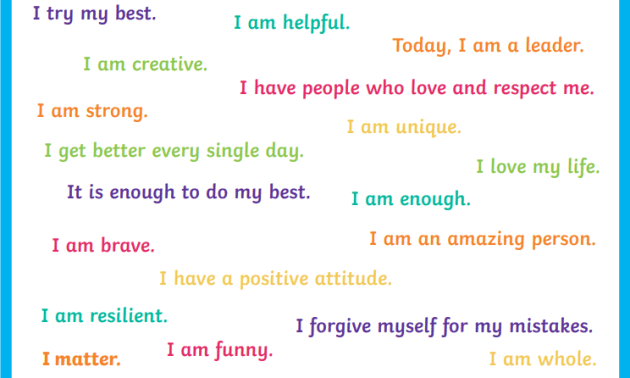
When children repeat these phrases, they start to see their own value. This is especially important during times of change or challenge, such as starting a new school or making new friends.
Credit: www.twinkl.com
Growth Mindset Affirmations For Kids
A growth mindset helps children see that they can get better at anything with effort and practice. These affirmations support a love of learning and resilience:
- I can learn new things.
- Mistakes help me grow.
- I am not afraid to try.
- I can always improve.
- I am a problem solver.
- Challenges make me stronger.
- I can ask for help when I need it.
- I am curious and eager to learn.
- It’s okay to not know everything.
- I keep going, even when it’s hard.
A growth mindset is linked to better school performance and higher motivation. By using these phrases, kids learn that effort matters more than talent.
Emotional Regulation Affirmations For Kids
Emotional regulation is the ability to manage feelings like anger, sadness, or worry. These affirmations help children stay calm and balanced:
- I can handle my feelings.
- It’s okay to feel sad sometimes.
- I am calm and relaxed.
- I can breathe deeply to feel better.
- I can talk about my feelings.
- I am in control of my actions.
- My feelings are important.
- I can find peaceful solutions.
- I can choose to be positive.
- I am safe and loved.
Practical tip: Pair these affirmations with deep breathing or mindfulness exercises. This helps children connect words to real emotions.

Credit: www.thepathway2success.com
Friendship And Kindness Affirmations For Kids
Building healthy friendships and showing kindness is a skill that starts early. Here are affirmations that help children connect with others:
- I am a good friend.
- I care about others.
- I share and take turns.
- I am kind to everyone.
- I listen when people talk.
- I can forgive and move on.
- I make others smile.
- I respect differences.
- I help when I can.
- I am a peacemaker.
These affirmations are useful during conflicts or when children feel left out. They remind kids of the value of kindness and connection.
School And Learning Affirmations For Kids
School can be a source of stress or excitement. The right words can make a big difference in how children approach learning:
- I am ready to learn.
- I am focused and attentive.
- I do my best work.
- I can ask questions.
- I am organized and prepared.
- I learn from my mistakes.
- I am proud of my progress.
- I enjoy learning new things.
- I believe in my abilities.
- I can finish my work.
These affirmations can be used before tests, homework, or any learning activity. They help children replace fear with excitement.
Courage And Bravery Affirmations For Kids
Every child faces fears. These affirmations build courage and help children deal with scary or new situations:
- I am brave.
- I can face my fears.
- I am stronger than I think.
- I try new things.
- I am not alone.
- I have the courage to speak up.
- I can do hard things.
- I believe in my strength.
- I am safe to explore.
- I trust myself.
Non-obvious insight: Remind children that bravery does not mean the absence of fear. It means acting even when you are scared.
Gratitude And Happiness Affirmations For Kids
Focusing on what we have, instead of what we lack, leads to happiness. These affirmations encourage gratitude:
- I am thankful for today.
- I see the good in every day.
- I appreciate my family and friends.
- I am grateful for what I have.
- I choose to be happy.
- I notice the little things.
- I bring joy to others.
- I look for the good in people.
- I feel lucky to be me.
- I celebrate my life.
Gratitude practices have been shown to increase happiness and reduce stress in children.
Respect And Responsibility Affirmations For Kids
Respect and responsibility are key values for growing up. These affirmations help children remember their role in the family, school, and community:
- I respect myself and others.
- I take care of my things.
- I am responsible for my actions.
- I follow the rules.
- I do my chores.
- I keep my promises.
- I am honest and fair.
- I help others when I can.
- I try my best every day.
- I make good choices.
Teaching respect and responsibility through affirmations can lead to better behavior at home and school.
How To Use Affirmations In Daily Life
Affirmations work best when they are part of a child’s daily routine. Here are some ways to use them at home or school:
Morning Affirmation Ritual
Start the day with a positive statement. This sets the tone for the rest of the day. For example, say, “I am ready for a great day. ”
Affirmation Cards
Write affirmations on small cards. Let your child pick one each morning. This adds a fun, interactive element.
Mirror Affirmations
Have your child look in the mirror and say an affirmation out loud. This builds confidence and helps make the words feel real.
Affirmation Journals
Encourage children to write down their favorite affirmations. Older kids can reflect on how the words made them feel during the day.
Group Affirmations
In classrooms or families, saying affirmations together can create a sense of unity and support.
Affirmation Songs Or Rhymes
Make affirmations into songs or rhymes. Music helps children remember and enjoy the practice.
Extra tip: If your child struggles with a certain fear or worry, create custom affirmations together. Personalized statements have a stronger impact.
Real-life Examples: How Affirmations Change Children
Affirmations are not just theory. Many parents and teachers have seen real results. Here are a few examples:
- A shy student started saying, “I am brave” before raising her hand in class. Over time, she became more confident speaking up.
- A boy who feared tests used, “I am prepared” every morning. His test anxiety decreased, and his grades improved.
- Siblings who argued learned, “I am kind to my family.” Conflicts became less frequent, and they started helping each other.
These stories show that small changes in language can create lasting change in behavior and attitude.
Comparison: Affirmations For Kids Vs. Adults
Some people wonder if affirmations for kids are different from those for adults. Here’s a simple comparison:
| Aspect | Affirmations for Kids | Affirmations for Adults |
|---|---|---|
| Language | Simple and clear | Can be complex or abstract |
| Focus | Self-esteem, courage, learning | Career, relationships, self-growth |
| Delivery | Often spoken with support | Usually self-directed |
| Frequency | Part of daily routines | Used as needed or in routines |
Kids need affirmations that match their age and experience. Adults may use more complex or abstract statements.
Making Affirmations More Effective
Not all affirmations are equally powerful. Here’s how to make them work better:
Personalization
Affirmations should feel true or possible for your child. Let kids adjust the words to fit their own feelings and needs.
Consistency
The more often affirmations are used, the stronger the effect. Make it a habit.
Visualization
Encourage kids to imagine themselves as the affirmation describes. For example, while saying, “I am brave,” they can picture themselves speaking in front of the class.
Positive Emotion
Affirmations work best when children feel the words. Encourage smiles, laughter, or excitement during the practice.
Involve The Whole Family
When everyone participates, affirmations become a shared positive experience.
Non-obvious insight: Celebrate small wins. If your child uses an affirmation and handles a tough situation well, recognize their effort. This builds a connection between positive self-talk and real results.
When Affirmations Might Not Work
Affirmations are helpful, but they are not magic. If a child struggles with very low self-esteem, anxiety, or trauma, affirmations alone may not be enough. In these cases, professional support from a counselor or psychologist can help.
Also, avoid using affirmations to cover up real problems. If a child is being bullied, for example, they need both support and action—not just positive words.
Affirmation Practice: Tracking Progress
Children love to see their progress. You can track affirmation use in a fun way. Here is a simple example:
| Day | Affirmation Used | How I Felt |
|---|---|---|
| Monday | I am brave | Happy, less scared |
| Tuesday | I am a good friend | Proud, friendly |
| Wednesday | I can do hard things | Confident, strong |
This simple chart encourages daily practice and helps kids notice the effect of positive words.
Creative Ways To Use Affirmations
You don’t have to stick to just saying affirmations. Here are more creative ideas:
- Art Projects: Paint or draw affirmations on rocks, bookmarks, or posters.
- Affirmation Jars: Write affirmations on slips of paper. Pull one out when your child needs a boost.
- Storytelling: Make up stories where the main character uses affirmations to solve problems.
- Bedtime Rituals: End the day with a calming affirmation, such as “I am safe and loved.”
Practical tip: Let children decorate their affirmation cards or posters. This increases their sense of ownership and enjoyment.
The Science Behind Affirmations For Kids
Some parents wonder if affirmations really work. While more research is needed, studies show that positive self-talk can improve mood, reduce anxiety, and support learning in children. According to a review published by the National Institutes of Health, affirmations activate brain areas linked to self-processing and reward.
One reason affirmations work is because the brain tends to believe what it repeats. When children hear and say positive statements often, they start to see themselves in a new light. This is especially true when affirmations are paired with support from adults and real-life experiences.
For more on the science behind affirmations, you can read this Psychology Today article.
Adapting Affirmations For Different Ages
Affirmations can be used with toddlers, young children, and teens. Here’s how they differ:
| Age Group | Best Approach | Example Affirmations |
|---|---|---|
| Toddlers (2-4) | Simple phrases, songs, repetition | I am loved, I am strong |
| Young Children (5-8) | Rhymes, visuals, daily routines | I am a good friend, I can learn |
| Preteens/Teens (9+) | Reflection, journaling, personalization | I am capable, I respect myself |
Younger children need more support and repetition. Older kids can create and use their own affirmations.
Overcoming Challenges In Affirmation Practice
It’s normal for kids to forget or lose interest in affirmations. Here’s how to keep the practice going:
- Change up the routine—try new affirmations, songs, or activities.
- Celebrate when your child remembers to use an affirmation.
- If your child feels silly, join in and make it a game.
- Be patient. Habits take time to build.
Remember, the goal is not perfection but progress. Every positive word helps.
When To Use Affirmations: Everyday Situations
Affirmations can help in many real-life moments, such as:
- Before a test or presentation
- During a fight with friends or siblings
- When trying a new activity or sport
- After making a mistake
- When feeling left out or lonely
- During bedtime routines
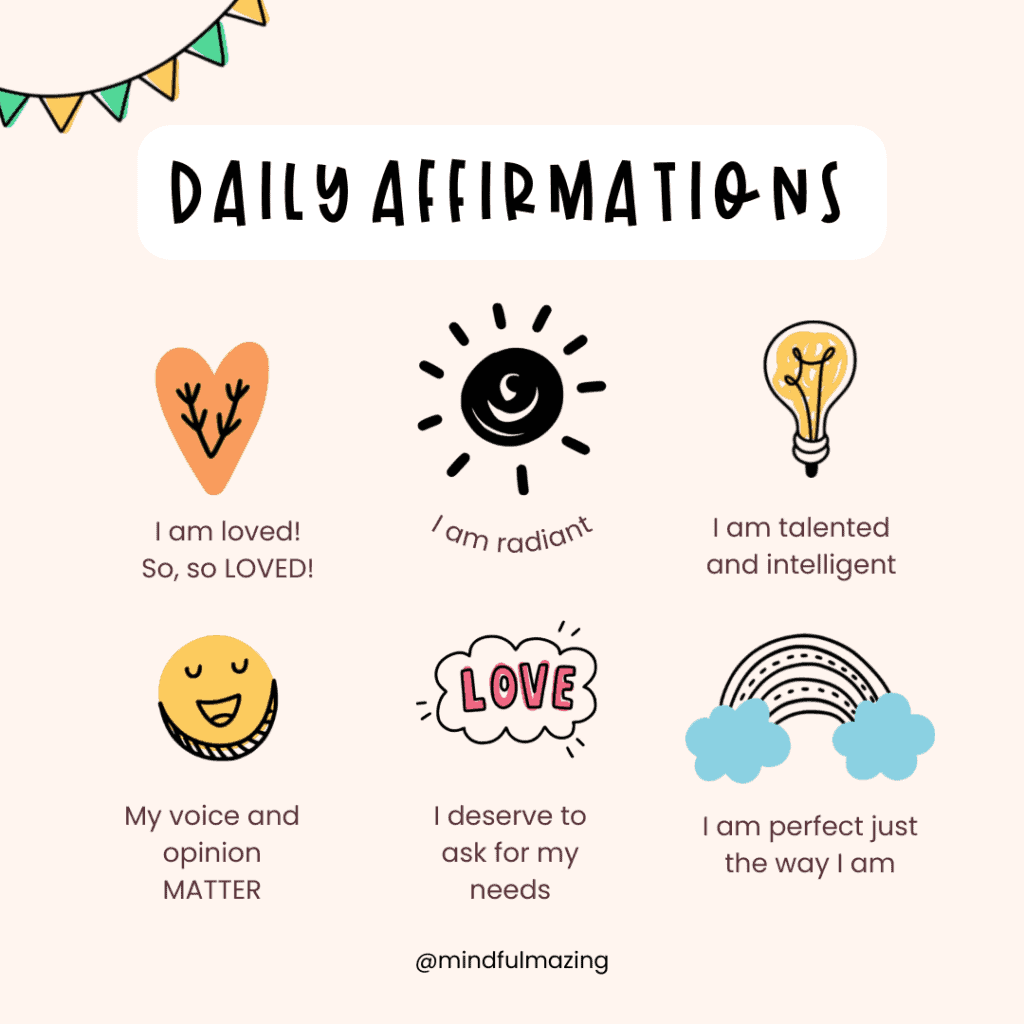
Customizing affirmations for these moments makes them even more powerful.
Credit: www.mindfulmazing.com
Combining Affirmations With Other Positive Practices
Affirmations are part of a bigger picture. When combined with other positive practices, the effect is even greater:
- Mindfulness: Teach kids to notice their thoughts and feelings.
- Gratitude journals: Write down things they are thankful for.
- Acts of kindness: Encourage helping others as a way to feel good.
- Physical activity: Pair affirmations with movement, like stretching or dance.
The more ways children experience positivity, the stronger the results.
Frequently Asked Questions
What Is The Best Age To Start Using Affirmations With Kids?
You can start using affirmations with children as young as two or three years old. At this age, use very simple phrases and lots of repetition. As kids grow, you can introduce more complex affirmations and let them create their own.
How Many Affirmations Should A Child Use Each Day?
There is no strict number. Start with one or two affirmations each day, and build from there if your child enjoys the practice. The most important thing is consistency and making affirmations a positive experience.
Do Affirmations Really Work For Shy Or Anxious Children?
Affirmations can help shy or anxious children, but they are not a cure-all. They work best when combined with support, encouragement, and, if needed, professional help. Over time, positive self-talk can reduce anxiety and build confidence.
Should I Correct My Child If They Say An Affirmation “wrong”?
Encourage your child, but do not worry about perfect wording. The goal is to help them feel good about themselves. If they change the words to something that feels better to them, that is fine. The meaning matters more than the exact words.
Can I Use Affirmations With Children Who Have Special Needs?
Yes, affirmations can be adapted for children with special needs. Use simple language, visual supports, or music if needed. Be patient and let the child move at their own pace. Affirmations can help all children feel valued and strong.
Helping kids develop positive self-talk is a gift that lasts a lifetime. Affirmations are simple, free, and powerful tools for building strong, happy, and confident children. With creativity and consistency, you can make affirmations a joyful part of every child’s day.
