

Affirmation Cards Ideas: Creative Ways to Inspire Daily Positivity
Affirmation Cards Ideas: Inspiration, Design, And Creative Uses
Feeling stuck or searching for ways to boost your mindset? Affirmation cards offer simple, powerful tools for daily encouragement. These cards are more than just pretty words on paper—they help build self-confidence, improve focus, and create positive habits. People across the world use affirmation cards to start their day, motivate loved ones, and even reduce stress.
But what makes a great affirmation card? How do you design cards that truly help? And what are the best ideas for different needs—like children, work, or tough times? This guide will give you creative concepts, practical advice, and expert tips for making affirmation cards that change lives.
Whether you want to craft your own, buy a thoughtful gift, or use them in a group, you’ll find everything you need here.
What Are Affirmation Cards?
Affirmation cards are small cards with positive statements. Each card has a phrase or message that reminds you of your strengths, values, or goals. They are easy to use: pick a card, read the words, and reflect on their meaning. Repeating or focusing on these statements helps replace negative thoughts with positive ones.
Some cards are simple—just one sentence. Others have a short story, an action step, or even a question to think about. You can find affirmation cards for almost any topic: self-love, health, gratitude, work, or relationships.
Why Use Affirmation Cards?
The main reason people turn to affirmation cards is to change how they think. Studies show that positive affirmations can:
- Reduce stress and anxiety
- Increase self-esteem
- Improve motivation and focus
- Help manage negative thoughts
For example, a person who feels nervous before a presentation might use a card that says, “I am confident and prepared. ” Reading this helps shift their thinking and calm their mind.
Affirmation cards are also portable. You can keep them on your desk, in your bag, or next to your bed. Many people use them in the morning to set a positive tone for the day, or at night to reflect before sleep. They can even become part of a family routine, a classroom activity, or a team-building exercise.
How To Create Your Own Affirmation Cards
Making your own cards adds a special, personal touch. You can design them for your own needs, or as a thoughtful gift for someone else. Here’s how to get started:
1. Choose Your Focus
Decide what you want the cards to help with. Is it self-confidence, stress relief, gratitude, or another area?
2. Find Or Write Affirmations
You can use classic phrases or write your own. Make sure each message is positive, present tense, and personal. For example: “I am enough.” “I attract good things into my life.”
3. Select Your Materials
Cardstock is sturdy and feels good in the hand. You can also use colored paper, recycled materials, or even digital designs.
4. Design And Decorate
Add colors, drawings, stickers, or inspiring images. Simple designs work well, but personal touches make each card unique.
5. Cut To Size
Standard cards are about the size of a business card (2 x 3. 5 inches), but you can choose any size you like.
6. Use Or Gift Your Cards
Keep them in a box, bag, or on a ring. Draw a card daily, or share them with friends and family.
Non-obvious Tips For Beginners
- Avoid vague messages. Instead of “Be happy,” try “I choose to find joy in small moments today.”
- Mix in action cards. Add cards with simple activities, like “Write down three things you’re grateful for.”
- Rotate themes. Use different colors or icons for areas like self-love, gratitude, or courage.
35 Creative Affirmation Card Ideas
Looking for inspiration? Here are 35 unique ideas for affirmation cards, with examples and tips for each.
1. Self-love Affirmations
These cards remind you to appreciate yourself. For example: “I am worthy of love and respect.” Use gentle colors like pink or lavender for a calming effect.
2. Morning Motivation Cards
Start your day with energy: “Today, I will give my best.” Place these cards near your coffee maker or mirror.
3. Stress Relief Affirmations
Calm your mind: “I let go of what I can’t control.” Add blue or green backgrounds for a soothing touch.
4. Gratitude Cards
Focus on what you have: “I am grateful for the support around me.” Encourage writing a gratitude journal after picking a card.
5. Goal-setting Cards
Stay on track: “Every step I take brings me closer to my dreams.” Use goal imagery, like mountains or arrows.
6. Health And Wellness Affirmations
Support your healthy habits: “I care for my body with love.” Include small reminders for hydration or movement.
7. Confidence Boosters
Perfect before interviews or meetings: “I trust my abilities.” Use bold fonts and strong colors.
8. Relationship Affirmations
Improve connections: “I listen with empathy.” Try adding questions, like “How can I show love today?”
9. Kids’ Affirmation Cards
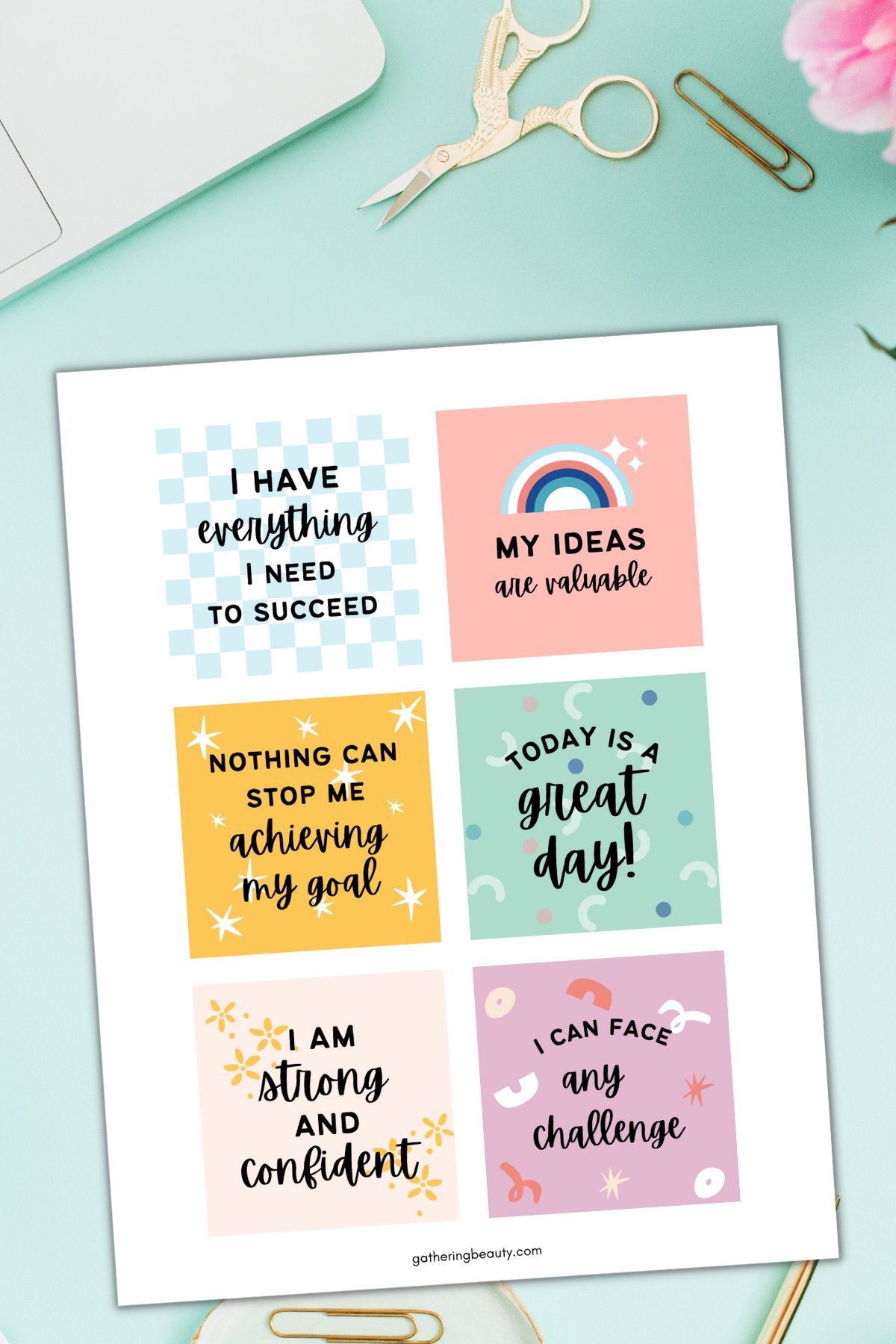
Make them fun and simple: “I am a great friend.” Use bright colors and playful drawings.
10. Work And Study Affirmations
Increase focus: “I am capable of learning new things.” Keep these cards on your desk.
11. Mindfulness Cards
Stay present: “I notice the beauty around me.” Pair with a small breathing exercise.
12. Courage Cards
Face fears: “I act with courage, even when it’s hard.” Use images of lions or superheroes.
13. Abundance Affirmations
Attract good things: “My life is full of opportunities.” Green and gold make good color choices.
14. Healing Affirmation Cards
Support recovery: “I give myself time to heal.” Add gentle imagery, like leaves or hearts.
15. Creativity Boosters
Spark new ideas: “I am open to inspiration.” Decorate with paint splashes or light bulbs.
16. Spiritual Affirmations
Connect with your beliefs: “I trust in a higher plan.” Use symbols that feel meaningful to you.
17. Overcoming Negative Self-talk
Replace old patterns: “My thoughts are kind and helpful.” Add reminders to breathe or smile.
18. Affirmation Cards For Teens
Tackle teen challenges: “I am unique and valuable.” Use modern designs and relatable language.
19. Affirmation Cards For Anxiety
Ease worries: “It’s okay to take things slow.” Include simple grounding steps, like “Name three things you see.”
20. Achievement Cards
Celebrate wins: “I am proud of my progress.” Suggest keeping the card after reaching a goal.
21. Parenting Affirmation Cards
Support parents: “I am doing my best as a parent.” Add reminders to ask for help when needed.
22. Friendship Affirmations
Build strong bonds: “I am a loyal and caring friend.” Suggest sharing cards with friends.
23. Affirmation Cards For Difficult Days
Offer comfort: “This feeling will pass.” Use soft colors and gentle words.
24. Positive Body Image Cards
Encourage self-acceptance: “I appreciate my body’s strength.” Avoid appearance-focused phrases.
25. Leadership Affirmations
Inspire action: “I lead with honesty and vision.” Use bold layouts and powerful verbs.
26. Money Mindset Cards
Shift beliefs: “I make wise choices with money.” Add practical tips, like “Save a little today.”
27. Study And Exam Confidence
Ease test stress: “I remember what I have learned.” Suggest a short break before picking a card.
28. Affirmation Cards For Caregivers
Recognize their effort: “My care makes a difference.” Add notes about self-care.
29. Affirmation Cards For Healing Grief
Offer comfort: “It’s okay to feel and heal.” Keep language gentle and supportive.
30. Affirmation Cards For Change
Embrace growth: “I adapt and thrive.” Use images of butterflies or new leaves.
31. Fitness Motivation Cards
Encourage movement: “I am strong and improving every day.” Suggest celebrating small wins.
32. Affirmation Cards For Sleep
Promote rest: “I give myself permission to rest.” Use calming colors and moon imagery.
33. Travel Affirmations
Enjoy new experiences: “I am open to adventure.” Pair with travel photos or maps.
34. Social Confidence Cards
Support social skills: “I am comfortable expressing myself.” Suggest trying a new conversation starter.
35. Environmental Affirmation Cards
Encourage eco-friendly habits: “I care for the planet.” Add simple actions, like “Pick up one piece of litter.”
Design Inspiration: Making Cards That Stand Out
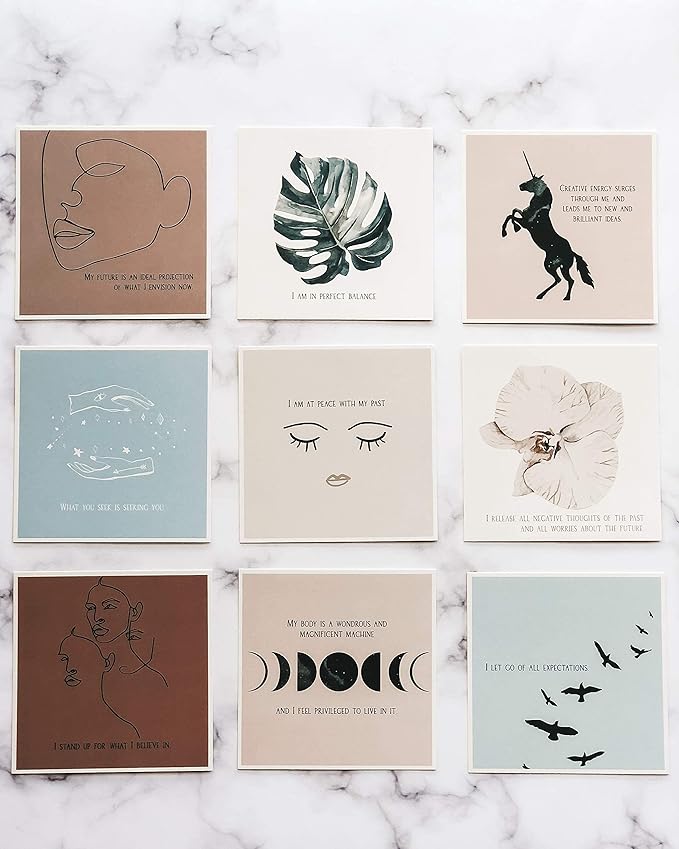
A card’s message matters, but so does its look. Design can make affirmations more engaging and memorable. Here are some creative ideas for design:
Use Symbols And Icons
Small images, like hearts, stars, or leaves, give meaning and make cards easier to remember. For example, a sun icon can show hope or a new start.
Play With Color Themes
Color affects mood. Use warm colors (red, orange) for energy, and cool colors (blue, green) for calm. You can even use different colors for different types of affirmations.
Add Texture
Try using textured paper or adding fabric, glitter, or stickers. This makes the cards feel special and more enjoyable to touch and use.
Personalize With Handwriting
Handwritten messages feel more personal. Even if you use a computer to design, adding a signature or small note can make each card unique.
Laminate For Durability
Laminating protects the cards from spills and tears, so they last longer. This is especially useful for cards you’ll carry with you or use with kids.
Table: Comparing Types Of Affirmation Cards
To help you choose the right type, here’s a simple comparison:
| Type | Main Focus | Best For | Typical Design |
|---|---|---|---|
| Self-Love | Confidence & Acceptance | Personal growth, daily use | Soft colors, heart icons |
| Kids’ Affirmations | Fun & Encouragement | Children, classrooms | Bright, playful images |
| Stress Relief | Calm & Relaxation | Busy adults, anxiety | Blue/green tones, gentle words |
| Work/Study | Focus & Achievement | Students, professionals | Simple, modern style |
Credit: www.thebodydeli.com
Practical Ways To Use Affirmation Cards
Affirmation cards are flexible. You can use them alone, with family, or in groups. Here are some ideas to get started:
Daily Draw
Every morning, pick a card at random. Read it aloud and think about how you can use its message that day.
Journaling Prompt
Use a card as a writing prompt. Reflect on the message in your journal, or write about a time it felt true for you.
Group Sharing
In meetings, classes, or support groups, pass a card around. Each person reads and shares what the affirmation means to them.
Visual Reminders
Place cards where you’ll see them often: your mirror, fridge, computer, or car dashboard. The more you see them, the more the message sticks.
Gifts And Notes
Include an affirmation card in a lunch box, greeting card, or care package. It’s a small gesture that can make a big impact.
Mindful Breaks
When feeling stressed, take a moment to pick a card, breathe, and repeat the message slowly. This can quickly shift your mood.
Table: Where To Use Affirmation Cards
Here’s a quick look at where and how people often use affirmation cards:
| Setting | How to Use | Who Benefits |
|---|---|---|
| Home | Morning rituals, bedtime reflection | Individuals, families |
| School | Classroom sharing, student support | Teachers, students |
| Workplace | Team meetings, desk reminders | Employees, leaders |
| Therapy/Support Groups | Discussion starters, coping tools | Clients, counselors |
| Gifts | Motivational notes, care packages | Friends, loved ones |
Credit: www.gatheringbeauty.com
Common Mistakes When Using Affirmation Cards
Many people start with good intentions but struggle to make affirmation cards work. Here are some common mistakes and how to avoid them:
1. Using Generic Or Impersonal Messages
Generic phrases like “Just be positive” often don’t connect deeply. Choose affirmations that feel real and speak to your situation. Personalize your cards for best results.
2. Forgetting To Use Them Regularly
Cards only work if you see and use them often. Place them somewhere visible and make them part of your routine.
3. Ignoring Negative Feelings
Affirmations don’t mean ignoring tough emotions. It’s okay to feel sad or stressed. Use cards to support yourself, not to cover up real feelings.
4. Overloading With Too Many Cards
A huge stack can feel overwhelming. Start with 10-20 cards and rotate new ones in as you grow more comfortable.
5. Expecting Instant Results
Change takes time. Affirmation cards help shift thinking slowly. Be patient and celebrate small changes.
Non-obvious Insights For Maximum Impact
Most people know the basics, but these advanced tips can make your affirmation card practice much more powerful:
- Record your voice reading affirmations and play them back. Hearing your own words makes messages stronger.
- Pair affirmations with small actions. For example, after reading “I am calm,” take three deep breaths.
- Create family or group rituals. Sharing cards at breakfast or meetings builds connection and support.
- Update cards as your life changes. Swap out cards that no longer fit your goals.
- Combine with art therapy. Decorate cards as a creative, relaxing activity.
Where To Find Or Share Affirmation Card Ideas
If you want more inspiration or want to share your own designs, many communities exist online. Websites, social media groups, and creative platforms offer free templates, tutorials, and support. For example, you can find a wide range of resources at Psychology Today, including research and examples.
Who Should Use Affirmation Cards?
Affirmation cards are for everyone. Some people use them for personal growth, while others use them for support during a difficult time. They work for children, students, parents, teachers, and professionals. Counselors and coaches often use them in therapy or coaching sessions. Even athletes and performers use affirmation cards to stay focused and confident.
If you want to change your mindset, build new habits, or add a bit of positivity to your day, affirmation cards are a helpful tool.

Credit: diyadulation.com
Frequently Asked Questions
What Are The Best Materials For Making Affirmation Cards?
Sturdy paper like cardstock works well for homemade cards. You can also use recycled paper, watercolor paper, or even wood for a unique feel. Laminating cards helps them last longer, especially if you plan to carry them or use them with kids.
How Do I Choose The Right Affirmations For My Cards?
Pick messages that feel personal and meaningful to you. Focus on areas you want to improve, like self-confidence or stress relief. Avoid phrases that feel fake or forced. If you’re making cards for others, ask about their needs or use classic affirmations that fit many situations.
Can Affirmation Cards Really Change How I Think?
Yes, regular use of affirmation cards can help shift your thoughts over time. Studies show that repeating positive statements can reduce stress, increase motivation, and improve self-esteem. The key is consistency—use the cards daily and reflect on their meaning.
How Many Affirmation Cards Should I Start With?
A set of 10-20 cards is enough for beginners. This keeps things simple and not overwhelming. You can add more cards later as you discover what works best for you.
Are There Digital Or Online Affirmation Cards?
Yes! Many apps and websites offer digital affirmation cards. You can receive a new card every day, set reminders, or even design your own online. Digital cards are easy to carry and share, but physical cards add a special, hands-on touch.
Creating and using affirmation cards is a simple, effective way to boost your mindset and support your well-being. With the right ideas, thoughtful design, and a bit of creativity, these cards can become a source of daily inspiration for you and those around you.
