

Which Tricep Exercises Hit the Long Head for Maximum Growth
Which Tricep Exercises Hit The Long Head
Building strong, defined triceps is a goal for many people who work out. The triceps make up a large part of your upper arm, and targeting the right part can change your results. The long head of the triceps is often missed, but it’s the biggest section and gives your arm more size and shape. If you want your arms to look full and strong, you need to work the long head directly.
Many people do triceps exercises but don’t know which ones hit the long head best. Some movements focus more on the other parts of the triceps, so you may not see the changes you want. Understanding how the long head works, and which exercises target it, can help you train smarter and get better results.
This guide will show you the best ways to target the long head, explain why it matters, and help you avoid common mistakes.
Understanding The Triceps Anatomy
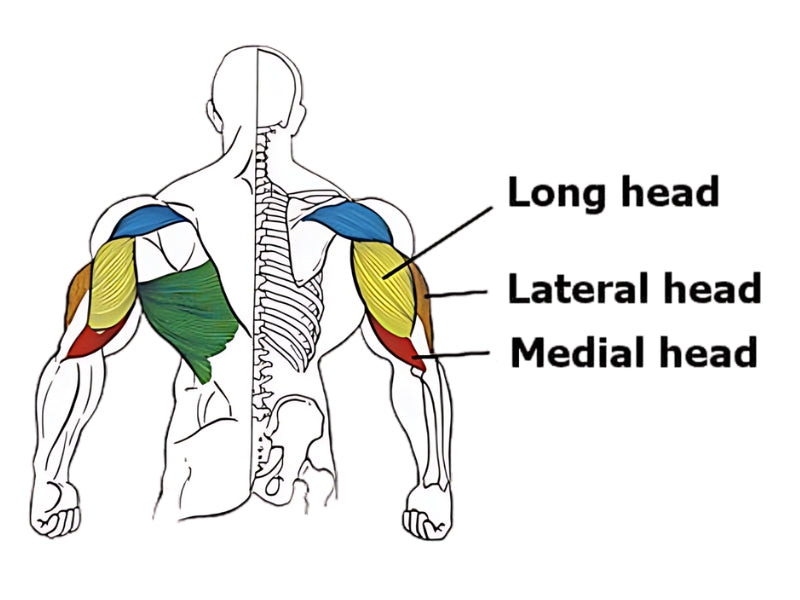
The triceps is made of three parts: long head, lateral head, and medial head. Each head has its own function and place on your arm.
- The long head starts at your shoulder and runs down the back of your arm. It’s the largest part and gives your arm much of its size.
- The lateral head is on the outer side and makes the arm look “cut” or defined.
- The medial head sits underneath and helps with small movements.
The long head is special because it crosses both the shoulder and elbow joint. That means you can target it by changing your arm position, not just by bending the elbow. This is something many people don’t know.
Why Target The Long Head?
When you focus on the long head, you get:
- Bigger arms: The long head is the thickest part of the triceps. Training it well adds more mass.
- Fuller shape: It gives your upper arm a rounded look.
- Strength for pressing: The long head helps in big movements like bench presses and overhead lifts.
- Balanced development: If you only train the lateral head, your arms may look flat from the back.
Many beginners only do pushdowns, which mostly work the lateral head. To really build triceps, you must work the long head directly.
How The Long Head Works
The long head helps straighten your arm (elbow extension) and also moves your arm backward (shoulder extension). It is most active when your arm is overhead or when your shoulder moves behind your torso. This detail is key for choosing exercises.
For example, if you do a triceps exercise with your arms at your sides, the long head is less involved. If your arms are overhead or stretched behind, the long head works harder.
Best Tricep Exercises For The Long Head
Some exercises are better for the long head than others. Let’s look at the top movements and why they work.
1. Overhead Triceps Extension
This is one of the most direct ways to target the long head. You can do it with a dumbbell, barbell, or cables.
How To Do It:
- Sit or stand with your arms overhead.
- Hold a weight with both hands.
- Lower the weight behind your head by bending your elbows.
- Stretch your arms up to return to the start.
Overhead position puts the long head in a stretched state, making it work harder. Many studies show this exercise activates the long head more than pushdowns.
Practical Tips:
- Keep elbows close together.
- Don’t swing the weight.
- Start with a light weight to avoid shoulder strain.
2. Skullcrushers (lying Triceps Extension)
This classic movement stretches the long head, especially if you use a slight incline bench.
How To Do It:
- Lie on a bench, holding a barbell or dumbbells.
- Start with your arms straight.
- Bend your elbows to lower the weight to your forehead.
- Push back up to straighten your arms.
Using an incline bench increases the stretch on the long head even more.
Practical Tips:
- Don’t let your elbows flare out.
- Move slowly to avoid hitting your head.
- Try different grips for comfort.
3. Incline Dumbbell Triceps Extension
This variation uses a bench set at an angle. The incline increases the stretch, making the long head work harder.
How To Do It:
- Set a bench at a 30–45 degree angle.
- Lie back with dumbbells in both hands.
- Lower the weights behind your head.
- Extend your arms fully.
Practical Tips:
- Keep your back flat on the bench.
- Don’t drop the dumbbells too low.
- Control the movement for safety.
4. Cable Overhead Triceps Extension
Cables keep tension on the muscle throughout the movement. Using cables overhead is great for the long head.
How To Do It:
- Attach a rope or handle to the high pulley.
- Step forward, lean slightly, and pull the cable overhead.
- Extend your arms, then return slowly.
Practical Tips:
- Keep your core tight.
- Use slow, controlled reps.
- Focus on the stretch at the bottom.
5. Dumbbell Triceps Kickback
Kickbacks are often seen as a lateral head exercise, but when done with your arm behind your body, the long head is engaged.
How To Do It:
- Hold a dumbbell and bend forward.
- Keep your upper arm parallel to your torso or even behind it.
- Straighten your arm fully, squeezing at the top.
Practical Tips:
- Don’t swing the weight.
- Pause at the top for extra contraction.
- Use light weights for form.
6. Close-grip Bench Press
This compound movement works all three heads but the long head helps stabilize the arm and press.
How To Do It:
- Lie on a bench and grip the bar with hands closer than shoulder-width.
- Lower the bar to your chest.
- Press back up.
Practical Tips:
- Keep elbows close to your body.
- Don’t use a grip that’s too narrow.
- Push through your palms.
7. Single-arm Overhead Extension
Doing the overhead extension one arm at a time increases focus on the long head.
How To Do It:
- Stand or sit with a dumbbell in one hand.
- Raise your arm overhead.
- Lower the weight behind your head, then extend.
Practical Tips:
- Use your free hand to support your elbow.
- Keep your body stable.
- Don’t rush the movement.
Credit: homegymsupply.co.uk
Comparison Of Long Head Activation
Researchers have tested different triceps exercises to see which ones activate the long head most. Here’s a quick look at some findings:
| Exercise | Long Head Activation (Relative) | Lateral Head Activation (Relative) |
|---|---|---|
| Overhead Extension | High | Medium |
| Skullcrusher | High | Medium |
| Pushdown | Low | High |
| Kickback | Medium | High |
This shows that overhead movements are best for the long head.
How To Include Long Head Exercises In Your Routine
Knowing the best exercises is just the start. You need to use them in your workouts the right way.
Sample Triceps Routine
A balanced triceps routine should include at least one exercise for each head, but focus on the long head if you want bigger arms.
Example routine:
- Overhead Dumbbell Extension – 3 sets x 10–12 reps
- Skullcrusher – 3 sets x 8–10 reps
- Triceps Pushdown (for lateral head) – 3 sets x 12–15 reps
You can change the exercises, but make sure an overhead movement is always included.
Frequency And Volume
For most people, training triceps 2–3 times per week is enough. The long head responds well to both heavy and moderate weights. You should aim for 8–15 reps per set, and 9–12 sets per week.
A common mistake is not doing enough sets for the long head. Many only do pushdowns, so add more overhead work.
Rest And Recovery
The triceps need rest to grow. Don’t train them every day. Wait at least 48 hours between sessions. If your elbows hurt, reduce volume or use lighter weights.
Common Mistakes When Training The Long Head
Many beginners miss the long head by:
- Only doing pushdowns or dips.
- Using poor form (elbows wide, not enough stretch).
- Not including overhead movements.
- Training with too heavy weights, losing the stretch.
- Ignoring recovery.
Another overlooked point: If you feel pain in your shoulder during overhead exercises, check your form. Sometimes, tight shoulders or weak stabilizers can cause problems.
Practical Tips For Better Long Head Activation
Adjust Your Arm Position
The long head works best when your arm is overhead or behind your body. Try to:
- Use a full range of motion.
- Stretch your arms fully at the bottom.
- Squeeze at the top.
Warm Up Your Shoulders
Overhead exercises need flexible shoulders. Warm up with arm circles or light band work.
Use Different Angles
Don’t just use flat benches. Try incline or decline positions to change the stretch and hit the long head differently.
Check Your Grip
A neutral or slightly rotated grip often feels better and activates the long head more.
Avoid Elbow Flaring
Keep your elbows close to your head in overhead movements. Wide elbows shift focus away from the long head.
Advanced Long Head Training Techniques
If you’re ready for more, try these advanced methods.
1. Superset Overhead And Pushdown
Do an overhead extension followed by a pushdown, with no rest. This tires the long head and then the lateral head.
2. Slow Negatives
Lower the weight slowly (3–5 seconds) to increase muscle tension. This is especially effective in skullcrushers or overhead extensions.
3. Stretch-focused Sets
After your last set, hold the stretch position for 10–20 seconds. This boosts growth by increasing muscle tension.
4. Partial Reps At Full Stretch
Do some reps only in the bottom half of the movement. The long head is more active in the stretch.
Comparing Equipment For Long Head Training
Different equipment can change how you train the long head. Here’s a quick comparison:
| Equipment | Pros | Cons |
|---|---|---|
| Dumbbells | Easy to use, good for single-arm work, allows natural movement | Hard to control heavy weights, may strain shoulders |
| Barbells | Can lift heavier, stable grip | Less natural movement, elbows may flare |
| Cables | Constant tension, adjustable angles | Needs a gym, setup takes time |
| Resistance Bands | Portable, joint-friendly | Hard to get strong resistance, tension varies |
Use what works best for you. Cables and dumbbells are usually most comfortable for overhead movements.
How Progression Works For The Long Head
Making progress is key to muscle growth. The long head responds well to both strength and volume, but technique matters more than weight.
Increase Weight Slowly
Don’t rush to heavier weights. Use perfect form and add small amounts each week.
Add Reps Or Sets
If you can’t increase weight, try more reps or extra sets.
Track Your Range Of Motion
Make sure you get a deep stretch each time. Over time, try to reach further behind your head.
Example Progression Plan
Week 1–2: Overhead Extension, 10 Reps, 3 Sets
Week 3–4: Overhead Extension, 12 Reps, 3 Sets
Week 5–6: Overhead Extension, 12 Reps, 4 Sets
Week 7–8: Add Weight, Repeat 3 Sets
Signs Your Long Head Is Working
Sometimes it’s hard to know if you’re targeting the long head. Here’s how to check:
- You feel a deep stretch in the back of your arm during overhead exercises.
- After the workout, the long head feels pumped or sore.
- Your arms look fuller, especially from the back.
If you only feel burn on the outside of your arm, you may be using movements that focus on the lateral head.
How Long Does It Take To See Results?
Results depend on your routine, diet, and genetics. Most people see changes in arm size in 8–12 weeks with focused long head training. Beginners may notice faster progress, while advanced lifters need more time.
Two things many miss:
- The long head is stubborn. It needs more stretch and tension than the lateral head.
- Eating enough protein is key. Aim for 0.7–1 gram per pound of body weight.
Real-world Example: Long Head Focus
Let’s look at a simple case. Mark is a beginner who only did pushdowns and dips. His arms were strong, but flat at the back. After adding overhead extensions and skullcrushers, he saw more size and shape in just 2 months.
Mark’s tip: “Don’t skip overhead moves. They make a huge difference.”
Credit: learn.athleanx.com
Comparing Long Head Exercises For Home Vs Gym
Not everyone has access to a gym. Here’s how you can target the long head at home.
| Exercise | Gym Equipment Needed | Home Variation |
|---|---|---|
| Overhead Cable Extension | Cable machine | Resistance band overhead extension |
| Skullcrusher | Barbell/dumbbell/bench | Floor skullcrusher with dumbbells |
| Incline Dumbbell Extension | Incline bench, dumbbells | Use a pillow or stack of books to create incline |
| Kickback | Dumbbell | Dumbbell or water bottle |
You can work the long head anywhere, as long as you change your arm position.
How To Protect Your Elbows And Shoulders
Overhead movements can stress your joints if you’re not careful. Here’s how to stay safe:
- Warm up with band pull-aparts or arm circles.
- Don’t use heavy weights until your form is solid.
- Stop if you feel sharp pain.
- Use wrist wraps if needed.
- Stretch your shoulders regularly.
Many people ignore small pains, which can turn into big injuries. Respect your body.
Nutrition For Long Head Growth
Muscles need fuel to grow. Don’t neglect your diet.
Protein
Aim for 0.7–1 gram per pound of body weight. Good sources: chicken, eggs, beans, whey.
Carbs And Fats
Carbs give you energy for workouts. Fats help with recovery. Eat a balanced diet.
Hydration
Drink water before, during, and after your workout. Dehydration can reduce performance.
Supplements
Whey protein, creatine, and fish oil can help, but aren’t required.
Tracking Your Progress
Keep a log of your workouts.
- Write down exercises, sets, reps, and weights.
- Take arm measurements every 2–4 weeks.
- Take progress photos from the back.
This helps you see what’s working and adjust your routine.
Long Head Training For Different Goals
For Size
Use moderate weights, high reps, and focus on stretch. Overhead extensions and skullcrushers are best.
For Strength
Use heavier weights with fewer reps. Close-grip bench press and overhead barbell extensions work well.
For Definition
Combine overhead movements with pushdowns or dips. Use higher reps and short rest periods.
Frequently Asked Questions
What Is The Best Exercise For The Long Head Of The Triceps?
The overhead triceps extension is the top exercise for the long head. It stretches the muscle and activates it fully. Skullcrushers and incline dumbbell extensions are also excellent.
How Often Should I Train The Long Head?
Train the long head 2–3 times per week. Make sure you use overhead or behind-the-body movements every session. Give your muscles time to recover between workouts.
Can I Target The Long Head At Home?
Yes, you can use dumbbells, resistance bands, or even water bottles. Overhead extensions and skullcrushers can be done without fancy equipment. Adjust your arm position to maximize stretch.
Why Don’t I Feel The Long Head Working?
You may not be using the right exercises or form. Make sure your arms are overhead or behind your torso. Move slowly and focus on the stretch. If you only feel the outside of your arm burning, switch to overhead movements.
Is It Safe To Do Overhead Exercises?
Yes, but warm up your shoulders and elbows first. Start with light weights, use controlled movements, and never push through sharp pain. If you have joint issues, try cables or bands, which are softer on the joints.
Building your triceps’ long head takes smart training, not just heavy lifting. Include overhead exercises, use proper form, and adjust your routine often. With patience and focus, you’ll see fuller, stronger arms that stand out. If you want to dive deeper into muscle anatomy, check out Wikipedia for more details. Remember, the long head is the secret to bigger arms—train it well, and your results will show.

Credit: www.youtube.com
