

What Tricep Exercises Work Each Head for Maximum Gains
What Tricep Exercises Work Each Head
Building impressive arms is a goal for many people in the gym, but most focus only on their biceps. The truth is, the triceps make up about two-thirds of your upper arm size. To get well-shaped arms, you need to train all parts of the triceps, not just do random pushdowns. The triceps muscle has three parts, or “heads,” and each head plays a unique role in your arm’s shape and strength.
Knowing which exercises target each tricep head can make your workouts much more effective. Instead of just guessing, you’ll be able to plan your training for balanced development and better performance. This guide explains how the triceps work, which exercises hit each head, and how to design routines that help you reach your goals faster.
Understanding Tricep Anatomy
The triceps brachii, or triceps, sits on the back of your upper arm. Its main job is to straighten your elbow and help with arm movements like pushing or pressing. The triceps has three heads:
- Long head: Runs down the back of the arm and is the largest part.
- Lateral head: Sits on the outer side, giving the triceps a “horseshoe” look.
- Medial head: Lies underneath the other two and helps with elbow extension.
While all three heads work together during most triceps exercises, you can emphasize one more than the others by changing your grip, arm position, or the angle of movement.
Why Each Head Matters
- The long head adds mass and helps your arm look fuller from the side and back.
- The lateral head creates that sharp, defined outer curve on your upper arm.
- The medial head gives support and helps your triceps look thick from different angles.
Training all three heads ensures your arms look balanced and function well, whether you want size, definition, or strength.
How Different Exercises Target Each Tricep Head
Not all triceps exercises are equal. Some moves make one head work harder than the others, depending on how your shoulder and elbow are positioned. Understanding these differences lets you pick the right exercises for your goals.
Basic Principles
- Arm position: When your arms are overhead, the long head works more. When arms are by your side or behind you, the lateral and medial heads get more involved.
- Grip: A narrow grip often targets the medial and long heads, while a wider grip can shift some work to the lateral head.
- Range of motion: Full extension and a deep stretch, especially overhead, help activate the long head.
Small changes can make a big difference. For example, changing from a pushdown to an overhead extension shifts the focus from mostly the lateral head to the long head.
Best Exercises For The Long Head
The long head is the only part of the triceps that crosses the shoulder joint. This means it gets stretched and activated more when your arm is raised overhead or behind your body. To make the long head work harder, choose exercises where your arms are above your head or move your elbows backward.
Top Long Head Tricep Exercises
- Overhead Triceps Extension (Dumbbell or Cable)
- Sit or stand, hold a dumbbell or cable above your head, and lower it behind your head, keeping your elbows pointed up.
- This creates a deep stretch and strong contraction for the long head.
- Skull Crushers (Lying Triceps Extensions)
- Using an EZ bar or dumbbells, lie on a bench and lower the weight toward your forehead or slightly behind your head.
- Bringing the weight behind your head, instead of just to your forehead, increases the stretch on the long head.
- Incline Dumbbell Triceps Extension
- Lie on a bench set at a slight incline, arms extended overhead, and lower the dumbbells behind your head.
- The incline increases the range of motion and long head activation.
- Single-Arm Overhead Triceps Extension
- Using one dumbbell or a cable, perform the same movement as the overhead extension, focusing on one arm at a time.
- This helps correct muscle imbalances and allows a deeper stretch.
Example: Overhead Dumbbell Extension
- How to do it: Stand tall, hold a dumbbell with both hands, and press it overhead. Lower the weight slowly behind your head, keeping your elbows close to your ears. Pause, then press back up.
- Tips: Don’t flare your elbows. Go for a full stretch at the bottom.
Non-obvious Insight
Many people let their elbows drift forward during overhead extensions, which reduces long head activation. Keeping your elbows vertical, or even slightly behind your head, increases tension where you want it.
Best Exercises For The Lateral Head
The lateral head sits on the outer side of your arm and is responsible for that eye-catching “horseshoe” shape. To target it, choose exercises where your arms are by your sides and use a pronated (palms down) grip. Movements that allow you to lock out your elbows hard at the end are especially good for the lateral head.
Top Lateral Head Tricep Exercises
- Triceps Pushdown (Cable, Straight Bar or Rope)
- Stand facing the cable, elbows tight to your sides, and push the bar or rope down until your arms are straight.
- A pronated grip focuses on the lateral head.
- Diamond Push-Ups
- Place your hands close together under your chest, forming a diamond shape with your fingers.
- Lower your chest to your hands, then push up, keeping elbows close to your sides.
- Close-Grip Bench Press
- Use a grip slightly narrower than shoulder-width. Lower the bar to your chest, keeping elbows tucked in.
- This compound move lets you handle heavier weights, stressing the lateral head.
- Kickbacks (Dumbbell or Cable)
- Bend forward at the waist, upper arm parallel to the ground, and extend your elbow to kick the weight back.
- Squeeze at the top for maximum contraction.
Example: Rope Pushdown
- How to do it: Attach a rope to the high pulley, grasp it with both hands, and push down, separating the rope ends at the bottom.
- Tips: Pause at the bottom and focus on squeezing the triceps hard.
Non-obvious Insight
Turning your palms outward at the end of a rope pushdown (like “breaking the rope”) increases lateral head activation. This simple twist is often overlooked but makes a real difference.

Credit: www.youtube.com
Best Exercises For The Medial Head
The medial head is less visible but crucial for elbow stability and overall triceps thickness. It works hardest when your arms are by your sides and you use a reverse (palms up) or neutral grip, or when using lighter weights for higher reps.
Top Medial Head Tricep Exercises
- Reverse-Grip Triceps Pushdown
- Stand facing the cable, grab the straight bar with an underhand grip, and push down.
- The reverse grip shifts the focus to the medial head.
- Bench Dips
- Place your hands on a bench behind you, feet on the floor, and lower your body by bending your elbows, then press up.
- The bottom part of the movement stresses the medial head.
- Close-Grip Push-Ups
- Similar to diamond push-ups but with hands just inside shoulder width.
- Keeping elbows tucked targets the medial head.
- Cable Kickbacks (Neutral or Underhand Grip)
- Set the cable at the lowest position, use a straight bar or rope, and extend your arm back with a neutral or underhand grip.
Example: Reverse-grip Pushdown
- How to do it: Stand facing a cable, grab the bar with palms facing up, elbows tight to your sides. Push the bar down until arms are fully extended.
- Tips: Keep your wrists straight and elbows locked in place.
Non-obvious Insight
The medial head is especially active during the last part of elbow extension. Doing slow, controlled reps and focusing on the lockout helps you feel this small muscle working.
Comparing Tricep Exercises By Head Activation
To help you pick the right exercises, here’s a comparison showing which tricep heads are most active in popular moves.
| Exercise | Long Head | Lateral Head | Medial Head |
|---|---|---|---|
| Overhead Dumbbell Extension | High | Medium | Low |
| Rope Pushdown | Low | High | Medium |
| Skull Crushers | High | Medium | Low |
| Kickbacks | Medium | High | Medium |
| Reverse-Grip Pushdown | Low | Low | High |
| Diamond Push-Ups | Medium | High | Medium |
As you can see, including a mix of these exercises will help you hit all three heads for full development.
Programming Tips: How To Train Each Tricep Head
You don’t have to do every exercise in one workout. Instead, plan your routine so you hit each head over the course of a week. Here’s how to design a smart program.
Frequency And Volume
- Train triceps 2–3 times per week for best results.
- Include at least one exercise for each head per session, if possible.
- Aim for 8–14 sets per week for triceps, adjusting based on your experience and recovery.
Sample Weekly Triceps Routine
Day 1:
- Overhead Dumbbell Extension (Long Head): 3 sets
- Rope Pushdown (Lateral Head): 3 sets
Day 2:
- Close-Grip Bench Press (Lateral/Long Head): 3 sets
- Reverse-Grip Pushdown (Medial Head): 2 sets
Day 3 (optional):
- Skull Crushers (Long Head): 3 sets
- Kickbacks (Lateral Head): 2 sets
Rest And Recovery
- Rest 48 hours between direct triceps sessions.
- Don’t overdo volume—triceps also work during chest and shoulder exercises.
Progression
- Increase weight or reps gradually.
- Focus on form and full range of motion, especially for overhead moves.
Common Mistake
Many lifters focus only on pushdowns or bench presses, which leaves the long head undertrained. Remember: overhead work is essential for full triceps growth.
How Arm Position And Equipment Change Tricep Emphasis
Not everyone has access to all types of equipment. Understanding how arm angle and tool choice affect triceps activation can help you make the best of what you have.
Free Weights Vs. Cables Vs. Bodyweight
| Equipment | Pros | Cons | Best Head Targeted |
|---|---|---|---|
| Dumbbells | Natural movement, easy setup | Harder to control at high weights | Long Head |
| Cables | Constant tension, many grip options | Need access to machines | Lateral & Medial Heads |
| Barbells | Can use heavy weights, good for strength | Less variety, more stress on joints | Lateral Head |
| Bodyweight | No equipment needed, joint-friendly | Hard to isolate heads | Lateral & Medial Heads |
Changing Grip And Elbow Angle
- Overhead: More long head.
- Arms by side, pronated grip: More lateral head.
- Reverse grip or neutral grip: More medial head.
If you’re limited on equipment, small changes in grip or arm position can help you shift the focus from one head to another.
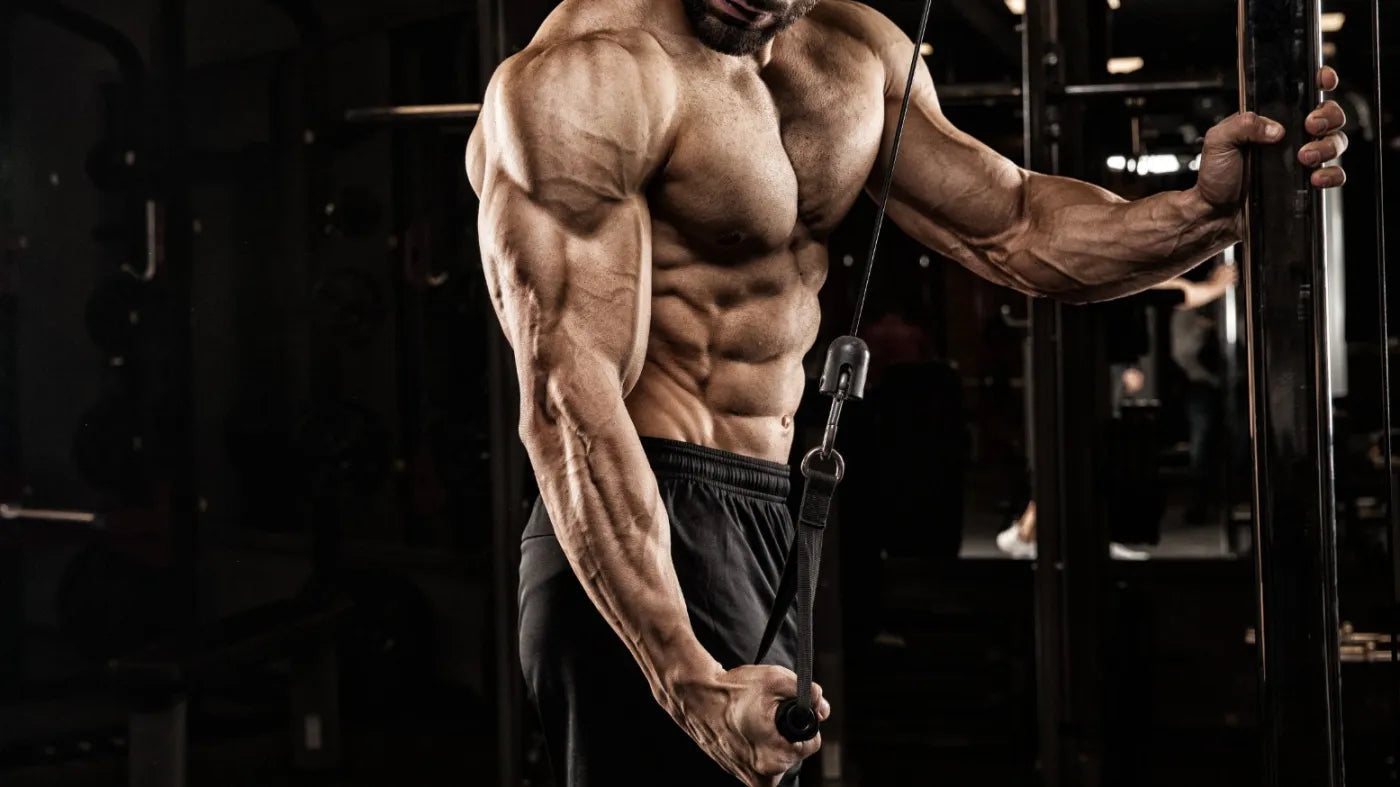
Credit: ca.ironbullstrength.com
Example Workouts For Balanced Triceps
Here are two sample routines you can try—one for the gym and one for home.
Gym Tricep Workout
- Overhead Cable Extension (Long Head): 3 sets of 10–12
- Rope Pushdown (Lateral Head): 3 sets of 10–15
- Reverse-Grip Pushdown (Medial Head): 2 sets of 12–15
Home Tricep Workout
- Diamond Push-Ups (Lateral & Medial Heads): 3 sets to failure
- Overhead Dumbbell Extension (Long Head): 3 sets of 10–12
- Bench Dips (Medial Head): 2 sets to failure
For both routines, rest 60–90 seconds between sets. Focus on slow, controlled reps and a full range of motion.
How To Tell If You’re Hitting Each Head
It’s not always easy to “feel” each tricep head. Here are some ways to check if you’re training them well:
- Soreness: After overhead work, you should feel it more toward the back of your arm (long head). After pushdowns, the outer arm (lateral head) may feel tighter.
- Muscle Pump: During the workout, a good pump in the area you’re targeting means you’re on the right track.
- Progress Photos: Over time, balanced development should show a fuller, more defined upper arm.
Advanced Tip
Filming your form can help spot mistakes, like elbows flaring or limited range of motion. Small tweaks can greatly improve which head you’re targeting.

Credit: www.gymreapers.com
Common Myths About Tricep Training
There’s a lot of confusion online about how to train triceps. Here are some common myths—and the truth.
- Myth: “You can’t isolate each head.”
- Fact: While you can’t fully isolate, you can emphasize each head with smart exercise choices.
- Myth: “Heavy weights are all you need.”
- Fact: Both heavy and lighter weights have value. High reps and full range of motion are key, especially for the medial head.
- Myth: “Pushdowns are enough.”
- Fact: Pushdowns mostly hit the lateral head. Overhead moves are needed for the long head.
Triceps Training For Different Goals
Your approach should match your goals. Here’s how to adapt your triceps workouts:
For Muscle Size
- Use a mix of compound (close-grip bench) and isolation (overhead extension, pushdown) moves.
- Go for 8–12 reps per set, with moderate to heavy weight.
- Focus on full range of motion and strong contractions.
For Strength
- Include heavy presses (close-grip bench, dips).
- Keep reps lower (4–8 reps), use higher weights, and rest longer between sets.
- Don’t neglect isolation moves for joint health.
For Definition
- Use higher reps (12–20 reps), short rest, and strict form.
- Include moves that let you “squeeze” at the peak, like rope pushdowns and kickbacks.
For Joint Health And Beginners
- Focus on lighter weights, higher reps (12–20), and slow tempo.
- Use cables or bands for less joint stress.
- Avoid locking out forcefully.
Mistakes Beginners Make When Training Triceps
Even with the right exercises, beginners often make mistakes that slow progress or cause injury.
- Using too much weight: This reduces range of motion and shifts work to other muscles.
- Poor elbow position: Letting elbows flare out reduces triceps tension.
- Not using overhead moves: Skipping these misses the long head.
- Rushing reps: Fast, sloppy reps don’t fully activate the triceps.
- Ignoring pain: Sharp or deep elbow pain means your form is off or you’re overtraining.
How To Avoid Mistakes
- Start light, master form, then add weight.
- Keep elbows close and controlled.
- Include both overhead and side-by-side arm moves.
- Listen to your body and rest if needed.
Science Behind Triceps Activation
Research using EMG (electromyography) shows that different triceps heads are most active depending on arm and grip position.
- Long head: Highest activation with overhead and incline moves.
- Lateral head: Most active with pronated grip pushdowns and close-grip presses.
- Medial head: Engaged most with reverse-grip and neutral-grip moves, especially at full lockout.
A study published by the National Institutes of Health found that overhead extensions led to greater long head activity compared to pushdowns. This is why variety and exercise selection matter for balanced growth.
For more details on triceps anatomy and activation, you can visit the Wikipedia page on triceps brachii.
Simple Triceps Workout Progression Plan
If you’re new to structured triceps training, here’s a simple 4-week progression to get results.
Week 1–2:
- Overhead Dumbbell Extension: 2 sets of 12 reps
- Rope Pushdown: 2 sets of 15 reps
- Bench Dips: 2 sets of 10 reps
Week 3–4:
- Overhead Dumbbell Extension: 3 sets of 10 reps
- Rope Pushdown: 3 sets of 12 reps
- Bench Dips: 3 sets of 12 reps
Increase weight only when you can complete all reps with good form. This plan ensures you hit all three heads and build a base for more advanced routines.
Tricep Exercise Selection Based On Experience Level
| Experience Level | Recommended Exercises | Notes |
|---|---|---|
| Beginner | Overhead Dumbbell Extension, Pushdown, Bench Dips | Focus on form, not weight |
| Intermediate | Skull Crushers, Rope Pushdown, Kickbacks, Diamond Push-Ups | Add variety and volume |
| Advanced | Incline Extensions, Close-Grip Bench, Reverse-Grip Pushdown | Emphasize each head, use intensity techniques |
Start simple, then add new exercises as your skill improves.
Frequently Asked Questions
Which Tricep Exercise Is Best For Overall Arm Size?
For size, compound moves like the close-grip bench press and skull crushers are excellent. They let you use heavy weights and hit multiple heads at once. But for best results, include at least one overhead move for the long head and one pushdown for the lateral head.
How Do I Know If My Triceps Are Growing?
Look for increased strength in pressing exercises, a tighter “horseshoe” shape on your upper arm, and progress in photos over weeks or months. Muscle soreness is not always the best sign of growth.
Can I Train Triceps And Biceps On The Same Day?
Yes, many people train both in the same session. Just avoid overdoing volume or using poor form due to fatigue. Try starting with the muscle you want to focus on most.
Is It Bad To Train Triceps Two Days In A Row?
It’s usually best to rest at least 48 hours between direct triceps sessions. Training them two days in a row can lead to overuse, poor performance, and higher injury risk.
What If I Only Have Dumbbells At Home?
You can do overhead extensions, kickbacks, and even close-grip push-ups with just dumbbells. Adjust grip and arm position to target each triceps head, and focus on slow, controlled reps.
No matter your equipment or experience, understanding which tricep exercises work each head will help you get stronger, build better arms, and avoid plateaus. With smart planning and consistency, your hard work will show in and out of the gym.
