

Tricep Workout And Chest: Build Muscle Fast With These Top Moves
A strong, balanced upper body is a goal for many people who work out. When you think about building your chest, you might focus on the bench press or push-ups. For triceps, maybe you picture cable pushdowns or dips. But here’s something many beginners don’t realize: your chest and triceps are deeply connected during most upper body workouts. Training these two muscle groups together can help you get better results, improve your strength, and save time in the gym. Whether you’re a beginner or already have some experience, understanding how to build your triceps and chest together is essential for a well-rounded, powerful look.
This article explains the best ways to train your chest and triceps, smart routines for all levels, and practical tips to avoid common mistakes. You’ll also see real examples, data, and clear answers to frequent questions. By the end, you’ll know exactly how to make your upper body workouts more effective and efficient.
Why Train Triceps And Chest Together?
Most pressing exercises, like the bench press or push-ups, work both your chest and triceps at the same time. Your chest starts the movement, and your triceps finish it by straightening your arms. This makes pairing them logical and efficient.
Here’s why training chest and triceps together makes sense:
- Efficiency: You can train both muscles in one workout, saving time.
- Better Strength Gains: Working these muscles together can boost your pressing strength.
- Muscle Balance: Avoids overtraining one muscle group while undertraining another.
- Fatigue Management: Training them together means you can push both to fatigue without worrying about a weak muscle holding back the other on a different day.
An often-missed insight: many people overtrain their triceps by doing too many isolation exercises after heavy chest presses. Because your triceps already get a lot of work from chest exercises, you don’t need as many triceps-only moves as you might think. Quality matters more than quantity.
Anatomy Basics: Chest And Triceps
Understanding the muscles you’re working helps you choose the right exercises and avoid injuries.
The Chest (pectorals)
Your main chest muscle is the pectoralis major. It’s a big, fan-shaped muscle covering much of your upper chest. It has two main parts:
- Upper chest (clavicular head): Involved in movements like incline presses.
- Lower chest (sternal head): Worked more during flat or decline presses.
Both parts help move your arms forward, upward, and across your body.
The Triceps
The triceps brachii sits on the back of your upper arm. Its job is to straighten your elbow and help lock out your arm during pressing movements. It has three heads:
- Long head: Starts at your shoulder blade, helps with shoulder extension.
- Lateral head: Adds width and shape to your arm.
- Medial head: Sits deep, helps with all elbow extension.
Knowing this, you can target each part with different exercises and angles.
How Chest And Triceps Work Together
When you press a weight (bench press, push-up, or dip), your chest does the main lifting at first. As you push the weight away from your body, your triceps finish by straightening your arms. This teamwork means that after intense chest work, your triceps are already partially fatigued.
This is why most chest-triceps routines start with bigger chest moves before moving to isolation triceps exercises. If you do it the other way, your triceps might get tired first, making your chest workout weaker.
A common mistake: Doing too many heavy triceps exercises before chest pressing can hurt your performance and increase injury risk. Always start with compound chest moves, then finish with triceps isolation work.
Compound Vs. Isolation Exercises
Understanding the difference helps you build a better workout plan.
- Compound exercises: Use more than one joint and muscle group at a time. Examples: bench press, push-up, dip.
- Isolation exercises: Focus on just one muscle and joint. Examples: triceps pushdown, chest fly, overhead triceps extension.
For chest and triceps, compound moves are the foundation. Isolation moves help finish the muscles and add detail.
Here’s a comparison of popular exercises and which muscles they target the most:
| Exercise | Chest Activation | Triceps Activation | Type |
|---|---|---|---|
| Bench Press | High | Medium | Compound |
| Push-Up | Medium-High | Medium | Compound |
| Chest Fly | High | Low | Isolation |
| Dips | Medium | High | Compound |
| Triceps Pushdown | Low | High | Isolation |
Non-obvious insight: While the bench press is famous for chest building, studies show that close-grip bench presses activate more triceps than the traditional version. Using different grips and angles can help you target both muscles more completely.
Choosing The Right Exercises
With so many exercises available, it’s important to pick the right ones for your level and goals.
Best Chest Exercises
- Barbell Bench Press: The classic for overall mass and strength.
- Dumbbell Press: Builds stability and balances both sides of your body.
- Incline Bench Press: Targets the upper chest.
- Push-Ups: Great for beginners and advanced lifters. Easy to modify.
- Chest Dips: Focuses on the lower chest and also works triceps.
Best Triceps Exercises
- Dips: Excellent for mass and strength.
- Triceps Pushdown: Isolates the triceps, especially the lateral head.
- Overhead Triceps Extension: Stretches and works the long head.
- Close-Grip Bench Press: Hits both chest and triceps hard.
- Skull Crushers: Targets all three triceps heads.
For maximum results, mix both compound and isolation exercises in your routine.
How Many Sets And Reps?
There’s no single answer, but research and real-world experience give good guidelines.
- Beginners: 2–3 sets of 8–12 reps per exercise
- Intermediate/Advanced: 3–4 sets of 6–12 reps for compound moves, 10–15 reps for isolation moves
Higher reps (12–15) help with muscle endurance and blood flow. Lower reps (6–8) with heavier weights build strength and size.
For most people, 10–20 total sets per muscle group per week is enough for growth. If you train chest and triceps together, you can split these sets across 1–2 workouts.

Credit: samarthyaclasses.com
Example Chest And Triceps Workouts
Let’s put it all together with sample routines for different levels.
Beginner Chest And Triceps Workout
This routine uses simple moves and focuses on learning good form.
- Push-Ups: 3 sets of 8–12 reps
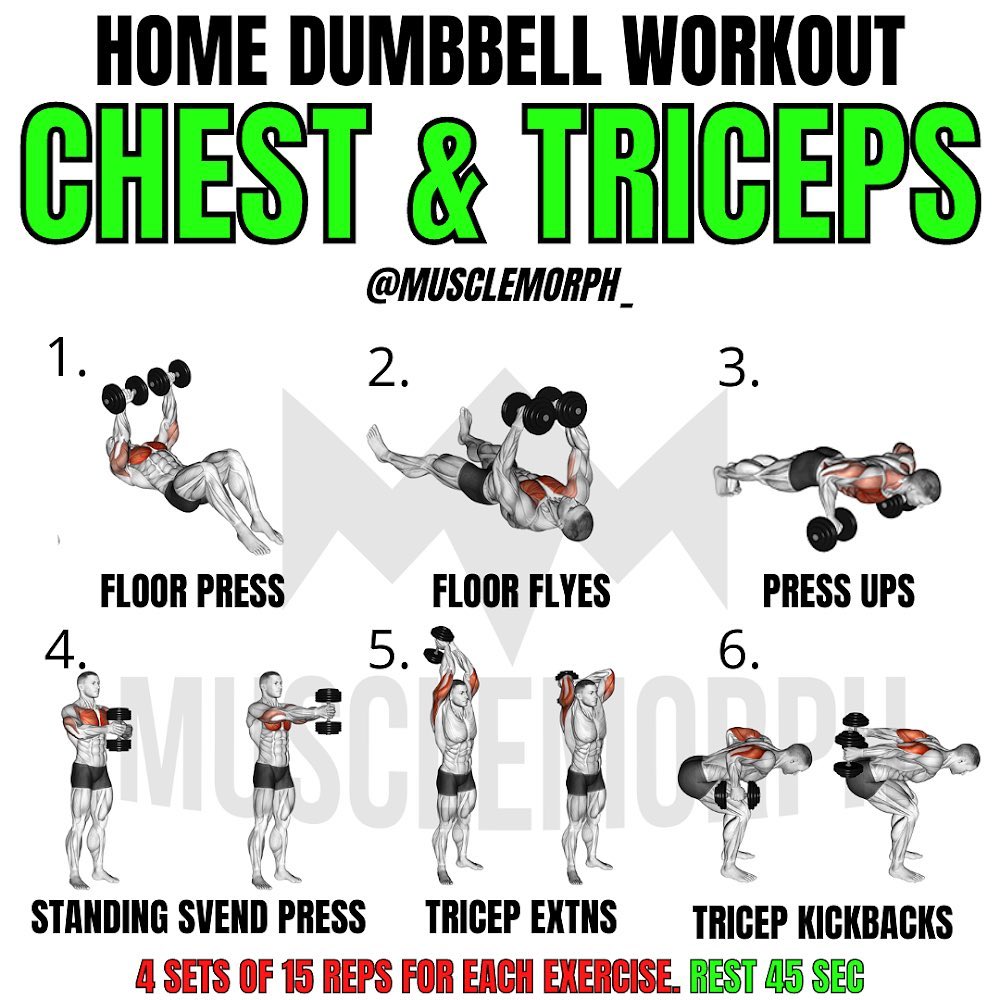
- Dumbbell Bench Press: 3 sets of 8–10 reps
- Incline Dumbbell Press: 2 sets of 10 reps
- Triceps Pushdown: 2 sets of 12 reps
- Overhead Triceps Extension: 2 sets of 12 reps
Rest 60–90 seconds between sets. Do this workout 1–2 times per week.
Intermediate Chest And Triceps Workout
For those with 6+ months of training, add variety and more volume.
- Barbell Bench Press: 4 sets of 6–8 reps
- Incline Dumbbell Press: 3 sets of 8–10 reps
- Dips: 3 sets to near failure
- Close-Grip Bench Press: 3 sets of 8–10 reps
- Skull Crushers: 2 sets of 10–12 reps
Rest 60–120 seconds between sets. Increase weight gradually as you get stronger.
Advanced Chest And Triceps Workout
For experienced lifters, use advanced techniques and higher intensity.
- Bench Press (with pause at bottom): 4 sets of 5–8 reps
- Weighted Dips: 4 sets of 8 reps
- Incline Dumbbell Fly: 3 sets of 10–12 reps
- Close-Grip Bench Press: 3 sets of 8 reps
- Overhead Cable Triceps Extension: 3 sets of 12 reps
- Triceps Rope Pushdown: 2 sets of 15 reps
Rest 90–150 seconds. Focus on perfect form and controlled tempo.
Sample Weekly Chest And Triceps Schedule
How often should you train these muscles? Most people get good results with 1–2 sessions per week. More isn’t always better—recovery is key for muscle growth.
Here’s an example weekly split:
| Day | Muscle Group | Example Exercises |
|---|---|---|
| Monday | Chest + Triceps | Bench Press, Incline Dumbbell Press, Triceps Pushdown |
| Wednesday | Back + Biceps | Pull-Ups, Row, Barbell Curl |
| Friday | Chest + Triceps | Dips, Chest Fly, Skull Crushers |
| Saturday | Legs | Squat, Leg Curl, Calf Raise |
This split allows enough rest between chest/triceps sessions. You can adjust days to fit your schedule.
Credit: www.fondation-enovos.lu
Tips For Better Chest And Triceps Workouts
Making small changes can lead to bigger gains and less frustration.
1. Warm Up Properly
Start every session with 5–10 minutes of light cardio and dynamic stretches. Then do warm-up sets with just the bar or light dumbbells. This helps prevent injury and prepares your muscles.
2. Focus On Form
Using heavy weights with bad form often leads to injuries and poor results. Control the weight, use a full range of motion, and don’t let your ego pick the weight.
3. Use Different Angles
Change your grip (wide, narrow), bench angle (flat, incline, decline), and equipment (barbell, dumbbell, cable) to work all parts of your chest and triceps.
4. Don’t Forget The Mind-muscle Connection
Think about squeezing the target muscle with every rep. Slow down the lowering phase (eccentric) to increase muscle tension.
5. Track Your Progress
Write down your weights, reps, and sets. Try to improve by adding more reps or a little more weight each week. Small, steady progress beats random training.
6. Manage Rest Times
Shorter rests (30–60 seconds) work for endurance or “pump. ” Longer rests (90–150 seconds) help you lift heavier and build strength. Match rest to your goals.
7. Balance Push And Pull
Overtraining chest and triceps without working your back and biceps can cause poor posture and shoulder pain. Always balance your routine with pulling exercises (rows, pull-ups).
8. Recover Well
Muscles grow when you rest, not during workouts. Aim for 7–9 hours of sleep, eat enough protein, and take rest days.
Nutrition Tips For Chest And Triceps Growth
No workout plan works without the right nutrition. Your muscles need fuel to grow and recover.
- Protein: Aim for 1.6–2.2 grams per kg of body weight daily. Good sources include chicken, eggs, beans, tofu, and fish.
- Carbs: Needed for energy, especially before workouts. Choose oats, rice, potatoes, or fruit.
- Healthy Fats: Support hormone health. Avocado, nuts, olive oil, and fatty fish are good options.
- Hydration: Dehydration hurts strength and recovery. Drink water throughout the day.
A common mistake: Not eating enough calories or protein. If you want muscle growth, you need a slight calorie surplus—about 200–300 extra calories per day.
Common Mistakes And How To Fix Them
Even experienced lifters make simple mistakes that slow progress or cause injury.
Doing Too Many Isolation Exercises
After heavy presses, your triceps are already tired. Two or three triceps-only moves are plenty. Focus on form and quality, not just volume.
Not Using Full Range Of Motion
Half reps may let you lift more, but they don’t build as much muscle. Go all the way down and up in each rep—unless a doctor or coach says otherwise.
Skipping Warm-ups
Jumping into heavy sets cold is risky. Always warm up your joints and muscles first.
Poor Recovery
Doing chest and triceps hard every day leads to burnout and injuries. Give each muscle group at least 48 hours to recover.
Ignoring Weak Points
If your triceps lag behind your chest (or vice versa), add one or two extra sets for that muscle. Don’t just repeat the same workout forever—adjust as needed.
Advanced Techniques For Chest And Triceps
Once you have a good base, advanced methods can break plateaus and add excitement.
Supersets
Do two exercises back-to-back with no rest. For example, bench press followed by triceps pushdown. This saves time and boosts intensity.
Drop Sets
Finish a set, reduce the weight, and continue for more reps. Great for the last set of triceps pushdowns or flys.
Paused Reps
Pause for 1–2 seconds at the bottom of a press. This forces your muscles to work harder and removes momentum.
Tempo Training
Control the speed of each part of the rep. Try 3 seconds down, 1 second up. This increases muscle tension and challenge.
These techniques should be used carefully. They are best for advanced lifters and should not replace good form or basic progression.
Sample Equipment For Home And Gym
You can train your chest and triceps almost anywhere. Here’s a quick look at equipment options.
| Equipment | Exercises Possible | Best For |
|---|---|---|
| Dumbbells | Press, Fly, Overhead Extension | Home, Gym |
| Barbell | Bench Press, Close-Grip Press | Gym, Advanced Home |
| Resistance Bands | Push-Up, Fly, Triceps Extension | Home, Travel |
| Bench | Presses, Dips | Home, Gym |
| Cable Machine | Pushdown, Fly, Overhead Extension | Gym |
| Parallel Bars | Dips | Gym, Park |
If you train at home with minimal equipment, focus on push-ups, dips (between chairs), and resistance band extensions. You can still get great results with consistency.
How To Progress Over Time
Building muscle takes patience. Here are ways to keep making gains:
- Add Weight: Increase dumbbell/barbell weight when you can do all sets and reps easily.
- Do More Reps: Add 1–2 reps per set when possible.
- Improve Form: Make each rep slower and more controlled.
- Change Exercise Order: Start with a different main lift every few weeks.
- Rest and Recover: Take a deload week (lower weights/volume) every 6–8 weeks.
Tracking your progress is key. Use a notebook or an app. Small, steady improvements add up over months.

Credit: www.fondation-enovos.lu
Injury Prevention And Safety Tips
Chest and triceps training is safe when done right, but pushing too hard or using poor form can cause problems.
- Warm up: Always start with light cardio and easy sets.
- Use a spotter: For heavy bench presses, a spotter is a must.
- Don’t bounce the bar: Lower weights under control; avoid “bouncing” at the bottom.
- Listen to your body: Sharp pain or popping is a red flag. Stop and rest.
- Stretch after workouts: Light stretching helps recovery and flexibility.
If you have a history of shoulder or elbow injuries, talk to a coach or physical therapist before starting new exercises.
Myths About Chest And Triceps Training
Many gym myths can waste your time or even slow your progress.
- Myth: You must train chest and triceps on separate days.
- Fact: Training them together is efficient and effective for most people.
- Myth: More exercises mean faster gains.
- Fact: Quality and recovery matter more than doing endless sets.
- Myth: Only big weights build muscle.
- Fact: Good form, time under tension, and progression are just as important.
- Myth: Women shouldn’t do chest or triceps training.
- Fact: Everyone benefits from upper body strength.
Don’t let myths stop you from making smart progress.
Frequently Asked Questions
How Often Should I Train Chest And Triceps?
Most people get the best results with 1–2 sessions per week for these muscles. This allows for enough recovery while still providing enough stimulus for growth. If you train with high intensity, give each muscle group at least 48 hours of rest before working them again.
Can I Do Chest And Triceps On Separate Days?
Yes, but you may notice more fatigue in your triceps during chest pressing if you train them on different days. Training together is often more efficient and helps manage muscle fatigue better.
What If My Triceps Are Weaker Than My Chest?
If you find your triceps lagging, add one or two extra sets of triceps isolation work at the end of your routine. Focus on strict form and try different angles (like overhead or reverse grip extensions) to fully target all triceps heads.
Are Push-ups Enough For Chest And Triceps Growth?
Push-ups are a great starting point and can help build both muscles, especially for beginners. As you get stronger, increase the difficulty by elevating your feet, adding weight, or doing more advanced variations.
Should I Change My Chest And Triceps Exercises Every Workout?
You don’t need to change exercises every session. Stick with your main lifts for 4–6 weeks to track progress, then swap in new moves or angles to keep things fresh and challenge your muscles in different ways.
Building a powerful chest and triceps takes time, patience, and a smart plan. By pairing these muscle groups, using a mix of compound and isolation moves, and focusing on quality over quantity, you’ll see steady improvements in strength and appearance. Remember, recovery and good nutrition matter just as much as your workouts. Track your progress, stay consistent, and enjoy the journey to a stronger, more confident you. If you want to explore more about muscle building, you can find useful scientific information at Wikipedia.
