

Quad And Glute Workout: Sculpt Stronger Legs Fast
Quad And Glute Workout
If you want legs that are strong, powerful, and look great, you need to focus on your quads and glutes. These are the biggest muscles in your lower body, and they do more than just help you look fit. Strong quads and glutes help you walk, run, jump, climb stairs, and even stand up straight. They give you stability and power for almost any sport or daily activity.
Many people try to train their legs but only do a few exercises. This often leads to slow progress or, worse, injuries. The truth is, building strong quads and glutes takes a smart approach. You need the right exercises, good form, and a clear plan.
In this guide, you’ll learn exactly how to build bigger, stronger, and more functional legs. Whether you are a beginner or have some gym experience, you’ll find advice you can use right away.
Why Quad And Glute Strength Matters
Your quadriceps are the large muscles at the front of your thighs. Your gluteal muscles are in your hips and buttocks. When these two muscle groups are strong and balanced, you get many benefits:
- Better posture: Your body stays upright with less effort.
- Improved athletic performance: Running, jumping, and quick movements become easier.
- Injury prevention: Strong quads and glutes support your knees, hips, and lower back.
- Everyday power: Simple tasks like lifting groceries or climbing stairs feel lighter.
One thing many beginners miss is that quad and glute training isn’t just for athletes. People of all ages and fitness levels benefit from a good lower body workout.
Understanding The Quad And Glute Muscles
Before you start training, it helps to know what you’re working. This allows you to feel the muscles during each exercise and adjust your form.
Quadriceps
The quads are made up of four muscles:
- Rectus femoris
- Vastus lateralis
- Vastus medialis
- Vastus intermedius
These muscles work together to straighten your knee and help lift your leg. The quads are used in squats, lunges, running, and climbing.
Glutes
The glutes have three main parts:
- Gluteus maximus (the biggest muscle, creates most of the shape of your butt)
- Gluteus medius (on the side of your hip)
- Gluteus minimus (under the medius, helps with hip movement)
The glutes help you stand up, walk, climb, and rotate your hips. Weak glutes are a common cause of knee and back problems.
Common Mistakes In Quad And Glute Workouts
Even with good intentions, many people make simple mistakes that stop their progress or cause pain:
- Neglecting form: Using too much weight or moving too fast can shift work away from the target muscles.
- Not enough variety: Doing only squats or lunges means some muscles never get strong.
- Skipping warm-up: Cold muscles are more likely to get hurt.
- Missing mind-muscle connection: Not focusing on the muscle means less growth.
- Ignoring single-leg movements: These help fix muscle imbalances and improve balance.
A good workout trains all parts of the muscle, uses different angles, and includes both heavy and light weights.
Key Principles For Effective Training
To get the most from your quad and glute workout, follow these simple principles:
- Progressive overload: Gradually increase the weight, reps, or sets to challenge your muscles.
- Full range of motion: Move through the complete up-and-down path of the exercise.
- Control: Lower the weight slowly to increase time under tension.
- Balance: Train both quads and glutes evenly to prevent injuries.
- Rest and recovery: Muscles grow when you rest, not just during exercise.
A big mistake beginners make is always lifting heavier but never focusing on form. Quality is better than quantity.
The Best Quad And Glute Exercises
You don’t need dozens of fancy moves. The best exercises are simple but powerful. Here are the top choices for building your lower body:
Squats: The Foundation
Squats are the king of leg exercises. They work your quads, glutes, and even your core. Squats can be done with your body weight, a barbell, dumbbells, or resistance bands.
How To Do A Basic Bodyweight Squat
- Stand with feet shoulder-width apart.
- Keep your chest up and look straight ahead.
- Lower your body by bending your knees and hips, as if sitting in a chair.
- Go as low as you can, ideally until your thighs are parallel to the floor.
- Push through your heels to stand back up.
Tip: Don’t let your knees cave inward. Keep your knees in line with your toes.
Variations
- Goblet squat: Hold a dumbbell or kettlebell at your chest.
- Barbell back squat: Place a barbell on your upper back.
- Sumo squat: Wider stance, targets inner thighs more.
Lunges: Unilateral Power
Lunges target each leg separately. This improves balance and fixes muscle imbalances.
How To Do A Forward Lunge
- Stand upright, feet hip-width apart.
- Step forward with one leg and lower your body until your front thigh is parallel to the floor.
- Push back to the starting position.
Tip: Keep your torso upright and your knee behind your toes.
Variations
- Reverse lunge: Step backward instead of forward.
- Walking lunge: Move forward with each lunge.
- Bulgarian split squat: Back foot on a bench, more glute focus.
Hip Thrusts: Glute Growth Secret
Many people don’t realize the power of hip thrusts. This exercise isolates the glutes better than squats or lunges.
How To Do A Hip Thrust
- Sit on the floor with your upper back against a bench.
- Roll a barbell (or use body weight) over your hips.
- Bend your knees, feet flat on the ground.
- Push through your heels to lift your hips up.
- Squeeze your glutes at the top, then lower your hips back down.
Tip: Keep your chin tucked. Focus on squeezing your glutes, not arching your back.
Variations
- Single-leg hip thrust: One leg raised, more glute activation.
- Banded hip thrust: Place a resistance band above your knees.
Step-ups: Simple But Effective
Step-ups are often overlooked but are a great way to build both quads and glutes.
- Stand in front of a bench or box.
- Step up with one leg, driving through your heel.
- Bring the other leg up, then step back down.
Tip: Use a box high enough to make your thigh parallel to the floor.

Credit: www.bibliotecaoscura.com
Deadlifts: Full-body Strength
Deadlifts are not just for the back. They hit your glutes and hamstrings hard, and the quads work too.
Romanian Deadlift (rdl)
- Stand with feet hip-width apart, holding a barbell or dumbbells.
- Keep your knees slightly bent.
- Hinge at your hips, lowering the weight while keeping your back straight.
- Go down until you feel a stretch in your hamstrings.
- Return to standing by pushing your hips forward.
Tip: Don’t round your back. Move slowly and with control.
Glute Bridges: For Beginners Or Home Workouts
Similar to hip thrusts but done on the floor. Great for beginners.
- Lie on your back, knees bent, feet flat.
- Push through your heels to lift your hips up.
- Squeeze your glutes at the top, then lower down.
Tip: Pause at the top for a better glute squeeze.
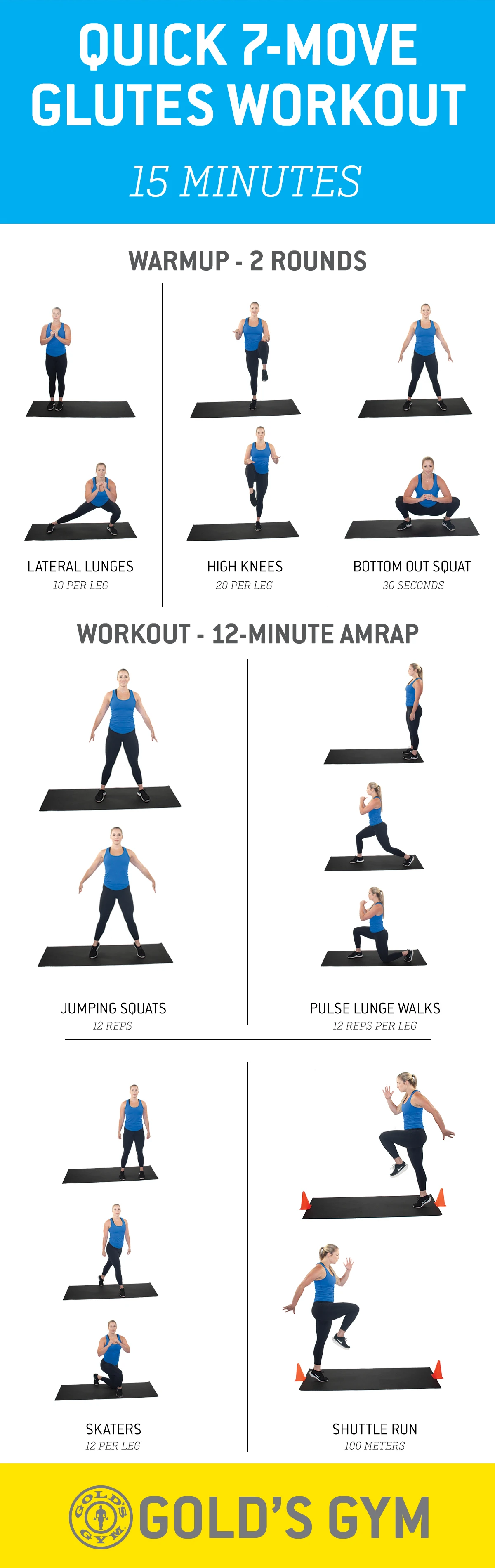
Credit: www.goldsgym.com
Leg Press: Machine Power
The leg press machine lets you load your quads and glutes safely.
- Sit in the machine, feet shoulder-width on the platform.
- Lower the platform until your knees are at 90 degrees.
- Push back up but don’t lock your knees.
Tip: Change your foot position to target different muscles.
Table: Exercise Comparison
Here’s how these exercises compare in terms of muscle focus and difficulty:
| Exercise | Main Muscle | Difficulty (1-5) | Equipment Needed |
|---|---|---|---|
| Squat | Quads, Glutes | 3 | None/Weights |
| Lunge | Quads, Glutes | 4 | None/Weights |
| Hip Thrust | Glutes | 3 | Bench/Barbell |
| Step-Up | Quads, Glutes | 2 | Bench/Box |
| Deadlift (RDL) | Glutes, Hamstrings | 4 | Barbell/Dumbbells |
| Glute Bridge | Glutes | 1 | None |
| Leg Press | Quads, Glutes | 3 | Machine |
Structuring Your Quad And Glute Workout
A balanced workout uses a mix of compound and isolation exercises. Here’s a sample plan you can follow 1–2 times per week:
Warm-up (5–10 Minutes)
- Light cardio (walking, cycling, or jumping jacks)
- Dynamic stretches (leg swings, hip circles)
Main Workout
- Squat (Barbell or Goblet) – 4 sets of 8–12 reps
- Hip Thrust – 4 sets of 10–15 reps
- Lunge (Walking or Reverse) – 3 sets of 10 reps each leg
- Step-Up – 3 sets of 12 reps each leg
- Romanian Deadlift – 3 sets of 8–12 reps
- Glute Bridge (as a burnout) – 2 sets of 20 reps
Cool Down (5 Minutes)
- Static stretching for quads, glutes, hamstrings
Practical tip: Rest 60–90 seconds between sets. If you’re short on time, focus on the first three exercises for maximum results.
How To Progress Over Time
Your muscles adapt quickly. To keep building strength and size, you must increase the challenge over time. Here’s how:
- Add weight: Increase the dumbbell or barbell weight.
- Add reps or sets: Do more repetitions or extra sets.
- Slow down: Lower the weight slowly for more muscle tension.
- Try harder variations: For example, move from bodyweight to barbell squats.
- Shorten rest: Less rest time makes your workout harder.
A common mistake is doing the same workout for months. Change one thing every few weeks to keep growing.
The Role Of Nutrition
No workout will give results without good nutrition. Muscles need fuel to grow and recover. Focus on these basics:
- Protein: Eat enough protein for muscle repair (chicken, eggs, tofu, beans).
- Carbohydrates: Give you energy for tough workouts (rice, potatoes, oats).
- Healthy fats: Needed for hormones and energy (avocado, nuts, olive oil).
- Water: Stay hydrated for best performance.
Insight: Many people undereat after workouts, which slows muscle growth. If you want bigger quads and glutes, aim for a small calorie surplus.
Common Quad And Glute Training Questions
How Often Should You Train Quads And Glutes?
Most people see good results with 1–2 sessions per week. Advanced lifters may do 3, but only if recovery is good.
Should Men And Women Train Differently?
Not really. The best exercises and principles are the same for everyone. Women often focus on glutes, but men can benefit from these moves too.
Can You Train Quads And Glutes At Home?
Yes. Bodyweight squats, lunges, step-ups, and glute bridges can be done at home. Use backpacks or water bottles for extra weight.
How Long Before You See Results?
Most people feel stronger in 2–4 weeks, but visible changes take 8–12 weeks with consistent training and good nutrition.
What If You Have Knee Or Back Pain?
Always check with a physical therapist or doctor first. Reduce weight, slow down the movements, and avoid exercises that hurt.
How To Avoid Plateaus
A plateau happens when you stop making progress. This is normal after several weeks or months. Here’s how to break through:
- Change your exercises: Try new movements or swap the order.
- Adjust your reps and sets: For example, do 6–8 reps for strength or 15–20 for endurance.
- Take a deload week: Train lighter for 1 week to let your body recover.
- Check your sleep and nutrition: These are often the problem, not the workout.
Surprising tip: Sometimes, doing less can help you grow more. Recovery is key.
The Mind-muscle Connection
One secret of advanced lifters is the mind-muscle connection. This means focusing on the muscle as you move, not just going through the motions. It helps activate more muscle fibers and leads to better results.
To improve your mind-muscle connection:
- Slow down each rep.
- Visualize your quads or glutes working.
- Touch the muscle between sets to “wake it up.”
- Pause at the hardest part of the exercise.
Beginners often miss this step. Don’t just “complete the reps”—make each one count.
When To Use Machines Vs. Free Weights
Both machines and free weights have benefits. Here’s a quick comparison:
| Method | Benefits | Drawbacks |
|---|---|---|
| Free Weights | Improves balance, uses more muscles, flexible | Harder to learn, needs more control |
| Machines | Safe for beginners, easy to change weight, targets specific muscles | Less core activation, fixed path, can feel unnatural |
Tip: Start with machines if you’re new, but add free weights as you get stronger.
Mobility And Flexibility For Quads And Glutes
Good mobility makes your workout safer and more effective. Tight hips or quads can limit your squat depth or glute activation.
Simple stretches:
- Hip flexor stretch: Kneel on one knee, push hips forward.
- Glute stretch: Lie on your back, pull one knee across your body.
- Quad stretch: Stand, grab your ankle, pull your heel to your butt.
Insight: Just 5–10 minutes of stretching after your workout can help you recover and avoid injuries.
Sample Quad And Glute Workout Plan (4 Weeks)
Here’s a practical plan for anyone who wants to see real progress. Adjust weights and reps to your level.
Week 1–2
- Squat: 3 sets of 10 reps
- Hip Thrust: 3 sets of 12 reps
- Lunge: 2 sets of 10 each leg
- Glute Bridge: 2 sets of 15 reps
Week 3–4
- Squat: 4 sets of 8 reps (add weight if possible)
- Hip Thrust: 4 sets of 10 reps (add weight or pause at top)
- Bulgarian Split Squat: 3 sets of 8 each leg
- Step-Up: 3 sets of 10 each leg
Tip: Log your weights and reps. Small improvements each week add up to big changes.
How To Combine Quads And Glutes With Other Training
If you also train your upper body or do cardio, schedule your leg workout with enough rest. For example:
- Monday: Upper body
- Tuesday: Quads & Glutes
- Wednesday: Rest or light cardio
- Thursday: Upper body
- Friday: Quads & Glutes
Don’t train legs two days in a row. Muscles need time to recover.
Supplements: Are They Needed?
Supplements are not magic. Most people get great results with food alone. However, some can help if your nutrition is lacking:
- Protein powder: Easy way to hit your protein target.
- Creatine: Supports strength and muscle growth.
- Omega-3: Good for joints and recovery.
Warning: Always check with a doctor before starting any supplement. Focus on whole foods first.
Training At Home Vs. Gym
You don’t need a gym to build strong legs. Here’s what you can do at home:
- Bodyweight squats and lunges
- Step-ups on stairs or a sturdy chair
- Glute bridges and single-leg glute bridges
- Use backpacks or water bottles as weights
At the gym, you have more options and heavier weights. But consistency matters most, not the location.
How to Tell if Your Quads and Glutes Are Getting Stronger
Progress isn’t only about muscle size. Signs you’re getting stronger:
- You can do more reps or lift heavier weights.
- Daily tasks (like climbing stairs) feel easier.
- Your form improves—deeper squats, better balance.
- Clothes fit differently.
Take photos or measurements every few weeks to see changes. Don’t rely only on the scale.
Rest And Recovery: The Hidden Key
Muscles grow when you rest, not just when you train. Here’s how to recover faster:
- Sleep at least 7 hours per night.
- Drink enough water.
- Stretch after each workout.
- Take rest days seriously—active recovery is fine, but don’t overtrain.
Insight: Soreness is normal but should not last more than 2–3 days. If it does, reduce your workout intensity.
Dealing With Stubborn Muscles
Sometimes, your quads or glutes grow slower than other muscles. Here’s what you can do:
- Train them first in your workout.
- Use different exercises or angles.
- Add “pump” work—high reps with light weight to increase blood flow.
- Focus on the mind-muscle connection.
Tip: Glutes often need extra attention to “wake up” if you sit a lot during the day.
Injury Prevention
Leg injuries can set you back for weeks. Avoid common mistakes:
- Warm up before heavy lifting.
- Never use too much weight.
- Focus on good form, not just reps.
- Listen to your body—sharp pain means stop.
- Include single-leg exercises to fix imbalances.
If you do get hurt, rest and see a professional before returning to training.
The Role Of Cardio
Cardio can help you recover faster and burn fat, but too much can slow muscle growth. If you’re focused on bigger quads and glutes, limit high-intensity cardio to 1–2 times per week.
Best choices:
- Walking on an incline
- Cycling
- Rowing
Avoid running right before or after your leg workout to save energy for strength training.
Tracking Your Progress
Here’s a simple way to track your progress:
| Date | Exercise | Weight Used | Reps | Notes |
|---|---|---|---|---|
| April 2 | Squat | 50 lbs | 10 | Felt strong, go heavier next time |
| April 2 | Hip Thrust | 60 lbs | 12 | Good glute squeeze |
Write down your results after each workout. You’ll see patterns and know when to push harder or rest.
Staying Motivated
Building strong quads and glutes takes time. Here’s how to stay motivated:
- Train with a friend or group.
- Set small, achievable goals.
- Celebrate each improvement, not just the big ones.
- Mix up your music or workout playlist.
- Remind yourself why you started.
Insight: Progress is not always linear. Some weeks are harder, but consistency always wins.
Where To Find More Information
For deeper learning, check resources like the American Council on Exercise for exercise guides, safety tips, and more.
Frequently Asked Questions
How Long Does A Good Quad And Glute Workout Take?
A solid workout usually takes 45 to 60 minutes, including warm-up and cool down. Focus on quality, not just time.
Is It Normal To Feel Sore After Training Quads And Glutes?
Yes, mild soreness is normal, especially if you’re new or trying new exercises. It should get better in a few days.
Can Quad And Glute Workouts Help With Knee Pain?
Sometimes. Strengthening these muscles can support your knees, but always check with a doctor if you have pain.
How Important Is Stretching After A Leg Workout?
Very important. Stretching helps you recover, reduces soreness, and keeps your muscles flexible.
What Should I Eat After A Quad And Glute Workout?
Eat a meal with protein (like chicken, tofu, or eggs) and some carbs (rice, potatoes, fruit) within 2 hours for best results.
Strong quads and glutes are the foundation of a powerful and healthy body. By following the right exercises, focusing on form, and staying consistent, you’ll see real results that last. Remember, start simple, build smart, and enjoy the process.

Credit: nilds.gov.ng
