

Lower Glute Workout: Sculpt and Lift Your Glutes Fast
Lower Glute Workout: Build Stronger, Shapelier Glutes
A well-developed lower glute is not just about looking good in jeans—it’s about strength, stability, and power in your daily life. Many people work hard on their glutes but still see a flat or “unfinished” look at the bottom of their buttocks. The secret? Training the lower glute area with smart, targeted exercises.
If you’ve ever felt frustrated that your squats or lunges aren’t giving you that lifted, round shape at the base of your glutes, you’re not alone. The lower glute is harder to target because many common exercises focus on the upper or middle glute muscles.
But with the right approach, you can build a fuller, more sculpted look and improve your athletic performance at the same time.
This article will guide you through everything you need to know about lower glute workouts. You’ll learn the science behind the lower glutes, discover the best exercises, and get practical tips for faster results. Whether you’re a beginner or an experienced lifter, you’ll find strategies here to maximize your lower glute gains.
Understanding The Lower Glute
Before you start training, it’s important to know what the lower glute really is. The glutes are made up of three main muscles: gluteus maximus, gluteus medius, and gluteus minimus. The lower glute mostly refers to the lower fibers of the gluteus maximus, the largest muscle in your buttocks.
This area connects the buttocks to the back of your thighs, right where your butt meets your hamstring. When this region is well-developed, it creates a smooth, round “under-butt” curve and eliminates the look of a flat or saggy bottom.
Why Is The Lower Glute Hard To Target?
Many leg and glute exercises, like basic squats or leg presses, mostly hit the middle or upper glutes. The lower glute is often underused because:
- Limited range of motion: Standard moves don’t stretch the lower glute enough.
- Form mistakes: Poor technique can shift work to your thighs or back.
- Muscle weakness: If your glutes are weak, your body uses other muscles instead.
Focusing on hip extension, deep stretches, and exercises that move your leg behind your body are key for lower glute activation.
The Benefits Of Training Your Lower Glutes
Most people want better-looking glutes, but training the lower glute does more than improve appearance. Here’s why it matters:
- Better posture: Strong lower glutes help keep your pelvis stable. This can reduce back pain and improve how you stand or walk.
- More power: Sports like running, jumping, and cycling all use the lower glute. A stronger lower glute means better speed and explosiveness.
- Injury prevention: Weak glutes put more stress on your knees and lower back. Training this area helps protect your joints.
- Functional strength: Everyday activities like climbing stairs, lifting objects, or getting up from a chair become easier.
A well-developed lower glute is not just about looks—it’s about moving better and feeling stronger.
Anatomy And Activation: The Science Behind Lower Glute Training
Understanding the science can help you train smarter. The gluteus maximus is the largest muscle in your body and has both upper and lower fibers. The lower fibers are responsible for:
- Hip extension: Moving your thigh backward behind your body.
- External rotation: Rotating your leg outward.
- Pelvic stabilization: Keeping your hips level.
To target the lower glute, you need exercises that involve these actions—especially hip extension with a deep stretch at the bottom of the movement. Studies show that exercises with a deep hip hinge (like Romanian deadlifts) or single-leg movements (like lunges) activate the lower glute more than shallow or machine-based moves.
Here’s a simple comparison of common glute exercises and their lower glute activation:
| Exercise | Main Glute Area Targeted | Lower Glute Activation |
|---|---|---|
| Barbell Hip Thrust | Upper/Middle | Moderate |
| Romanian Deadlift | Lower | High |
| Step-Up | Full | Moderate |
| Back Extension | Lower | High |
| Squat | Middle | Low |
This shows why some exercises give faster results for the lower glute than others.
The 10 Best Lower Glute Exercises
Let’s look at the most effective exercises for building your lower glute. Each move is chosen for its ability to activate and shape the lower part of your buttocks. Aim to include a mix of these in your routine for best results.
1. Romanian Deadlift
This lift stretches and strengthens your entire posterior chain, with special emphasis on the lower glute.
How to do it:
- Stand with feet hip-width apart, holding a barbell or dumbbells.
- Keep your knees slightly bent and your back flat.
- Hinge at your hips, lowering the weight toward your feet.
- Stop when you feel a deep stretch in your hamstrings and glutes.
- Return to standing by driving your hips forward.
Tip: Focus on slow, controlled movement for maximum muscle activation.
2. Back Extension (glute-focused)
This exercise can be done on a back extension bench or a Roman chair.
How to do it:
- Set your feet in the foot pads and cross your arms over your chest.
- Lower your torso toward the ground with a flat back.
- Lift your torso back up, squeezing your glutes at the top.
Tip: To hit the lower glute, keep your legs straight and drive with your hips, not your back.
3. Bulgarian Split Squat
A single-leg move that challenges balance and deeply stretches the lower glute.
How to do it:
- Stand a few feet in front of a bench.
- Place one foot behind you on the bench.
- Lower your back knee toward the floor, keeping your front knee over your ankle.
- Push through your front heel to return to standing.
Tip: Lean slightly forward to better target your glutes.
4. Step-up
Step-ups are great for hitting the lower glute, especially when you use a higher platform.
How to do it:
- Stand in front of a sturdy bench or box.
- Step up with one foot, pressing through your heel.
- Bring your other foot up, then step back down.
Tip: Don’t push off with your trailing leg. Let your glute do the work.
5. Single-leg Glute Bridge
This move isolates each glute and is great for beginners or warm-ups.
How to do it:
- Lie on your back with one knee bent, the other leg straight.
- Drive your heel into the floor and lift your hips.
- Squeeze your glutes at the top, then lower down.
Tip: Pause at the top for one or two seconds for extra activation.
6. Cable Pull-through
A cable machine move that gives constant tension to the lower glute.
How to do it:
- Stand facing away from a cable machine, holding the handle between your legs.
- Hinge at your hips, letting the cable pull your hips back.
- Squeeze your glutes to stand up straight.
Tip: Keep your spine neutral and avoid using your lower back.
7. Reverse Lunge
This lunge variation puts more stretch on the lower glute than standard lunges.
How to do it:
- Stand tall, step one foot back, and lower your knee toward the floor.
- Push through your front heel to return to standing.
Tip: The deeper the step back, the more you’ll feel it in your lower glutes.
8. Frog Pump
A bodyweight exercise that isolates the lower glute.
How to do it:
- Lie on your back with knees bent and feet together, letting your knees fall out.
- Push through the edges of your feet to lift your hips.
Tip: High reps (15-30) work best for this move.
9. Kickback (cable Or Bodyweight)
Kickbacks are a classic for shaping the under-butt.
How to do it:
- Get on all fours or use a cable machine.
- Extend one leg straight back, keeping your core tight.
- Squeeze your glute at the top.
Tip: Don’t let your lower back arch; focus on glute movement.
10. Sumo Deadlift
A wide-stance deadlift that activates the lower glute and inner thigh.
How to do it:
- Stand with feet wider than shoulder-width, toes out.
- Grip the barbell with hands inside your knees.
- Lift by pushing your hips forward and standing up tall.
Tip: The wide stance helps recruit the lower glute more than conventional deadlifts.
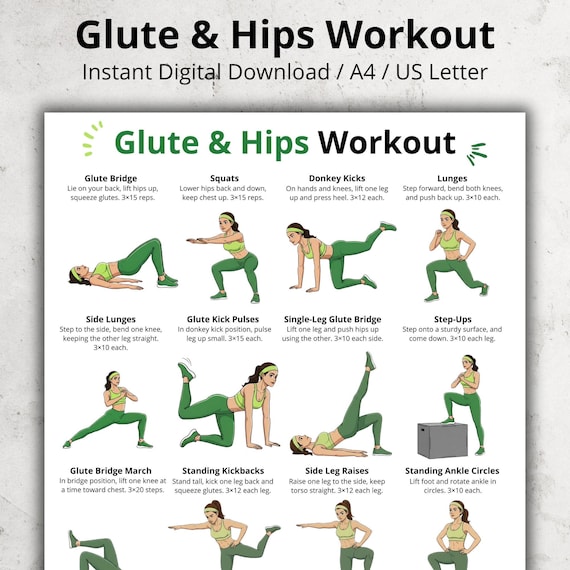
Credit: www.etsy.com
Sample Lower Glute Workout Routines
It’s not enough to do the right exercises—you need a smart plan. Here are two lower glute-focused routines: one for beginners, and one for more advanced lifters.
Beginner Lower Glute Routine
- Romanian Deadlift – 3 sets x 10 reps
- Step-Up – 3 sets x 12 reps each leg
- Single-Leg Glute Bridge – 3 sets x 12 reps each side
- Frog Pump – 2 sets x 20 reps
Rest: 60–90 seconds between sets.
Frequency: 2 times per week.
Advanced Lower Glute Routine
- Barbell Hip Thrust – 4 sets x 8 reps
- Bulgarian Split Squat – 3 sets x 10 reps each leg
- Back Extension (Glute Focus) – 3 sets x 12 reps
- Cable Pull-Through – 3 sets x 15 reps
- Reverse Lunge – 2 sets x 12 reps each leg
Rest: 60–120 seconds between sets.
Frequency: 2–3 times per week.
Progression Tips
- Increase weight or reps each week.
- Use slow, controlled movement.
- Focus on feeling your glutes work, not just moving the weight.
Common Mistakes That Limit Lower Glute Growth
Even with the best exercises, progress can stall if you make these common mistakes:
1. Using Too Much Weight:
Heavy weights can shift work to your back or thighs, reducing glute activation.
2. Not Using A Full Range Of Motion:
Stopping short means you miss the deep stretch that activates the lower glute.
3. Poor Mind-muscle Connection:
If you can’t feel your glutes working, slow down and focus on the squeeze.
4. Ignoring Single-leg Exercises:
These moves fix muscle imbalances and force your lower glute to work harder.
5. Skipping Warm-up Or Mobility Work:
Tight hips or hamstrings can stop you from activating your lower glute.
6. Training Only With Machines:
Free weights and bodyweight moves often work the lower glute more.
Data: Mistakes That Limit Glute Growth
Here’s how common mistakes can affect your results:
| Mistake | Impact on Lower Glute | Fix |
|---|---|---|
| Too much weight | Less glute activation, more thigh/back work | Use moderate weight, focus on form |
| Shallow range of motion | Misses lower glute stretch | Go deeper, maintain control |
| No single-leg moves | Imbalances, weak lower glute | Add lunges, split squats |
| No mind-muscle focus | Poor activation | Slow reps, squeeze at top |
Lower Glute Workout: Sets, Reps, And Rest
How you structure your workout matters as much as the exercises you choose. For most people, the best approach is:
- Sets: 3–4 per exercise
- Reps: 8–15 (for strength and muscle growth)
- Rest: 60–90 seconds (shorter for isolation, longer for compound lifts)
High reps (12–20) work well for bodyweight moves like frog pumps or kickbacks, while lower reps (6–8) are better for heavy lifts like deadlifts.
Weekly Training Frequency
How often should you train your glutes for best results? Most people see the best gains with 2–3 focused glute sessions per week, with at least one rest day between them.
Example Weekly Schedule
| Day | Activity |
|---|---|
| Monday | Lower Glute Workout |
| Tuesday | Upper Body or Rest |
| Wednesday | Cardio or Mobility |
| Thursday | Lower Glute Workout |
| Friday | Rest or Full Body |
| Saturday | Lower Glute Workout |
| Sunday | Rest |
If you’re new to glute training, start with 2 sessions per week and add a third as you get stronger.
Nutrition For Lower Glute Growth
Exercise is only half the battle. To see real changes in your lower glute, you need the right nutrition.
Key Points For Glute Growth
- Protein: Aim for 0.7–1 gram per pound of body weight daily. Protein helps repair and build new muscle.
- Healthy fats: Include sources like nuts, olive oil, and fatty fish for hormone support.
- Carbohydrates: Needed for energy and recovery, especially after hard workouts.
- Hydration: Muscles grow better when you’re well-hydrated.
If you want to add size to your glutes, eat in a slight calorie surplus (100–300 extra calories per day). If you want to tone without adding size, focus on high-protein, lower-calorie meals.
Supplement Tips
- Whey protein can help you reach your protein goals.
- Creatine may boost muscle strength and growth.
- Collagen can support joint and tendon health during intense training.
Always focus on whole foods first, and use supplements only to fill gaps.
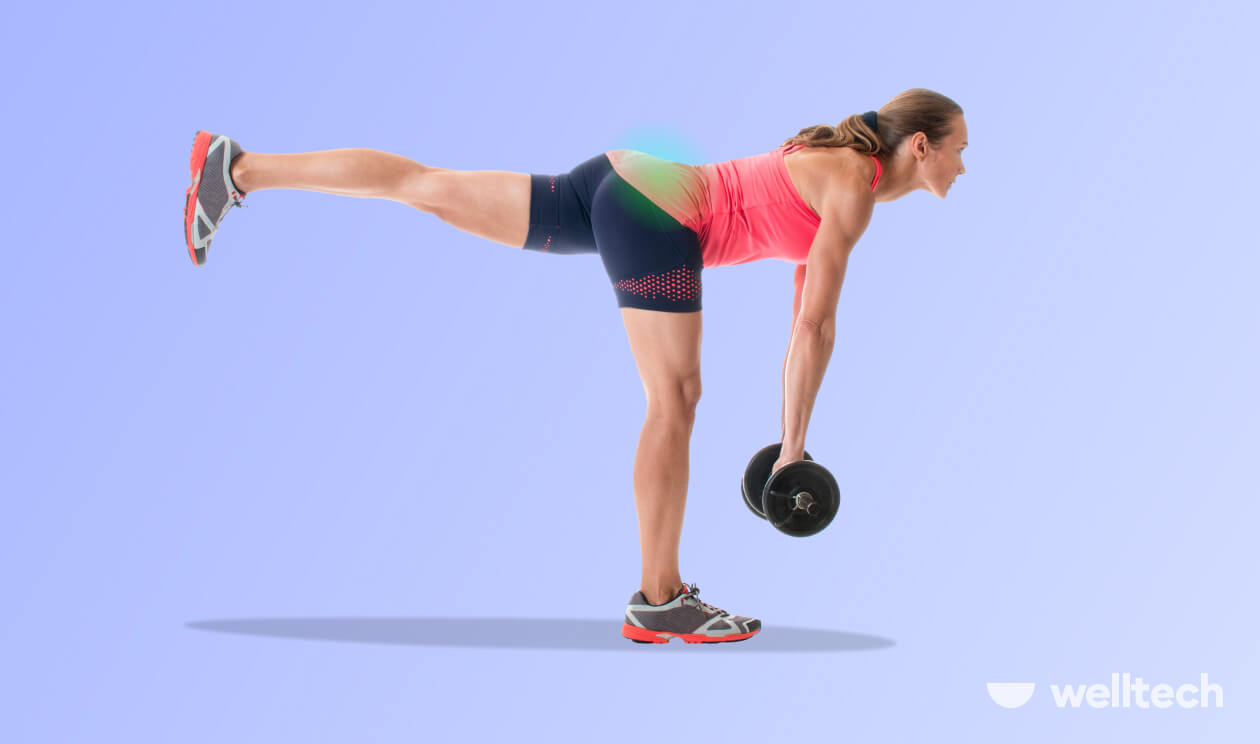
Credit: welltech.com
Mind-muscle Connection: The Secret To Faster Results
One insight beginners often miss is the importance of the mind-muscle connection. This simply means focusing your attention on the muscle you want to work, instead of just moving through the exercise.
Research shows that thinking about your glutes during each rep can boost muscle activation by up to 20%. Here’s how to improve your mind-muscle connection:
- Slow down your reps and feel the stretch and squeeze.
- Put your hand on your lower glute to feel it working.
- Visualize the muscle contracting during every movement.
Adding this mental focus can make even simple exercises much more effective.
Mobility And Warm-up: Don’t Skip This Step
Another area many people overlook is mobility. Tight hips or hamstrings can block your lower glute from firing properly. Before every workout, do a 5–10 minute warm-up:
- Dynamic stretches: Leg swings, walking lunges, hip circles.
- Glute activation drills: Clamshells, banded glute bridges, monster walks.
This primes your lower glute to take over during your main lifts.

Credit: www.plymouthblockmanagement.com
How To Track Progress
Tracking your results keeps you motivated and shows what’s working.
- Take progress photos: Every 4–6 weeks, take side and back photos in similar lighting.
- Track weights and reps: Write down your workouts to make sure you’re improving.
- Measure your hips and thighs: Tape measurements show changes even if the scale does not.
- Notice daily activities: Are stairs, running, or standing up easier? That’s progress!
Don’t expect overnight changes. Lower glute growth is slow but steady with the right plan.
Lower Glute Training For Women Vs. Men
Both women and men can benefit from lower glute training, but there are some differences in goals and approach.
- Women often focus on shaping and lifting the glutes for a rounder look.
- Men may focus more on strength and power for sports or lifting.
But the best exercises are the same for everyone. The main difference is usually the number of reps and sets, and how much weight is used.
Hormonal Differences
Women have more estrogen, which may help with muscle recovery and endurance. Men have more testosterone, which supports muscle growth. This means women may be able to train their glutes more often with higher reps, while men may see faster strength gains.
Cardio And Lower Glute Training
You don’t have to skip cardio if you want to grow your lower glutes. But some types are better than others.
- Stair climbing and hill walking work the glutes more than flat running.
- Sprinting on an incline also targets the lower glute.
Limit long-distance running if your goal is muscle growth, as too much can slow your gains.
Recovery: Let Your Glutes Grow
Muscles grow outside the gym, not during your workout. Make sure you:
- Get 7–9 hours of sleep every night.
- Stretch or foam roll after training.
- Take at least one full rest day per week.
- Listen to your body—soreness is okay, but sharp pain is not.
Real-life Results: What To Expect
Lower glute growth takes time, patience, and consistency. Some people see visible changes in 6–8 weeks, while others may need several months. Genetics play a role, but smart training and nutrition can help anyone improve.
A major insight: Some people try to “spot reduce” fat in the under-butt area. This isn’t possible. You can build muscle and improve shape, but fat loss comes from a calorie deficit and full-body training.
Extra Tips For Maximum Lower Glute Gains
- Try paused reps: Pause for 1–2 seconds at the hardest point of each rep.
- Use resistance bands: Bands add extra tension at the top of moves like hip thrusts or glute bridges.
- Mix up your stance: Wide stances can hit different glute fibers.
- Focus on quality, not just quantity: Perfect form beats more reps every time.
If you want to learn more about glute training science, check out this research overview from the National Institutes of Health.
Frequently Asked Questions
How Often Should I Train My Lower Glutes?
For best results, train your lower glutes 2–3 times per week. This gives your muscles enough time to recover and grow. If you’re a beginner, start with two sessions and add a third as you get stronger.
Can I Target Only My Lower Glutes?
You can focus on exercises that activate the lower glute, but you can’t isolate it completely. Most glute exercises will also work your upper and middle glutes, which is good for balanced development.
How Long Does It Take To See Lower Glute Results?
Most people start seeing changes in 6–12 weeks with consistent training and good nutrition. The exact timeline depends on your starting point, genetics, and effort.
What If I Don’t Feel My Glutes Working?
Slow down your reps and focus on the mind-muscle connection. Try warm-up drills like clamshells or glute bridges to “wake up” your muscles before your main workout. If you still struggle, check your form or ask a coach for help.
Will Lower Glute Training Make My Thighs Bigger?
Not necessarily. Lower glute exercises, especially single-leg and hip hinge moves, target the buttocks more than the thighs. If you’re worried about thigh growth, choose exercises that emphasize hip extension and glute squeeze over quad-heavy moves.
Building stronger, more defined lower glutes is possible for anyone with the right approach. With smart exercise choices, consistent nutrition, and a focus on form, you’ll see results in both how you look and move. Remember: progress takes time, but every rep brings you closer to your goals. Stay patient, keep learning, and enjoy the journey to stronger glutes.
