

Best Leg And Glute Workout: Sculpt Stronger, Leaner Muscles Fast
Many people want strong, toned legs and glutes—not just for looks, but also for better movement, posture, and health. Whether you want to lift heavier weights, run faster, or simply climb stairs with ease, building your leg and glute muscles can make a big difference.
Unfortunately, many beginners focus too much on upper body workouts and leave their lower half behind. This can lead to weak legs, muscle imbalances, and even injuries over time.
The right leg and glute workout is not just about doing endless squats or lunges. It’s about smart exercise selection, proper technique, and gradual progress. In this guide, you’ll learn the best exercises, how to structure your workouts, and common mistakes to avoid.
You’ll also find useful tips, sample routines, and answers to the questions most people have about leg and glute training.
Why Strong Legs And Glutes Matter
The muscles in your legs and glutes are some of the largest and strongest in your body. They play a big role in almost every movement you do: walking, running, jumping, standing, and even sitting. Here’s why focusing on these muscles is so important:
- Better athletic performance: Strong legs and glutes help you run faster, jump higher, and move more powerfully in sports or daily life.
- Injury prevention: Balanced lower body muscles support your knees, hips, and back, reducing the risk of strains and joint pain.
- Posture and stability: Your glutes and legs keep your body stable and upright, improving your posture and balance.
- Metabolism boost: Large muscles use more energy. Training your legs and glutes burns more calories, even when you’re resting.
Many people don’t realize that weak glutes can even cause back pain or knee issues. That’s why lower body training should be a key part of any fitness program.
Key Principles Of An Effective Leg And Glute Workout
To get the best results, you need more than just a list of exercises. Here’s what you should focus on:
- Compound movements: These exercises work several muscles at once and help you build strength faster.
- Progressive overload: Gradually increasing the weight, reps, or difficulty helps your muscles grow and adapt.
- Proper form: Good technique prevents injuries and targets the right muscles.
- Variety: Mixing up exercises challenges your muscles in different ways and keeps workouts interesting.
- Rest and recovery: Muscles need time to repair and grow, so don’t train legs and glutes every day.
Most beginners overlook recovery. Training hard without enough rest can actually slow your progress or cause injury. It’s better to train smart, not just hard.
The Best Leg And Glute Exercises
Let’s break down the top movements you should include in your workouts. These exercises target all the main muscles: quads (front thighs), hamstrings (back thighs), glutes (butt), and calves.
Squats
Squats are often called the “king” of lower body exercises. They work your quads, glutes, hamstrings, and even your core. There are many squat variations, but the basic bodyweight or barbell squat is the best place to start.
How to do it:
- Stand with feet shoulder-width apart.
- Bend your knees and hips, lowering your body like you’re sitting in a chair.
- Keep your chest up and back straight.
- Go as low as you can without losing form, then push back up.
Tip: Don’t let your knees cave inward. Focus on pushing them out as you stand up.
Lunges
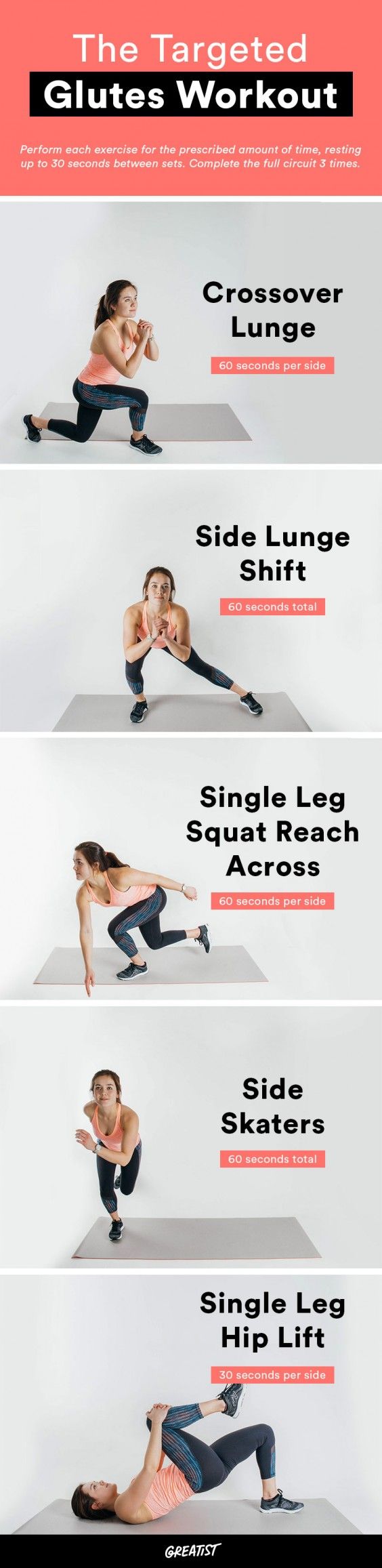
Lunges work each leg separately, which improves balance and corrects muscle imbalances. They target the quads, glutes, and hamstrings.
How to do it:
- Stand tall, step one foot forward, and lower your back knee toward the floor.
- Keep your front knee above your ankle.
- Push back to the starting position and switch legs.
Variation: Try walking lunges, reverse lunges, or side lunges to hit your muscles differently.
Deadlifts
Deadlifts are great for building strength in your hamstrings and glutes. They also work your lower back and core.
How to do it:
- Stand with feet hip-width apart, barbell over the middle of your feet.
- Bend at your hips and knees, grab the bar, and keep your back straight.
- Stand up by driving your hips forward, then lower the bar back down.
Tip: Start with light weight until you learn proper form—deadlifts can strain your back if done incorrectly.
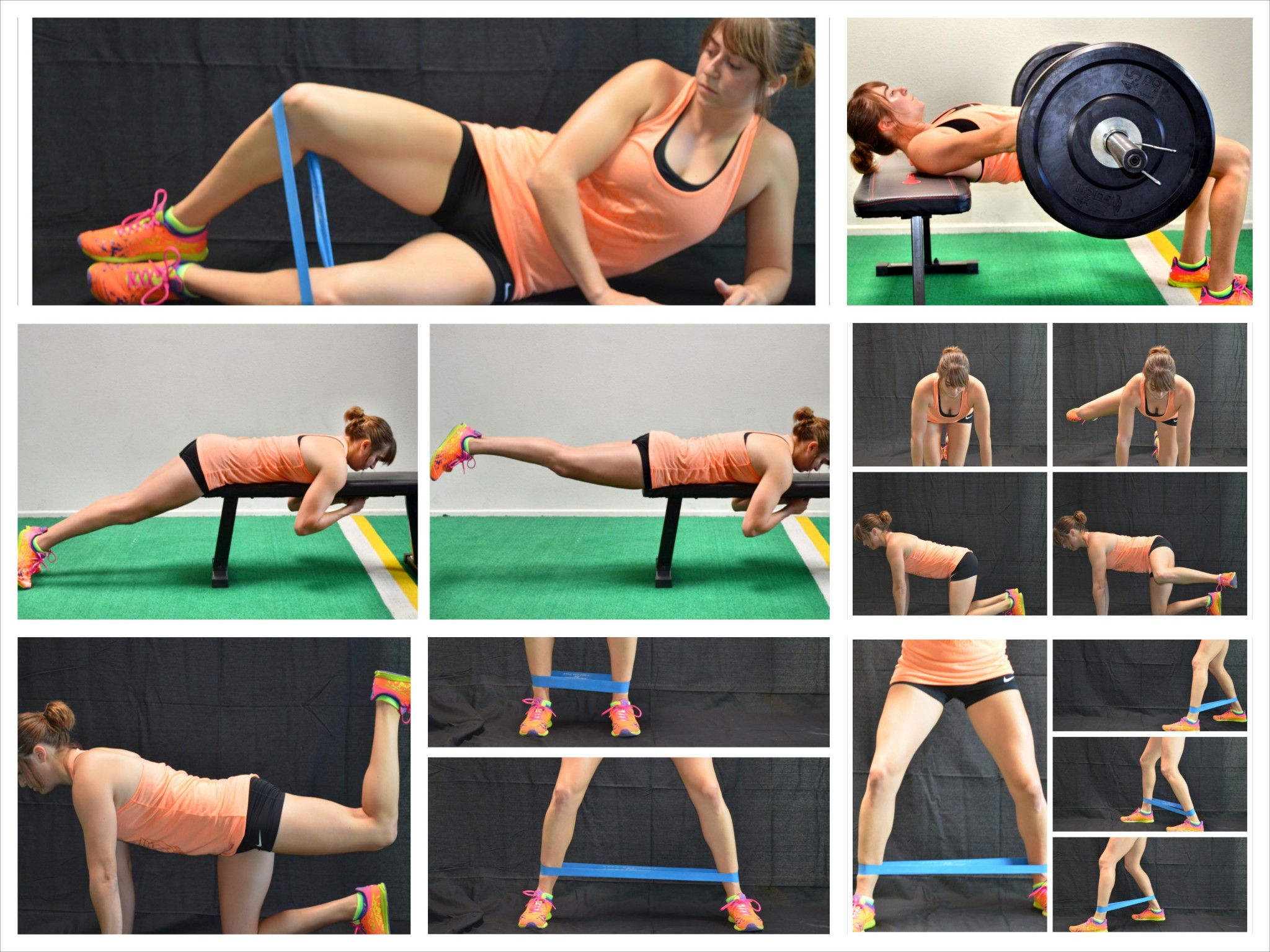
Hip Thrusts
Few exercises target the glutes as well as hip thrusts. They’re a must if you want to build a strong, rounded backside.
How to do it:
- Sit on the ground with your upper back against a bench, knees bent.
- Place a barbell or weight across your hips.
- Push through your heels, lifting your hips up until your thighs and body form a straight line.
- Lower back down and repeat.
Note: You can use just your body weight if you’re a beginner.
Step-ups
This simple movement works your quads, glutes, and calves while also improving balance.
How to do it:
- Stand in front of a bench or sturdy box.
- Step one foot up, drive through your heel, and bring your other foot up.
- Step back down and repeat with the other leg.
Tip: Add dumbbells for extra resistance.
Bulgarian Split Squats
This challenging single-leg exercise really targets your glutes and quads.
How to do it:
- Stand a few feet in front of a bench.
- Place one foot on the bench behind you.
- Lower your back knee toward the ground, keeping your chest up and front knee over your ankle.
- Push back up to starting position.
Mistake to avoid: Letting your front knee go too far past your toes.
Leg Press
The leg press machine lets you lift heavy safely, focusing on your quads and glutes.
How to do it:
- Sit on the machine with feet shoulder-width apart on the platform.
- Push the weight up, then slowly lower it until your knees form a 90-degree angle.
- Press back up.
Tip: Don’t lock your knees at the top.
Glute Bridges
This is a simpler version of the hip thrust, great for activating your glutes.
How to do it:
- Lie on your back, knees bent, feet flat.
- Push through your heels, lifting your hips toward the ceiling.
- Lower back down.
Insight: Doing glute bridges before squats or deadlifts can “wake up” your glutes, making your workout more effective.
Calf Raises
Strong calves help with running, jumping, and balance.
How to do it:
- Stand with feet flat, then rise up onto your toes as high as possible.
- Lower back down slowly.
Variation: Try single-leg calf raises for extra challenge.
Hamstring Curls
This machine exercise isolates your hamstrings.
How to do it:
- Adjust the machine so the pad sits just above your ankles.
- Curl your legs up as far as possible, then lower back down.
Tip: Move slowly—don’t let the weights drop too quickly.
Sample Leg And Glute Workout Routines
Workouts should fit your experience and goals. Here are three different routines for different levels:
Beginner Routine
Perfect for those just starting out, using mostly bodyweight or light weights.
- Bodyweight squats — 3 sets of 12 reps
- Glute bridges — 3 sets of 15 reps
- Reverse lunges — 3 sets of 10 reps per leg
- Calf raises — 3 sets of 15 reps
Rest: 60 seconds between sets.
Intermediate Routine
For those with some experience, adding more resistance and variety.
- Barbell squats — 4 sets of 8 reps
- Bulgarian split squats — 3 sets of 10 reps per leg
- Hip thrusts — 3 sets of 12 reps
- Step-ups (with dumbbells) — 3 sets of 12 reps per leg
- Seated or standing calf raises — 3 sets of 15 reps
Rest: 60–90 seconds between sets.
Advanced Routine
For experienced lifters, focusing on strength and muscle building.
- Deadlifts — 4 sets of 6 reps
- Front squats — 4 sets of 8 reps
- Barbell hip thrusts — 4 sets of 10 reps
- Walking lunges (with heavy dumbbells) — 3 sets of 15 reps per leg
- Hamstring curls — 3 sets of 15 reps
- Single-leg calf raises — 4 sets of 12 reps per leg
Rest: 90 seconds between sets.
How To Structure Your Week
Most people get good results training legs and glutes 2 times per week. Spread out your workouts to allow recovery (for example, Monday and Thursday).

Credit: www.fondation-enovos.lu
Comparing Top Leg And Glute Exercises
Here’s a look at how some of the most popular exercises target different muscles:
| Exercise | Quads | Hamstrings | Glutes | Calves |
|---|---|---|---|---|
| Squat | High | Medium | High | Low |
| Deadlift | Low | High | High | Low |
| Hip Thrust | Low | Low | Very High | Low |
| Lunge | High | Medium | High | Low |
| Calf Raise | Low | Low | Low | Very High |
Insight: No single exercise works every muscle equally. Mixing compound and isolation exercises gives the best results.
Common Mistakes In Leg And Glute Training
Even with the best exercises, mistakes can slow your progress or cause injury. Here’s what to watch out for:
1. Neglecting Form
Many people add weight too quickly and let their form suffer. This not only reduces the effectiveness of the exercise but also increases injury risk. Take time to learn the correct technique—especially for squats and deadlifts.
2. Not Training Through Full Range Of Motion
Partial reps (not going low enough in a squat, for example) limit muscle growth. Move through the full range for each exercise unless you have joint problems.
3. Ignoring Single-leg Movements
Exercises like lunges and split squats build balance and fix imbalances that squats alone can’t address.
4. Skipping Warm-ups And Mobility
A proper warm-up increases blood flow, improves movement quality, and helps prevent injury. Try 5–10 minutes of light cardio plus dynamic stretches before heavy lifting.
5. Doing Too Much Cardio
While cardio is healthy, too much can interfere with muscle growth. If you want bigger, stronger legs and glutes, focus on resistance training.
6. Overlooking Recovery
Working your legs hard every day is a common mistake. Muscles need time to repair and grow. Aim for 48–72 hours between tough leg and glute sessions.
7. Not Eating Enough Protein
Muscle growth requires enough protein. Make sure your diet supports your training.
Credit: www.fondation-enovos.lu
How To Progress: Reps, Sets, And Weight
Progress in the gym is all about progressive overload. Here’s how to apply it:
- Increase weight: When you can easily do all your sets and reps, add a small amount of weight.
- Add reps or sets: You can also do more repetitions or add another set.
- Change tempo: Slow down the lowering phase to make exercises harder.
- Try harder variations: Move from bodyweight to weighted, or from regular squats to Bulgarian split squats.
Here’s a basic progression plan:
| Week | Squat Weight | Reps per Set | Sets |
|---|---|---|---|
| 1 | 50 lbs | 10 | 3 |
| 2 | 55 lbs | 10 | 3 |
| 3 | 55 lbs | 12 | 3 |
| 4 | 60 lbs | 10 | 4 |
Tip: Increase by small amounts, and only when your form is solid.
Home Vs. Gym: Where Should You Train?
You can build strong legs and glutes in both places, but there are differences.
Home Workouts
- Pros: Convenient, private, and no equipment needed for many moves.
- Cons: Harder to add heavy resistance unless you have dumbbells, bands, or a barbell.
Best exercises: bodyweight squats, lunges, step-ups (using stairs), glute bridges, single-leg calf raises, resistance band work.
Gym Workouts
- Pros: Access to more equipment (barbells, machines), easier to increase weight.
- Cons: May be crowded, less convenient.
Best exercises: barbell squats, leg press, hip thrusts, deadlifts, hamstring curls, calf raise machine.
Insight: For muscle growth, you’ll eventually need more resistance than bodyweight alone. If you start at home, look for ways to add weight over time.
The Role Of Nutrition In Building Legs And Glutes
Your workout is just one piece of the puzzle. What you eat matters, too.
- Protein: Aim for 0.7–1 gram per pound of body weight daily to support muscle growth.
- Carbohydrates: Fuel your workouts and help recovery.
- Healthy fats: Support hormone health and energy.
- Water: Stay hydrated for muscle function.
A balanced meal after your workout (with protein and carbs) helps your muscles recover and grow.
How Long Does It Take To See Results?
Results depend on your starting point, genetics, workout routine, and diet. Most people see early changes (feeling stronger, better endurance) in 4–6 weeks. Visible changes in muscle size or shape usually take 8–12 weeks or more.
Non-obvious insight: Progress is not always visible at first. Strength gains often come before you see muscle growth. Track your weights, reps, and how you feel, not just the mirror.
Advanced Tips For Faster Progress
If you want to get the most from your leg and glute workouts, try these strategies:
1. Mind-muscle Connection
Focus on feeling the target muscle working during each exercise. For glutes, think about squeezing at the top of each rep.
2. Use Resistance Bands
Bands are especially useful for glute activation. Place a band above your knees during squats or hip thrusts to increase the challenge.
3. Try Paused Reps
Pause at the bottom of a squat or the top of a hip thrust for 1–2 seconds. This removes momentum and makes your muscles work harder.
4. Unilateral Training
Single-leg exercises (like Bulgarian split squats) not only build muscle but also improve balance and fix weak spots.
5. Track Your Progress
Keep a workout log. Write down your sets, reps, and weights. This keeps you motivated and helps you see where you’re improving.
Stretching And Mobility For Better Results
Tight muscles can limit your range of motion and lead to poor form. Include stretching and mobility work in your routine:
- Before your workout: Dynamic stretches (leg swings, walking lunges)
- After your workout: Static stretches (hamstring stretch, quad stretch, pigeon pose for glutes)
Spending 5–10 minutes on mobility can help you squat deeper and move better.
Gender Differences: Do Men And Women Need Different Workouts?
The basic exercises are the same for everyone. However, women often have a greater focus on glute development, while men may focus more on overall leg size.
Key point: Both men and women should include heavy compound exercises and single-leg work. Glute isolation (hip thrusts, bridges) can help anyone looking to shape their lower body.
Cardio And Leg/glute Training: What’s The Right Balance?
It’s fine to combine cardio and strength training, but too much cardio can make it harder to build muscle. If your main goal is bigger, stronger legs and glutes:
- Limit long, intense cardio sessions.
- Try interval training or hill sprints for a cardio boost that also challenges your glutes.
- Always do strength work before cardio if you combine them in one session.
Credit: redefiningstrength.com
Training Frequency And Recovery
Your legs and glutes are strong, but they still need rest. For most people:
- Train legs and glutes 2–3 times per week for best results.
- Give at least 48 hours between hard sessions.
- Sleep 7–9 hours per night for the best recovery.
Overtraining can lead to fatigue, poor performance, and even injury. Listen to your body—if you’re always sore, take an extra rest day.
Motivation And Consistency: The Secret To Success
The biggest challenge is not the workout—it’s sticking with it. Here’s how to stay on track:
- Set clear goals: Know why you want stronger legs and glutes.
- Find a workout buddy: Training with a friend keeps you accountable.
- Track your progress: Small wins add up over time.
- Make it fun: Try new exercises, listen to music, or join a group class.
Remember, real change takes time. Consistency beats intensity every time.
Sample Weekly Training Plan
Here’s how you can fit leg and glute workouts into a balanced week:
| Day | Workout |
|---|---|
| Monday | Leg and glute strength (squats, lunges, hip thrusts) |
| Tuesday | Upper body or rest |
| Wednesday | Cardio or active recovery (walking, cycling) |
| Thursday | Leg and glute strength (deadlifts, Bulgarian split squats, calf raises) |
| Friday | Upper body or rest |
| Saturday | Mobility, stretching, or light cardio |
| Sunday | Rest |
This plan balances strength, recovery, and movement for best results.
Frequently Asked Questions
What’s The Fastest Way To Grow My Glutes?
Focus on heavy compound lifts like hip thrusts and squats, use progressive overload, and train your glutes at least twice a week. Eat enough protein and calories to support muscle growth. Adding resistance bands and glute isolation moves can speed up activation and growth.
Can I Train Legs And Glutes Every Day?
It’s not recommended. Muscles need time to recover and grow. Training them every day can lead to overuse injuries and slow progress. Most people see the best results with 2–3 sessions per week, allowing at least 48 hours between workouts.
Will Leg And Glute Workouts Make My Legs Bulky?
Building large muscles takes a lot of time, heavy weights, and extra calories. For most people, leg and glute workouts will create a toned, athletic look, not bulk. If you want to keep your legs slim, focus on moderate weights and higher reps.
How Important Is Stretching For Leg And Glute Training?
Stretching improves flexibility, helps with recovery, and can prevent injuries. Dynamic stretching before your workout and static stretching after are both important. Don’t skip mobility work—it helps you move better and lift more safely.
Are Machines Or Free Weights Better For Legs And Glutes?
Both have advantages. Free weights (like squats and deadlifts) train more muscles and improve balance. Machines (like the leg press or hamstring curl) let you focus on specific muscles and lift heavier safely. The best results come from using both in your routine. For more on the science of strength training, check the Wikipedia page on strength training.
Building strong, powerful legs and glutes is possible for anyone with the right approach. Choose effective exercises, train consistently, eat well, and pay attention to recovery. Over time, you’ll see the results—not just in the mirror, but in every step you take.
