

Leg And Glute Workout: Sculpt Stronger, Leaner Lower Body Fast
Building powerful legs and glutes is about more than just looking good. Strong lower body muscles help you move better, lift heavier, run faster, and avoid injury. Whether you want to boost athletic performance, get toned, or simply walk up stairs with ease, a good leg and glute workout is essential.
But many people struggle to see real results. They might use the wrong exercises, skip important training methods, or miss key recovery steps. This guide will show you how to structure an effective leg and glute workout, break down the best exercises, and share tips that most beginners miss.
No matter your starting point, you’ll find clear steps to stronger legs and glutes.
Why Focus On Legs And Glutes?
Your legs and glutes are home to the largest muscles in your body. The gluteus maximus is the biggest muscle, and the quadriceps and hamstrings are not far behind. These muscles do much more than move you around—they support your core, protect your back, and help you balance. Weak legs or glutes can lead to poor posture, back pain, and even injuries during other workouts.
Stronger lower body muscles can:
- Increase your metabolism, helping you burn more calories even at rest.
- Improve everyday movements like walking, climbing, and lifting.
- Boost performance in sports and cardio.
- Reduce the risk of knee and lower back injuries.
- Support healthy aging by keeping you mobile and independent.
Many people focus too much on upper body workouts, neglecting the lower half. But a balanced body means working both upper and lower body with equal care.
Key Muscles Worked In Leg And Glute Workouts
To build an effective leg and glute workout, it’s important to know which muscles you’re targeting. Here are the main groups:
- Gluteus maximus, medius, and minimus: These muscles shape your backside and help with hip movement and stability.
- Quadriceps: Located in the front of your thighs, these muscles help you straighten your knee.
- Hamstrings: Found at the back of your thighs, they bend your knees and help extend your hips.
- Adductors: Inner thigh muscles that bring your legs together and stabilize your hips.
- Calves (gastrocnemius and soleus): These help you push off the ground and balance.
- Hip flexors: Muscles in the front of your hips, important for lifting your legs.
By targeting all these areas, you’ll build balanced strength and avoid muscle imbalances that can cause problems later.
How To Structure A Leg And Glute Workout
A strong workout is more than just doing a few squats and lunges. The best routines include different types of movements and training styles. Here’s a simple structure that works for most people:
- Warm-Up (5–10 minutes): Get your blood flowing with light cardio, then activate your muscles with dynamic stretches.
- Compound Exercises: These moves work several muscles at once. Think squats, deadlifts, and lunges.
- Isolation Exercises: Target one muscle group at a time, such as leg curls or glute bridges.
- Accessory Work: Balance and stability moves, like step-ups or side-lying leg lifts.
- Cool Down (5–10 minutes): Stretch and relax your muscles to help with recovery.
How many sets and reps? It depends on your goals:
- For strength: 3–5 sets of 4–8 reps using heavier weights.
- For muscle size (hypertrophy): 3–4 sets of 8–12 reps, moderate weights.
- For endurance and toning: 2–3 sets of 12–20 reps, lighter weights or bodyweight.
Rest 1–2 minutes between sets for strength, 30–60 seconds for endurance. Beginners can start with two workouts per week, while advanced lifters may train legs and glutes up to three times.
Best Leg And Glute Exercises (with Examples)
Some exercises are more effective than others for building leg and glute strength. Here are the top moves, with tips for each.
1. Squats
Squats are the king of lower body exercises. They work the glutes, quads, hamstrings, and even your core.
- How to do it: Stand with feet shoulder-width apart, toes slightly out. Lower your hips back and down like sitting into a chair, keeping your chest up. Go as low as you can while keeping your heels down. Press back up to standing.
- Tips: Don’t let your knees cave in. Keep your back straight. Start with bodyweight, then add dumbbells or a barbell as you get stronger.
2. Deadlifts
Deadlifts target the glutes, hamstrings, and lower back.
- How to do it: Stand with feet hip-width apart. Hold a barbell or dumbbells in front. Bend at your hips and knees, lowering the weight while keeping your back flat. Drive through your heels to return to standing.
- Tips: Keep the weight close to your body. Don’t round your back. Start light and focus on form.
3. Lunges
Lunges work each leg separately, helping fix imbalances.
- How to do it: Step forward with one leg and lower your body until both knees are bent 90 degrees. Push off your front foot to return to standing. Repeat on the other side.
- Tips: Keep your torso upright. Don’t let your front knee go past your toes.
4. Glute Bridges / Hip Thrusts
These are top moves for targeting your glutes.
- How to do it: Lie on your back, knees bent and feet flat. Push through your heels to lift your hips as high as possible, squeezing your glutes at the top. Lower slowly.
- Tips: To make it harder, add weight across your hips (hip thrusts) or try single-leg versions.
5. Step-ups
Great for building strength and stability.
- How to do it: Step onto a bench or sturdy box with one foot, then drive through your heel to lift your body up. Step down and repeat.
- Tips: Use a box high enough to challenge you, but not so high you lose balance.
6. Bulgarian Split Squats
A challenging single-leg move.
- How to do it: Place one foot behind you on a bench. Lower your hips until your front thigh is parallel to the floor. Push back up.
- Tips: Keep your front knee in line with your toes. Lean forward slightly to hit the glutes more.
7. Leg Curls And Leg Extensions
Machines help isolate the hamstrings (curls) and quads (extensions).
- How to do it: Follow the machine’s instructions. Focus on slow, controlled reps.
- Tips: Don’t swing the weights. Control both lifting and lowering.
8. Calf Raises
Don’t Forget The Calves!
- How to do it: Stand tall, push onto your toes, and lower back down.
- Tips: Pause at the top for a deeper burn. Try on a step to get a better stretch.
Sample Leg And Glute Workout Routines
Let’s see how to put these moves together. Here are two routines—one for beginners, one for more advanced lifters.
Beginner Routine
- Bodyweight squats: 3 sets of 12 reps
- Glute bridges: 3 sets of 15 reps
- Reverse lunges: 2 sets of 10 reps per leg
- Step-ups: 2 sets of 10 reps per leg
- Standing calf raises: 2 sets of 15 reps
Rest 60 seconds between sets. Focus on good form, not speed.
Intermediate/advanced Routine
- Barbell squats: 4 sets of 8 reps
- Romanian deadlifts: 3 sets of 10 reps
- Bulgarian split squats: 3 sets of 8 reps per leg
- Hip thrusts (weighted): 3 sets of 10 reps
- Leg curls (machine): 3 sets of 12 reps
- Seated calf raises: 3 sets of 15 reps
Rest 1–2 minutes between sets. Use weights that challenge you but allow for good form.
Comparing Leg And Glute Exercises
Some exercises hit certain muscles harder than others. Here’s a quick comparison:
| Exercise | Main Muscles Worked | Skill Level | Best For |
|---|---|---|---|
| Squat | Glutes, quads, hamstrings, core | All | Overall strength |
| Deadlift | Glutes, hamstrings, lower back | Intermediate | Posterior chain |
| Lunge | Glutes, quads, hamstrings | Beginner | Single-leg strength |
| Hip Thrust | Glutes | All | Glute growth |
| Leg Curl | Hamstrings | All | Isolation |
Training Tips For Fast Progress
Many people make slow progress because they miss a few important details. Here’s how to get better results:
- Use Full Range of Motion: Go as low or as high as your body allows in each movement. This activates more muscle fibers and leads to better gains.
- Progressive Overload: Gradually increase the weight, reps, or sets over time. This is key for growth.
- Don’t Rush Rest: Muscles need time to recover between sets. Rushing leads to sloppy form.
- Focus on Form First: Using heavy weights with poor form leads to injury and less muscle growth.
- Mix Up Your Routine: Change exercises, sets, or reps every 4–6 weeks to avoid plateaus.
- Don’t Forget Recovery: Muscles grow when you rest. Aim for at least one full rest day between hard leg/glute sessions.
Two Insights Beginners Miss
- Hip Hinge vs. Knee Bend: Moves like deadlifts and good mornings are “hip hinge” exercises, while squats and lunges are “knee bend” moves. You need both for a balanced workout.
- Mind-Muscle Connection: Actively focus on squeezing the target muscle during each rep, especially in glute exercises. This helps with muscle activation and growth.
Mistakes To Avoid In Leg And Glute Workouts
Even with the best intentions, common errors can block your progress.
- Skipping Warm-Up: Cold muscles are more likely to get injured. Always spend a few minutes warming up.
- Ignoring Single-Leg Exercises: Focusing only on squats or deadlifts can hide strength imbalances. Use lunges, split squats, or step-ups.
- Not Challenging Yourself: If the last 2–3 reps of your set feel easy, the weight is too light.
- Bad Posture: Rounding your back or letting knees cave in can cause injury.
- Overtraining: Training legs every day doesn’t give muscles time to repair and grow.
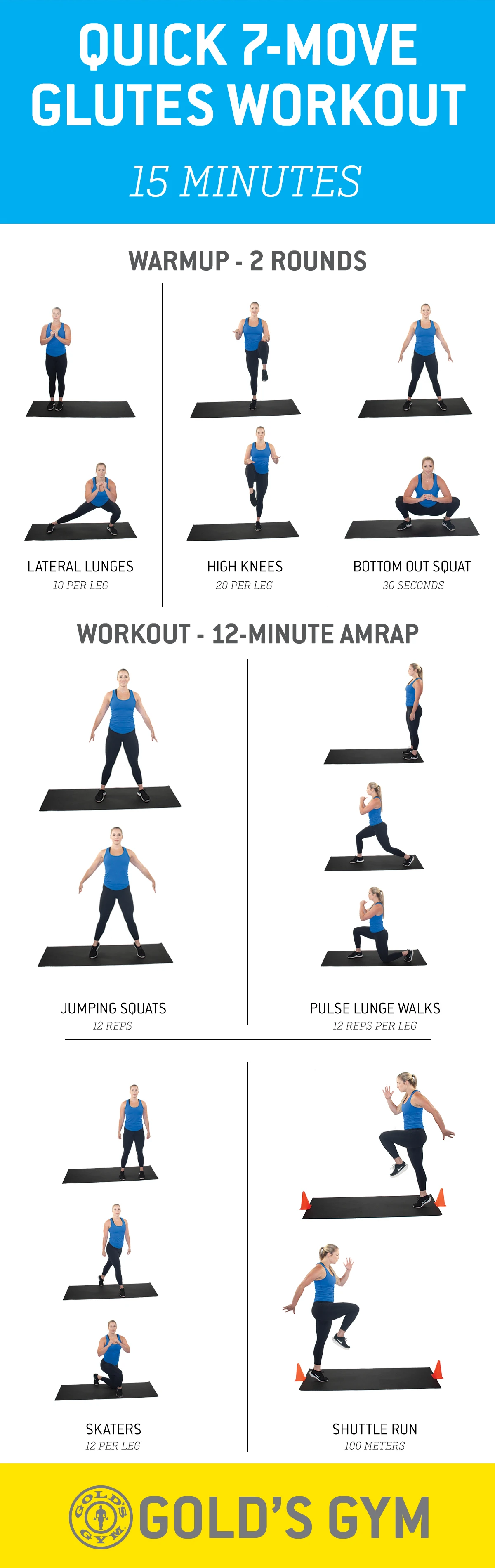
Credit: www.goldsgym.com
Sample Weekly Leg And Glute Training Plan
Here’s how you might fit leg and glute workouts into your week:
| Day | Workout | Main Focus |
|---|---|---|
| Monday | Leg and Glute Workout A | Compound lifts (squats, deadlifts) |
| Wednesday | Active Recovery (walking, stretching) | Mobility |
| Friday | Leg and Glute Workout B | Single-leg, isolation, glute focus |
| Sunday | Rest | Recovery |
You can adjust the days to fit your schedule. Just remember to leave at least one day of rest between hard leg/glute sessions.
Equipment Needed For Leg And Glute Workouts
You can get a great workout with just your body weight. But adding equipment can help you build more strength and muscle. Here’s a comparison of common options:
| Equipment | Benefits | Best For |
|---|---|---|
| Bodyweight | No cost, easy to start, low risk | Beginners, home workouts |
| Dumbbells | Versatile, easy to hold, good for single-leg work | All levels |
| Barbells | Heavier loads, best for squats and deadlifts | Intermediate & advanced |
| Resistance bands | Portable, add tension, good for activation | All levels, rehab |
| Machines | Target muscles, safe, adjust weight easily | Isolation work, injury recovery |
If you train at home, a pair of dumbbells and a resistance band can be enough. At the gym, try different tools to keep things interesting.
Nutrition For Leg And Glute Growth
Training is only half the battle. Your muscles need the right nutrition to repair and grow. Here’s what matters most:
- Protein: Aim for at least 0.7 grams of protein per pound of body weight each day. Good sources include chicken, fish, beans, eggs, and protein shakes.
- Carbohydrates: These fuel your workouts. Include whole grains, fruits, and starchy veggies.
- Healthy Fats: Support hormone health. Choose nuts, olive oil, and avocados.
- Water: Muscles need to stay hydrated to work well and recover.
For muscle growth, you need to eat more calories than you burn. But don’t go overboard—just a small surplus is enough. For those looking to tone without bulking, focus on high protein, moderate carbs, and a small calorie deficit.
How To Warm Up And Cool Down
Many people skip warm-ups or cool-downs, but these steps are important for safety and recovery.
Warm-up
- 5 minutes of light cardio: Brisk walking or cycling to raise your heart rate.
- Dynamic stretches: Leg swings, hip circles, bodyweight squats.
This gets blood flowing and wakes up your muscles.
Cool Down
- Light stretching: Focus on quads, hamstrings, glutes, calves, and hips.
- Foam rolling: Helps release tight spots and improves recovery.
Spending just a few minutes here can help you avoid soreness and injuries.
Adapting Workouts For Home, Gym, Or No Equipment
You don’t need a gym to build strong legs and glutes. Here’s how to train anywhere:
At Home (no Equipment)
- Bodyweight squats
- Glute bridges
- Reverse lunges
- Step-ups (use stairs)
- Wall sits
Do more reps or slow down the tempo to make moves harder.
At The Gym
- Add weights: Dumbbells, barbells, machines
- Try advanced moves like hip thrusts, heavy squats, or leg presses
With Resistance Bands
- Place a band above your knees for squats or glute bridges
- Do side steps or monster walks for hip activation
Bands are great for travel or small spaces.
How Long Does It Take To See Results?
Results depend on your starting point, routine, and nutrition. Most people notice some difference in strength and muscle tone after 4–6 weeks of regular training. Visible changes in muscle size or shape may take 8–12 weeks or more, especially for women due to lower testosterone.
Consistency is key. Don’t jump from one routine to another every week. Stick with your plan, eat right, and get enough sleep. Take progress photos every month—they’re more accurate than the scale.
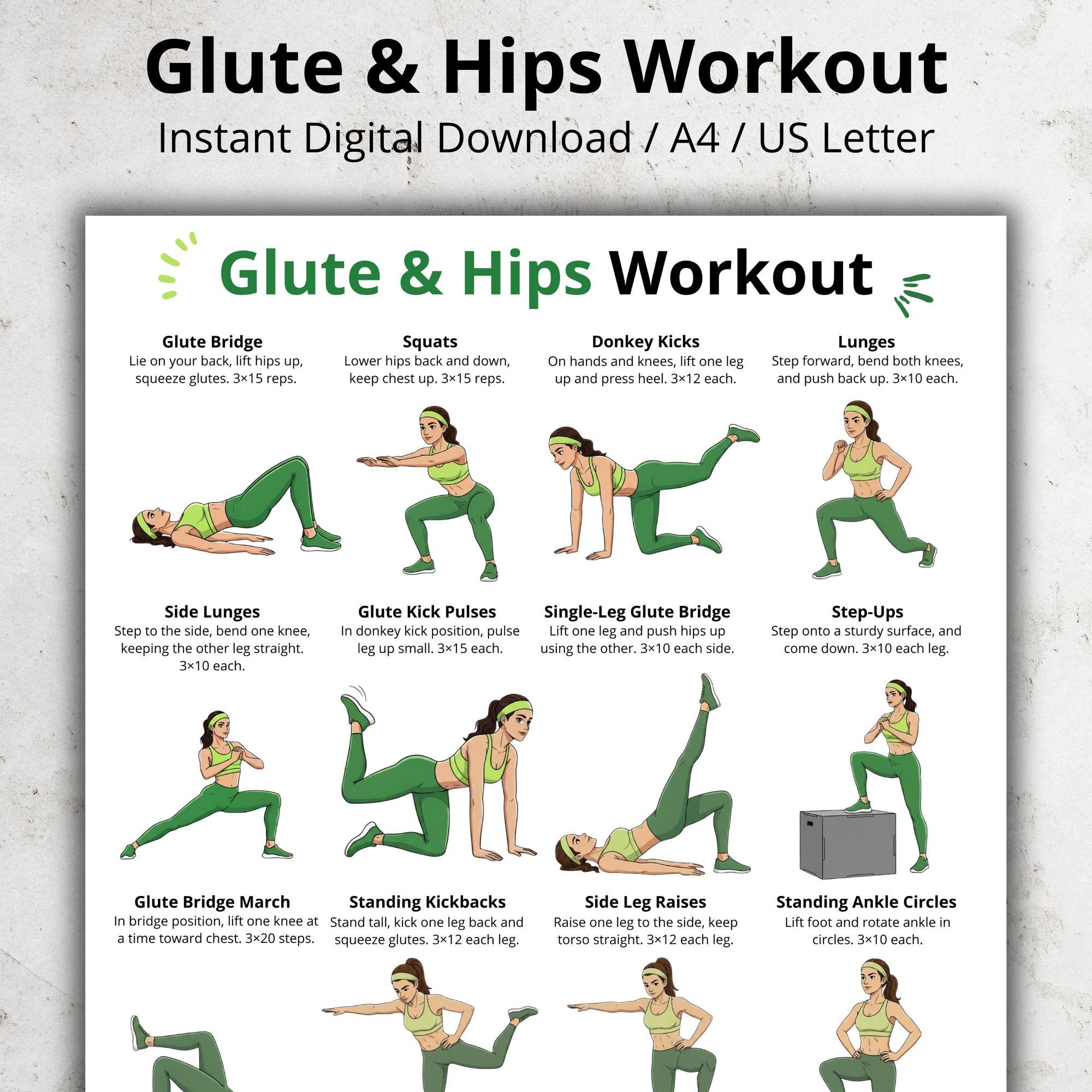
Credit: www.etsy.com
Advanced Training Methods For Legs And Glutes
If you’ve been training for a while, you might need new challenges. Here are a few methods to break plateaus:
- Supersets: Do two exercises back-to-back with no rest. Example: squats followed by lunges.
- Drop sets: Do a set with a heavy weight, then reduce the weight and keep going.
- Pulses: At the bottom of a squat or lunge, do small up-and-down movements to increase the burn.
- Paused reps: Pause for 2–3 seconds at the bottom of a squat or bridge before coming up.
- Tempo training: Slow down the lowering (eccentric) phase to build more muscle.
These methods boost intensity and help you keep making gains.
The Role Of Cardio In Leg And Glute Workouts
Cardio is good for heart health and can help with fat loss, but it won’t build much muscle. However, certain types of cardio, like hill sprints, stair climbing, or cycling, can work your legs and glutes harder than others.
If your main goal is muscle growth, do cardio after your strength training, not before. Limit long, steady-state cardio if you want to maximize muscle gains.

Credit: www.afvt.org
Injury Prevention And Safety Tips
Lower body training is safe if you use good form and don’t overdo it. Here’s how to stay injury-free:
- Warm up and cool down every time.
- Start with bodyweight or light weights to learn technique.
- Listen to your body—pain (not muscle burn) means stop.
- Use proper shoes with good support.
- Avoid locking your knees at the top of moves.
If you have knee, hip, or back issues, check with a doctor or physical therapist before starting. They can suggest safe modifications.
The Importance Of Rest And Recovery
Rest is when your muscles actually grow. Training legs and glutes too often or too hard can slow progress or cause injury. Here are signs you might need more rest:
- Persistent soreness or tightness
- Poor sleep or mood
- Loss of strength or motivation
Aim for 7–9 hours of sleep, eat enough, and take full rest days. Use gentle walks, stretching, or foam rolling on off days.
Tracking Your Progress
Set clear, measurable goals. For example:
- Add 10 pounds to your squat in 2 months
- Do 15 step-ups per leg without stopping
- Reduce body fat by 2%
Track your workouts in a notebook or app. Record weight, reps, and how you felt. Celebrate small wins—they add up over time.
Additional Resources
For more information on exercise science and safe training, check out the National Strength and Conditioning Association. Their site has evidence-based advice for all levels.
Frequently Asked Questions
How Many Times Per Week Should I Do Leg And Glute Workouts?
Most people get great results with 2–3 leg and glute sessions each week, with at least one day of rest between. Beginners may start with one or two, while advanced lifters can handle more.
Can I Do Leg And Glute Workouts At Home Without Equipment?
Yes. Bodyweight moves like squats, lunges, glute bridges, and step-ups are very effective. You can make them harder by slowing down, adding more reps, or using resistance bands.
How Long Should A Leg And Glute Workout Last?
A typical session takes 45–60 minutes, including warm-up and cool-down. Quality matters more than time—focus on good form and challenging sets.
Why Aren’t My Glutes Growing Even Though I Train Them?
Common reasons include not using enough resistance, doing the same exercises for too long, poor nutrition, or not activating the glutes properly during moves. Try increasing weight, changing your routine, and focusing on the mind-muscle connection.
What’s The Best Exercise For Building Glutes?
Hip thrusts and glute bridges are among the best for direct glute activation. Squats and lunges also help, but if your main goal is glute size, include hip thrusts with good form and enough resistance.
Building strong, balanced legs and glutes is one of the smartest fitness moves you can make. With the right exercises, good nutrition, and smart recovery, you’ll build muscle, burn fat, and move better in everything you do. Remember to be patient—real results take time, but the effort is always worth it.
