

How Many Tricep Exercises Per Week Boosts Muscle Growth?
How Many Tricep Exercises Per Week: A Complete Guide
Building strong, defined triceps is a goal for many people who lift weights. Your triceps make up about two-thirds of your upper arm size, so training them well can make your arms look bigger and more toned. But how many tricep exercises per week should you do?
Is more always better, or is there a smart limit?
If you’re confused by all the different advice online, you’re not alone. Some say train triceps every day, others say once a week is enough. The truth lies somewhere in between and depends on your goals, experience, and how the rest of your training looks.
This article explains how to plan the best weekly tricep routine for muscle growth, strength, or general fitness. You’ll learn what really matters, how to avoid mistakes, and how to choose the right number and type of exercises.
Why Tricep Training Matters
The triceps brachii is a three-headed muscle on the back of your upper arm. It’s responsible for straightening your elbow and helps with pushing movements like bench presses and push-ups. Strong triceps can improve your performance in many sports and daily activities, not just make your arms look better.
Many people focus on biceps, but neglecting triceps is a common mistake. Well-developed triceps give your arms more shape and size than biceps alone. Plus, triceps are involved in almost every upper body push exercise, so stronger triceps can help you lift heavier weights in chest and shoulder workouts.
Understanding Tricep Anatomy And Function
To train your triceps well, it helps to know how they work. The triceps have three “heads” or parts:
- Long head: Runs along the back of your arm, attaches to your shoulder blade.
- Lateral head: Outer part, gives the “horseshoe” shape.
- Medial head: Deeper, provides thickness under the long and lateral heads.
Each head is activated by different arm positions and exercises. For balanced growth, your weekly routine should target all three heads. For example, overhead tricep extensions work the long head, while pushdowns and close-grip presses hit the lateral and medial heads more.

Credit: www.menshealth.com
Key Factors That Affect Tricep Training Frequency
How often and how much you should train triceps depends on several important factors. Understanding these will help you make smart choices instead of following random workout plans.
1. Training Experience Level
- Beginners: If you’re new to lifting, your muscles grow with less work. Fewer exercises and lower frequency still give good results.
- Intermediate/Advanced: As you get stronger, your muscles need more work to keep growing. You can handle more exercises per week, but recovery also becomes important.
2. Training Goals
- Muscle Growth (Hypertrophy): Needs more total work (volume), often 2–3 sessions per week with different exercises.
- Strength: Focuses on heavier weights, fewer reps, but you still need enough work for progress.
- Toning/General Fitness: Lower volume and frequency can be enough if you don’t want maximum growth.
3. Total Weekly Training Volume
Volume means the total sets and reps you do for a muscle each week. Studies show that 10–20 sets per week is a good range for most people who want bigger triceps. This total can be split across several workouts.
4. Exercise Selection
Different exercises hit the triceps in different ways. Using a mix of movements—like pushdowns, extensions, and presses—helps work all three heads and reduces the risk of overuse injuries.
5. Recovery And Fatigue
Your triceps also work during chest and shoulder exercises (like bench press or dips). Training them too often, or with too many exercises, can lead to overtraining or elbow pain. Rest days and listening to your body are important.
How Many Tricep Exercises Per Week Is Optimal?
Here’s the core question: how many unique tricep exercises should you do each week for best results?
General Guidelines
- Beginners: 1–2 tricep exercises per workout, 1–2 times per week
- Intermediates: 2–3 tricep exercises per workout, 2–3 times per week
- Advanced: 3–4 tricep exercises per workout, 2–3 times per week
But that’s only part of the story. The number of different exercises you use each week matters, too.
Variety Vs. Repetition
Doing only one tricep exercise all week can limit growth and leave some muscle fibers undertrained. On the other hand, using too many different exercises can reduce focus and lead to poor progress. For most people, using 3–5 unique tricep exercises per week is ideal. This gives enough variety to hit all heads of the triceps, but not so much that you can’t get stronger at each movement.
Here’s how this looks in practice:
| Experience Level | Unique Exercises per Week | Sessions per Week | Total Sets per Week |
|---|---|---|---|
| Beginner | 2–3 | 1–2 | 6–10 |
| Intermediate | 3–4 | 2–3 | 10–15 |
| Advanced | 4–5 | 2–3 | 12–20 |
If you train triceps twice a week, you might use two exercises per session but change one of them each time. For example:
- Day 1: Rope pushdown, overhead dumbbell extension
- Day 2: Close-grip bench press, tricep kickback
That’s four unique exercises in one week, covering all parts of the muscle.
The Science Behind Weekly Exercise Selection
Research supports the idea that using multiple exercises for a muscle group leads to more complete muscle growth. One study found that changing exercises across the week increased muscle thickness compared to repeating the same exercise every session. Different exercises also reduce stress on your joints and make training less boring.
But more isn’t always better. Adding too many exercises can make your workouts too long and lower your focus. It’s better to get stronger at a few key movements and rotate them every few weeks.
How To Structure Your Weekly Tricep Routine
Planning your weekly tricep training takes more than just picking exercises. You need to balance intensity, volume, and recovery. Here’s a step-by-step approach to build an effective routine for any goal.
Step 1: Decide How Many Days To Train Triceps
Most people get great results training triceps 2–3 times per week. This can be as part of a push day, upper body day, or arm day.
- 2 days/week: Allows enough recovery and fits most schedules.
- 3 days/week: Works for advanced lifters or people with high recovery ability.
Avoid training triceps hard on back-to-back days. Muscles need at least 48 hours to recover.
Step 2: Choose Your Exercises
Pick 3–5 unique tricep exercises to use over the week. Include at least one from each category:
- Overhead movements (hits long head): Overhead tricep extension, skullcrusher, French press
- Pushdowns/Pressdowns (hits lateral and medial heads): Rope pushdown, straight-bar pushdown, cable pressdown
- Pressing movements: Close-grip bench press, dips, diamond push-ups
- Isolation movements: Tricep kickbacks, single-arm cable extensions
Example weekly rotation:
- Day 1: Overhead extension, rope pushdown
- Day 2: Close-grip bench press, tricep kickback
- Day 3: Skullcrusher, straight-bar pushdown
Step 3: Plan Your Sets And Reps
For muscle growth, aim for 3–4 sets per exercise, 8–15 reps per set. For strength, use heavier weights and 4–6 reps per set. Adjust the weight so the last reps are challenging but keep good form.
Step 4: Balance Volume With Other Training
Remember, your triceps also work during chest and shoulder pressing. If you already do a lot of bench presses or shoulder presses, count that work toward your total tricep volume. Doing too much can slow recovery or cause elbow pain.
Step 5: Track Progress And Adjust
Keep a log of your exercises, sets, reps, and weights. If you’re not seeing progress after a few weeks, adjust the number of exercises, sets, or frequency. Sometimes, adding a new exercise or increasing rest days helps break a plateau.
Practical Examples For Different Goals
Let’s break down sample routines for people with different goals and experience levels. These examples show how to fit the right number of tricep exercises per week into a balanced program.
Beginner: Build A Foundation
- Train triceps 1–2 times per week
- Use 2 exercises per session, 3 sets each
Sample week:
- Day 1: Rope pushdown (3x10), overhead dumbbell extension (3x12)
- Day 2: Close-grip bench press (3x8), tricep kickback (3x12)
Total: 4 Unique Exercises, 12 Sets Per Week
Intermediate: Add Size And Strength
- Train triceps 2–3 times per week
- Use 2–3 exercises per session, 3–4 sets each
Sample week:
- Day 1: Skullcrusher (4x10), rope pushdown (3x12)
- Day 2: Close-grip bench press (4x8), overhead cable extension (3x12)
- Day 3: Dips (bodyweight, 3x12), single-arm cable extension (3x12)
Total: 6 Unique Exercises, 20 Sets Per Week
Advanced: Maximize Growth
- Train triceps 3 times per week
- Use 3–4 exercises per session, 3–4 sets each
Sample week:
- Day 1: Overhead barbell extension (4x10), rope pushdown (4x12), dips (4x10)
- Day 2: Skullcrusher (4x10), straight-bar pushdown (4x12), close-grip bench press (4x8)
- Day 3: French press (3x12), tricep kickback (3x15), single-arm cable extension (3x15)
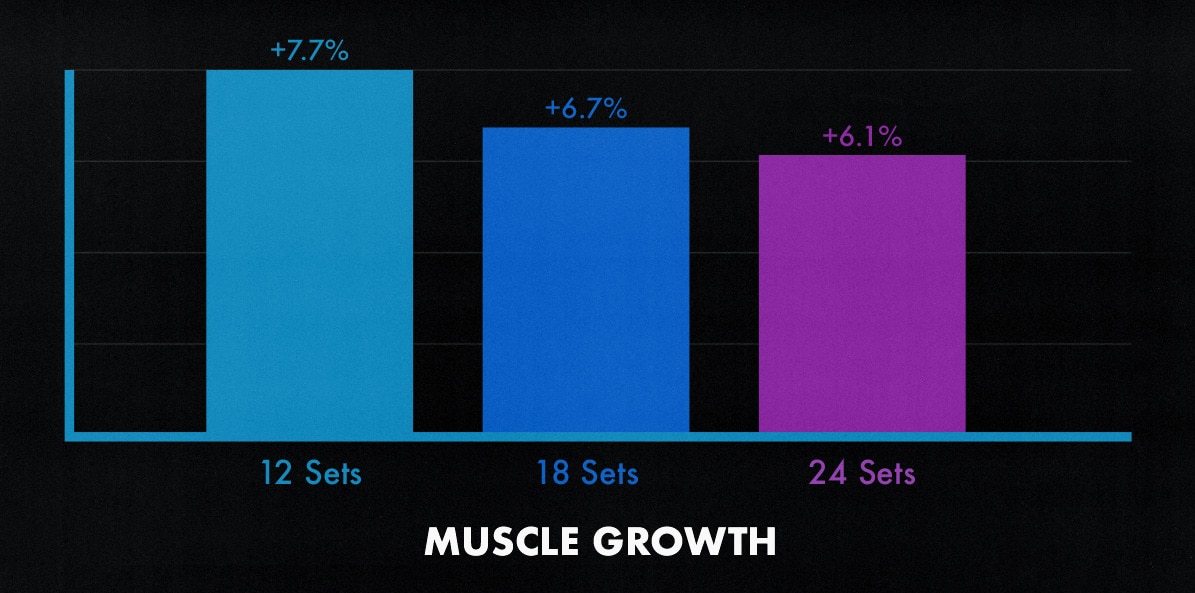
Total: 9 unique exercises (rotate main 5–6), 36 sets per week (adjust as needed for recovery)
Credit: outlift.com
What If You Train Full Body Or Push/pull/legs?
You don’t have to do a special arm day to grow your triceps. Many people use full-body or push/pull/legs splits. Here’s how to fit tricep work into these routines:
- Full-body split: Add one tricep isolation exercise at the end of 2–3 workouts per week.
- Push/pull/legs split: Do 2–3 tricep exercises during each push day.
- Upper/lower split: Include 2 tricep exercises on each upper body day.
This approach works well because your triceps are already active during pressing movements. Just add a few focused exercises to make sure you’re hitting all heads.
How To Know If You’re Doing Too Much Or Too Little
Finding the right balance is key. Here are signs you may need to adjust your weekly tricep exercise count:
Signs Of Too Much
- Persistent soreness in the triceps or elbows
- Decreased strength or performance over time
- Joint pain, especially at the elbows
- No progress even with increased effort
Signs Of Too Little
- No muscle soreness after workouts (not always bad, but can be a clue)
- Little or no increase in arm size or strength
- Stagnant lifts, especially in pressing exercises
If you notice these signs, adjust your routine. Sometimes, doing fewer exercises with better form gives better results.

Credit: www.reddit.com
Common Mistakes People Make With Tricep Training
Even experienced lifters make errors with tricep routines. Watch out for these pitfalls:
- Doing only pushdowns: Pushdowns are popular but don’t hit all heads. Add overhead and pressing movements.
- Neglecting form: Using too much weight and swinging your body reduces muscle activation.
- Ignoring elbow pain: Tricep exercises can strain elbows if done with poor technique or too much volume.
- Not varying exercises: Using the same movement for months can stall progress. Rotate exercises every 4–8 weeks.
- Overtraining: More isn’t always better. Muscles grow during recovery.
Best Tricep Exercises To Include Each Week
Some tricep exercises are better for certain goals. Here’s a comparison of popular movements, their main target, and unique benefits:
| Exercise | Main Tricep Head Targeted | Special Benefit |
|---|---|---|
| Overhead Dumbbell Extension | Long head | Stretches triceps, good for mass |
| Rope Pushdown | Lateral/medial | Easy on elbows, full contraction |
| Close-Grip Bench Press | All heads | Good for size and strength |
| Dips | Lateral/long | Bodyweight, scalable |
| Skullcrusher | Long/lateral | Deep stretch, intense |
| Tricep Kickback | Lateral | Isolation, good for finishing sets |
Choose exercises that fit your equipment and comfort. Overhead movements can bother some people’s shoulders, so adjust as needed.
Non-obvious Insights Most Beginners Miss
- Triceps recover faster than many muscle groups. Because they’re used in many upper body exercises, most people can train them more often than they think—as long as the total volume is managed.
- Pressing strength depends on triceps. If your bench press or shoulder press stalls, adding extra tricep work (with 1–2 new exercises per week) often helps break through plateaus.
- Not all isolation is equal. Some people only do cable pushdowns, but exercises like overhead extensions and skullcrushers challenge the triceps in stretched positions, which research links to better growth.
- Changing grip changes muscle activation. For example, using a reverse grip on pushdowns or close-grip bench presses can shift the focus to different tricep heads.
- Warm-up and elbow health matter. Many lifters skip proper warm-ups for triceps, leading to elbow pain over time. Simple band pushdowns or light extensions before heavy sets can protect your joints.
How To Progress And Avoid Plateaus
To keep gaining muscle and strength, you need to challenge your triceps over time—a principle called progressive overload. Here’s how to do it safely:
- Add a small amount of weight to each exercise every 1–2 weeks.
- Increase reps or sets gradually if weight increases stall.
- Switch to a new exercise every 4–8 weeks to keep muscles adapting.
- Focus on controlled movements and full range of motion.
If you hit a plateau, check your recovery and nutrition first. Often, simply rotating in one or two new exercises (while keeping your weekly total in the 3–5 range) gets things moving again.
Tracking Your Tricep Progress
Measuring progress is more than just flexing in the mirror. Use these methods for better feedback:
- Strength gains: Are you lifting more weight or doing more reps over time?
- Arm measurements: Measure your upper arm every 4 weeks, relaxed and flexed.
- Photos: Take pictures from the same angle every month.
- Workout log: Track sets, reps, weights, and notes on how each exercise feels.
If your numbers are moving up and your arms look bigger, your routine is working—even if it doesn’t feel magical every week.
Frequently Asked Questions
How Many Tricep Exercises Should I Do Per Workout?
For most people, 2–3 tricep exercises per workout is enough. This allows you to target all heads of the muscle without overdoing it. For beginners, 1–2 exercises per session is plenty.
Can I Train Triceps Every Day?
No, it’s not recommended. Triceps need at least 48 hours to recover between hard workouts. Training them every day can lead to overuse injuries and slow progress.
Is It Okay To Train Triceps With Chest Or Shoulders?
Yes, it’s common to train triceps after chest or shoulder workouts since these muscles work together in pushing movements. Just be careful not to overdo total weekly volume and watch for signs of elbow fatigue.
How Do I Know If I’m Using The Right Weight For Tricep Exercises?
Choose a weight that lets you complete all reps with good form but feels challenging by the last 2–3 reps. If you can do 2 extra reps with perfect form, it’s time to increase the weight a little.
What’s The Best Way To Avoid Elbow Pain During Tricep Training?
Warm up with light, high-rep pushdowns or extensions, use proper form, and don’t lock out your elbows too hard. Rotate exercises every few weeks and avoid excessive weekly volume. If pain continues, take a break and consult a professional.
Closing Thoughts
Finding the right number of tricep exercises per week isn’t about doing the most possible—it’s about being smart, balanced, and consistent. For most people, 3–5 unique tricep exercises spread over 2–3 sessions per week gives the best results for growth, strength, and arm definition. Make sure to mix up your movements, respect your recovery, and adjust as you progress.
Don’t forget, the best plan is the one you can stick to over time. If you’re unsure about technique or routine design, consider working with a fitness coach or reading research on PubMed for deeper guidance. With patience and the right approach, your triceps will show the results you’re working for.
