

Can You Workout Triceps And Biceps Together for Maximum Gains?
Can You Workout Triceps And Biceps Together
Building strong, defined arms is a common goal for many fitness enthusiasts. When you start training seriously, you might wonder if it’s a good idea to workout triceps and biceps together in the same session. There’s a lot of advice online, but not all of it is clear, especially if you’re new to lifting or English isn’t your first language. This article will answer your questions in simple words and help you decide if training both arm muscles together is right for you.
You’ll learn how the biceps and triceps work, the benefits and drawbacks of pairing them, smart ways to organize your workouts, and common mistakes to avoid. We’ll also look at real-world examples, sample routines, and expert advice. By the end, you’ll be able to build your own effective arm workout with confidence.
Understanding Biceps And Triceps
Before deciding how to train these muscles, it helps to know what they do.
The biceps are the muscles on the front of your upper arm. They bend your elbow and help rotate your forearm. When you do curls, you’re training the biceps.
The triceps are on the back of your upper arm. Their main job is to straighten your elbow. When you push something away, like in a push-up or triceps extension, you’re using these muscles.
Both muscles play a role in daily movement and sports. They also make up a large part of your arm’s size and shape. For many people, strong biceps and triceps give the arms a toned, athletic look.
How Muscles Work During Arm Training
When you exercise your arms, you use different muscles for different actions.
- Biceps: Used when pulling, like in rows or curls.
- Triceps: Used when pushing, like in push-ups or presses.
During compound lifts (exercises that use many muscles), biceps and triceps often work as helpers. For example, during a bench press, your triceps help your chest push the bar. In a pull-up, your biceps help your back muscles pull your body up.
This is why some people split their workouts by muscle action (push/pull) instead of by muscle group.
Common Training Splits For Arms
There are many ways to organize your workouts. Here are some popular methods:
- Biceps and Triceps Together: Both muscle groups trained in the same session.
- Push/Pull Split: Train pushing muscles (chest, shoulders, triceps) one day, and pulling muscles (back, biceps) another day.
- Full Body Workout: Work all major muscle groups in one session, 2-3 times per week.
- Body Part Split: Focus on one or two muscle groups per workout (for example, “arm day” for biceps and triceps).
Each split has its own benefits. Which is best depends on your goals, schedule, and experience level.
Benefits Of Training Triceps And Biceps Together
Pairing these two muscles in a single session has several advantages:
- Convenience: You can finish both muscle groups in one session, saving time.
- Focused Pump: Training both muscles one after the other can give a strong feeling of blood flow (the “pump”) in your arms.
- Balanced Development: Working both sides of the arm in the same workout may help avoid muscle imbalances.
- Simplicity: It’s easy to plan and remember your workouts.
Some advanced athletes also use this method to create “supersets” (doing a biceps exercise right after a triceps exercise, or vice versa) for extra intensity.
Potential Drawbacks And Risks
While training biceps and triceps together works for many, there are a few things to watch out for:
- Fatigue: Your arms can get tired quickly, making it hard to keep good form.
- Overtraining: If you train arms too often or with too much weight, you may not recover enough between workouts.
- Crowded Workouts: If you also train chest or back on the same day, your arm muscles may get too much work, risking injury or slowing progress.
It’s important to manage your workout volume (number of sets and reps) and give your muscles enough time to recover.
Comparing Arm Training Approaches
Let’s look at how training biceps and triceps together compares to other methods. This can help you choose what fits your needs.
| Workout Split | Main Benefit | Best For | Potential Downside |
|---|---|---|---|
| Biceps & Triceps Together | Efficient, focused arm training | Busy people, arm growth goals | Fatigue, risk of overuse |
| Push/Pull Split | Allows heavier lifts, less overlap | Building strength, full body growth | Less direct arm focus per session |
| Full Body Workout | Time-saving, overall balance | Beginners, limited schedule | Lower arm-specific volume |
| Body Part Split | Maximum muscle focus | Advanced lifters, bodybuilders | Longer gym time, risk of overtraining |
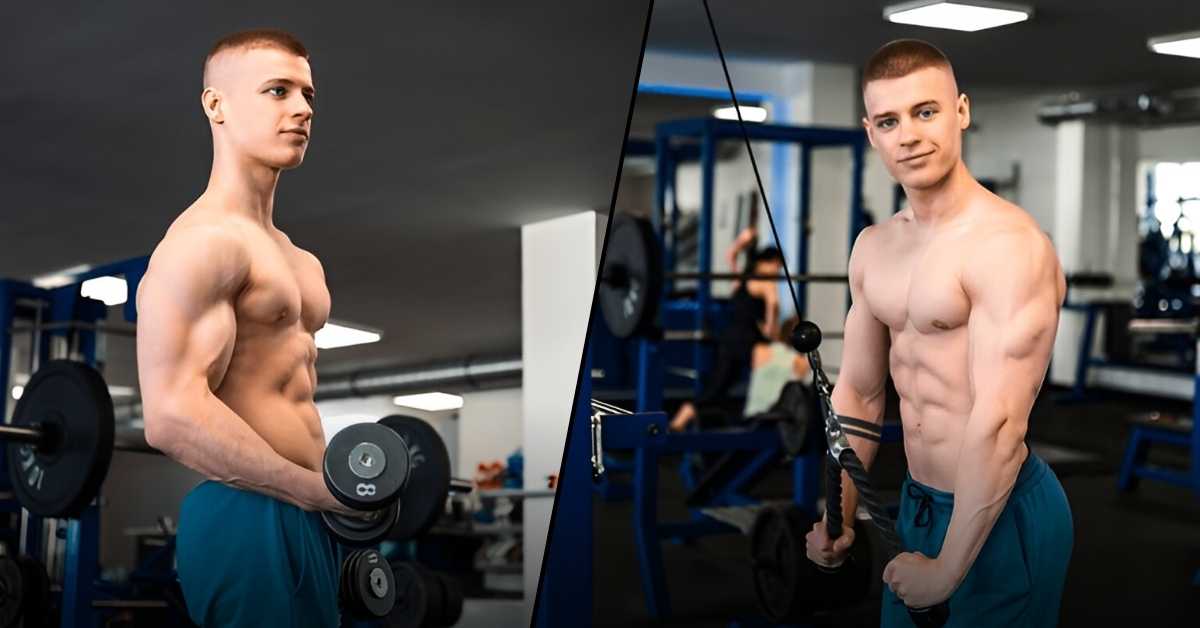
Credit: communitystrengthaustin-personaltraining.com
Science Behind Training Arms Together
Research shows that muscles can recover in about 48–72 hours after a workout, depending on intensity. Training both biceps and triceps together does not harm progress if you allow enough rest before the next session.
A study published in the *Journal of Strength and Conditioning Research* found that muscle growth (hypertrophy) is similar whether you train muscles together or separately, as long as total weekly volume is the same.
Another insight: when you superset biceps and triceps, you can often complete your session faster without reducing performance. This is because one muscle rests while the other works.
Practical tip: If you notice your arms are still sore or tired before your next workout, give them more time to recover. Recovery is just as important as the workout itself.
How To Structure A Biceps And Triceps Workout
A balanced arm session includes:
- A warm-up to protect joints and muscles
- 2–4 exercises for biceps
- 2–4 exercises for triceps
- 2–4 sets per exercise
- 8–15 reps per set (for most people)
Here’s a sample structure:
- Warm-Up (5–10 minutes): Arm circles, light push-ups, or resistance band curls.
- Triceps Exercise 1: Overhead triceps extension
- Biceps Exercise 1: Dumbbell curl
- Triceps Exercise 2: Triceps pushdown
- Biceps Exercise 2: Hammer curl
- Optional Superset: Close-grip push-up (triceps) + Barbell curl (biceps)
- Cool Down: Stretching for biceps, triceps, and forearms
You can alternate exercises (one triceps, then one biceps), or finish all triceps before moving to biceps. Both methods work—choose what feels best.
Sample Biceps And Triceps Workouts
Below are two sample routines. One is for beginners, and one for intermediate/advanced lifters.
Beginner Arm Workout
- Warm-up: 5 minutes of light cardio and arm mobility
- Dumbbell Biceps Curl: 3 sets x 10 reps
- Triceps Overhead Extension: 3 sets x 10 reps
- Hammer Curl: 2 sets x 12 reps
- Triceps Kickback: 2 sets x 12 reps
Rest 60–90 seconds between sets.
Intermediate/advanced Arm Workout
- Warm-up: 5–10 minutes of dynamic stretching
- Barbell Curl: 4 sets x 8–10 reps
- Triceps Rope Pushdown: 4 sets x 10–12 reps
- Incline Dumbbell Curl: 3 sets x 10–12 reps
- Skullcrusher: 3 sets x 8–10 reps
- Superset: Concentration Curl + Diamond Push-up: 3 sets x 12 reps each
Rest 60 seconds between sets, or 30 seconds if doing supersets.
Tip: You don’t need to change exercises every session, but swapping one or two moves every month can help prevent plateaus.
Supersets: Boosting Your Arm Workout
A popular way to train biceps and triceps together is with supersets. This means doing one set for triceps, then immediately doing a set for biceps, with little or no rest between.
Benefits of supersets include:
- Saving time
- Increasing intensity
- Creating a strong muscle pump
Example superset:
- Triceps Dips (12 reps)
- Alternating Dumbbell Curl (12 reps each arm)
- Rest for 90 seconds, then repeat
Supersets are safe for most people, but if you’re new to training, start with traditional sets to learn good form first.
How Often Should You Train Arms Together?
Most people get good results training biceps and triceps together once or twice per week. Training frequency depends on:
- Your overall workout split
- How much total arm work you do (including chest/back days)
- Your recovery ability
If you also do heavy pushing or pulling exercises, remember your arms are working then too. Too much direct arm work can slow recovery or cause overuse injuries.
Advanced tip: Some athletes do a lighter arm session early in the week, and a heavier one later. This can boost growth, but only if you recover well.
Common Mistakes When Training Arms Together
Many people make errors that limit progress or cause injury. Here are some to watch for:
- Doing Too Many Sets: More isn’t always better. 8–12 total sets for each muscle is usually enough.
- Poor Form: Swinging weights or using momentum takes work away from the muscles.
- Not Changing Exercises: Doing only curls or pushdowns every time can lead to plateaus.
- Neglecting Recovery: Muscles grow when you rest, not just when you train.
- Ignoring Other Muscles: Strong arms need a strong back, chest, and shoulders too.
If you’re not seeing results, review your workout for these mistakes.
How Biceps And Triceps Respond To Different Rep Ranges
Training with different rep ranges targets various muscle fibers.
| Rep Range | Focus | Example Weight | Best For |
|---|---|---|---|
| 4–6 reps | Strength | Heavy | Powerlifters, advanced |
| 8–12 reps | Muscle Growth | Moderate | Most people, muscle size |
| 12–20 reps | Endurance | Light | Beginners, toning |
Most arm workouts use 8–12 reps per set for best growth. Mixing in some heavier and lighter sets can help avoid plateaus.
Should You Train Biceps Or Triceps First?
There’s no strict rule, but order can affect your results.
- If one muscle is weaker, train it first while you’re fresh.
- Some research suggests starting with the muscle you want to improve most.
If you always start with biceps, your triceps may not get as much effort, and vice versa. Rotating the order can lead to more balanced growth.
Insider tip: Some experienced lifters start with a compound exercise (like close-grip bench press for triceps) before moving to isolation work (like curls).
Nutrition And Recovery For Arm Growth
Training is only part of the equation. For your arms to grow, you need to support them with the right nutrition and recovery.
- Protein: Aim for at least 0.7 grams per pound of bodyweight per day for muscle repair.
- Carbohydrates: These fuel your workouts and support recovery.
- Hydration: Muscles need water to function well.
- Sleep: 7–9 hours per night helps your body recover and build muscle.
If you’re not gaining strength or size, check your nutrition and sleep before adding more training.
Who Should Not Train Biceps And Triceps Together?
While this method works for most, some people may want to avoid it:
- If you’re new to exercise, full body workouts are often more effective.
- If you have elbow or shoulder injuries, training both muscle groups intensely may increase discomfort.
- If you’re an athlete focused on other sports, too much arm isolation can take away from your main training.
Always adjust your workout to your own needs and listen to your body.
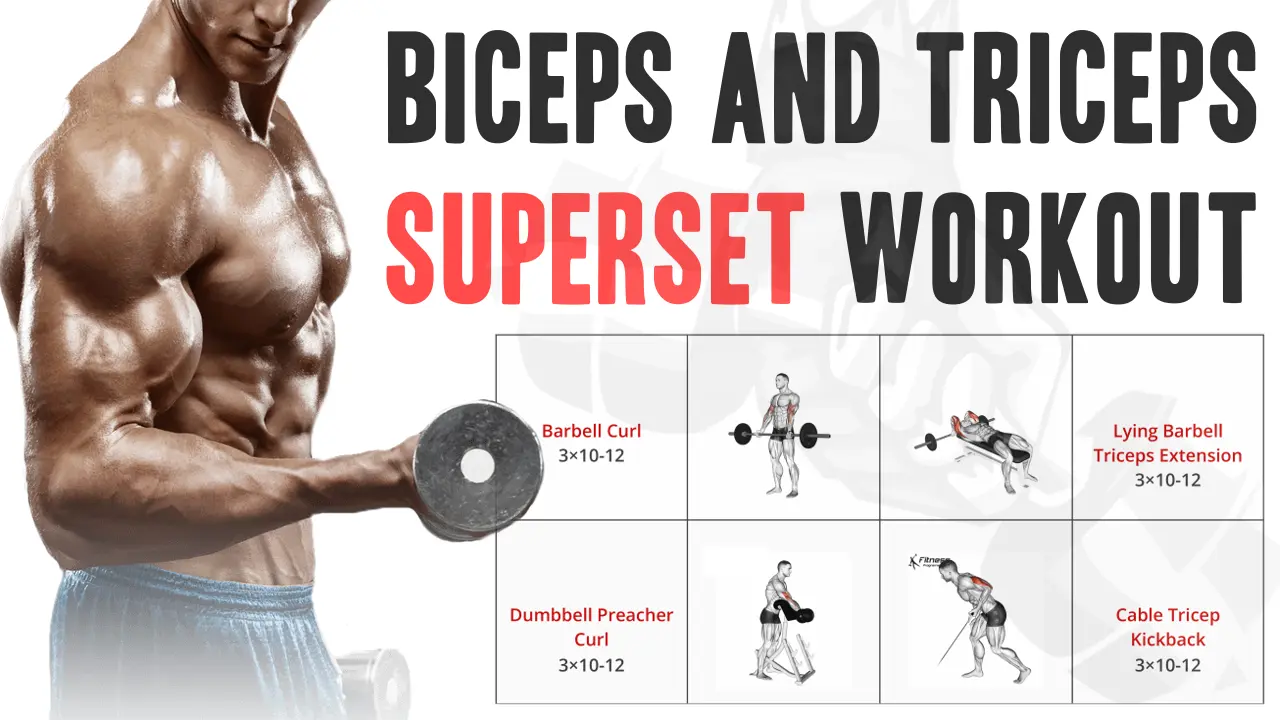
Credit: fitnessprogramer.com
Real-world Example: Arm Training For Busy People
Anna is a working parent with only three hours a week for the gym. She splits her training into three days: legs, arms, and chest/back.
On arm day, Anna does:
- Warm-up
- Triceps Pushdown: 3 sets x 10 reps
- Barbell Curl: 3 sets x 10 reps
- Overhead Triceps Extension: 2 sets x 12 reps
- Hammer Curl: 2 sets x 12 reps
She finishes in under 40 minutes. By training both arm muscles together, she maximizes her limited gym time and still sees results.
Advanced Technique: Pre-exhaust Supersets
Some experienced lifters use a method called pre-exhaust. Here’s how it works:
- Start with an isolation exercise (like triceps extension) to tire out the target muscle.
- Then, do a compound exercise (like close-grip bench press) to push the muscle even harder.
This can boost growth, but it’s intense and not for beginners. Always use good form and adjust weights as needed.
When To Change Your Arm Routine
Muscles adapt quickly. If you notice any of these signs, it may be time to switch things up:
- Strength has stopped increasing
- You feel bored or unmotivated
- Joints feel sore or tired all the time
- No change in arm size after several weeks
Try changing the order of exercises, number of sets/reps, or adding new moves. Even small changes can spark new progress.
Equipment Choices For Arm Training
You can train biceps and triceps together with almost any equipment:
- Dumbbells: Great for curls, kickbacks, extensions
- Barbells: Best for heavy curls, skullcrushers
- Resistance Bands: Useful for home workouts or travel
- Cable Machines: Allow constant tension, many variations
- Bodyweight: Push-ups, dips, chin-ups
Mixing equipment keeps workouts interesting and hits muscles from different angles.
Common Questions About Soreness And Recovery
Many people worry about muscle soreness after arm workouts. Some soreness is normal, especially if you try new exercises or increase weights. But constant, severe soreness means you may need more rest.
- If soreness lasts more than 3 days, reduce volume next time.
- Gentle stretching and light activity can help recovery.
- If you feel sharp pain (not just soreness), stop and consult a professional.
How Arm Training Fits Into A Weekly Routine
Here’s a sample week for someone who wants to train arms and all major muscle groups:
- Monday: Chest + Triceps
- Tuesday: Back + Biceps
- Wednesday: Rest or Cardio
- Thursday: Legs
- Friday: Arms (biceps + triceps together)
- Saturday: Shoulders + Core
- Sunday: Rest
This schedule allows enough recovery for each muscle group and lets you focus on arms once a week.
Tracking Progress And Making Adjustments
To get the best results, keep a simple workout log. Write down:
- Exercises
- Sets and reps
- Weights used
- How you felt
Review your log every few weeks. If you’re lifting more weight or doing more reps, you’re progressing. If not, try adjusting your plan.
Hidden tip: Taking arm measurements every month can motivate you and show real growth, even if the scale doesn’t change much.
The Mind-muscle Connection
Focusing on the muscle you’re working (“mind-muscle connection”) helps many people get better results. When curling, think about squeezing the biceps; when pushing, focus on the triceps.
Some studies suggest this can lead to more muscle growth. Try slowing down your reps and really feeling the muscle work, not just moving the weight.
Should You Workout Triceps And Biceps Together? Key Takeaways
- It’s safe and effective for most people.
- Allows for focused, time-efficient arm training.
- Watch for overtraining and give enough recovery.
- Use a variety of exercises, rep ranges, and equipment.
- Adjust the routine as you progress.
If you like simple, fast workouts and want bigger or stronger arms, training both muscles together is a smart choice.
Frequently Asked Questions
Is It Better To Train Biceps And Triceps On The Same Day Or Separate Days?
Both ways can work. Training together is efficient and gives a strong pump. Training on separate days allows you to focus more on each muscle. Your choice depends on your schedule and goals.
How Many Exercises Should I Do For Biceps And Triceps In One Session?
Usually, 2–4 exercises for each muscle is enough. Focus on quality over quantity. For beginners, start with two exercises per muscle.
Can I Do Biceps And Triceps After A Chest Or Back Workout?
Yes, but be careful. Your arms might already be tired from compound lifts. If your main goal is arm growth, dedicate a separate session to biceps and triceps when possible.
What Is The Best Rep Range For Arm Growth?
Most people see the best results with 8–12 reps per set. Mix in some heavier and lighter sets to challenge your muscles differently.
Where Can I Find More Science-backed Workout Tips?
Check reputable sources like Healthline’s muscle building guide for more research and expert advice.
Training both biceps and triceps together is a proven, flexible approach. With smart planning and attention to recovery, you can see impressive arm gains—no matter your starting point. Remember, consistency and patience are just as important as the workout itself.

Credit: www.youtube.com
