

Glute Workout Resistance Bands: Sculpt Stronger Glutes Fast
Glute Workout Resistance Bands: Complete Guide For Stronger Glutes
Strong glutes are more than just a trend. They help you walk, run, lift, and even keep your back healthy. Many people want toned, powerful glutes, but gyms and heavy weights aren’t always easy to access. Resistance bands have become a popular solution because they are simple, portable, and highly effective for glute workouts. You can use them anywhere — at home, outdoors, or even while traveling.
This guide will help you understand how resistance bands can transform your glute workouts. You’ll learn about the benefits, how to choose the right band, top exercises, sample routines, and advanced tips. Whether you’re a beginner or experienced lifter, you’ll find practical advice, clear instructions, and useful examples.
Let’s get started and make your glute training smarter and more successful.
Why Resistance Bands Are Perfect For Glute Training
Many fitness tools claim to help build strong glutes, but resistance bands stand out for several reasons. They are not only affordable and easy to carry, but also allow for a wide range of movements.
- Progressive resistance: Bands stretch as you move, making exercises harder the further you go. This helps muscles grow and get stronger.
- Joint-friendly: Unlike heavy weights, bands put less stress on your joints. You can train hard without risking injury.
- Versatility: You can use resistance bands for dozens of glute exercises, from squats to hip thrusts and lateral walks.
- Activation: Bands force your glutes to work more because they add tension from different angles. This improves muscle activation.
- Convenience: No need for a gym or special equipment. Bands fit in a bag, so you can train anywhere.
A study by the International Journal of Sports Physical Therapy found that using resistance bands can increase glute muscle activation more than bodyweight alone. This means your workouts can be more effective with bands than with just your own weight.
Types Of Resistance Bands For Glute Workouts
Not all bands are the same. Choosing the right kind makes your workouts safer and more effective. Here are the main types you’ll find:
| Band Type | Features | Best For | Drawbacks |
|---|---|---|---|
| Loop Bands | Flat, closed circle; available in different widths | Glute activation, squats, leg lifts | Can roll or snap if low quality |
| Mini Bands | Small loops; often made of rubber or fabric | Lateral walks, hip abduction | May tear if overstretched |
| Tube Bands | Long tubes with handles | Full-body training, advanced glute moves | Handles can limit some glute exercises |
| Fabric Bands | Thicker, soft material; more comfortable | Heavy resistance, stability, comfort | Bulkier, not ideal for all exercises |
Most glute workouts use loop bands or mini bands. Fabric bands are great if you want more comfort and less rolling. Tube bands are useful for advanced exercises or full-body moves.
How To Choose The Right Resistance Band
Picking the right band helps you reach your goals faster and avoids frustration. Here’s what matters:
- Resistance level: Bands come in light, medium, heavy, and extra heavy. Beginners should start with light or medium, then progress.
- Material: Rubber bands are cheaper but can roll and snap. Fabric bands last longer and feel better on your skin.
- Width and length: Wider bands give more resistance and stability. Shorter bands are better for moves like lateral walks.
- Comfort: Look for bands that don’t pinch or slide. Try different materials to see which feels best.
- Quality: Cheap bands break easily. Investing in a good set saves money and prevents injuries.
Here’s a quick comparison to help you decide:
| Band Material | Durability | Comfort | Resistance Range |
|---|---|---|---|
| Rubber | Moderate | Can roll or pinch | Light to heavy |
| Fabric | High | Soft, stays in place | Medium to extra heavy |
If you plan to do high-rep workouts or want long-lasting bands, fabric is a smart choice. For travel or quick workouts, rubber bands are lighter and easier to pack.
Benefits Of Glute Training With Resistance Bands
Training your glutes with resistance bands offers unique advantages. It’s not just about appearance — strong glutes improve your whole body.
- Better posture: Strong glutes keep your hips stable, reducing back pain and making it easier to stand tall.
- Injury prevention: Bands help you train safely, strengthening muscles that support your knees and lower back.
- Improved athletic performance: Athletes with strong glutes jump higher, run faster, and lift heavier.
- Balanced muscle development: Bands let you target smaller glute muscles that often get ignored with big lifts.
One non-obvious benefit is that bands help you learn proper movement patterns. If your form slips, the band’s tension reveals weaknesses, helping you correct mistakes quickly.
Common Mistakes In Glute Band Workouts
Even the best bands won’t help if your technique is off. Here are mistakes people often make:
- Using the wrong resistance: Too light and you won’t feel it; too heavy and your form suffers.
- Poor placement: Bands should sit above your knees or ankles. Never place them directly on your knee joints.
- Fast, sloppy reps: Moving too quickly reduces muscle activation and increases injury risk.
- Ignoring warm-up: Always warm up your hips and glutes before using bands.
- Not progressing: If you use the same band and exercises forever, your results will stall.
A key insight: Many beginners forget that band resistance changes as you move. If you don’t reach full range of motion, you miss the most challenging part of the exercise.
Top Glute Exercises With Resistance Bands
You don’t need a long list of moves. Focus on a few effective exercises and do them well. Here are the most powerful glute band exercises:
1. Glute Bridge
- Lie on your back, knees bent, feet flat, band above your knees.
- Press your hips up, squeeze glutes, hold briefly, then lower.
- Keep knees out so the band stays taut.
Tip: Push through your heels for better glute activation.
2. Squat
- Stand, feet shoulder-width, band above knees.
- Squat down, keeping knees pushed outward.
- Stand up, repeat.
Tip: Don’t let the band pull your knees inward.
3. Lateral Band Walk
- Stand, band above ankles or knees.
- Take small steps sideways, keeping tension in the band.
- Go both directions.
Tip: Keep your hips low for more challenge.
4. Clamshell
- Lie on your side, knees bent, band above knees.
- Open top knee, keeping feet together.
- Lower, repeat.
Tip: Don’t roll your hips backward.
5. Standing Kickback
- Stand, band above ankles.
- Kick one leg back, squeeze glute, return slowly.
- Alternate legs.
Tip: Hold a wall for balance.
6. Hip Thrust
- Sit on the floor with upper back against a bench, band above knees.
- Feet flat, knees bent.
- Thrust hips upward, squeeze glutes, lower.
Tip: Pause at the top for maximum tension.
7. Fire Hydrant
- On hands and knees, band above knees.
- Lift one knee out to the side, keeping hips stable.
- Lower, repeat.
Tip: Keep your core tight; don’t rotate hips.
8. Single-leg Glute Bridge
- Lie on back, band above knees.
- Lift one leg, push hips up using other leg.
- Lower, switch sides.
Tip: Use a light band if this feels too hard.
9. Bulgarian Split Squat
- Stand in front of bench, band above knees.
- Place back foot on bench, squat down with front leg.
- Stand up, repeat.
Tip: Don’t let knees cave in.
10. Frog Pump
- Lie on back, soles of feet together, band above knees.
- Push hips up, squeeze glutes, lower.
Tip: Keep knees out to stretch the band.
Each of these exercises targets different parts of the glute muscles. Mixing them in your routine will help you build balanced strength.
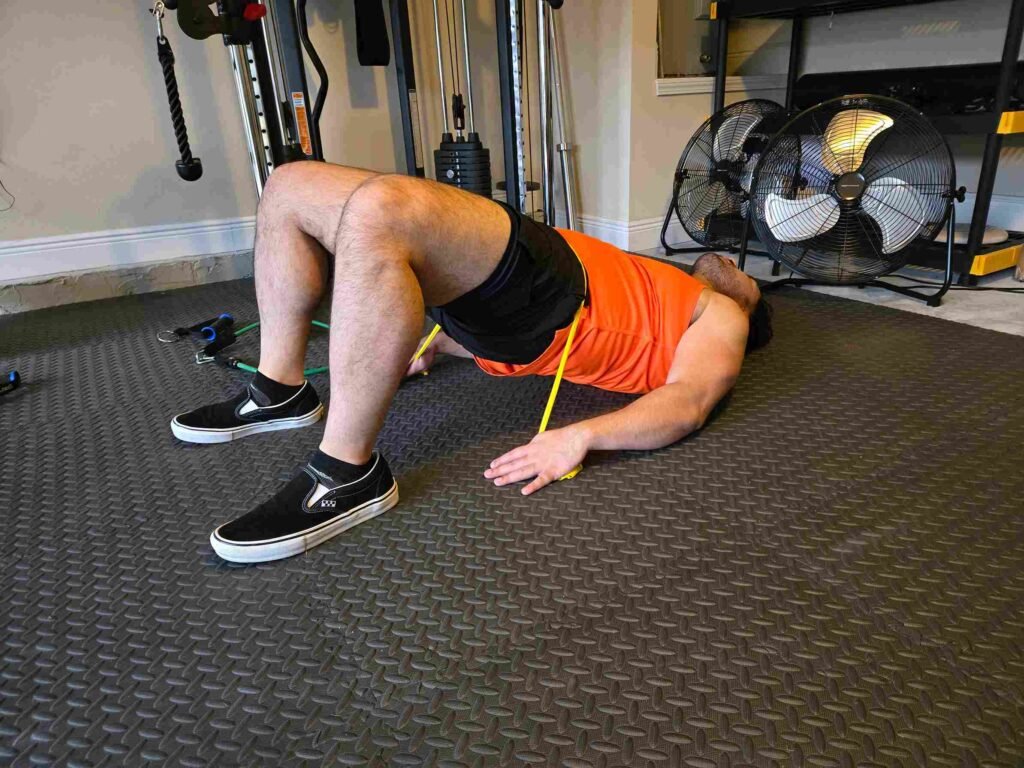
Credit: homegymmentor.com
Sample Glute Band Workout Routines
You can build a strong glute routine with just bands. Here are two sample workouts — one for beginners, one for advanced users.
Beginner Routine
- Glute Bridge: 3 sets x 15 reps
- Lateral Band Walk: 3 sets x 20 steps
- Clamshell: 3 sets x 12 reps per side
- Standing Kickback: 2 sets x 15 reps per side
Rest: 30–60 seconds between sets
Tip: Focus on slow, controlled movements.
Advanced Routine
- Hip Thrust: 4 sets x 12 reps
- Squat: 4 sets x 15 reps
- Fire Hydrant: 3 sets x 20 reps per side
- Bulgarian Split Squat: 3 sets x 10 reps per side
- Frog Pump: 3 sets x 20 reps
Rest: 45–90 seconds between sets
Tip: Add pauses or slow negatives for more challenge.
You can mix these routines with other leg exercises, or do them two to three times a week for best results.
How To Progress With Glute Band Workouts
Progression is key to building stronger glutes. Here’s how to keep improving:
- Increase resistance: Use thicker bands or double up.
- Add reps or sets: Gradually increase volume each week.
- Slow down tempo: More time under tension means more growth.
- Try harder moves: Switch to single-leg exercises or advanced variations.
- Track your workouts: Keep a journal to monitor progress.
One insight many miss: As you get stronger, your band workouts can become as tough as weight training. Don’t be afraid to push yourself.
Advanced Glute Band Techniques
Once you master the basics, try these advanced ideas:
- Supersets: Do two exercises back-to-back with no rest. Example: Glute bridge + fire hydrant.
- Pulses: At the top of a move, do small, quick reps to increase burn.
- Isometric holds: Hold the hardest position for 10–30 seconds.
- Drop sets: Start with heavy band, switch to lighter band when fatigued.
These methods boost intensity and help break through plateaus.
Combining Resistance Bands With Other Training
Bands work well alone, but you can combine them with bodyweight or weights for even better results.
- Bodyweight: Add bands to squats, lunges, or bridges for more challenge.
- Dumbbells: Hold a dumbbell while using a band for hip thrusts.
- Machines: Use bands for warm-up before machine exercises.
Mixing bands with other tools keeps your workouts fresh and helps you target glutes from new angles.
Tracking Your Glute Progress
Many people forget to measure their progress. Tracking helps you see what’s working and where to improve.
- Photos: Take pictures every few weeks to see changes.
- Measurements: Use a tape measure around hips and thighs.
- Strength: Write down how many reps you can do, or which band you use.
- Mobility: Notice if your hips feel looser or stronger in daily life.
A surprising tip: Sometimes, you’ll see strength gains before visual changes. Don’t get discouraged — muscle takes time to grow.
Glute Band Workouts For Men Vs Women
Glute training benefits everyone, but men and women may have different goals.
- Women: Often focus on muscle tone, shape, and endurance. Bands help sculpt and lift.
- Men: Usually aim for strength, power, and stability. Bands build functional muscle for sports and lifting.
No matter your gender, bands can be adjusted for any goal by changing resistance, reps, and exercise type.
Safety Tips For Resistance Band Workouts
Safety is important, even with simple tools like bands.
- Check bands for damage: Always look for tears or cracks before using.
- Control your movements: Avoid jerky or fast reps.
- Warm up: Move your hips, glutes, and legs before starting.
- Don’t overstretch: Never pull a band beyond its limit.
- Use proper placement: Keep bands above knees or ankles, not directly on joints.
If you feel pain (not muscle burn), stop and check your form. Bands should challenge your muscles, not hurt your joints.
How Often Should You Train Glutes With Bands?
How often you train depends on your goals and recovery.
- Beginners: 2–3 times per week is enough.
- Intermediate/Advanced: 3–4 times per week, but listen to your body.
- Rest days: Give muscles time to recover. Overtraining can slow progress.
You can add band workouts to your regular fitness routine or use them as a stand-alone plan.
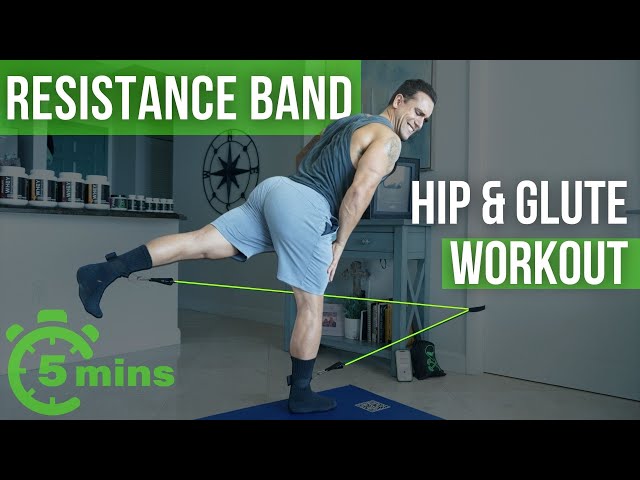
Credit: www.youtube.com
Real-life Success Stories
Resistance bands have helped many people build strong glutes at home. For example, Sarah, a busy mom, used mini bands for 20-minute workouts three times a week. After two months, she noticed less back pain and her jeans fit better.
Mark, a runner, added band exercises to his warm-up. His speed improved and he felt stronger during long runs.
These stories show that anyone can get results, even with limited time or equipment.
Choosing The Best Resistance Bands For Glutes
With so many brands and products, picking the right one can be tricky. Here are key points to compare:
| Brand | Material | Resistance Levels | Comfort | Price Range |
|---|---|---|---|---|
| Fit Simplify | Rubber | Light to heavy | Moderate | $10–$15 |
| Gymshark | Fabric | Medium to extra heavy | High | $20–$30 |
| Peach Bands | Rubber | Light to heavy | Good | $12–$18 |
| Te-Rich | Fabric | Medium to heavy | Very high | $15–$25 |
Look for brands with good reviews and a clear return policy. Avoid bands that don’t list their resistance levels.
Resistance Bands Vs Weights For Glute Training
Some people think bands are not as effective as weights. But research shows bands can build muscle and strength just as well, especially for glutes.
- Bands: Better for activation, endurance, and stability.
- Weights: Good for building max strength and size.
If your goal is strong, toned glutes, bands can do the job. If you want bigger muscles, add weights as you progress.
Where To Find Glute Resistance Band Workouts
You can find thousands of band workouts online, but quality matters. Look for programs from certified trainers. Some reliable sources include YouTube fitness channels, official fitness brands, and research-backed sites like ACE Fitness.
Avoid programs that promise instant results or use unsafe techniques.

Credit: www.youtube.com
Glute Band Workout Tips For Busy People
If you have limited time, resistance bands are perfect. Here’s how to make the most of short workouts:
- Keep bands in your bag or car.
- Do mini workouts (10–15 minutes) during breaks.
- Use bands while watching TV or waiting.
- Focus on compound exercises for faster results.
Even small sessions, if done regularly, build muscle and improve strength.
Frequently Asked Questions
How Long Does It Take To See Results From Glute Band Workouts?
Most people notice changes in strength and muscle tone after 4–6 weeks of regular training. Visible results depend on diet, genetics, and workout intensity. Be patient — consistency is key.
Can Resistance Bands Help With Glute Activation For Runners?
Yes. Bands are great for warming up glutes before running. Moves like lateral walks and glute bridges help activate muscles, improve running form, and reduce risk of injury.
Is It Safe To Use Resistance Bands Every Day?
It’s safe if you use proper form and don’t overwork the same muscles. For best results, train glutes 2–4 times per week and give muscles time to recover.
What Resistance Level Should I Start With?
Beginners should use light or medium bands. If you can do 15–20 reps with good form, move to a heavier band. Always listen to your body and avoid pain.
Can I Combine Resistance Bands With Weights?
Absolutely. Bands add extra tension and improve muscle activation. You can use them with dumbbells, barbells, or machines for greater challenge and variety.
Building strong glutes with resistance bands is simple, effective, and flexible. Whether you’re a fitness beginner or athlete, bands help you train anywhere, anytime. Remember to choose the right band, use proper form, and progress steadily. With patience and smart training, you’ll enjoy stronger, healthier glutes that support your whole body.
