

Glute Workout on Smith Machine: Sculpt Stronger, Rounder Glutes
Glute Workout on Smith Machine: The Ultimate Guide for Stronger, Shapelier Glutes
If you want to build strong, round, and functional glutes, you may wonder where to start. Many people think they need free weights or fancy machines. But the Smith machine offers unique benefits for anyone looking to target their glutes, whether you are a beginner or an experienced lifter. This guide will show you how to use the Smith machine to get the most out of your glute workouts, explain why it's effective, and cover everything you need to know to avoid mistakes and see real progress.
Why Train Glutes On The Smith Machine?
The glutes are not just for looks. Strong glutes help you walk, run, climb stairs, and stabilize your hips and lower back. Weak glutes can lead to poor posture, back pain, and less athletic power.
The Smith machine is a piece of equipment where a barbell is attached to rails, moving only up and down. This fixed path makes some exercises easier to learn and safer, especially if you train alone or want to focus on your form.
Key Advantages
- Stability: The fixed path helps you keep balance. This is useful for those learning new movements or returning from injury.
- Safety: The bar can be racked at any height. If you get stuck, you can set the bar down safely.
- Isolated Muscle Focus: Because you worry less about stabilizing, you can focus more on squeezing and feeling the glutes work.
- Versatility: You can do many glute exercises, including squats, lunges, hip thrusts, and split squats.
Many people overlook the Smith machine, thinking it is less effective than free weights. In reality, it can help you target the glutes more directly and with better control.
Anatomy Of The Glutes: What You Need To Know
Your glutes are made up of three main muscles:
- Gluteus maximus: The largest muscle. It gives the butt its shape and is responsible for hip extension (moving your thigh backward).
- Gluteus medius: Located on the side of your hip. Important for hip abduction and stabilizing your pelvis.
- Gluteus minimus: The smallest glute muscle. Works with the medius for stabilization.
A good glute workout should hit all three muscles, but especially the gluteus maximus.
Smith Machine Glute Exercises: The Essentials
Let’s break down the most effective Smith machine exercises for glutes. For each, you’ll find step-by-step instructions, form tips, and common mistakes to avoid.
1. Smith Machine Hip Thrust
This is one of the best exercises for glute activation.
How to do it:
- Sit on the floor with your upper back against a bench, knees bent, and feet flat.
- Roll the Smith machine bar over your hips. Place a thick pad on the bar for comfort.
- Position your feet shoulder-width apart.
- Unrack the bar and press through your heels, lifting your hips up. Squeeze your glutes at the top.
- Lower slowly and repeat.
Tips:
- Keep your chin tucked and ribs down.
- Pause at the top for extra glute squeeze.
Common mistakes:
- Using your lower back to lift.
- Placing feet too far forward or back.
2. Smith Machine Squat (feet Forward)
This squat variation puts extra focus on the glutes.
How to do it:
- Stand under the bar with feet shoulder-width apart.
- Step your feet 6–12 inches forward of the bar (not directly under it).
- Unrack the bar and squat down, keeping your back straight.
- Push through your heels to stand up.
Tips:
- Don’t let your knees travel too far forward.
- Go as low as your flexibility allows.
Common mistakes:
- Placing feet directly under the bar—this targets quads more than glutes.
- Rounding your back.
3. Smith Machine Reverse Lunge
Great for glute and hamstring development.
How to do it:
- Stand with the bar on your upper back.
- Step back with one leg, lowering your knee toward the ground.
- Press through your front heel to return to start.
Tips:
- Keep your chest up.
- Take a long step back to hit glutes harder.
Common mistakes:
- Leaning forward too much.
- Not keeping the front knee behind the toes.
4. Smith Machine Bulgarian Split Squat
Targets one glute at a time for extra shape and strength.
How to do it:
- Place one foot behind you on a bench.
- Stand under the bar with your other foot forward.
- Lower your back knee to the floor.
- Push through your front heel to stand.
Tips:
- Keep your torso upright.
- Use a pad if the bar hurts your back.
Common mistakes:
- Letting the front knee cave in.
- Using too much weight.
5. Smith Machine Glute Bridge
Similar to hip thrusts, but with a lower range of motion.
How to do it:
- Lie on the floor with knees bent and feet flat.
- Roll the bar over your hips.
- Push through your heels to lift your hips.
- Squeeze at the top and lower down.
Tips:
- Focus on squeezing the glutes.
- Don’t arch your lower back.
Common mistakes:
- Not using a pad for the bar.
- Driving with your toes.
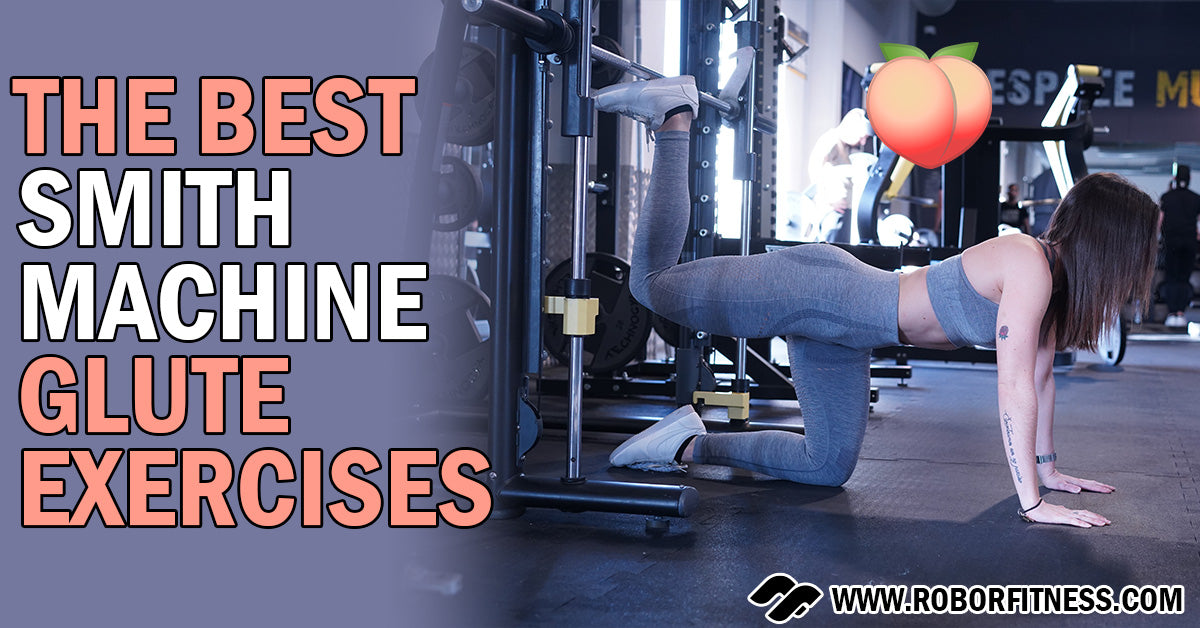
6. Smith Machine Donkey Kick
A unique move to isolate the glute maximus.
How to do it:
- Kneel under the bar with one foot on the floor.
- Rest the bar on the sole of your shoe, foot flexed.
- Push your foot up, lifting the bar.
- Lower and repeat.
Tips:
- Move slowly and control the weight.
- Keep your hips square.
Common mistakes:
- Using momentum.
- Rotating your hips.
Smith Machine Vs Free Weights For Glutes
Is the Smith machine better than free weights? It depends on your goals and experience. Here is a comparison to help you decide:
| Factor | Smith Machine | Free Weights |
|---|---|---|
| Stability | High (fixed path) | Low (requires balance) |
| Safety | Easier to rack mid-set | Spotter needed for heavy lifts |
| Muscle Focus | Better for isolating glutes | More stabilizer muscle use |
| Variety | Many effective glute exercises | Wider exercise selection |
| Beginner Friendly | Yes | Can be intimidating |
Non-obvious insight: You can often lift more weight on the Smith machine because you don’t need to stabilize the bar. This can help increase muscle growth if you focus on good form.
Another key point: The fixed path is not a problem for most glute exercises. In fact, it can help you keep tension on the glutes throughout the movement.
Sample Smith Machine Glute Workouts
It’s important to structure your workout for the best results. Here are two sample routines—one for beginners and one for advanced lifters.
Beginner Smith Machine Glute Workout
This routine is simple but effective.
- Smith Machine Hip Thrust – 3 sets of 12 reps
- Smith Machine Squat (Feet Forward) – 3 sets of 10 reps
- Smith Machine Reverse Lunge – 2 sets of 12 reps per leg
- Smith Machine Glute Bridge – 2 sets of 15 reps
Rest: 60–90 seconds between sets
Tips:
- Focus on slow, controlled movements.
- Use light to moderate weight and increase as you get stronger.
Advanced Smith Machine Glute Workout
For more experienced lifters who want to maximize glute growth.
- Smith Machine Hip Thrust – 4 sets of 8–10 reps (heavy)
- Smith Machine Bulgarian Split Squat – 3 sets of 10 reps per leg
- Smith Machine Squat (Feet Forward) – 4 sets of 8 reps
- Smith Machine Donkey Kick – 3 sets of 15 reps per leg
- Smith Machine Reverse Lunge – 3 sets of 12 reps per leg (moderate weight, slow tempo)
Rest: 60–120 seconds between sets
Advanced tips:
- Use slow lowering (eccentric) phases to create more muscle tension.
- Try “pause reps”—pause at the hardest part of the movement for 2 seconds.
Non-obvious insight: Many lifters neglect unilateral (single-leg) moves like split squats and lunges. These help fix muscle imbalances and build fuller glutes.
How To Set Up The Smith Machine For Glute Exercises
Proper setup is crucial. Here’s a quick guide for a safe and effective start:
- Adjust the bar height: For hip thrusts and glute bridges, set the bar at hip height when seated. For squats and lunges, set it at upper back height.
- Add padding: Use a thick bar pad or towel for comfort, especially for hip thrusts and glute bridges.
- Foot placement: For glute focus, keep feet slightly forward in squats. For lunges and split squats, position the front foot far enough forward so the knee doesn’t pass the toes.
- Bench position: For hip thrusts, use a bench that is stable and won’t slide.
Practical tip: Always test the movement with no weight first to check the path and height.
Common Mistakes To Avoid With Smith Machine Glute Training
Even though the Smith machine can make some exercises easier, it’s still possible to make mistakes that reduce your results or risk injury.
1. Poor Foot Placement
Placing your feet directly under the bar during squats mostly works the quads, not the glutes. Move your feet a bit forward to shift the focus to your glutes.
2. Rushing Reps
Fast reps use momentum and take tension off the muscles. Focus on slow, controlled movements, especially when lowering the weight.
3. Not Using A Pad
The bar can feel hard on your hips or back. Always use a thick pad or towel for comfort and safety.
4. Using Too Much Weight
With the extra stability, it’s tempting to load the bar heavy. But poor form leads to less muscle growth and more injury risk. Start lighter and perfect your movement.
5. Ignoring Range Of Motion
Partial reps may seem easier, but they don’t activate the glutes as much. Use a full range of motion where safe and comfortable.
6. Neglecting Unilateral Movements
Bilateral exercises (using both legs at once) are important, but single-leg moves fix imbalances and build more rounded glutes.
How Many Sets And Reps For Best Glute Growth?
Research suggests that a mix of rep ranges is best for muscle growth. Here’s a breakdown:
| Goal | Sets | Reps per Set | Rest Between Sets |
|---|---|---|---|
| Muscle Growth | 3–5 | 8–15 | 60–120 sec |
| Strength | 3–5 | 4–8 | 120–180 sec |
| Endurance/Tone | 2–4 | 15–20 | 30–60 sec |
Best practice: Mix heavy sets (6–8 reps) and lighter, higher-rep sets (12–15 reps) in your program. This keeps your glutes growing and avoids plateaus.
Programming Smith Machine Glute Workouts Into Your Routine
How often should you train glutes? Most people see the best results with 2–3 sessions per week, with at least one day of rest between sessions.
Example weekly plan:
- Day 1: Smith machine glute workout
- Day 2: Upper body or cardio
- Day 3: Rest or light activity
- Day 4: Smith machine glute workout (different exercise order)
- Day 5: Rest
- Day 6: Cardio or other training
- Day 7: Rest
You can combine Smith machine glute work with other leg exercises or keep it as a focused workout.
Tip: Change your exercise order or try new variations every 4–6 weeks to keep progress going.
Progressive Overload: The Key To Glute Gains
If you want your glutes to grow and get stronger, you need to use progressive overload—doing more over time. This can mean:
- Increasing the weight
- Doing more reps or sets
- Slowing down the lowering phase
- Adding a pause at the hardest part of the lift
Practical example: If you did 3 sets of 10 reps at 100 lbs last week, try 11 reps per set or 105 lbs this week. Small changes add up.
Non-obvious insight: Many people forget to track their workouts. Keeping a workout log helps you see progress and stay motivated.

Credit: www.youtube.com
Smith Machine Glute Training For Women Vs. Men
Both men and women benefit from glute training, but goals can differ. Women often want more rounded glutes for shape, while men might focus on strength and power.
Key points for women:
- Higher reps and more sets can help shape the glutes.
- Focus on mind-muscle connection—feel the glutes working each rep.
Key points for men:
- Mix heavy sets for strength and moderate sets for size.
- Don’t skip single-leg moves—they build stability and reduce injury risk.
Fact: The muscle fibers in the glutes respond well to both heavy and light weights as long as you train close to failure.
Using Bands And Other Tools With The Smith Machine
For extra glute activation, you can add resistance bands above your knees during hip thrusts or squats. Bands increase tension at the top of the movement, where glutes work hardest.
Other tools:
- Bar pads: For comfort during hip thrusts and bridges.
- Slant boards or wedges: Can change angles for more glute focus.
- Mini bands: Help keep knees out during squats or thrusts.
Tip: Start with just your body weight or light bands to learn the movement before adding more resistance.
How To Warm Up For Smith Machine Glute Workouts
Never skip your warm-up. A good warm-up increases blood flow and prepares your joints and muscles.
Example warm-up routine:
- 5 minutes of light cardio (walking, cycling)
- Dynamic stretches (leg swings, hip circles)
- Bodyweight glute bridges – 2 sets of 15 reps
- Bodyweight squats – 2 sets of 12 reps
- Band walks – 1 set of 20 steps each way
A good warm-up reduces injury risk and helps you get more out of each set.
Tracking Progress And Measuring Results
Building glutes takes time. Progress can be slow but steady if you stay consistent.
Ways to track your progress:
- Take progress photos every 4 weeks.
- Measure your hips and glutes with a tape measure.
- Track your weights, sets, and reps in a notebook or app.
- Notice improvements in how you move and feel during daily activities.
Common mistake: Only watching the scale. Muscle is denser than fat, so your size and shape may change even if your weight stays the same.
Credit: www.roborfitness.com
Nutrition Tips For Glute Growth
Training is only part of the picture. Nutrition plays a big role in muscle growth.
Key nutrition tips:
- Eat enough protein (about 0.7–1 gram per pound of bodyweight per day).
- Include carbs and healthy fats for energy and recovery.
- Eat a small meal or snack with protein and carbs within 1–2 hours after your workout.
- Stay hydrated—muscles work best when you’re well-hydrated.
Non-obvious insight: Being in a slight calorie surplus (eating a bit more than you burn) will help your glutes grow faster. If you only eat at maintenance or below, growth will be slower.
For more details on nutrition for muscle growth, check out resources like Healthline.
Smith Machine Glute Workouts: Myths And Facts
There are many myths about the Smith machine and glute training. Let’s clear up a few:
- Myth: Smith machine squats are bad for your knees.
Fact: When you place your feet forward and use good form, Smith machine squats are safe and effective for glutes.
- Myth: You can’t build muscle with machines.
Fact: Machines allow you to isolate muscles and lift heavier, which can help muscle growth.
- Myth: Only women need to train glutes.
Fact: Strong glutes are essential for everyone for health, performance, and injury prevention.

Credit: www.youtube.com
Example Progression For Beginners
If you are new to Smith machine glute training, follow this simple progression over 8 weeks:
Weeks 1–2:
- Hip thrust: 2 sets of 10 reps
- Squat (feet forward): 2 sets of 10 reps
- Reverse lunge: 1 set of 10 reps per leg
Weeks 3–4:
- Hip thrust: 3 sets of 12 reps
- Squat (feet forward): 3 sets of 12 reps
- Reverse lunge: 2 sets of 12 reps per leg
Weeks 5–6:
- Add glute bridge: 2 sets of 15 reps
- Increase weight if form is good
Weeks 7–8:
- Try Bulgarian split squat: 2 sets of 8 reps per leg
- Increase sets or weight as able
Always focus on form first, then increase difficulty.
When To Change Your Glute Workout
Your body adapts to exercise after a few weeks. Signs you should change your workout:
- You don’t feel sore or challenged anymore
- No increase in weight or reps for 2–3 weeks
- You get bored or lose motivation
How to change your routine:
- Change the order of exercises
- Try new rep ranges (e.g., 20 reps per set)
- Add new exercises or use bands/wedges
- Change your foot position slightly
Safety Tips For Smith Machine Glute Training
Even with the extra stability, safety matters.
- Always use clips to secure the weights.
- Never use a bar that’s too high or low for your body—adjust the height.
- Start with lighter weights to master form.
- If you feel pain (not muscle burn), stop and check your technique.
- Keep the area around the machine clear—no tripping hazards.
Practical advice: If you’re unsure about your form, ask a trainer for feedback or film yourself from the side.
Frequently Asked Questions
How Often Should I Train Glutes On The Smith Machine?
For most people, 2–3 times per week is ideal. This gives your muscles time to recover and grow. Make sure to have at least one rest day between glute workouts.
Can Beginners Use The Smith Machine For Glute Exercises?
Yes, the Smith machine is beginner-friendly. Its stability helps you learn new movements safely. Start with light weights and focus on good form.
What Weight Should I Use On The Smith Machine For Glute Training?
Choose a weight you can lift with good form for all reps and sets. For growth, the last few reps should feel challenging but not impossible. Increase weight gradually as you get stronger.
Is The Smith Machine As Effective As Free Weights For Glute Growth?
Both are effective. The Smith machine allows for better isolation and safety, especially for hip thrusts and squats. Free weights build more stabilizer strength. Using both in your routine can give the best results.
What Should I Do If I Feel Pain In My Knees Or Back During Smith Machine Glute Exercises?
Pain is a sign something is wrong. Check your form and foot placement. Make sure you use a pad for comfort and don’t use too much weight. If pain continues, stop and consult a professional to avoid injury.
Building strong, shapely glutes does not need to be complicated. The Smith machine is a powerful tool that helps you train safely and effectively. With the right exercises, good form, and consistent effort, you’ll see results in strength, shape, and confidence.
Remember, progress takes time—stay patient and enjoy the process!
