

Glute Lifting Workout: Top Moves for a Perkier, Sculpted Butt
Glute Lifting Workout: The Complete Guide For Stronger, Rounder Glutes
A strong, lifted backside is more than just a trend—it’s a sign of good health, power, and confidence. Many people want firm, round glutes, but getting them is not just about doing endless squats. Building your glute muscles the right way will help you with daily movement, improve your posture, reduce lower back pain, and even boost athletic performance. Whether you’re new to fitness or looking to take your results to the next level, understanding how to train your glutes with science-backed techniques can transform your workouts and your body.
This article walks you through everything you need to know about a glute lifting workout: how your glute muscles work, why they matter, the best exercises, smart routines for every level, common mistakes, and expert tips to see faster results. You’ll also find answers to popular questions and get practical comparisons to help you choose the best approach for your goals.
Why Strong Glutes Matter
The glutes—mainly the gluteus maximus, gluteus medius, and gluteus minimus—are the largest and one of the most powerful muscle groups in your body. These muscles control your hips, help you stand up straight, move your legs, and stabilize your pelvis. When your glutes are weak or underused, you may notice issues like:
- Poor posture
- Back and knee pain
- Less power in sports or daily activities
- Higher risk of injuries
Building strong glutes is not just for appearance. It’s about improving how your body moves and feels every day.
The Science Behind Glute Activation
Many people spend hours sitting, which can make the glutes “lazy.” This is called gluteal amnesia or “dead butt syndrome.” When this happens, other muscles (like your lower back or hamstrings) take over, making workouts less effective and raising your injury risk.
Activating your glutes before and during your workout is key. This means waking up those muscles with targeted warm-ups and using exercises that really make them work. Studies show that adding glute activation drills can increase muscle growth and strength gains over time.
How Glute Muscles Work
To lift and shape your glutes, it helps to know what each muscle does:
- Gluteus maximus: The biggest glute muscle. It helps you stand up, climb stairs, and move your leg backward.
- Gluteus medius: On the side of your hip. It keeps your pelvis stable and helps move your leg out to the side.
- Gluteus minimus: The smallest glute, under the medius. It also helps with leg movement and stability.
A great glute workout includes exercises that target all three muscles.
Best Glute Lifting Exercises
Not all exercises are equal for glute growth and lift. The best moves use large ranges of motion, let you add resistance, and keep tension on the glutes. Here are the top picks:
1. Hip Thrust
The hip thrust is one of the most effective moves for glute building. It focuses mainly on the gluteus maximus and allows you to use heavy weights safely.
How to do it:
- Sit on the floor with your upper back against a bench.
- Roll a barbell over your hips (use a pad for comfort).
- Bend your knees, feet flat on the floor.
- Push through your heels, lift your hips up, and squeeze your glutes at the top.
- Lower slowly and repeat.
Tip: Make sure your chin stays tucked and your ribs don’t flare out.
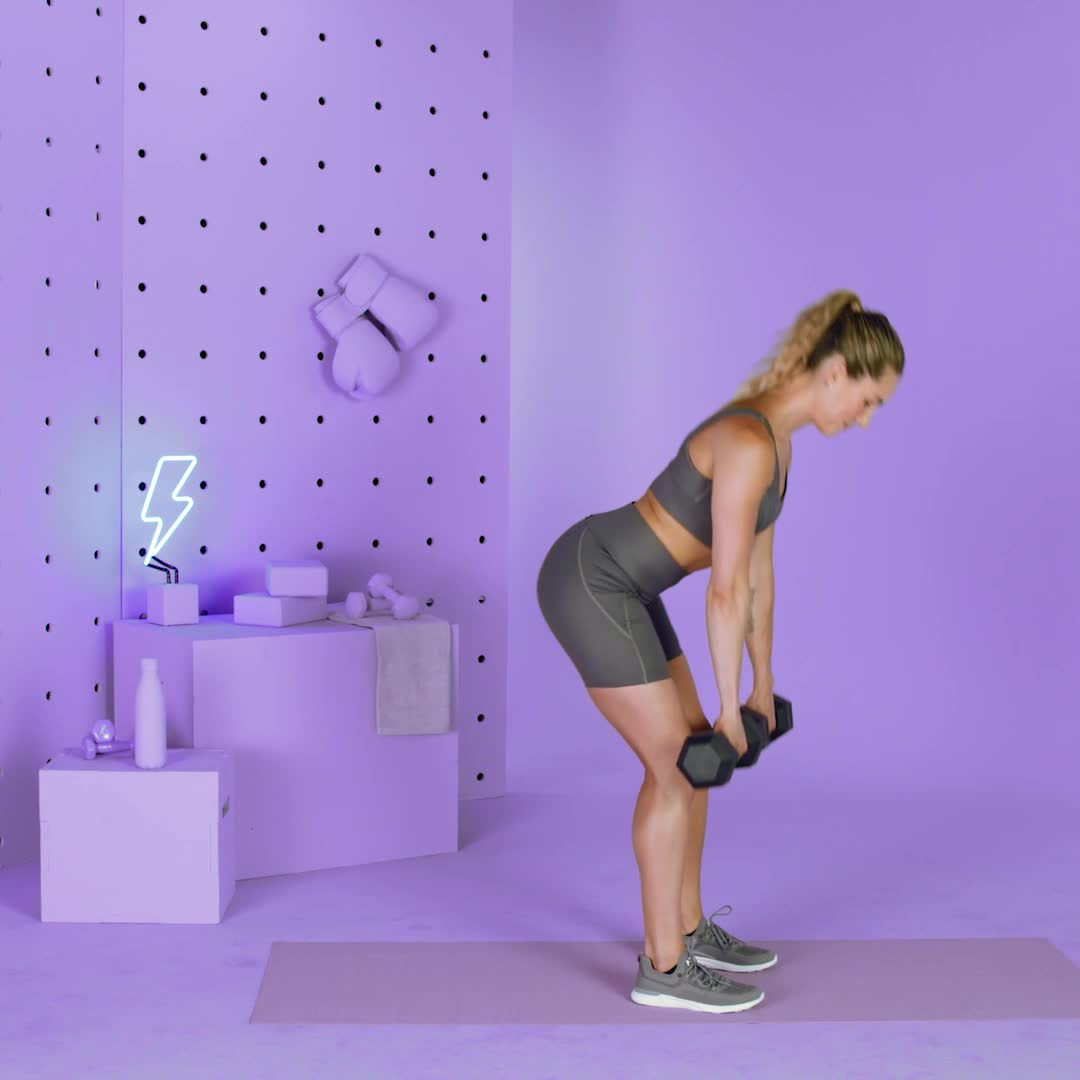
2. Romanian Deadlift (rdl)
This exercise targets the glutes and hamstrings with a strong stretch and contraction.
How to do it:
- Stand with feet hip-width apart, holding a barbell or dumbbells in front.
- Keep your back flat, bend your knees a little, and push your hips back.
- Lower the weight until you feel a stretch in your hamstrings.
- Return to standing by pushing your hips forward.
Tip: Focus on the hip movement, not just bending at the waist.
3. Bulgarian Split Squat
This single-leg move builds strength and stability, hitting the glutes hard.
How to do it:
- Stand a few feet in front of a bench.
- Place one foot behind you on the bench.
- Lower your body by bending your front knee, keeping your chest up.
- Push through your front heel to stand up.
Tip: Lean forward slightly to shift more work onto your glutes.
4. Glute Bridge
Like the hip thrust but done from the floor, this is a great beginner-friendly move.
How to do it:
- Lie on your back, knees bent, feet flat.
- Push through your heels, lift your hips, and squeeze your glutes.
- Lower slowly and repeat.
Tip: Pause at the top for a stronger contraction.
5. Cable Kickback
Cables keep tension on the glutes through the whole range.
How to do it:
- Attach an ankle strap to a low cable.
- Stand facing the machine, hold on for balance.
- Kick one leg back, keeping it straight, squeezing your glute.
- Lower and repeat.
Tip: Don’t arch your lower back; focus on squeezing the glute.
6. Step-up
Simple but very effective for glute lift and balance.
How to do it:
- Stand in front of a bench or box.
- Step up with one foot, push through your heel, and bring the other leg up.
- Step down and repeat.
Tip: Use a high enough step so your knee is at 90 degrees or higher.
7. Lateral Band Walk
This move targets the gluteus medius and minimus for rounder hips.
How to do it:
- Place a resistance band around your legs above the knees.
- Bend your knees slightly, keep your chest up.
- Step sideways, keeping tension on the band.
Tip: Don’t let your knees collapse inward.
8. Sumo Deadlift
A wide-stance deadlift that shifts more work to your glutes.
How to do it:
- Stand with feet wider than shoulders, toes out.
- Grip the bar with hands inside your knees.
- Stand up, driving through your heels, squeezing your glutes.
Tip: Keep your chest up and spine neutral.
9. Single-leg Glute Bridge
Challenges your balance and works each glute separately.
How to do it:
- Lie on your back, knees bent.
- Lift one leg in the air, push through the other heel to lift your hips.
- Lower and repeat.
Tip: Keep your hips level throughout the move.
10. Curtsy Lunge
This targets the side glutes and inner thighs.
How to do it:
- Stand tall, step one leg behind and across the other.
- Lower into a lunge, keeping your front knee over your foot.
- Push back to start.
Tip: Keep your chest up and avoid twisting your hips.
Comparing Glute Exercises: Muscle Activation And Equipment
Choosing the right glute exercises depends on your goals, fitness level, and what equipment you have. Here’s a simple comparison of the most popular moves and what they target:
| Exercise | Main Muscles Targeted | Equipment Needed | Best For |
|---|---|---|---|
| Hip Thrust | Gluteus Maximus | Barbell/Bench | Max Strength, Mass |
| Romanian Deadlift | Gluteus Maximus, Hamstrings | Barbell/Dumbbells | Stretch & Growth |
| Bulgarian Split Squat | Gluteus Maximus, Medius | Bench, Dumbbells | Balance, Shape |
| Glute Bridge | Gluteus Maximus | Bodyweight/Barbell | Beginners, Activation |
| Lateral Band Walk | Gluteus Medius, Minimus | Resistance Band | Side Glute, Activation |
Creating Your Glute Lifting Workout Routine
A great glute lifting workout plan combines heavy compound lifts, isolation moves, and activation drills. Here’s how to put it all together, whether you’re a beginner or advanced.
Glute Warm-up (5–10 Minutes)
Always start with a warm-up to get your glutes ready. Try:
- Bodyweight glute bridges (15 reps)
- Clamshells with a band (15 reps each side)
- Lateral band walks (10 steps each way)
- Fire hydrants (10 reps each side)
These moves wake up your glutes and make your main workout more effective.
Beginner Glute Lifting Routine
If you’re new, focus on learning form and building a mind-muscle connection.
Sample Routine:
- Glute Bridge – 3 sets of 12–15 reps
- Bodyweight Squat – 3 sets of 15 reps
- Step-Up – 3 sets of 10 reps each leg
- Lateral Band Walk – 2 sets of 12 steps each way
Rest 60–90 seconds between sets.
Intermediate Glute Lifting Routine
Now add weights and more challenging moves.
Sample Routine:
- Hip Thrust – 4 sets of 8–12 reps
- Bulgarian Split Squat – 3 sets of 10 reps each leg
- Romanian Deadlift – 3 sets of 8–10 reps
- Cable Kickback – 3 sets of 12 reps each leg
- Lateral Band Walk – 2 sets of 15 steps each way
Rest 90 seconds between sets.
Advanced Glute Lifting Routine
Push for heavier weights, more volume, and intensity.
Sample Routine:
- Barbell Hip Thrust – 5 sets of 6–10 reps (heavy)
- Sumo Deadlift – 4 sets of 8 reps
- Bulgarian Split Squat (weighted) – 4 sets of 8 reps each leg
- Single-Leg Glute Bridge – 3 sets of 12 reps each leg
- Curtsy Lunge – 3 sets of 12 reps each leg
Rest 2 minutes between heavy sets.
Weekly Workout Structure
For most people, working glutes 2–3 times per week gives the best results. You need both enough stimulus and enough recovery. Here’s a sample weekly plan:
- Day 1: Glute Lifting Workout
- Day 2: Upper Body/Rest
- Day 3: Glute & Lower Body Workout
- Day 4: Rest/Cardio
- Day 5: Glute Focused Workout
- Day 6: Rest/Active Recovery
- Day 7: Rest

Credit: www.youtube.com
Volume, Frequency, And Progression
For muscle growth and lift, you need to challenge your glutes with enough volume (sets x reps), intensity (weight used), and progression (making workouts harder over time).
How Much Volume?
Research suggests that 10–20 sets per week of focused glute work is ideal for most people. This can be split over several days.
How To Progress
- Add more weight when you can complete all reps with good form.
- Add more reps or sets.
- Slow down the lowering part (eccentric) for extra tension.
- Try harder exercises or use resistance bands for extra challenge.
Tracking your progress is important. Write down your sets, reps, and weights each session.
Mistakes That Kill Your Glute Gains
Even with the best exercises, some common mistakes can stop your progress. Watch out for these:
- Not feeling the glutes: If you don’t feel your glutes working, adjust your form, slow down, or try activation drills.
- Overusing the lower back: Arching your back in hip thrusts or deadlifts shifts work away from the glutes.
- Neglecting single-leg moves: These are crucial for balance and full glute development.
- Poor range of motion: Half-reps don’t fully challenge the glutes. Use a full stretch and squeeze.
- No progressive overload: Doing the same thing every week leads to plateaus.
- Too much cardio, not enough resistance: Cardio alone won’t lift or grow your glutes.
- Ignoring recovery: Muscles need rest and protein to grow.
Nutrition For Glute Growth And Lift
Training is only half the battle. Nutrition plays a huge role in building muscle and shaping your glutes.
Key Nutrition Tips
- Eat enough protein: Aim for 0.7–1 gram per pound of body weight daily. Protein helps your muscles repair and grow.
- Get enough calories: Building muscle needs a small calorie surplus. Don’t diet too hard if you want bigger glutes.
- Focus on nutrient-rich foods: Lean meats, fish, eggs, dairy, beans, whole grains, nuts, fruits, and vegetables all support muscle growth.
- Stay hydrated: Water supports muscle function and recovery.
Sample Glute-building Meal Plan
Here’s a simple example for a day:
- Breakfast: Scrambled eggs with spinach and whole-grain toast
- Snack: Greek yogurt with berries
- Lunch: Grilled chicken, quinoa, roasted veggies
- Snack: Protein shake and a banana
- Dinner: Salmon, sweet potato, broccoli
Cardio And Glute Workouts: Finding The Balance
Cardio is important for heart health, but too much can slow muscle growth. The best approach is:
- Limit intense cardio (like running) to 2–3 times per week if glute growth is your goal.
- Choose cardio that uses your glutes, like hiking, cycling, or incline walking.
- Avoid doing heavy glute training right after long cardio sessions.
Home Vs. Gym Glute Training
You can build your glutes at home or in the gym, but the tools you use may change. Here’s a simple comparison:
| Training Location | Best Equipment | Example Exercises | Limitations |
|---|---|---|---|
| Gym | Barbells, Dumbbells, Machines, Bands | Hip Thrust, Deadlift, Cable Kickback | Requires Membership, Travel |
| Home | Bands, Dumbbells, Bodyweight | Glute Bridge, Step-Up, Lateral Band Walk | Limited Heavier Weights |
Pro insight: At home, you can increase reps, slow down movements, or use resistance bands to keep challenging your glutes as you get stronger.
Glute Activation: The Secret Weapon
Many people skip glute activation drills before their main workout, but they make a huge difference. These drills “wake up” your glute muscles so they fire better during bigger lifts. This means more growth and less chance of injury.
Popular Glute Activation Drills
- Banded clamshells
- Monster walks
- Donkey kicks
- Fire hydrants
Do 1–2 sets of 10–20 reps for each before your main workout.
Hidden tip: Many advanced lifters still use activation drills before every glute workout, even after years of training.
Glute Lifting For Different Body Types
Your genetics and body shape play a role in how your glutes look and grow. Some people naturally have rounder glutes, while others may need more time and effort. The good news is, anyone can improve their glute lift and shape with smart training.
- Flat glutes: Focus on heavy hip thrusts and deadlifts for mass.
- Sagging glutes: Add more single-leg and step-up work for lift.
- Wide hips, but less shape: Use more lateral moves and band work for roundness.
Remember, patience and consistency are key. Results come with time and hard work.
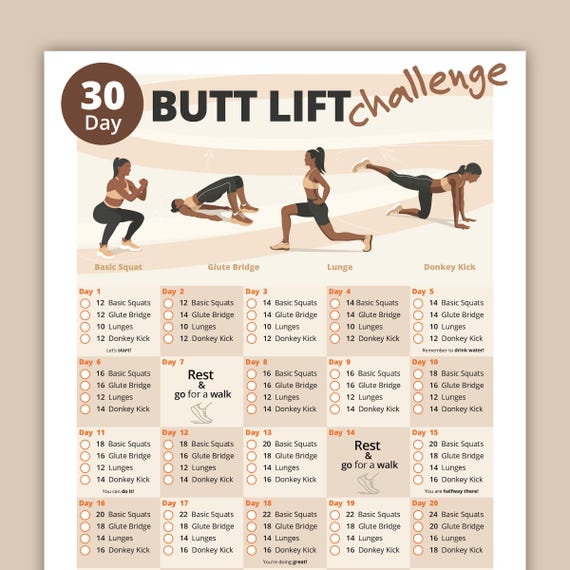
Sample 4-week Glute Lifting Program
To help you get started, here’s a simple 4-week plan. Adjust weights as needed for your fitness level.
Week 1–2 (beginner/intermediate)
Day 1:
- Glute Bridge – 3 x 15
- Step-Up – 3 x 12 each leg
- Lateral Band Walk – 2 x 15 each way
Day 2:
- Hip Thrust – 3 x 12
- Bulgarian Split Squat – 3 x 10 each leg
- Clamshells – 2 x 15 each side
Day 3:
- Rest or light cardio
Week 3–4 (intermediate/advanced)
Day 1:
- Barbell Hip Thrust – 4 x 10
- Romanian Deadlift – 3 x 8
- Lateral Band Walk – 3 x 12 each way
Day 2:
- Bulgarian Split Squat – 4 x 8 each leg
- Cable Kickback – 3 x 12 each leg
- Curtsy Lunge – 3 x 12 each leg
Day 3:
- Rest or active recovery
Pro tip: You can repeat or rotate the plan, increasing weight and reps as you get stronger.
Credit: www.designboxed.com
Tracking Your Progress
To see real changes, track your workouts and progress. Write down:
- Exercises, sets, reps, and weights each session
- How you felt during the workout
- Any adjustments or notes
Take progress photos every 2–4 weeks. Sometimes, changes are more visible than what the scale shows.
Common Myths About Glute Training
There’s a lot of bad advice about glute workouts. Let’s clear up a few myths:
- Myth: “Squats alone are enough.”
Truth: While squats work your glutes, they’re not the best at isolating them for growth and lift.
- Myth: “Women will get bulky.”
Truth: Building muscle, especially in glutes, takes time. It’s very difficult to become “bulky” accidentally.
- Myth: “You need to train glutes every day.”
Truth: Muscles grow when you rest. Two to three focused sessions per week are better for most people.
- Myth: “Bodyweight is enough forever.”
Truth: You can start with bodyweight, but adding resistance is key for real growth.
Credit: www.etsy.com
Advanced Techniques For Faster Results
If you’ve been training for a while and want to break through a plateau, try these advanced methods:
- Pause Reps: Hold the top of a hip thrust or glute bridge for 2–3 seconds.
- Drop Sets: Reduce the weight after your last set and do more reps to failure.
- Supersets: Pair two glute moves back-to-back for extra burn (e.g., hip thrust + band walk).
- Tempo Training: Slow down the lowering phase (eccentric) to increase muscle tension.
Use these techniques carefully—they’re tough but very effective.
Glute Training And Posture
Strong glutes help keep your pelvis and spine in a healthy position. If your glutes are weak, your lower back and hips may compensate, leading to pain and poor movement. A good glute routine supports better posture, balance, and stability in everything you do.
Hidden insight: Many people notice their lower back pain improves after a few weeks of focused glute training.
Real-life Benefits Of Glute Lifting
Lifting your glutes isn’t only about how you look in jeans. Strong glutes help you:
- Climb stairs or hills more easily
- Jump higher and run faster
- Protect your knees and back
- Stand and walk with better posture
- Feel more confident and powerful
When To See Results
With smart training and nutrition, most people see early changes in 4–6 weeks. Bigger, rounder glutes may take several months of consistent work. Don’t give up too soon—muscle growth is a slow, steady process.
Resources For Further Learning
If you want to go deeper, check out expert guides and research on strength training and glute development. The National Institutes of Health offers in-depth scientific articles on muscle growth, exercise techniques, and injury prevention.
Frequently Asked Questions
How Many Times A Week Should I Train My Glutes?
For most people, 2–3 focused sessions per week is ideal. This gives enough stimulus for growth and enough rest for recovery. Training glutes every day can lead to overuse and less progress.
Do I Need Weights To Lift And Grow My Glutes?
You can start with bodyweight exercises, but for the best results, add resistance over time. This can be with dumbbells, barbells, resistance bands, or even heavy household items. Progressive overload is key for muscle growth.
How Long Does It Take To See Glute Lifting Results?
You may feel your glutes getting stronger within a few weeks. Visible changes, like a higher and rounder shape, usually take 4–12 weeks of consistent effort, depending on your starting point and routine.
Why Don’t I Feel My Glutes Working During Exercises?
If you don’t feel your glutes, check your form and try activation drills before your main workout. Sometimes, your body uses other muscles (like your lower back or quads) instead. Focus on slow, controlled movements and squeezing the glutes at the top of each rep.
Can Men Benefit From Glute Lifting Workouts?
Absolutely. Strong glutes help everyone—men and women—with power, stability, and injury prevention. For men, glute training can also improve performance in sports, running, and weightlifting.
Building lifted, strong glutes takes patience, smart training, and good nutrition. By following the strategies in this guide, you’ll not only shape your body but also improve your strength, movement, and confidence for life.
