

Glute Workout for Women at Home: Sculpt and Lift Fast
Glute Workout For Women At Home
Strong, toned glutes are not just about looks—they support your body, improve posture, and help with daily movements. Many women want to build and shape their glute muscles, but not everyone has access to a gym. The good news? You can achieve impressive results at home with simple equipment or even no equipment at all.
A well-designed glute workout can fit your busy schedule, and the benefits go beyond appearance. From increased strength to better athletic performance, working out your glutes can make a real difference in your life.
Let’s explore everything you need to know about effective glute workouts for women at home. You’ll learn the science behind glute training, practical exercises, sample routines, common mistakes, and even how to adjust for different fitness levels. Along the way, you’ll get tips that many beginners overlook, so you can start your journey with confidence.
Why Glute Training Matters For Women
Many women focus on abs, arms, or legs, but glute training often gets ignored. The glute muscles include the gluteus maximus, gluteus medius, and gluteus minimus. These muscles are the powerhouse for walking, running, jumping, and lifting. They stabilize your hips and lower back.
Here are some reasons why glute workouts are important:
- Improved posture: Strong glutes help keep your pelvis aligned and reduce lower back pain.
- Functional strength: Everyday movements like climbing stairs, standing up, or picking up objects depend on glute power.
- Athletic performance: Glutes are key for speed, agility, and balance. Athletes often train them for better results.
- Injury prevention: Weak glutes can cause knee pain, hip pain, and even ankle injuries. Strengthening them helps avoid these problems.
- Body shape: Well-developed glutes give a rounded, lifted appearance, which many women desire.
One non-obvious insight: Glute strength affects your entire lower body chain—if your glutes are weak, your knees and ankles may overcompensate, increasing injury risk.
Understanding Glute Muscles And How They Work
Before you start training, it’s helpful to know which muscles you’re targeting. The glutes are made up of three main muscles:
- Gluteus maximus: The largest muscle, responsible for hip extension (moving your leg backward), and giving your glutes their shape.
- Gluteus medius: Located on the side of your hip, it helps with abduction (moving your leg outward) and stabilizes your pelvis.
- Gluteus minimus: The smallest, under the medius, it helps with similar functions.
These muscles work together for movements like squatting, lunging, and stepping. When you do glute exercises, you activate all three, but different movements focus on different parts.
A common beginner mistake: Only doing squats. While squats are great, they mostly target the gluteus maximus and quads. For balanced glute development, you need exercises that hit all areas.
Key Principles For Effective Glute Workouts At Home
You don’t need fancy machines to build your glutes. But for results, you need to follow some important training principles:
- Progressive overload: To grow and strengthen muscles, you must gradually increase resistance. At home, you can use resistance bands, dumbbells, or even your body weight.
- Proper form: Quality over quantity. Poor technique can shift the work away from the glutes and lead to injuries.
- Variety: Mix up exercises and angles to target all glute muscles. This prevents plateaus and ensures full development.
- Mind-muscle connection: Focus on squeezing your glutes during each movement. Studies show this improves activation and results.
- Recovery: Muscles grow when you rest. Aim for 2-3 glute sessions per week, with at least 48 hours between them.
A practical tip: Video yourself or use a mirror to check your form. Many women unknowingly use their back or quads instead of glutes—seeing yourself helps correct this.
The Best Glute Exercises For Women At Home
Let’s look at effective glute exercises you can do at home. These require minimal equipment, and you can modify most for your fitness level.
1. Bodyweight Squats
A classic, but still powerful. Stand with feet shoulder-width apart, toes slightly out. Lower your hips like sitting in a chair, keeping your chest up. Push through your heels to return.
- Muscles worked: Gluteus maximus, quads
- Tip: Pause at the bottom and squeeze your glutes as you rise.
2. Glute Bridges
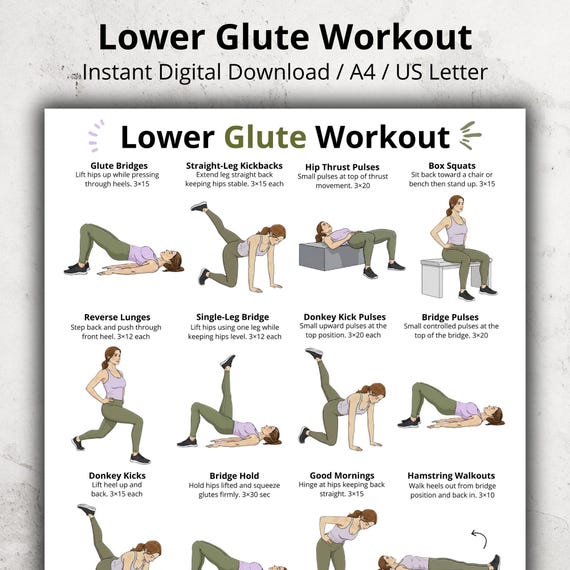
Lie on your back with knees bent, feet flat. Lift your hips by pushing through your heels, squeezing your glutes at the top. Lower with control.
- Muscles worked: Gluteus maximus, hamstrings
- Variation: Single-leg bridge for more challenge.
3. Bulgarian Split Squats
Stand in front of a chair or couch. Place one foot behind you on the seat. Lower your body, keeping your front knee over your toes, then push up.
- Muscles worked: Glutes, quads, balance
- Tip: Lean forward slightly to emphasize glutes.
4. Donkey Kicks
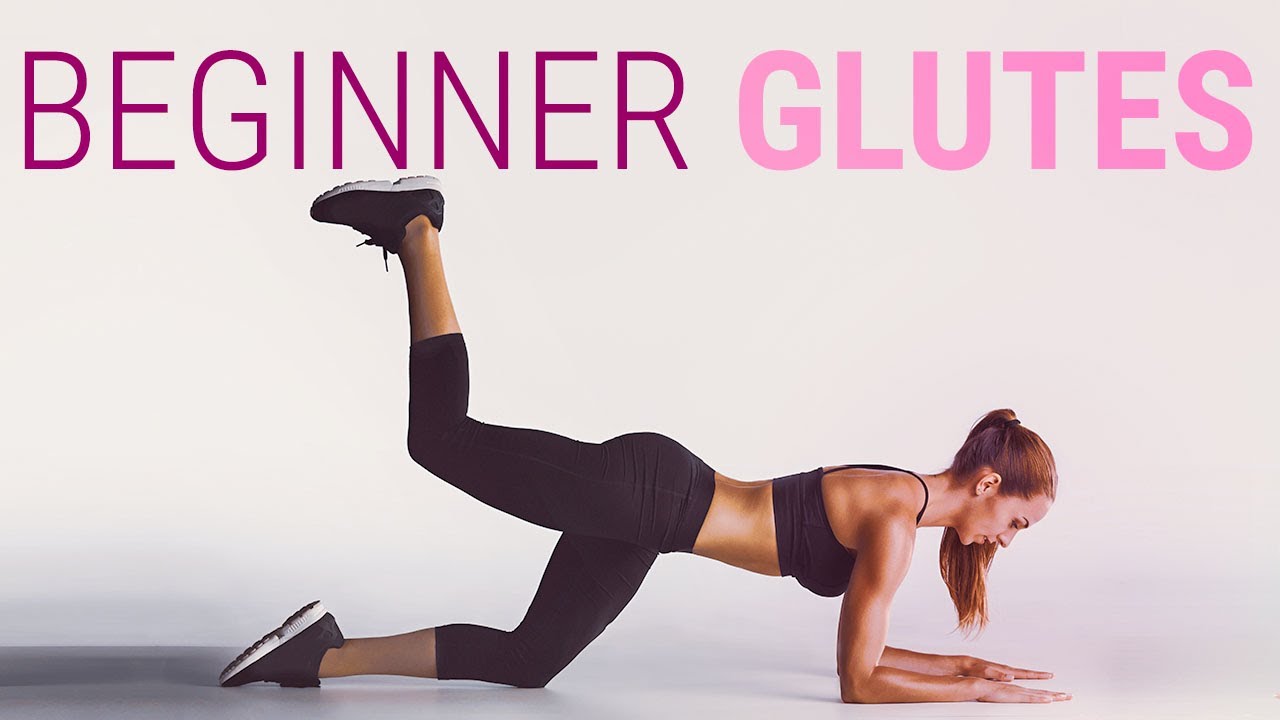
Start on all fours. Lift one leg, bent at 90 degrees, toward the ceiling. Lower and repeat.
- Muscles worked: Gluteus maximus, minimus
- Variation: Add a resistance band for extra tension.
5. Fire Hydrants
On hands and knees, lift one leg out to the side, keeping your knee bent. Lower and repeat.
- Muscles worked: Gluteus medius, minimus
- Tip: Avoid twisting your hips—focus on lifting with your glutes.
6. Step-ups
Using a sturdy chair or stair, step up with one foot, driving through your heel, then bring the other foot up. Step down and repeat.
- Muscles worked: Glutes, quads
- Variation: Hold dumbbells for extra resistance.
7. Hip Thrusts
Similar to glute bridges, but your upper back rests on a couch or bench, and you lower your hips off the edge. Drive through your heels and squeeze at the top.
- Muscles worked: Gluteus maximus
- Tip: Use a resistance band above your knees for more activation.
8. Lateral Band Walks
Place a resistance band above your knees. Stand with feet hip-width apart and squat slightly. Step sideways, keeping tension in the band.
- Muscles worked: Gluteus medius, minimus
- Tip: Keep steps small and controlled.
9. Reverse Lunges
Step one foot backward, lower your body, then return to standing. Alternate legs.
- Muscles worked: Glutes, hamstrings, quads
- Variation: Add a pulse at the bottom for more burn.
10. Clamshells
Lie on your side, knees bent. Keep feet together and lift your top knee, then lower.
- Muscles worked: Gluteus medius, minimus
- Tip: Place a band above your knees for resistance.
11. Frog Pumps
Lie on your back, soles together, knees out. Lift your hips and squeeze your glutes.
- Muscles worked: Gluteus maximus, medius
- Tip: Do high reps for a strong burn.
12. Curtsy Lunges
Step one leg behind and across your body, lowering into a lunge. Return to standing and switch sides.
- Muscles worked: Glutes, inner thighs
- Variation: Hold a dumbbell for extra challenge.
Sample Glute Workout Routines For Women At Home
Different fitness levels require different routines. Here are sample workouts for beginners, intermediate, and advanced women.
Beginner Routine
- Bodyweight squats: 3 sets of 12 reps
- Glute bridges: 3 sets of 15 reps
- Donkey kicks: 2 sets of 12 reps per leg
- Fire hydrants: 2 sets of 12 reps per leg
- Step-ups: 2 sets of 10 reps per leg
Rest 60 seconds between sets.
Intermediate Routine
- Bulgarian split squats: 3 sets of 10 reps per leg
- Hip thrusts: 3 sets of 15 reps
- Lateral band walks: 3 sets of 15 steps per side
- Reverse lunges: 3 sets of 12 reps per leg
- Clamshells: 2 sets of 15 reps per side
Rest 45 seconds between sets.
Advanced Routine
- Single-leg hip thrusts: 3 sets of 12 reps per leg
- Frog pumps: 3 sets of 20 reps
- Curtsy lunges: 3 sets of 12 reps per leg
- Step-ups with dumbbells: 3 sets of 15 reps per leg
- Bulgarian split squats with pulse: 3 sets of 10 reps per leg
Rest 30–45 seconds between sets.
If you’re unsure which routine fits you, start with the beginner level and move up as you feel stronger.
How Often Should Women Train Glutes At Home?
For best results, aim for 2–3 glute sessions per week. This gives your muscles time to recover and grow. Avoid training glutes every day—overworking can lead to fatigue and slow progress.
One surprising insight: Many women see faster results by training glutes with higher frequency but lower volume (shorter workouts, more often), rather than long, exhausting sessions once a week.
Equipment Options For Home Glute Workouts
You can get great results with just your body weight, but adding equipment speeds progress and keeps workouts interesting. Here’s a comparison of common equipment:
| Equipment | Benefits | Price Range | Space Needed |
|---|---|---|---|
| Resistance Bands | Variety, easy to use, portable | $10–$30 | Minimal |
| Dumbbells | Add weight, increase challenge | $15–$100 | Small |
| Chair/Couch | For step-ups, hip thrusts | Already owned | Medium |
| Yoga Mat | Comfort for floor exercises | $10–$30 | Minimal |
If you’re on a budget, start with resistance bands—they target the glutes well and are affordable.
Tracking Progress: Measuring Glute Growth And Strength
Measuring your progress keeps you motivated and shows what’s working. Here are practical ways to track glute development:
- Photos: Take front, side, and back photos every 4 weeks. Wear similar clothing for consistency.
- Measurements: Use a tape measure around the widest part of your hips/glutes.
- Strength gains: Record reps, sets, and resistance used for each exercise.
- Performance: Notice improvements in daily activities—stairs feel easier, you can jump higher, or lift heavier.
Here’s a simple comparison of progress tracking methods:
| Method | Accuracy | Motivation Level | Effort Needed |
|---|---|---|---|
| Photos | Medium | High | Low |
| Measurements | High | Medium | Medium |
| Strength gains | High | High | Medium |
| Performance | Low | Medium | Low |
One practical tip: Don’t rely on the scale alone. Glute muscles can grow while your weight stays the same or even drops.
Credit: www.etsy.com
Nutrition For Glute Growth And Recovery
Training is just one part of the equation. For your glutes to grow and recover, you need the right nutrition.
- Protein: Essential for muscle repair. Aim for 1.0–1.2 grams per kilogram of body weight per day.
- Carbohydrates: Fuel your workouts and help recovery.
- Healthy fats: Support hormone balance and energy.
Sample meal ideas for glute growth:
- Grilled chicken with brown rice and roasted veggies
- Greek yogurt with berries and nuts
- Salmon with sweet potato and broccoli
- Eggs with whole grain toast and avocado
A common mistake: Not eating enough protein. Many women think they eat enough, but often fall short. Consider tracking your intake for a week to check.
Glute Workout Tips For Busy Women
If you have a tight schedule, you can still fit glute workouts into your day. Here are practical strategies:
- Micro-workouts: Do short 5–10 minute sessions during breaks. For example, 2 sets of squats and glute bridges before lunch.
- Supersets: Combine two exercises back-to-back with no rest. This saves time and increases intensity.
- Active chores: Turn household tasks into mini workouts. Squat when picking up laundry, step up on stairs, or do lunges while cleaning.
One non-obvious insight: Even short, frequent sessions can trigger muscle growth if you push close to fatigue. Quality matters more than workout length.

Credit: www.youtube.com
Common Mistakes In Glute Training At Home
Avoiding errors can make your workouts safer and more effective. Here are mistakes women often make:
- Using poor form: Letting knees cave in or arching the back shifts work away from the glutes.
- Neglecting hip abduction movements: Only doing squats misses the gluteus medius and minimus.
- Skipping warm-up: Cold muscles are more prone to injury. Always start with light cardio or mobility drills.
- Not progressing: Doing the same routine for months leads to plateaus. Add resistance or reps over time.
- Overtraining: Muscles need rest. Training glutes every day slows growth and increases injury risk.
A practical tip: Film yourself during workouts to check for mistakes—many beginners don’t notice their form errors until they see a video.
How To Modify Glute Workouts For Different Fitness Levels
Whether you’re a beginner or advanced, you can adjust glute workouts to fit your needs. Here’s how:
| Level | Modification | Example Exercise |
|---|---|---|
| Beginner | Bodyweight only, slow reps, focus on form | Bodyweight squat |
| Intermediate | Add resistance band or light dumbbells | Bulgarian split squat |
| Advanced | Single-leg variations, heavier weights, more volume | Single-leg hip thrust |
If you have joint issues or injuries, choose low-impact exercises like glute bridges or clamshells.
Credit: www.youtube.com
How To Warm Up For Glute Workouts At Home
A good warm-up prepares your muscles and joints for the workout ahead. Here’s a simple routine:
- 5 minutes of light cardio: March in place, jump rope, or do jumping jacks.
- Hip mobility drills: Hip circles, leg swings, or side lunges.
- Activation exercises: 2 sets of glute bridges or lateral band walks.
Warming up increases blood flow and reduces injury risk. Don’t skip it—even if you’re short on time.
Cool Down And Recovery After Glute Workouts
After you finish your workout, cooling down helps your muscles recover and prevents stiffness.
- Stretching: Focus on glutes, hamstrings, and hip flexors. Hold each stretch for 20–30 seconds.
- Foam rolling: If you have a foam roller, use it on your glutes and legs for 3–5 minutes.
- Hydration: Drink water to help your body recover.
A practical tip: Stretching your hip flexors can improve glute activation next session. Many women sit for long periods, which makes hip flexors tight.
Glute Training For Different Goals: Shape, Strength, Or Endurance
Your workout should match your goal. Here’s how to adjust:
- Shape: Focus on high-rep, moderate resistance exercises like frog pumps, clamshells, and lateral band walks.
- Strength: Use lower reps (6–10) with higher resistance—single-leg hip thrusts, weighted squats, or step-ups.
- Endurance: Combine bodyweight exercises in circuit style, resting less between sets.
Don’t mix all goals in one workout. Pick one and stick with it for 4–6 weeks, then change if needed.
How To Stay Motivated With Home Glute Workouts
Staying motivated can be tough, especially at home. Here are strategies that work:
- Set clear goals: Write down your targets—shape, strength, or endurance.
- Track progress: Use photos, measurements, or a workout log.
- Join online communities: Share your journey, ask questions, or get support. For example, forums on Bodybuilding.com offer advice and encouragement.
- Reward yourself: Celebrate milestones—new personal bests, sticking with a routine, or visible results.
- Change routines: Try new exercises or challenges every few weeks to keep things fresh.
One insight: Motivation often drops when results slow. Remind yourself that muscle growth takes time—small improvements add up.
Frequently Asked Questions
What Is The Best Glute Exercise For Women At Home?
There isn’t one “best” exercise, but hip thrusts and glute bridges are highly effective. They activate the gluteus maximus strongly and can be done with bodyweight, bands, or added weight. For balanced development, combine these with lateral movements like fire hydrants and lateral band walks.
How Long Does It Take To See Results From Glute Workouts?
Results depend on consistency, nutrition, and genetics. Most women see changes in 4–8 weeks with regular training and proper nutrition. Progress may be faster if you train glutes 2–3 times per week, push close to fatigue, and track your workouts.
Can I Train Glutes Every Day?
It’s not recommended. Glute muscles need time to recover and grow. Training them every day may lead to overtraining, fatigue, and slow progress. Aim for 2–3 sessions per week with at least 48 hours between.
Do I Need Equipment For Effective Glute Workouts At Home?
No, but equipment can help. Bodyweight exercises are effective, especially for beginners. Adding resistance bands or dumbbells increases challenge and speeds progress. If you’re on a budget, start with bands—they are affordable and highly effective.
What Should I Eat After A Glute Workout?
Eat a meal with protein and carbohydrates within 1–2 hours after training. Examples: chicken with rice, eggs with toast, or Greek yogurt with fruit. Protein supports muscle repair, while carbs help recovery.
Building strong, toned glutes at home is completely possible. With the right exercises, smart routines, and practical tips, you can reach your goals—even on a busy schedule. Remember to focus on form, track your progress, and enjoy the journey. Your glutes will thank you!
