

Glute Workout for Beginners: Build Stronger Glutes Fast
Glute Workout For Beginners: Build Stronger Glutes From Day One
A strong lower body is the foundation of daily movement and athletic performance. The glute muscles, often just called glutes, play a bigger role than most people think. They help you walk, run, stand up, climb stairs, and even protect your lower back. If you want to improve your posture, balance, or shape your body, building stronger glutes is a smart place to start.
For many beginners, training glutes can feel confusing. Which exercises really work? How do you avoid injury? Do you need fancy gym equipment? The good news: you do not need to be an athlete or a gym regular to see results. With the right plan and a bit of patience, you can start building your glutes at home or in the gym.
This article covers everything you need to know about a glute workout for beginners. You will learn which exercises work best, how to set up a simple routine, and tips for faster progress. Let’s unlock the power of your glutes—one step at a time.
Understanding The Glute Muscles
Your glutes are not just one muscle. They are a group of three main muscles:
- Gluteus maximus: The largest muscle in your body. It gives your butt its shape and helps you stand up from a chair, climb stairs, and lift heavy things.
- Gluteus medius: Located on the side of your hip. It keeps your pelvis stable when you walk or run.
- Gluteus minimus: The smallest glute muscle, found under the gluteus medius. It helps with hip movement and stability.
When you target all three glute muscles, you build a balanced lower body. This helps with strength, power, and injury prevention. Weak glutes can lead to poor posture, knee pain, or even back problems. That’s why glute training is important for everyone—not just athletes or bodybuilders.
Benefits Of Strong Glutes
You might think strong glutes only matter for looks, but there are many health benefits too:
- Better posture: Strong glutes support your hips and spine, so you stand taller and move better.
- Less back pain: The glutes help take stress off your lower back, making pain less likely.
- More power: If you play sports or just want to run faster, strong glutes help you push off the ground with more force.
- Injury prevention: Balanced glutes protect your knees, hips, and lower back from strain.
- Daily activities: Even simple things like walking, getting up from a chair, or carrying groceries feel easier with strong glutes.
Many people do not realize their glutes are weak until they start training them. You might notice better balance, more energy, and less discomfort in your hips or back after just a few weeks of consistent training.
Common Beginner Mistakes In Glute Training
Starting a new workout routine can be exciting, but some common mistakes can slow your progress:
- Poor form: Rushing through exercises or using the wrong posture can make your workout less effective and increase injury risk.
- Neglecting all glute muscles: Focusing only on squats does not target the glute medius and minimus. A variety of exercises is best.
- Using too much weight too soon: Beginners sometimes add heavy weights before they master the movement. This can hurt your back or knees.
- Skipping warm-up: Cold muscles are more likely to get injured. Warm up before every workout.
- Lack of rest: Muscles grow when you rest, not just when you train. Training glutes every day can stall your progress.
One non-obvious tip: mind-muscle connection is key. Focus on the glutes working during each movement, not just finishing the set. This helps you get better results, even with simple exercises.
Essential Glute Exercises For Beginners
You do not need a gym full of machines to start. These exercises use your bodyweight or simple tools like resistance bands or dumbbells. You can do them at home or in any fitness space.
1. Glute Bridge
Lie on your back with knees bent and feet flat on the floor. Push through your heels to lift your hips up, squeezing your glutes at the top. Lower back down with control.
- Targets: Gluteus maximus, core
- Tip: Do not arch your lower back—focus on pushing with your glutes
2. Bodyweight Squat
Stand with feet shoulder-width apart. Bend your knees and lower your hips as if sitting in a chair. Keep your chest up and push through your heels to stand back up.
- Targets: Glutes, thighs, core
- Tip: Do not let your knees fall inward
3. Standing Kickback
Hold onto a chair or wall for balance. Stand tall, then lift one leg straight behind you, squeezing your glute. Lower slowly.
- Targets: Gluteus maximus, gluteus medius
- Tip: Keep your back straight—do not swing your leg
4. Clamshell
Lie on your side with knees bent and legs stacked. Keeping your feet together, lift your top knee as high as you can without moving your hips. Lower and repeat.
- Targets: Gluteus medius, minimus
- Tip: Move slowly and keep your hips steady
5. Lateral Band Walk
Place a resistance band above your knees or ankles. Stand with feet hip-width apart, bend your knees slightly, and step side-to-side.
- Targets: Gluteus medius, hip muscles
- Tip: Stay low and keep tension on the band
6. Reverse Lunge
Stand with feet together. Step one foot back and lower your body until both knees are bent at about 90 degrees. Return to standing.
- Targets: Glutes, thighs
- Tip: Keep your front knee above your ankle
7. Donkey Kick
Start on hands and knees. Keeping your knee bent, lift one leg up toward the ceiling, then lower.
- Targets: Glutes, hamstrings
- Tip: Do not arch your back—focus on squeezing your glute
8. Step-up
Find a sturdy box or bench. Step one foot onto it, push through your heel, and stand up. Lower back down and switch legs.
- Targets: Glutes, quads
- Tip: Use a height that feels safe and keeps your knee comfortable
9. Hip Thrust (beginner Version)
Sit on the ground with your upper back against a bench or sofa. Roll your feet toward you and push through your heels to lift your hips. Squeeze your glutes at the top.
- Targets: Gluteus maximus, hamstrings
- Tip: Keep your chin tucked and core braced
10. Fire Hydrant
On hands and knees, lift one leg out to the side, keeping the knee bent. Lower and repeat.
- Targets: Gluteus medius, minimus
- Tip: Do not twist your body—move only your hip
Two non-obvious insights: Beginners often forget the power of slow reps. Slowing down each movement increases muscle activation. Also, training both sides equally is important—do not always start with your stronger leg.

Credit: www.hevyapp.com
Sample Glute Workout Routine For Beginners
Here is a simple routine you can follow 2-3 times per week. You do not need to do all exercises each session. Focus on 5-6 movements and add variety over time.
- Warm-up (5-7 minutes)
- March in place
- Hip circles
- Bodyweight squats
- Leg swings
- Main workout (repeat each exercise for 2-3 sets of 10-15 reps)
- Glute bridge
- Bodyweight squat
- Lateral band walk
- Clamshell
- Reverse lunge
- Donkey kick
- Cool down (3-5 minutes)
- Light stretching for hips, glutes, and thighs
Rest 30-60 seconds between sets. If you feel pain (not just muscle work), stop and check your form.
Equipment: What You Need And What You Don’t
Most glute exercises can be done with just your bodyweight. However, simple tools can make your workout more effective or fun:
| Equipment | Benefits | Beginner-Friendly? |
|---|---|---|
| Resistance Bands | Adds tension, helps activate glutes | Yes |
| Dumbbells | Adds weight as you get stronger | Yes, start light |
| Bench/Step | For step-ups, hip thrusts | Yes |
| Barbell | For advanced hip thrusts/squats | No, for later |
You can get great results with bodyweight and bands alone for several months. Only add weights when you feel comfortable and your form is strong.
Proper Form And Safety Tips
Glute exercises are safe when done with good form. Here are some key points to remember:
- Keep your back straight during movements
- Push through your heels (not your toes) to activate glutes
- Do not rush—slow, controlled reps are better than fast, sloppy ones
- Avoid locking your knees at the top of squats or bridges
- Breathe normally, exhaling during the “hard” part of each movement
If you feel pain in your lower back or knees, stop and check your form. Sometimes, filming yourself or working out with a mirror helps you spot mistakes.
One insight many miss: Even small changes, like moving your feet a few inches during bridges or squats, can shift which glute muscles work hardest. Experiment to find what works best for your body.
How To Progress: Making Your Glute Workout Harder
Your body adapts quickly. To keep building muscle and strength, you need to make your workouts a little harder over time. This is called progressive overload.
Ways to progress:
- Increase reps or sets: Add 2 more reps or 1 more set as you get stronger.
- Slow down: Lower and raise your body more slowly to increase muscle tension.
- Add resistance bands or light weights: A simple band can double the challenge of squats or bridges.
- Try harder variations: For example, single-leg glute bridge or Bulgarian split squat.
- Shorten rest: Resting less between sets makes your muscles work harder.
Here’s a quick comparison of progression methods:
| Progression Method | How to Apply | When to Use |
|---|---|---|
| More reps | Go from 10 to 15 per set | First 2-3 months |
| Heavier resistance | Use a stronger band or add dumbbells | After mastering form |
| Harder variations | Single-leg exercises | When regular moves feel easy |
A common mistake: Adding too much too soon. Only increase one thing (weight, reps, or difficulty) at a time.
Weekly Glute Training Plan For Beginners
To see results, you need consistency. Most people should train glutes 2-3 times per week with at least one rest day in between. Here is an example week:
- Monday: Glute workout (bodyweight focus)
- Wednesday: Glute workout (add bands or weights)
- Friday: Glute workout (mix of both)
On other days, you can do light cardio, stretching, or rest. Do not train glutes hard two days in a row—muscles need time to recover.
You might see small changes in strength and shape after 4-6 weeks. For best results, track your workouts in a notebook. Write down which exercises, how many sets/reps, and any notes on how you felt.
Diet And Recovery: Supporting Glute Growth
Exercise is only part of the story. To build muscle, your body needs enough protein and rest.
- Protein: Try to include a protein source (chicken, fish, tofu, beans, eggs, dairy) in every meal. Aim for about 0.7-1 gram of protein per pound of bodyweight.
- Carbs and fats: These give you energy for workouts. Whole grains, fruits, vegetables, nuts, and olive oil are good choices.
- Hydration: Drink water before, during, and after your workout. Muscles need water to function well.
- Sleep: Aim for 7-9 hours of sleep per night. This is when your muscles repair and grow.
One non-obvious tip: Many beginners do not eat enough after training. A simple snack with protein and carbs (like yogurt and fruit) helps your body recover faster.
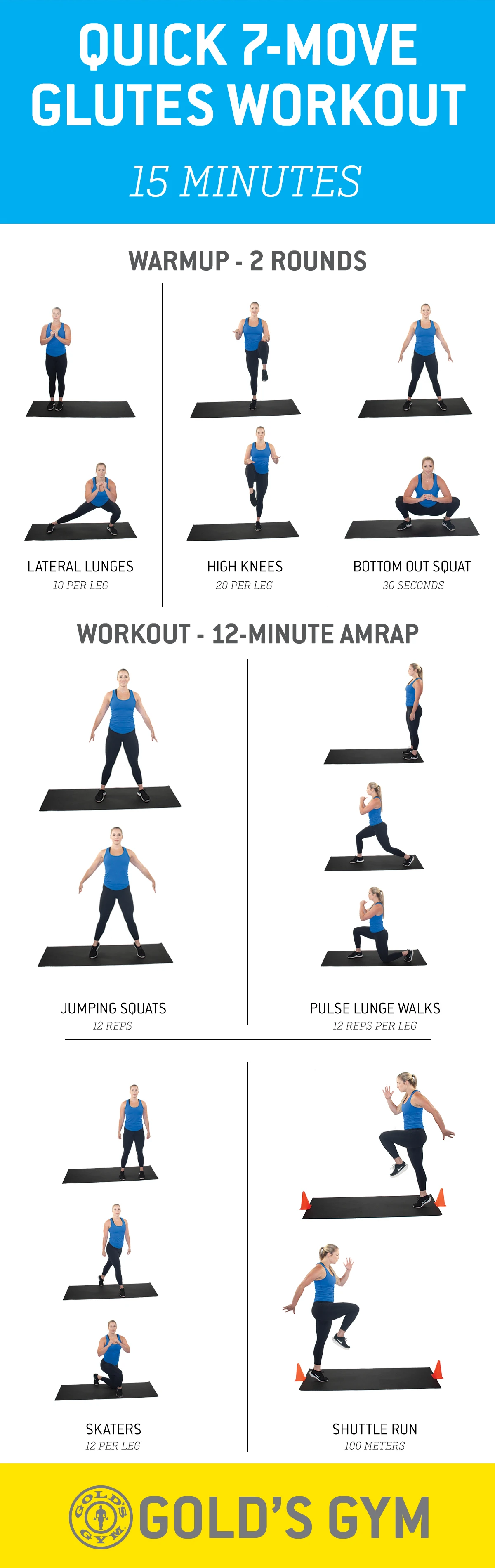
Credit: www.goldsgym.com
Tracking Your Progress
Seeing your progress helps keep you motivated. Here are ways to track:
- Take photos every 2-4 weeks (front, side, back)
- Measure your hips, thighs, and waist with a tape measure
- Write down your sets, reps, and weights used
- Note how you feel (less pain, better balance, more energy)
Do not worry about the scale too much. Muscle is denser than fat, so your weight might not change much even as your body shape improves.
Some beginners miss this: Results are not always visible right away. Sometimes you feel stronger before you see changes in the mirror. Stick with it!
Glute Workout Tips For Better Results
A few practical tips can make your glute workouts more effective:
- Warm up well: This prevents injury and activates the glute muscles.
- Focus on quality: Ten good reps are better than twenty bad ones.
- Use a mirror or video: Check your form, especially on new exercises.
- Mix things up: Try new exercises or change the order to keep muscles guessing.
- Rest enough: Muscles grow when you rest, not just when you work out.
Another insight: The mind-muscle connection is real. Before each set, picture your glutes working. This simple trick can boost results.
When To Increase Difficulty
As a beginner, you might wonder when to make your workout harder. Signs you are ready:
- You finish all sets and reps easily
- You do not feel tired or challenged
- Your form does not break down with extra reps
Try adding a band, more reps, or a harder variation—but only one change at a time. If you feel pain (not just muscle work), go back to an easier version or check your form.
Common Questions And Concerns
Many beginners have questions about glute training. Here are some quick answers:
- Will I get bulky? Most people, especially women, do not get bulky from glute training. You will gain muscle, which shapes your body.
- Can I do glute workouts every day? It’s better to have rest days. Muscles grow during rest, not just work.
- Do I need a gym? No. You can get great results with bodyweight and bands at home.
- How long before I see results? Most people feel stronger in 2-4 weeks and see visual changes in 6-12 weeks.
- Can I lose fat with glute workouts? Muscle burns more calories, but diet is key for fat loss.
Adapting Your Glute Workout For Home Or Gym
You can train your glutes effectively in both places. Here are some quick adjustments:
At Home
- Use a resistance band for extra challenge
- Use a sturdy chair or sofa for hip thrusts and step-ups
- Fill a backpack with books for added weight
At The Gym
- Try machines like the glute drive or cable kickback
- Use dumbbells or barbells for squats and lunges
- Use heavier bands or ankle weights
The main thing is to stay consistent. You do not need perfect equipment—just dedication and good form.
Glute Activation: Why It Matters
Sometimes, people have trouble feeling their glutes work. This is called “glute amnesia. ” Sitting too much can make your glutes “sleepy. ” Glute activation exercises wake them up before your main workout.
Good activation exercises:
- Bodyweight glute bridge
- Clamshells
- Lateral band walks
- Fire hydrants
Spend 5 minutes on these before your main workout. This makes your glutes work harder and gives better results.
How Glutes Support Your Whole Body
Strong glutes are not just for looks. They help in sports, prevent injuries, and make daily life easier. For example, runners with strong glutes have fewer knee injuries. People who sit a lot feel less lower back pain if they train glutes regularly.
Glutes are also important for balance and stability—key for everyone as they age. If you want to stay active and healthy, glute training is a long-term investment.
Example Of A 4-week Beginner Glute Plan
Here’s a simple month-long plan for beginners:
Week 1-2 (2x per week):
- Glute bridge: 2 sets of 12 reps
- Bodyweight squat: 2 sets of 12 reps
- Clamshell: 2 sets of 10 reps each side
- Lateral band walk: 2 sets of 12 steps each way
Week 3-4 (3x per week):
- Glute bridge: 3 sets of 15 reps
- Bodyweight squat: 3 sets of 15 reps
- Reverse lunge: 2 sets of 10 reps each leg
- Donkey kick: 2 sets of 12 reps each side
- Lateral band walk: 2 sets of 15 steps each way
Add a few reps or an extra set each week if you feel strong. Always focus on good form.
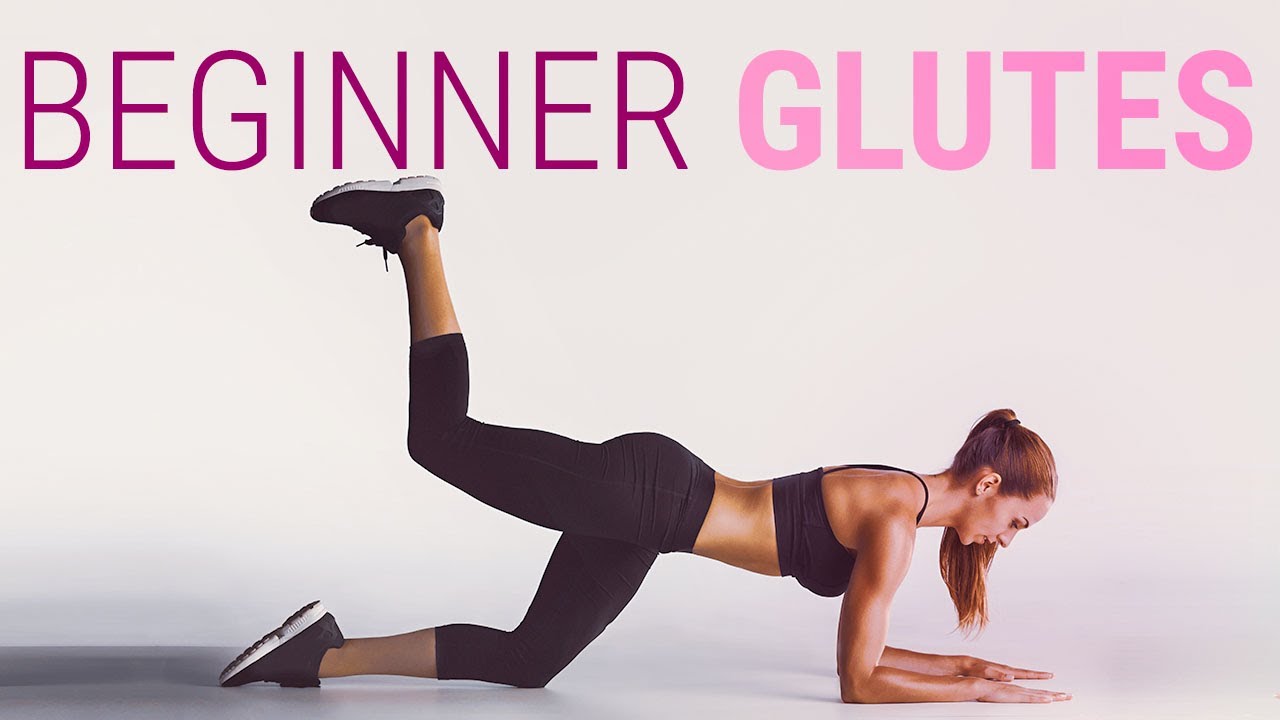
Credit: www.youtube.com
How To Avoid Plateaus
A plateau is when your progress slows down or stops. It happens to everyone. Here’s how to break through:
- Change up your routine every 4-6 weeks
- Try new exercises or change the order
- Add resistance (bands, weights) or change tempo (slow reps)
- Make sure you are eating enough protein and sleeping well
Sometimes, a short rest week helps your body recover and come back stronger.
Real-world Example: How Glute Training Helped A Beginner
Let’s look at an example. Maria, a beginner, started glute workouts at home with just a mat and resistance band. In the first month, she trained twice a week and focused on glute bridges, clamshells, and squats.
After 4 weeks, she noticed:
- She could climb stairs without knee pain
- Her jeans fit better around the hips
- She felt stronger and more balanced
Maria’s progress came from consistency and focusing on form—not fancy equipment or heavy weights. Her advice: Start small, stay patient, and celebrate every win.
Frequently Asked Questions
How Often Should I Train My Glutes As A Beginner?
Beginners should train glutes 2-3 times per week. Give yourself at least one day of rest between sessions for best results. This allows your muscles to recover and grow.
Do I Need Special Equipment For Glute Workouts?
No. You can get good results with just your bodyweight. Resistance bands, dumbbells, or a step can make exercises harder, but they are not required when starting out.
How Long Does It Take To See Results From Glute Training?
You may feel stronger after 2-4 weeks. Visible changes, like more muscle shape or less pain, usually come after 6-12 weeks of consistent training. Every body is different, so be patient.
Can I Combine Glute Workouts With Other Exercises?
Yes. Glute exercises fit well with full-body workouts. You can combine them with upper body, core, or cardio routines. Just be careful not to overtrain the same muscles.
Where Can I Learn More About Glute Training?
A reliable source for more information is the Wikipedia page on gluteus maximus. It explains the muscle’s function and importance for movement.
Glute training is a smart choice for all fitness levels. With the right approach, you will see and feel the benefits in every part of your life. Stay consistent, focus on good form, and enjoy the journey to stronger glutes!
