

Glute Workout Dumbbell: Build Stronger Glutes Fast
Glute Workout Dumbbell
Building strong and shapely glutes is not just about looks—it’s about power, movement, and overall athletic health. Your glutes are among the largest and most important muscle groups in your body. They help you stand up, climb stairs, run, and lift heavy things. If you want to improve your lower body strength, boost your metabolism, or just build a rounder backside, focusing on glute workouts with dumbbells can be a game-changer.
What makes dumbbells so useful? They are easy to use, available in most gyms and homes, and can be adjusted for different fitness levels. You don’t need complicated machines or fancy equipment to get results. With the right exercises and good form, dumbbells can help you activate all parts of your glutes—maximus, medius, and minimus—for a balanced and strong lower body.
This article will guide you through everything you need to know about glute workouts with dumbbells. We’ll cover the best exercises, how to structure your workouts, common mistakes to avoid, and answer the most common questions. Whether you’re a beginner or someone looking to take your glute training to the next level, you’ll find useful tips and insights here.
Why Strong Glutes Matter
Your glutes do much more than just fill out your jeans. They are the main drivers of hip extension, rotation, and stability. When your glutes are weak, other muscles like your lower back, hamstrings, or even your knees have to work harder.
This can cause pain and injuries over time.
Strong glutes help with:
- Better posture: Strong glutes keep your pelvis stable, which supports your spine.
- Sports performance: Activities like sprinting, jumping, and cycling all require glute power.
- Injury prevention: Balanced glutes reduce pressure on your knees and lower back.
- Everyday strength: Simple tasks like standing up, lifting bags, or climbing stairs become easier.
Many people spend hours sitting each day, which can make glutes weak and “inactive. ” Adding dumbbell glute exercises to your routine can help wake up these muscles, improve movement, and build a healthier body.
Glute Anatomy And How Dumbbells Help
Understanding your glute muscles helps you train them better. The gluteus maximus is the largest muscle in your buttocks, responsible for hip extension and shape. The gluteus medius sits on the outer side and stabilizes your hips. The gluteus minimus is deep inside, supporting movement and stability.
Dumbbells are especially effective because:
- They force each side of your body to work equally, preventing muscle imbalances.
- You can adjust weight easily to match your strength level.
- Dumbbells allow for a big range of motion, which is important for muscle growth.
- Many dumbbell glute exercises also work your core and legs, giving you more benefits in less time.
Best Dumbbell Glute Exercises
Here are the most effective dumbbell glute exercises. Each one targets your glutes in a unique way. Doing a mix of these ensures all glute muscles are worked.
1. Dumbbell Hip Thrust
This is a top glute builder. Sit on the floor with your upper back against a bench or box. Roll a heavy dumbbell onto your hips. Plant your feet flat and shoulder-width apart. Push through your heels, lifting your hips and squeezing your glutes at the top.
Lower down with control.
Tips:
- Keep your chin tucked and ribs down.
- Don’t over-arch your back at the top.
- Pause for a second at the top for maximum glute activation.
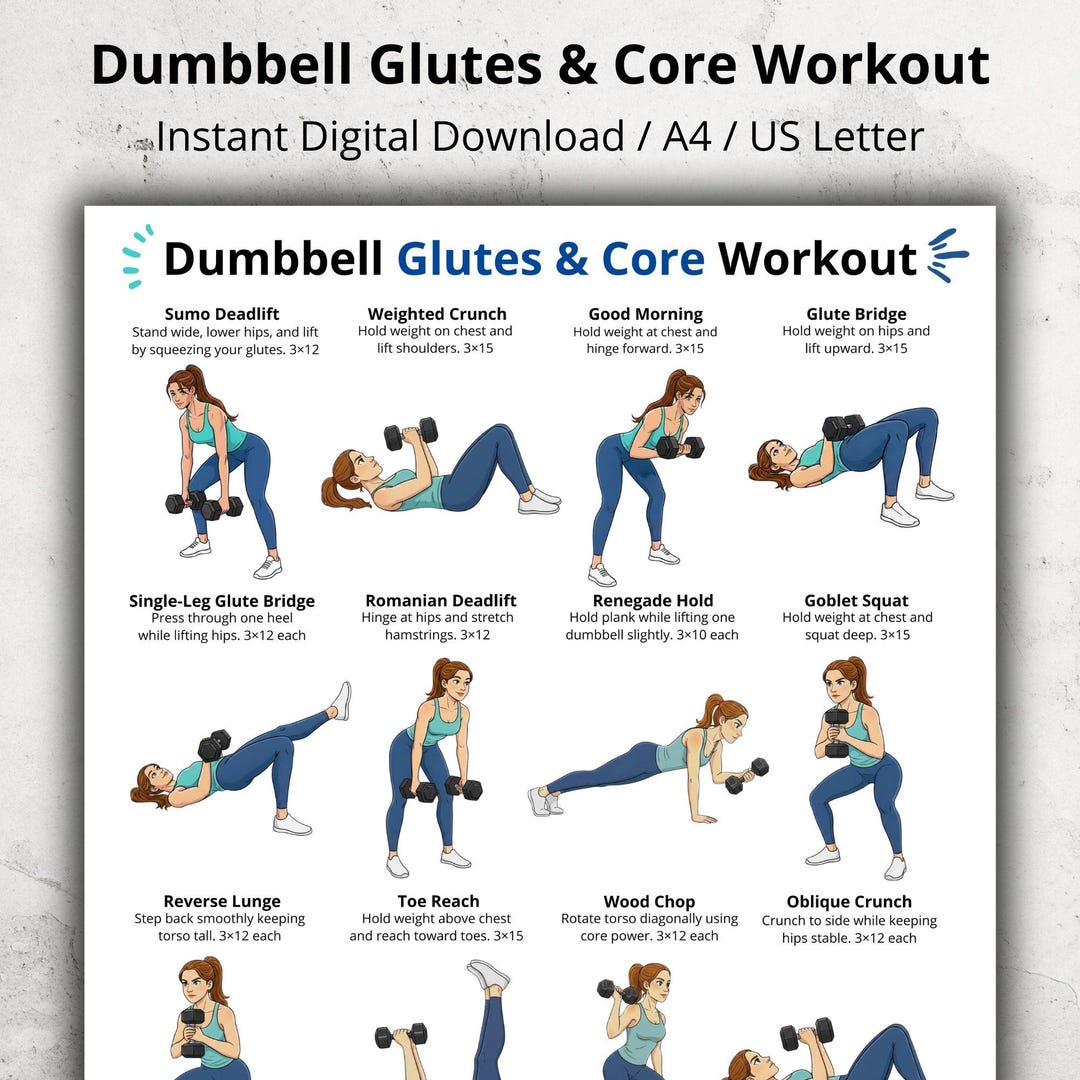
2. Dumbbell Romanian Deadlift (rdl)
Stand with feet hip-width, holding dumbbells in front of your thighs. Soften your knees. Push your hips back as you lower the dumbbells down your legs. Keep your back straight. When you feel a stretch in your hamstrings, squeeze your glutes and stand back up.
Tips:
- Move slowly—this is not a fast exercise.
- Keep dumbbells close to your body.
- Don’t let your back round.
3. Dumbbell Bulgarian Split Squat
Stand a few feet in front of a bench. Rest one foot on the bench behind you. Hold a dumbbell in each hand. Lower your back knee toward the floor, keeping your front knee over your ankle. Push up through your front heel.
Tips:
- Lean forward a bit to hit your glutes more.
- Use lighter weights if you’re new to this exercise.
- Keep your core tight for balance.
4. Dumbbell Step-up
Hold dumbbells at your sides. Step one foot onto a sturdy bench or box. Push through your heel to lift your whole body up. Step down and repeat with the other leg.
Tips:
- Use a bench that is about knee height.
- Don’t push off with your lower foot—let your lead leg do the work.
- Keep your chest up.
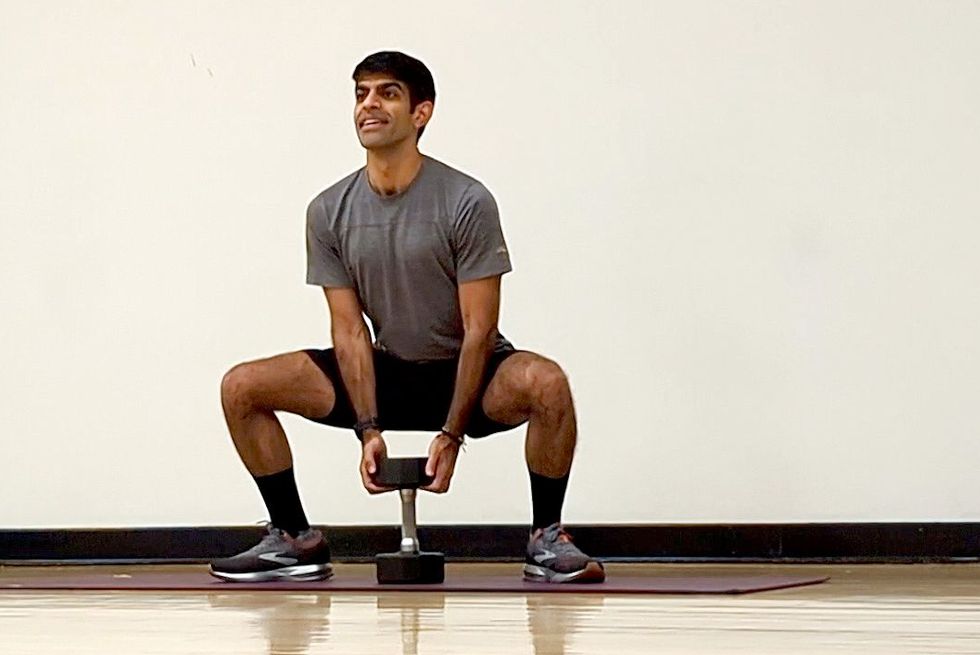
5. Dumbbell Sumo Squat
Stand with feet wider than hip-width, toes turned out. Hold a dumbbell with both hands in front of you. Lower your body until your thighs are parallel to the floor. Push through your heels to stand up.
Tips:
- Keep your knees out over your toes.
- Go slow and control each rep.
- Squeeze your glutes at the top.
6. Dumbbell Glute Bridge
Lie on your back with knees bent and feet on the floor. Rest a dumbbell on your hips. Push through your heels to lift your hips, squeezing glutes at the top. Lower down.
Tips:
- Keep your back flat.
- Pause at the top for more tension.
- Don’t let your knees fall out.
7. Dumbbell Curtsy Lunge
Hold a dumbbell in each hand. Step your right leg behind and across your left, lowering into a lunge. Push back to start and repeat on the other side.
Tips:
- Keep your chest up.
- Step wide enough to feel your glutes working.
- Use light weights at first.
8. Dumbbell Kickstand Deadlift
Stand with one foot slightly behind the other, heel up. Hold dumbbells in front. Hinge at the hips, keeping your back straight. Lower dumbbells toward the floor, then squeeze glutes to return.
Tips:
- Focus on moving your hips back, not just bending forward.
- Don’t let your front knee move in or out.
- Use mirrors to check your form.
9. Dumbbell Single-leg Glute Bridge
Lie on your back with one knee bent and the other leg straight. Rest a dumbbell on your hip (same side as bent leg). Push through your heel to lift your hips. Lower down with control.
Tips:
- Keep your hips level.
- Go slow—this is harder than it looks.
- Start with no weight if needed.
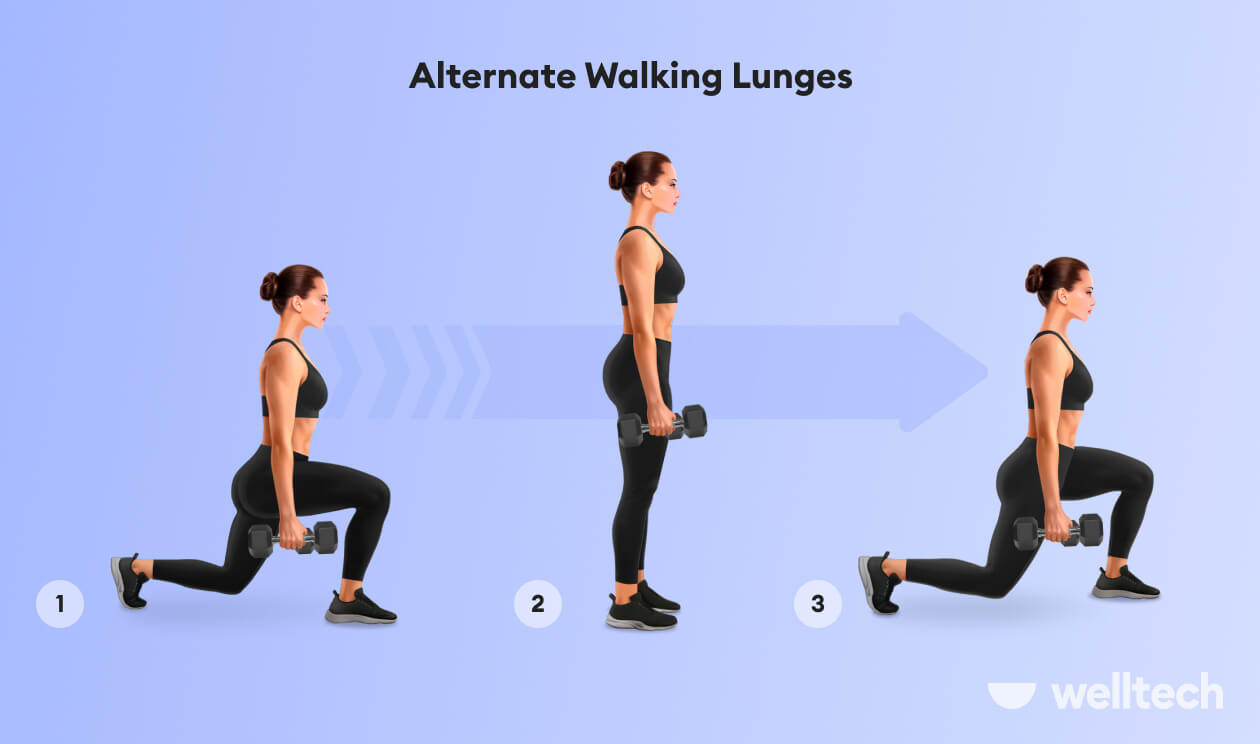
10. Dumbbell Walking Lunge
Hold dumbbells at your sides. Step forward with one leg, lower your knee, then step the other leg forward into the next lunge. Keep moving forward.
Tips:
- Use a long stride to hit your glutes.
- Don’t rush—focus on control.
- Keep your chest tall.
How To Structure A Dumbbell Glute Workout
Getting results depends on more than just picking the right exercises. You need a smart plan that fits your goals, time, and fitness level.
Workout Frequency
Most people see good results training glutes 2-3 times per week. This gives enough stimulus for growth, but also time to recover. Training too often can cause soreness and slow progress.
Sets, Reps, And Weight
- Beginners: Start with 2-3 sets of 10-15 reps for each exercise.
- Intermediate/Advanced: Try 3-5 sets of 8-12 reps, using heavier dumbbells.
- Choose a weight that feels challenging by the last few reps, but allows good form.
- For glute growth, focus on higher volume (more sets and reps) and progressive overload (gradually increasing weight or reps).
Sample Workout Plan
Here’s a simple plan for a full dumbbell glute session:
- Dumbbell Romanian Deadlift: 3 sets x 12 reps
- Dumbbell Hip Thrust: 3 sets x 10 reps
- Dumbbell Bulgarian Split Squat: 3 sets x 10 reps per leg
- Dumbbell Step-Up: 2 sets x 12 reps per leg
- Dumbbell Glute Bridge: 2 sets x 15 reps
Rest 60-90 seconds between sets. If you’re short on time, you can superset (pair) two exercises together.
How To Progress Over Time
One common mistake is doing the same workout every week. Muscles need new challenges. Here’s how you can progress:
- Increase dumbbell weight when you can do all reps easily.
- Add more sets or reps.
- Slow down the lowering part of each rep (eccentric).
- Add a pause at the hardest part (like the top of a hip thrust).
Comparing Dumbbell Glute Exercises
Not all dumbbell glute exercises work your muscles in the same way. Here’s a quick comparison to help you pick the right ones for your goals:
| Exercise | Glute Activation | Balance Required | Other Muscles Worked |
|---|---|---|---|
| Dumbbell Hip Thrust | Very High | Low | Hamstrings, Core |
| Dumbbell Bulgarian Split Squat | High | High | Quads, Core |
| Dumbbell Romanian Deadlift | High | Medium | Hamstrings, Lower Back |
| Dumbbell Step-Up | Medium | Medium | Quads, Calves |
| Dumbbell Sumo Squat | Medium | Low | Adductors, Quads |
For maximum glute growth, include both hip thrust (or glute bridge) and hinge-based moves (like RDLs).
Common Mistakes And How To Fix Them
Working your glutes with dumbbells is simple, but some errors can limit your results—or even cause injury.
1. Using Too Much Weight Too Soon
Many people think heavier is better. But with poor form, you may hurt your back or miss glute activation. Start lighter, master your technique, then increase the weight.
2. Not Feeling The Glutes
If you feel your lower back or quads more than your glutes, adjust your stance or movement. Small changes in foot position or tempo can shift the focus to your glutes.
3. Rushing The Reps
Slow, controlled movements build more muscle. Don’t swing the dumbbells or use momentum. Pause at the top of each rep and focus on the squeeze.
4. Skipping Warm-up
Cold muscles are less effective and more prone to injury. Do a few minutes of dynamic stretches, like leg swings or bodyweight squats, before starting.
5. Ignoring Single-leg Moves
Single-leg exercises expose weak spots and fix muscle imbalances. Don’t just stick to two-legged moves—add split squats, lunges, and single-leg bridges.
Tips For Better Results
Here are some key strategies to get the most from your dumbbell glute workouts:
- Mind-muscle connection: Really focus on squeezing your glutes during each rep. This helps activate more muscle fibers.
- Range of motion: Go as deep as your flexibility allows, without pain. Deeper moves often activate more glute muscle.
- Foot placement: Small changes (like turning toes out in sumo squats) can help you feel your glutes more.
- Rest and recovery: Glutes need time to recover and grow. Don’t work them hard every day.
- Nutrition: To build muscle, you need enough protein and calories. Don’t forget this part.
- Consistency: Results come from repeating good workouts week after week.
Advanced Glute Training Techniques
Once you’ve mastered the basics, you can add advanced methods to keep making progress.
1. Progressive Overload
Try to lift slightly heavier dumbbells or do more reps every few weeks. This simple approach is the foundation of muscle growth.
2. Tempo Training
Change how fast you lift and lower the weights. For example, take 3 seconds to lower and 1 second to lift. This increases time under tension and boosts growth.
3. Isometric Holds
Pause at the hardest part of the movement (like the top of a hip thrust) for 2-3 seconds. This increases muscle activation.
4. Pre-exhaustion
Do an isolation move like a glute bridge before a compound move like a squat. This makes your glutes work harder in the main exercise.
5. Drop Sets
After your last set, reduce the weight and keep going until you can’t do any more reps. This burns out the muscle for extra growth.
Glute Activation: Why Warm-ups Matter
Many people have “sleepy” glutes from sitting all day. Glute activation drills before your main workout can help you feel your glutes more and get better results.
Try these as a warm-up:
- Bodyweight glute bridges (15 reps)
- Clamshells with or without a light band (15 reps per side)
- Donkey kicks (10 reps per side)
- Bodyweight squats (15 reps)
Spend 5-8 minutes on these before picking up the dumbbells.
Dumbbell Selection Guide
Choosing the right dumbbells is important for safety and progress.
What Weight To Use?
For beginners, start with lighter dumbbells (5-15 lbs) to learn the moves. Intermediate users can use 15-35 lbs, and advanced lifters may use 40 lbs or more. The right weight lets you finish all your reps with good form, but the last 2-3 reps should be tough.
Fixed Vs. Adjustable Dumbbells
Fixed dumbbells are sturdy but take up space. Adjustable dumbbells save room and let you change weights quickly. For home workouts, adjustable sets are popular.
Grip And Comfort
Look for dumbbells with a textured grip and comfortable handle. This helps prevent slipping, especially if you sweat.
Cost And Quality
High-quality dumbbells cost more but last longer and feel better to use. If you train at home, think of them as an investment.
Here’s a quick comparison of dumbbell types:
| Type | Pros | Cons | Best For |
|---|---|---|---|
| Fixed Dumbbells | Durable, No Setup | Take Space, More Costly | Gyms, Dedicated Home Gyms |
| Adjustable Dumbbells | Space-Saving, Flexible | Can Be Bulky, Less Durable | Home Use, Limited Space |
| Selectorized Dumbbells | Quick Weight Change | Expensive, Moving Parts | Advanced Home Users |
Home Vs. Gym Glute Workouts
You can build strong glutes with dumbbells almost anywhere. But there are some differences between training at home and in a gym.
At Home
- Less equipment, so you may repeat similar exercises more often.
- You can train anytime.
- Adjustable dumbbells save space.
- Use furniture (like a couch for hip thrusts) as benches.
In The Gym
- More dumbbell weight options.
- Benches, boxes, and mirrors help with form and variety.
- Sometimes you need to wait for equipment.
Both places work well—consistency and effort matter most.
Tracking Your Progress
To know if your glute workouts are working, track your results. Here’s how:
- Write down weights, sets, and reps for each workout.
- Take progress photos every few weeks.
- Notice changes in strength (can you use heavier dumbbells? ).
- See how your clothes fit—glutes may feel firmer or more lifted.
If you don’t see progress after a few months, change your routine or increase your weights.
Real-world Results And Motivation
Many people start glute workouts for better looks, but they stay for the strength and confidence. Improved glutes often mean better posture, less back pain, and stronger legs for sports or everyday life.
One thing beginners often miss is that results take time. Visible changes may take months, even if you get stronger fast. Take small wins—like doing more reps or lifting heavier—as signs of progress. Celebrate these, and stay patient.
Another insight: Muscle soreness is not always a sign of a good workout. If your glutes are sore for days, you may be overdoing it or need more recovery.
Nutrition For Glute Growth
Training is just one piece. Your body needs the right food to build muscle. Here are key tips:
- Protein: Eat enough protein to repair and grow muscle. Aim for about 0.7-1 gram per pound of body weight.
- Calories: If you want bigger glutes, you may need a calorie surplus (eating more than you burn).
- Carbs and fats: Don’t skip these. Carbs give you energy to train, and fats support hormones.
- Drink water—muscles need hydration to work well.
Eating well after your workout helps with muscle repair. Try a meal with protein and carbs within two hours after training.
Credit: welltech.com
Safety Tips And Injury Prevention
Glute workouts with dumbbells are usually safe, but keep these tips in mind:
- Always warm up your body before lifting.
- Use good form—don’t rush or lift too heavy.
- If you feel sharp pain (not normal muscle burn), stop and check your technique.
- If you have past injuries, talk to a trainer or physical therapist before starting.
A small but important tip: Watch your footing, especially with heavy dumbbells. Don’t train on slippery floors.
Glute Workouts For Different Goals
Everyone wants something different from their glute training. Here’s how to adjust your workouts for specific goals.
For Muscle Growth (hypertrophy)
- Use moderate to heavy dumbbells.
- Do 8-12 reps per set.
- Focus on slow, controlled movements and full range of motion.
- Rest 60-90 seconds between sets.
For Endurance And Tone
- Use lighter dumbbells.
- Do 15-20 reps per set.
- Shorter rests (30-60 seconds).
- Add more single-leg or high-rep moves.
For Power And Sports
- Use explosive moves like step-ups or hip thrusts with a faster push.
- Lower reps (6-8), heavier weights.
- Rest longer between sets (2-3 minutes).
Credit: www.bicycling.com
Combining Glute Workouts With Other Training
You can train glutes alone, or combine these exercises with other muscle groups. Many people add glute-focused moves to leg day. Others do full-body workouts. Both approaches work—just make sure glutes get enough attention if they’re your priority.
A smart mix is:
- 1-2 days of full lower body (glutes, quads, hamstrings)
- 1 day focused only on glutes (shorter but intense)
- Upper body on other days
Don’t train heavy glutes the day before a big run or sports game—your legs might feel tired.
Glute Workout Dumbbell Routine Examples
Here are two sample routines for different levels.
Beginner Routine
- Dumbbell Glute Bridge: 2 sets x 15 reps
- Dumbbell Sumo Squat: 2 sets x 12 reps
- Dumbbell Step-Up: 2 sets x 10 reps per leg
Rest 60-90 seconds between sets. Focus on form.
Intermediate Routine
- Dumbbell Romanian Deadlift: 3 sets x 12 reps
- Dumbbell Hip Thrust: 3 sets x 10 reps
- Dumbbell Bulgarian Split Squat: 3 sets x 10 reps per leg
- Dumbbell Curtsy Lunge: 2 sets x 12 reps per leg
Rest 60 seconds between sets. Add a pause at the top of hip thrusts.
You can switch exercises each week to keep things interesting.
The Science Behind Glute Workouts
Research shows that hip thrusts and deadlifts activate the gluteus maximus more than regular squats. Single-leg moves activate the gluteus medius and minimus, which help stabilize your hips.
A study published in the Journal of Strength and Conditioning Research found that adding hip thrusts and RDLs increased glute size and strength more than squats alone.
For more on glute training research, visit Wikipedia.
Frequently Asked Questions
How Heavy Should My Dumbbells Be For Glute Exercises?
Choose a weight that is challenging but allows you to finish all reps with good form. For beginners, 5-15 lbs is enough. As you get stronger, increase to 20-40 lbs or more. The last 2-3 reps of each set should feel tough.
Can I Build Bigger Glutes With Only Dumbbells?
Yes, you can get strong, round glutes using just dumbbells. The key is to choose the right exercises, use enough weight, and progress over time. Consistency and good nutrition are also important.
How Often Should I Do Glute Workouts?
Most people see good results training glutes 2-3 times per week. Allow at least one rest day between hard sessions to let muscles recover and grow.
What If I Only Feel My Legs, Not My Glutes?
Try changing your foot position, slowing down your reps, or doing glute activation drills before your main workout. Focus on the “squeeze” at the top of each movement. Sometimes, lighter weight and better form work better than going heavy.
Is Soreness Needed For Glute Growth?
Feeling sore sometimes is normal, but you don’t need to be sore after every workout to see progress. Too much soreness can mean you’re overdoing it or need better recovery.
Glute workouts with dumbbells are one of the most efficient ways to shape your lower body, improve your strength, and boost your confidence. With the right plan, good form, and patience, you can see real changes—no fancy equipment needed. Remember, progress comes from doing the basics well and staying consistent.
Whether you train at home or in the gym, your glute goals are within reach.
Credit: www.etsy.com
