

Glute Machine Workout: Maximize Your Glute Gains Fast
A strong, toned lower body is a goal for many people—whether you want better athletic performance, more confidence in your shape, or simply improved health and mobility. The glute machine workout is one of the most effective ways to build your glutes quickly and safely. These machines are designed to target the glute muscles directly, reduce the risk of injury, and help you see results faster than bodyweight exercises alone. If you’ve ever wondered how to use glute machines in your workout or how they compare to traditional exercises, this guide will help you understand everything you need to know.
Understanding Glute Machines
Glute machines are gym equipment designed to isolate and strengthen the gluteus maximus, gluteus medius, and gluteus minimus muscles. Some common types include the glute kickback machine, hip thrust machine, and seated abductor machine. Unlike free weights or bodyweight exercises, these machines allow you to control resistance, movement, and stability—making them ideal for both beginners and advanced users.
Glute machines use adjustable weights, padded supports, and guided motion to ensure your muscles work hard, but your joints stay protected. For many people, this leads to faster muscle growth, easier progress tracking, and less chance of poor form or injury.
Types Of Glute Machines
- Glute Kickback Machine: Targets the gluteus maximus through a backward kicking movement.
- Hip Thrust Machine: Focuses on hip extension, a key glute-building movement.
- Seated Abductor Machine: Works the outer glute muscles by pushing your legs apart.
- Standing Abductor Machine: Similar to the seated version but performed while standing.
- Multi-Hip Machine: Allows hip movement in multiple directions for balanced glute development.
- Leg Press Machine: Can also be used to target glutes with specific foot placement.
Each machine offers unique benefits. For example, the hip thrust machine activates more glute fibers, while the abductor machine shapes the outer glutes for a rounded look. Choosing the right machines depends on your fitness goals and body type.
How Glute Machines Compare To Traditional Exercises
Many people ask whether glute machines are better than squats, lunges, or other classic leg exercises. Here’s a comparison to help you decide:
| Exercise Type | Glute Activation | Ease of Use | Injury Risk |
|---|---|---|---|
| Glute Machine | High | Easy | Low |
| Squat | Medium-High | Medium | Medium |
| Lunge | Medium | Medium | Medium |
| Hip Thrust (Free Weight) | Very High | Hard | Medium |
Glute machines allow you to focus on the muscles without needing perfect balance or complex movement. This is especially helpful if you are recovering from injury, new to exercise, or want to boost your glute growth without risking your knees or back.

Credit: www.bibliotecaoscura.com
Benefits Of A Glute Machine Workout
A glute machine workout offers several benefits that go beyond simply building muscle:
- Improved muscle isolation: Machines keep your body stable, so your glutes get all the attention.
- Better tracking of progress: You can increase weights easily and see your strength improve.
- Lower risk of injury: Machines guide movement, reducing the chance of bad form.
- Customizable for all fitness levels: Both beginners and advanced athletes can adjust weight and difficulty.
- Time-efficient: You can work your glutes harder in less time than many free weight exercises.
Non-obvious Insights
Most beginners miss two key points:
- Glute machines help correct imbalances. Many people have one side stronger than the other. By isolating each leg, machines help even out strength and shape.
- Machines allow for “progressive overload” safely. Increasing resistance is key for muscle growth, and machines make it easy to add small amounts of weight without risking injury.
Anatomy Of The Glutes And Why They Matter
The glutes are made up of three main muscles:
- Gluteus maximus: The largest, responsible for hip extension and power.
- Gluteus medius: On the side, helps with hip stability and movement.
- Gluteus minimus: Deeper muscle, supports balance and movement.
Strong glutes are not just about looks. They support your lower back, improve athletic performance, and prevent injuries. Weak glutes can lead to back pain, knee issues, and poor posture.
Example: Daily Benefits
If you walk, run, climb stairs, or lift objects, strong glutes help you move efficiently and avoid strain. Athletes with powerful glutes jump higher, run faster, and change direction quickly.
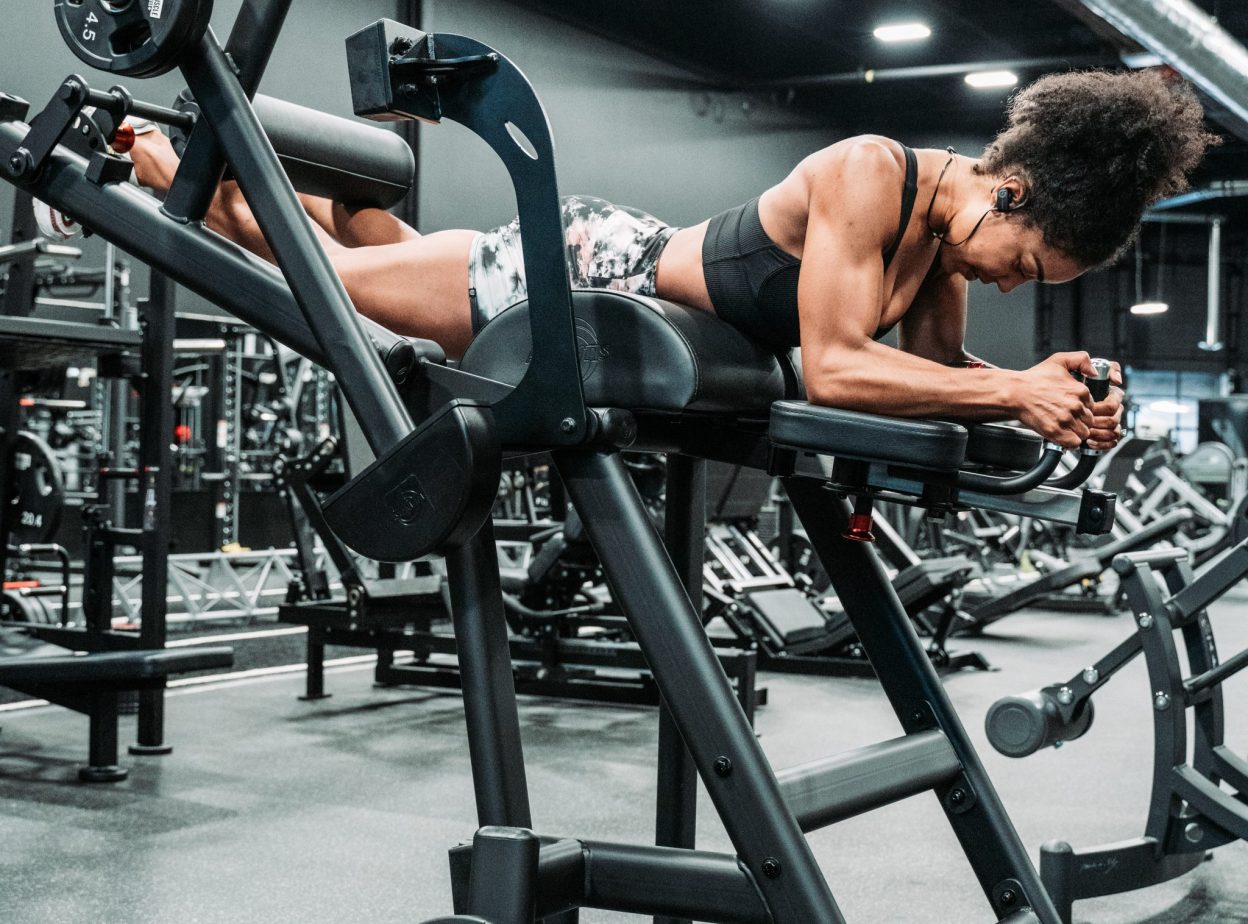
Credit: atlantisstrength.com
Planning Your Glute Machine Workout
Building a glute-focused routine with machines is simple, but planning is important. Here’s how to get started:
- Choose your machines: Pick 2–3 machines that target different parts of the glute.
- Set your frequency: 2–3 times per week is ideal for most people.
- Adjust weights: Start with lighter weights to learn form, then gradually increase.
- Rest between sets: 60–90 seconds is best for strength, 30–45 seconds for endurance.
- Track your progress: Record weights, sets, and reps each session.
Example Glute Machine Workout
Let’s look at a sample routine for beginners and intermediate users.
Beginner Routine:
- Glute Kickback Machine: 3 sets x 12 reps (each leg)
- Seated Abductor Machine: 3 sets x 15 reps
- Hip Thrust Machine: 3 sets x 10 reps
Intermediate Routine:
- Glute Kickback Machine: 4 sets x 15 reps (each leg)
- Standing Abductor Machine: 4 sets x 12 reps
- Hip Thrust Machine: 4 sets x 12 reps
- Multi-Hip Machine: 3 sets x 10 reps
Always warm up with 5–10 minutes of light cardio and dynamic stretching before you start.
Step-by-step Guide: Using Glute Machines Safely
Each machine works differently, so knowing the proper technique is crucial. Here’s how to use the three most popular glute machines:
Glute Kickback Machine
- Adjust the machine for your height and leg length.
- Place your knee or foot on the pad, depending on design.
- Hold the handles for balance.
- Push your leg back, squeezing your glute.
- Lower slowly and repeat.
Tip: Focus on squeezing your glute at the top. Avoid swinging your leg or using your lower back.
Hip Thrust Machine
- Sit on the bench and slide your shoulders under the pad.
- Place your feet flat on the floor, hip-width apart.
- Push your hips up, pressing through your heels.
- Hold for a second at the top, then lower slowly.
Tip: Keep your chin tucked and core tight to protect your back.
Seated Abductor Machine
- Sit with your legs inside the pads.
- Set the weight and adjust the seat.
- Push your legs apart, feeling your outer glutes.
- Pause, then bring legs back slowly.
Tip: Don’t let the pads bounce back. Control the movement for best results.
Progressive Overload: Growing Your Glutes Faster
Progressive overload means increasing the challenge over time. This is the secret to bigger, stronger glutes. Here’s how to do it with machines:
- Increase weight: Add 5–10 lbs when your sets feel easy.
- Add reps: Go from 10 to 12, then 15 reps as you get stronger.
- Change tempo: Slow down your movements to increase muscle tension.
- Try single-leg variations: Use one leg at a time to boost intensity.
Most people forget that small increases add up. Even a 5 lb jump every two weeks leads to big changes over months.
Common Mistakes In Glute Machine Workouts
Avoiding mistakes is as important as doing the right exercises. Here are common errors to watch out for:
- Using too much weight: This leads to poor form and less glute activation.
- Skipping warm-up: Cold muscles get injured easily.
- Fast, uncontrolled movements: Slow, controlled reps build more muscle.
- Neglecting other glute muscles: Only doing kickbacks misses the outer glutes.
- Not tracking progress: You can’t improve what you don’t measure.
Practical tip: Use your phone or a notebook to log every session. This helps you see what’s working and spot plateaus quickly.
Glute Machine Workout For Different Goals
Your routine should change depending on your goal. Here’s how to tailor your workout:
For Muscle Growth
- Use heavier weights
- Do 8–12 reps per set
- Take longer rest (60–90 seconds)
For Tone And Shape
- Use medium weights
- Do 12–20 reps per set
- Short rest (30–45 seconds)
For Strength
- Use maximum weight you can lift with good form
- Do 5–8 reps per set
- Rest 90–120 seconds
For Rehabilitation
- Use light weights
- Focus on slow, controlled movement
- Higher reps (15–20), lower intensity
Example: Athlete Vs Beginner
Athletes might do hip thrusts with heavy weight and low reps for explosive power. Beginners should focus on lighter weight and more reps to learn proper form and avoid injury.
Tracking Progress And Measuring Results
Seeing progress is motivating. Here’s how to measure your results:
- Strength: Record how much weight you lift and how many reps you do.
- Size: Take regular photos or measure your hips and thighs with a tape.
- Shape: Notice changes in your glute curve, roundness, and firmness.
- Performance: Track improvements in running, jumping, or other sports.
For most people, visible changes start after 4–8 weeks of consistent training.
Glute Machine Workout Vs Free Weights
Many people ask if glute machines are better than free weights. Both have pros and cons.
| Factor | Glute Machines | Free Weights |
|---|---|---|
| Safety | High | Medium |
| Muscle Isolation | Excellent | Good |
| Functional Strength | Medium | High |
| Variety | Limited | Unlimited |
| Learning Curve | Easy | Hard |
| Injury Risk | Low | Medium |
For beginners or those who want maximum safety, glute machines are ideal. If you want to train for sports or need variety, free weights add value. Many people use both for the best results.
Glute Machine Workout For Men And Women
Glute training is often seen as a “women’s workout,” but strong glutes are just as important for men. Men benefit from improved power, speed, and injury prevention. Women often focus on shape and tone.
Differences In Approach
- Men: May use heavier weights and focus on hip thrusts for power.
- Women: Often use higher reps and more abductor work for shape.
Example: Customization
Men might do 5–8 reps with heavy weights on the hip thrust machine. Women may prefer 15–20 reps on the abductor machine to build curves.
Tips For Maximizing Glute Machine Results
Getting the most from your glute machine workout requires smart strategies. Here are some practical tips:
- Use full range of motion: Don’t cut reps short. Full movement builds more muscle.
- Focus on mind-muscle connection: Think about squeezing your glutes during each rep.
- Rest and recover: Muscles need time to grow. Rest at least 48 hours between sessions.
- Mix up your routine: Change machines, rep ranges, and weights every 4–6 weeks.
- Eat enough protein: Aim for 0.7–1 gram per pound of body weight for muscle growth.
Non-obvious Insight
Many people forget that sleep and hydration are key. Muscles grow when you rest, not just when you train. Aim for 7–8 hours of sleep and drink plenty of water daily.
Glute Machine Workout For Home Gyms
If you don’t have access to a commercial gym, you can still build strong glutes at home. Many companies now offer compact glute machines for home use. Here’s how to choose the right one:
- Size: Make sure it fits your space.
- Adjustability: Look for machines with adjustable resistance.
- Quality: Choose sturdy, well-built machines.
Example: Popular Home Glute Machines
- Mini Hip Thrust Machine: Compact, easy to use, suitable for small spaces.
- Resistance Band Kickback Machine: Portable, affordable, good for beginners.
- Home Seated Abductor Machine: Designed for living rooms or garages.
Compare features, price, and reviews before buying. For more guidance, check out Verywell Fit.
Glute Machine Workout For Seniors
Older adults can benefit from glute machine workouts, too. Strong glutes help prevent falls, improve balance, and make everyday tasks easier.
Tips For Seniors
- Use light weights and slow movements.
- Focus on comfort and stability.
- Avoid machines that require difficult set-up or high flexibility.
Many gyms offer special machines for seniors, with easy entry and exit, padded seats, and simple controls.
Glute Machine Workout For Athletes
Athletes use glute machines to boost performance in sports like running, soccer, basketball, and hockey. Powerful glutes help with speed, jumping, and quick changes of direction.
Tips For Athletes
- Use hip thrust machines with heavy weights for explosive power.
- Add single-leg exercises to correct imbalances.
- Combine machine work with sprinting or plyometrics for best results.
How To Combine Glute Machines With Other Exercises
For full development, combine glute machine workouts with other lower body exercises:
- Squats: Build overall leg strength.
- Deadlifts: Improve back and glute power.
- Lunges: Increase balance and stability.
- Step-ups: Work glutes and hamstrings.
Alternate machine and free weight sessions for complete results.
Nutrition For Glute Growth
Training is only half the story. To build your glutes, you need the right nutrition:
- Protein: Essential for muscle repair and growth.
- Healthy fats: Support hormone production and recovery.
- Complex carbs: Give energy for tough workouts.
Aim for balanced meals with chicken, fish, beans, eggs, rice, oats, and vegetables. Avoid crash diets—they slow muscle growth and increase injury risk.
Glute Machine Workout Myths
Many myths surround glute training. Here are the most common:
- Only women need glute workouts. Wrong—men benefit just as much.
- Machines don’t build real muscle. False—machines help isolate muscles and boost growth.
- You need to train every day. Not true—rest is key for results.
- Heavy weights make you bulky. Muscle shape depends on genetics and diet.
Ignore these myths and focus on proven techniques.
Sample Advanced Glute Machine Workout
For those ready to push harder, here’s an advanced routine:
- Glute Kickback Machine: 5 sets x 15 reps (each leg)
- Hip Thrust Machine: 5 sets x 10 reps (heavy weight)
- Seated Abductor Machine: 4 sets x 20 reps
- Multi-Hip Machine: 4 sets x 12 reps
- Standing Abductor Machine: 3 sets x 15 reps
Tip: Add resistance bands to machines for extra challenge.
How Long Does It Take To See Results?
Results depend on your consistency, diet, and genetics. Most people notice changes after 4–8 weeks. Strength comes first, then size and shape. Be patient—glute growth takes time.
Injuries And Safety Tips
Safety is crucial. Always warm up, start with light weights, and use proper form. If you feel pain (not muscle burn), stop immediately.
Common Injuries
- Muscle strains
- Lower back pain
- Knee discomfort
How To Avoid
- Use correct settings on machines.
- Don’t rush your reps.
- Rest between sessions.
Glute Machine Workout For Busy People
If you’re short on time, glute machines are perfect. They allow quick, efficient workouts.
20-minute Glute Machine Workout
- Glute Kickback Machine: 2 sets x 12 reps (each leg)
- Hip Thrust Machine: 2 sets x 10 reps
- Seated Abductor Machine: 2 sets x 15 reps
Rest 30–45 seconds between sets. Focus on intensity, not speed.
Glute Machine Workout Challenges
Ready to test yourself? Try these challenges:
- Increase weight every week for 4 weeks.
- Add a new machine or variation each session.
- Aim for 100 total reps in one workout.
Challenges keep you motivated and help break plateaus.

Credit: www.amazon.com
Glute Machine Workout For Weight Loss
Glute workouts burn calories and boost metabolism. More muscle means more fat burned at rest.
Tips For Fat Loss
- Use higher reps (15–20)
- Short rest periods (30–45 seconds)
- Combine with cardio (treadmill, bike)
Frequently Asked Questions
How Often Should I Do A Glute Machine Workout?
Most people should train their glutes with machines 2–3 times per week. This gives muscles time to recover and grow. Too much can lead to overtraining and injury.
Can I Use Glute Machines If I Have Knee Or Back Pain?
Yes, glute machines are often safer for people with knee or back issues. They help control movement and reduce stress on joints. Always start with light weights and check with a doctor if pain persists.
Are Glute Machines Better Than Squats?
Glute machines isolate the glutes better than squats, especially for beginners. Squats work many muscles at once, so they’re good for overall strength, but machines are best for targeted growth.
How Do I Know If My Glutes Are Getting Stronger?
You’ll notice improved strength and shape. If you’re lifting heavier weights, seeing more muscle definition, and feeling stronger in daily activities, your glutes are growing.
What Should I Eat To Support Glute Growth?
Eat plenty of protein, healthy fats, and complex carbs. Examples include chicken, eggs, beans, nuts, rice, and vegetables. Hydration and sleep are also important for muscle recovery.
Building strong glutes with machines is simple, effective, and safe for almost everyone. Whether you’re a beginner or advanced, young or old, a well-planned glute machine workout can transform your body, boost your confidence, and improve your health. Remember to start slow, focus on form, and enjoy the process.
With patience and consistency, you’ll see the results you want.
