

Glute And Hamstring Workout: Sculpt Stronger Legs Fast
Glute And Hamstring Workout: Build Strength, Shape, And Flexibility
Strong glutes and hamstrings are more than just a fitness trend. These muscles drive explosive movement, support healthy posture, and help prevent injuries—from back pain to knee problems. Whether you want athletic power, a toned lower body, or safer daily movement, training your glutes and hamstrings is essential. This guide will show you practical exercises, workout routines, and smart strategies to reach your goals, even if you’re a beginner or returning after a break.
Many people start with squats and lunges, but there’s much more to effective glute and hamstring training. You’ll learn the anatomy, discover mistakes to avoid, and see how to build a balanced routine. Each section is packed with real-world advice, so you can train smarter—not just harder.
Ready to transform your lower body? Let’s get started.
Glute And Hamstring Anatomy: Why Training Matters
Your glutes are the largest muscle group in your body. The gluteus maximus, medius, and minimus create shape and stability. The hamstrings include three muscles—biceps femoris, semitendinosus, and semimembranosus—running from your hip to your knee.
These muscles:
- Power running, jumping, and climbing stairs
- Stabilize your hips and pelvis
- Protect your lower back and knees
- Shape the back of your legs and butt
Weak glutes and hamstrings can lead to:
- Lower back pain
- Tight hip flexors
- Knee injuries
- Poor athletic performance
A well-designed workout improves muscle tone, strength, and flexibility. You don’t need fancy equipment—bodyweight, free weights, or resistance bands work. But understanding how these muscles work helps you train efficiently.
Key Benefits Of Glute And Hamstring Training
Why focus on these muscle groups? Most people underestimate their impact. Here are some core benefits:
- Better posture: Strong glutes pull your pelvis into alignment, reducing slouching.
- Injury prevention: Balanced hamstrings protect your knees and lower back during sports.
- Athletic performance: Explosive power starts in the glutes and hamstrings—think sprinting, jumping, and even swimming.
- Fat loss and muscle tone: These large muscles burn lots of calories and create a sculpted shape.
- Functional movement: Everyday actions like standing, walking, and lifting become easier.
Surprisingly, many beginners miss the importance of muscle balance. Overtraining quadriceps (front thigh) but ignoring hamstrings and glutes can lead to imbalances and injuries.
Common Mistakes In Glute And Hamstring Workouts
Even experienced gym-goers make critical errors. Avoid these to see faster results and prevent setbacks:
- Neglecting hamstrings: Many focus on glutes, ignoring hamstring exercises. This increases injury risk.
- Poor form: Rounding your back or letting knees collapse inward reduces effectiveness.
- Not activating muscles: If you don’t feel the glutes working, you’re probably using other muscles.
- Doing only squats: Squats are great, but they mainly target quads unless you use special variations.
- Overusing machines: Machines can limit range of motion and miss stabilizer muscles.
- Skipping warm-ups: Cold muscles are prone to strain. Always warm up.
Non-obvious tip: Glute and hamstring activation improves when you slow down your reps and focus on the mind-muscle connection—think about the muscle working during each movement.
Essential Glute And Hamstring Exercises
A smart workout mixes compound and isolation exercises. Compound moves use multiple joints, while isolation focuses on one muscle group.
Compound Exercises
These build strength and size across glutes, hamstrings, and supporting muscles.
- Barbell Hip Thrust
- Romanian Deadlift
- Bulgarian Split Squat
- Sumo Squat
- Step-Up
- Kettlebell Swing
Isolation Exercises
Great for targeting weak spots or finishing your workout.
- Glute Bridge
- Hamstring Curl (machine or stability ball)
- Cable Kickback
- Seated Leg Curl
- Standing Leg Curl
Bodyweight Variations
For home workouts or beginners.
- Single-leg Glute Bridge
- Reverse Lunge
- Donkey Kick
- Fire Hydrant
- Hamstring Walkout
Below is a comparison of some popular compound and isolation exercises:
| Exercise | Type | Main Muscles | Equipment Needed |
|---|---|---|---|
| Barbell Hip Thrust | Compound | Glutes, Hamstrings | Barbell, Bench |
| Romanian Deadlift | Compound | Hamstrings, Glutes | Dumbbells/Barbell |
| Glute Bridge | Isolation | Glutes | Bodyweight |
| Hamstring Curl | Isolation | Hamstrings | Machine/Ball |
| Donkey Kick | Isolation | Glutes | Bodyweight |
Example Glute And Hamstring Workout Routine
Planning your routine is key. Here’s a sample workout you can do 2-3 times per week. Adjust weight and reps for your fitness level.
Warm-Up (5–10 minutes)
- Light cardio (jogging, cycling)
- Dynamic stretches (leg swings, hip circles)
Workout
- Barbell Hip Thrust – 4 sets x 8–12 reps
- Romanian Deadlift – 3 sets x 10 reps
- Bulgarian Split Squat – 3 sets x 8 reps each leg
- Hamstring Curl (machine or ball) – 3 sets x 12 reps
- Step-Up (weighted or bodyweight) – 3 sets x 10 reps each leg
- Glute Bridge – 3 sets x 15 reps
Cool Down (5 minutes)
- Static stretching: Hamstrings, glutes, hips
Tips For Progress
- Increase weight gradually.
- Focus on form, not speed.
- Rest 60–90 seconds between sets.
- If you feel pain (not muscle burn), stop and check your technique.
Advanced Training Techniques
Once you master basic moves, try these to boost progress:
- Tempo Training: Slow down the lowering phase (eccentric). For example, take 3 seconds to lower in a hip thrust.
- Resistance Bands: Add bands for extra tension, especially in glute bridges and kickbacks.
- Supersets: Pair two exercises back-to-back (e.g., hip thrust + glute bridge).
- Unilateral Training: Single-leg work builds balance and reduces weak spots.
- Drop Sets: After reaching muscle fatigue, reduce weight and keep going.
Athletes use these methods to break plateaus and add variety. Beginners should build a foundation before trying advanced techniques.
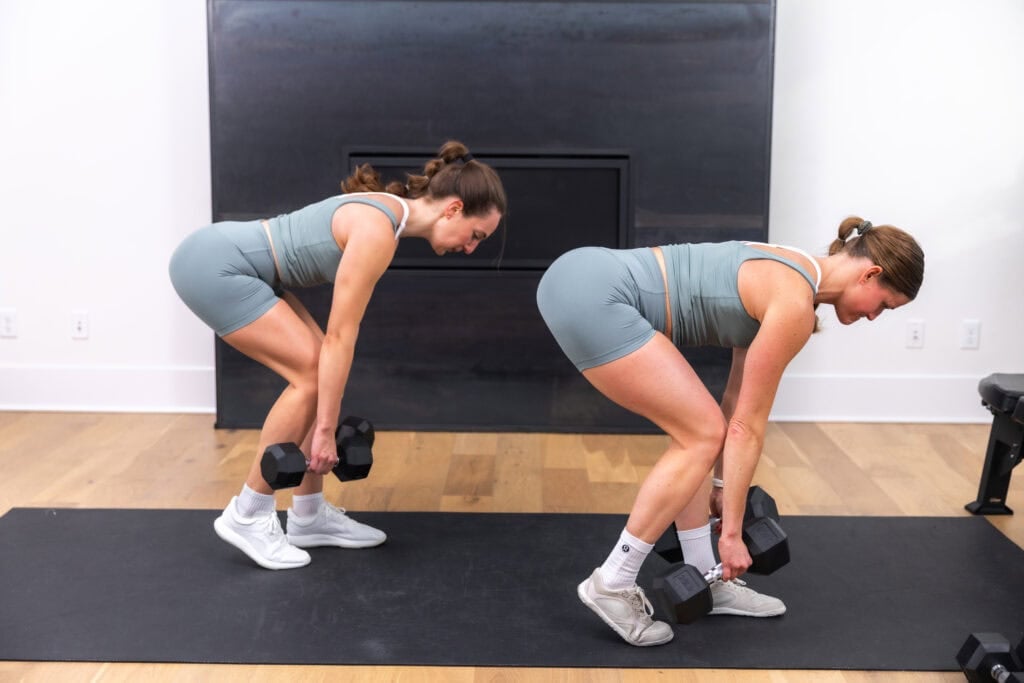
Credit: www.nourishmovelove.com
Glute And Hamstring Workouts For Different Goals
Not everyone trains for the same reason. Here’s how to adapt your routine:
Muscle Growth (hypertrophy)
- Use moderate to heavy weights.
- 8–12 reps per set.
- 3–4 sets per exercise.
- Rest 60–90 seconds.
Strength
- Heavy weights, lower reps.
- 4–6 reps per set.
- 4–5 sets.
- Rest 2–3 minutes.
Endurance
- Light weights or bodyweight.
- 15–20 reps per set.
- 2–3 sets.
- Short rest (30–45 seconds).
Fat Loss
- Mix compound moves with short rest.
- Add circuits or supersets.
- Use higher reps to burn more calories.
Here’s a table showing how to structure workouts for different goals:
| Goal | Sets | Reps | Rest Time | Intensity |
|---|---|---|---|---|
| Muscle Growth | 3–4 | 8–12 | 60–90 sec | Moderate-Heavy |
| Strength | 4–5 | 4–6 | 2–3 min | Heavy |
| Endurance | 2–3 | 15–20 | 30–45 sec | Light |
| Fat Loss | 3–4 | 12–15 | 45–60 sec | Moderate |
Home Vs. Gym Glute And Hamstring Workouts
You don’t need a gym to build strong glutes and hamstrings. Here’s how workouts compare:
| Setting | Advantages | Limitations | Recommended Exercises |
|---|---|---|---|
| Gym | Heavy weights, variety, machines | Access, cost, crowd | Hip thrust, deadlift, leg curl |
| Home | Convenience, free, privacy | Limited equipment | Glute bridge, donkey kick, step-up |
If you train at home, invest in a resistance band and a pair of dumbbells. These add challenge without needing machines.
How To Activate Glutes And Hamstrings
Many people don’t feel their glutes or hamstrings working during exercises. This is a real problem, especially for beginners. Here’s how to activate these muscles:
- Warm Up With Activation Moves: Start with glute bridges, band walks, or donkey kicks.
- Mind-Muscle Connection: Concentrate on squeezing your glutes during each rep.
- Use Proper Form: Don’t let your back arch or hips rotate.
- Avoid Excessive Momentum: Move slowly and control the weight.
A non-obvious insight: Glute activation improves when you externally rotate your feet slightly during squats and lunges. This opens the hips and shifts the focus to the glutes.
Stretching And Mobility For Glutes And Hamstrings
Flexibility matters for injury prevention and performance. Tight hamstrings or glutes can limit movement and cause pain.
Best Stretches:
- Seated Hamstring Stretch
- Figure Four Glute Stretch
- Standing Forward Bend
- Pigeon Pose
- Lying Knee-To-Chest
Hold each stretch for 20–30 seconds. Do after workouts or before bed.
Mobility Tips:
- Use foam rollers to release tight spots.
- Try dynamic stretches before exercise.
- Walk or jog lightly to warm up muscles.
Nutrition For Muscle Growth And Recovery
Training is only part of the puzzle. Nutrition fuels growth and speeds up recovery.
Protein: Aim for 0.7–1 gram per pound of body weight daily. Good sources include chicken, eggs, Greek yogurt, beans, and whey protein.
Carbohydrates: Provide energy for workouts. Choose whole grains, fruits, and vegetables.
Healthy Fats: Support hormone balance. Use avocados, nuts, and olive oil.
Hydration: Drink water before, during, and after exercise. Dehydration slows muscle recovery.
Post-Workout: Eat a meal or shake with protein and carbs within 1–2 hours after training. This helps repair muscle fibers and replenish energy.
A practical tip: Many beginners don’t eat enough protein, slowing progress. Track your intake for a week to find gaps.
How Often Should You Train Glutes And Hamstrings?
Frequency depends on your goals and recovery. Most people train these muscles 2–3 times per week. Allow at least one day between sessions for recovery.
If you’re advanced, you can train more often, but vary the intensity. For example:
- Heavy day (deadlifts, hip thrusts)
- Light day (bodyweight, mobility, stretching)
Listen to your body. If you feel persistent soreness, take an extra rest day.

Credit: us.humankinetics.com
Tracking Progress And Avoiding Plateaus
Results don’t happen overnight. Here’s how to measure progress:
- Strength Gains: Track how much weight you lift.
- Body Measurements: Use a tape measure for hips, thighs, and waist.
- Mirror Feedback: Visual changes are slow but real.
- Mobility: Notice improved flexibility and movement.
- Performance: Faster sprints, higher jumps, easier stairs.
Plateaus happen to everyone. Change your routine every 4–6 weeks. Add new exercises, increase weight, or adjust reps.
A non-obvious insight: Take photos every month. You’ll notice changes that the scale misses.
Safety Tips And Injury Prevention
Training hard is good, but safety matters. Follow these steps:
- Always warm up before heavy lifts.
- Keep your back straight and core tight during deadlifts and hip thrusts.
- Don’t lock your knees at the top of movements.
- Use a spotter for heavy barbell work.
- If you feel sharp pain (not muscle burn), stop immediately.
Avoid rushing through reps—quality beats quantity.
Glute And Hamstring Workout For Athletes
Athletes need explosive power and injury resistance. Here’s a sample routine for sports performance:
Dynamic Warm-Up:
- High knees, butt kicks, lateral shuffles
Workout:
- Power Cleans – 3 sets x 6 reps
- Box Jumps – 3 sets x 8 reps
- Barbell Hip Thrust – 4 sets x 8 reps
- Nordic Hamstring Curl – 3 sets x 6 reps
Cool Down:
- Stretching, foam rolling
Athletes should focus on speed and power, not just muscle size. These exercises build explosive strength for sprinting, jumping, and changing direction.
Glute And Hamstring Workout For Older Adults
Strength training is important at every age. For older adults:
- Use lighter weights or bodyweight.
- Focus on slow, controlled movements.
- Prioritize balance and stability.
Recommended Exercises:
- Chair Squat
- Glute Bridge
- Step-Up
- Standing Leg Curl
Aim for 2–3 sessions per week. Always check with a doctor before starting new workouts.
Glute And Hamstring Workout For Beginners
If you’re new to fitness, keep it simple. Start with bodyweight moves and focus on form.
Sample Beginner Routine:
- Glute Bridge – 3 sets x 12 reps
- Reverse Lunge – 3 sets x 10 reps each leg
- Donkey Kick – 3 sets x 12 reps each leg
- Hamstring Walkout – 2 sets x 8 reps
Rest 60 seconds between sets. Gradually add weight as you get stronger.
Glute And Hamstring Workout For Women
Women often want toned legs and a firm glute shape. Here’s how to focus your routine:
- Use hip thrusts, glute bridges, and step-ups.
- Mix bodyweight and weighted exercises.
- Don’t fear heavy weights—they help shape, not bulk.
Women’s muscles respond well to higher reps and moderate weights. Add resistance bands for extra challenge.
Glute And Hamstring Workout For Men
Men usually aim for size and strength. Focus on:
- Heavy deadlifts, hip thrusts, and squats
- Lower reps, higher weights
- Include single-leg work for balance
Add plyometric moves like jumps or sprints for explosive power.
Recovery And Rest: Essential For Progress
Muscles grow during rest, not during training. Here’s how to recover:
- Sleep 7–9 hours per night
- Stretch after workouts
- Use foam rollers to release tension
- Eat balanced meals with protein and carbs
Overtraining slows progress and increases injury risk. Take at least one rest day per week.

Credit: us.humankinetics.com
Glute And Hamstring Workout Equipment
You don’t need expensive gear, but a few tools help:
- Barbell: For hip thrusts and deadlifts
- Dumbbells: Versatile for many moves
- Resistance Bands: Great for activation and added tension
- Bench or Step: For split squats and step-ups
- Stability Ball: For hamstring curls
If you’re just starting, bodyweight exercises are enough. As you progress, add weights and bands.
Scientific Research On Glute And Hamstring Training
Studies show that hip thrusts and Romanian deadlifts activate the glutes and hamstrings better than squats alone. Glute activation increases when you pause at the top of hip thrusts. Hamstring strength reduces risk of knee injuries in sports.
A good resource for research-backed exercise info is NCBI.
Frequently Asked Questions
How Long Does It Take To See Results From Glute And Hamstring Workouts?
Most people notice changes in strength within 2–4 weeks. Visible muscle tone usually takes 8–12 weeks with consistent training and good nutrition. Individual progress varies based on genetics, diet, and workout intensity.
Can I Train Glutes And Hamstrings On The Same Day?
Yes, it’s effective to train both together. Many exercises, like hip thrusts and deadlifts, work both groups. Just avoid overtraining—2–3 sessions per week is plenty for most people.
What Is The Best Exercise For Glute Activation?
Barbell hip thrust is the top choice for glute activation. Pausing at the top and using a resistance band can increase muscle engagement. For beginners, glute bridges are a good starting point.
How Can I Avoid Knee Pain During Glute And Hamstring Workouts?
Focus on proper form—keep knees tracking over toes, don’t let them collapse inward. Strengthen your hamstrings and glutes to stabilize the joint. Avoid locking your knees at the top of movements and warm up thoroughly.
Are Glute And Hamstring Workouts Suitable For Older Adults?
Absolutely. Training these muscles supports balance, mobility, and joint health. Use lighter weights, focus on controlled movements, and choose exercises like step-ups, glute bridges, and standing leg curls.
Building strong glutes and hamstrings is one of the smartest choices for health, fitness, and confidence. With the right exercises, balanced routines, and good nutrition, you’ll see progress in strength, shape, and daily movement. Remember—quality matters more than quantity. Stay consistent, listen to your body, and enjoy the journey to a stronger lower body.
