

Full Glute Workout: Transform Your Glutes With These Top Exercises
A full glute workout is more than just a way to shape your body. Strong glutes help you run faster, lift heavier, and stay balanced. If you want to build muscle, improve your athletic performance, or simply look better in jeans, working your glutes is key.
Many people focus only on squats or lunges, but the glutes need a variety of movements and targeted exercises. In this article, you’ll discover how to train your glutes fully, learn the best exercises, see sample routines, and avoid common mistakes.
You’ll also get practical advice for beginners and advanced lifters, plus answers to the most asked questions. Whether you train at home or in the gym, this guide will help you build powerful, well-shaped glutes and understand why they matter for your health and fitness.
Understanding Glute Muscles
The glutes are made up of three main muscles: gluteus maximus, gluteus medius, and gluteus minimus. Each plays a different role.
- Gluteus maximus: The largest muscle, responsible for hip extension and outward rotation. It powers movements like standing up from a chair, running, and jumping.
- Gluteus medius: Located on the outer side of your hips, it stabilizes the pelvis. It’s active during walking, running, and side steps.
- Gluteus minimus: The smallest, sitting beneath the medius. It helps with hip abduction and internal rotation.
These muscles work together to move your hips, support your back, and keep your body balanced. Weak glutes can lead to back pain, knee injuries, and poor posture.
Why Glutes Are Important
Strong glutes help you:
- Maintain good posture
- Protect your lower back
- Run, jump, and lift safely
- Prevent injuries in sports
- Improve overall body strength
Many daily actions depend on glute strength. Even simple activities, like walking up stairs or getting out of bed, use these muscles.
Common Signs Of Weak Glutes
If your glutes are not strong enough, you might notice:
- Lower back pain
- Poor balance
- Slow running speed
- Knees collapsing inward during squats
- Difficulty standing up after sitting
Building your glutes solves these problems and boosts your confidence.
Key Principles For Glute Training
Not all glute workouts are equal. To see real progress, you need to follow certain principles. This section explains how to train your glutes effectively.
1. Exercise Selection
Choose exercises that work all three glute muscles. Mix compound movements (like squats) with isolation exercises (like hip abductions).
2. Training Frequency
For best results, train your glutes 2–3 times per week. This gives muscles time to recover while still stimulating growth.
3. Progressive Overload
To make your glutes stronger, gradually increase weight, reps, or intensity. If you always do the same workout, your muscles stop growing.
4. Mind-muscle Connection
Focus on squeezing your glutes during each rep. Many people use their legs or lower back instead of glutes. Slow down and feel the muscle working.
5. Balanced Routine
Include movements in different planes:
- Hip extension: Moves like hip thrusts and deadlifts.
- Hip abduction: Side-lying leg raises and band walks.
- Hip external rotation: Clamshells and monster walks.
6. Rest And Recovery
Muscles grow while resting. Avoid training the same muscle every day. Get enough sleep and eat a balanced diet.
7. Variation
Change your exercises every few weeks. This keeps your body challenged and prevents plateaus.
Best Glute Exercises
A strong glute workout uses a mix of compound and isolation moves. Here are the most effective exercises:
1. Hip Thrust
This exercise targets the gluteus maximus. You can use a bench and barbell, or do it with bodyweight.
- Sit with your upper back on a bench
- Place feet flat on the ground, knees bent
- Push hips up, squeezing glutes at the top
- Lower back down
Hip thrusts build strength and size. Research shows they activate the glutes more than squats.
2. Romanian Deadlift
Works the gluteus maximus and hamstrings.
- Hold a barbell or dumbbells
- Keep legs slightly bent
- Lower weight, keeping your back straight
- Feel stretch in glutes, then lift back up
Focus on slow, controlled movement.
3. Squats
A classic compound move. Squats target all glute muscles, plus thighs.
- Stand with feet shoulder-width apart
- Lower down like sitting in a chair
- Keep chest up, knees out
- Rise back up
Try variations: goblet squats, sumo squats, or pistol squats.
4. Lunges
Lunges build glute strength and improve balance.
- Step forward with one leg
- Lower until both knees are bent
- Push back up
You can do walking lunges, reverse lunges, or side lunges.
5. Step-ups
Simple but powerful. Use a sturdy bench or step.
- Step up with one foot
- Push through your heel, squeeze glute
- Step down
Change height for more challenge.
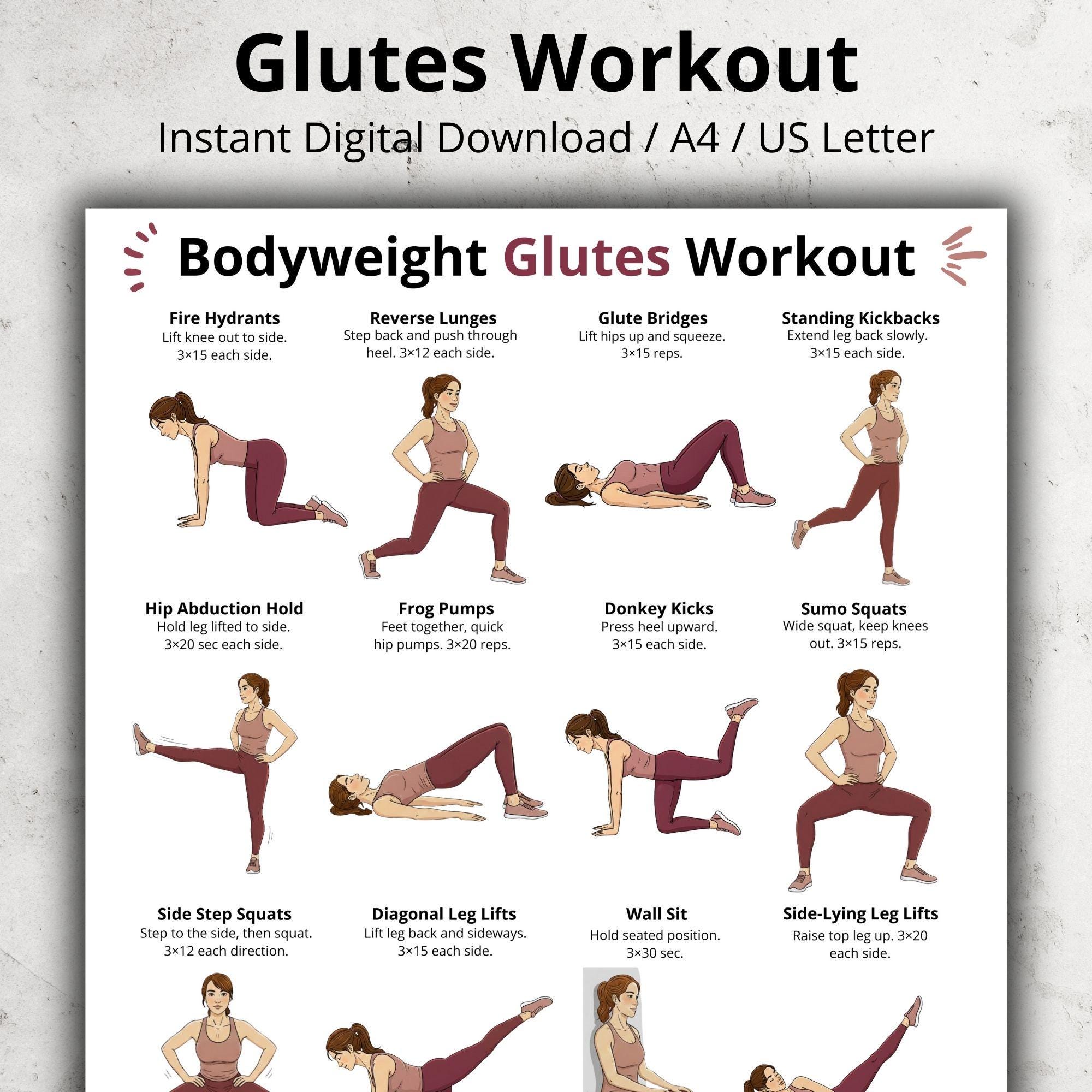
6. Glute Bridge
Great for beginners. Similar to hip thrust but on the floor.
- Lie on your back, knees bent
- Push hips up, squeeze glutes
- Lower slowly
Add weight for extra resistance.
7. Bulgarian Split Squat
Targets glutes and quads. Use a bench behind you.
- Place one foot behind on bench
- Lower down, front knee over ankle
- Push up through front heel
Works balance and single-leg strength.
8. Cable Kickback
Isolation move using a cable machine.
- Attach ankle strap
- Kick leg back, squeeze glute
- Return slowly
Helps shape and tone glutes.
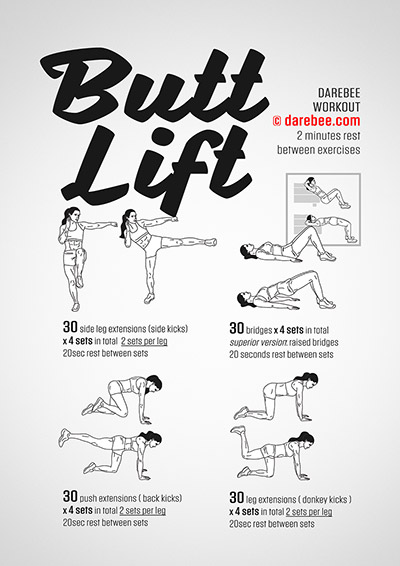
9. Clamshell
Targets gluteus medius and minimus.
- Lie on your side, knees bent
- Open top knee, keep feet together
- Close knee
Use a resistance band for more intensity.
10. Monster Walks
Works glute medius, helps hip stability.
- Place band around knees or ankles
- Step sideways, keeping tension
- Stay low, chest up
Great warm-up or finisher.
Sample Full Glute Workout Routine
Here’s a routine you can follow at the gym or at home. Adjust weights and reps based on your level.
Warm-up
Start with 5–7 minutes:
- Light cardio (jogging, cycling)
- Dynamic stretches (leg swings, hip circles)
Main Workout
- Hip Thrust – 4 sets x 10–12 reps
- Bulgarian Split Squat – 3 sets x 8–10 reps each leg
- Romanian Deadlift – 3 sets x 10–12 reps
- Cable Kickback – 3 sets x 12–15 reps each leg
- Monster Walks – 2 sets x 20 steps
- Clamshell – 2 sets x 15 reps each side
Cool Down
- Stretch glutes and hips for 5 minutes
- Foam roll if possible
Weekly Schedule Example
You can train your glutes three days a week. Here’s a sample schedule.
| Day | Workout Focus | Key Exercises |
|---|---|---|
| Monday | Glute Strength | Hip Thrust, Romanian Deadlift, Squat |
| Wednesday | Glute Activation & Balance | Bulgarian Split Squat, Clamshell, Monster Walks |
| Friday | Glute Power | Lunges, Step-Ups, Cable Kickback |

Credit: www.fondation-enovos.lu
Home Vs Gym Glute Workouts
You don’t need fancy equipment for a full glute workout. Both home and gym routines can work well.
Home Workout Tips
- Use resistance bands for added challenge
- Try single-leg exercises for extra intensity
- Use household items like chairs for step-ups
Gym Workout Advantages
- Access to weights and machines
- Easier to add progressive overload
- More exercise variety
Here’s a comparison of home and gym options:
| Workout Location | Equipment Needed | Exercise Variety | Progressive Overload |
|---|---|---|---|
| Home | Bands, bodyweight, chair | Moderate | Limited |
| Gym | Weights, machines, cables | High | Easy |
For best results, use both options. If you train at home, focus on high reps and good form.
Glute Workout Tips For Beginners
If you’re new to glute training, start slow. Here are practical tips:
- Learn proper form before adding weight
- Use mirrors or record yourself to check technique
- Start with bodyweight exercises, then add resistance
- Don’t skip warm-up and stretching
- Rest for 60–90 seconds between sets
- Track progress (reps, weights, photos)
Beginners often forget to squeeze their glutes. Focus on the mind-muscle connection.
Common Beginner Mistakes
- Doing only squats for glutes
- Using too much weight, losing form
- Not training glutes often enough
- Skipping hip abduction exercises
- Neglecting recovery
Make your glute workouts a habit. Consistency is more important than intensity.
Advanced Glute Training Strategies
If you want to take your glute gains to the next level, try these strategies.
1. Increase Training Volume
Add more sets or reps. Advanced lifters often do 16–20 sets per week for glutes.
2. Use Heavier Weights
Lift heavier to stimulate growth. But keep good form.
3. Add Pause Reps
Pause at the top of hip thrusts or bridges for 2–3 seconds. This increases muscle activation.
4. Try Tempo Training
Slow down the lowering phase. For example, 3 seconds down, 1 second up.
5. Use Supersets
Pair two exercises back-to-back. For example, hip thrust + clamshell.
6. Add Plyometric Moves
Jump squats or jumping lunges build explosive power.
| Strategy | Benefits | Who Should Try |
|---|---|---|
| Heavier weights | Muscle growth, strength | Intermediate, advanced |
| Pause reps | More activation, shape | All levels |
| Supersets | Intensity, time-saving | Advanced |
| Plyometrics | Power, athleticism | Athletes, advanced |
Don’t push too fast. Increase intensity slowly to avoid injuries.
Nutrition For Glute Growth
Training is only half the equation. Muscles need fuel to grow.
Protein
Eat enough protein to support muscle repair. Aim for 0.7–1 gram per pound of bodyweight.
Carbohydrates
Carbs give you energy for hard workouts. Include whole grains, fruits, and vegetables.
Healthy Fats
Fats help hormone production. Avocado, olive oil, and nuts are good choices.
Hydration
Drink plenty of water. Dehydration slows recovery and performance.
Supplements
Some people use protein powder or creatine. These can help, but are not required.
Avoid skipping meals. Your body needs food to recover and build muscle.
Credit: darebee.com
How To Track Glute Progress
Seeing your results keeps you motivated. Here’s how to measure progress:
- Take photos every 2–4 weeks
- Track weights, reps, and sets in a notebook or app
- Measure hips and thighs with a tape
- Test your strength: Hip thrust max, squat max
- Notice improvements in daily activities
Look for signs like better posture, easier stair climbing, and more confidence.
Common Glute Workout Mistakes
Even experienced lifters make errors. Here are some to avoid:
1. Not Activating Glutes
Many people use their quads or lower back instead. Do activation drills before heavy exercises.
2. Overtraining
Too many workouts with no rest can cause injuries. Always allow recovery time.
3. Using Poor Form
Bad technique leads to pain and less muscle growth. Ask a coach or watch tutorials.
4. Ignoring Hip Abduction
Only doing hip extension (squats, deadlifts) misses the glute medius and minimus.
5. Skipping Warm-up
Start every session with light cardio and mobility.
6. Not Enough Variety
Repeating the same exercises leads to plateaus. Change up your routine every 4–6 weeks.
7. Neglecting Nutrition
If you don’t eat enough, your muscles won’t grow.
Avoid these mistakes and you’ll see faster results.
Glute Workout For Different Goals
People train glutes for various reasons. Adjust your routine based on your goal.
For Muscle Growth
- Use heavy weights
- Focus on hip thrusts, squats, deadlifts
- Train glutes 2–3 times per week
For Athletic Performance
- Include plyometric moves
- Use single-leg exercises
- Work on balance and stability
For Toning And Shaping
- Higher reps, lower weights
- Add isolation moves like kickbacks and clamshells
- Mix resistance bands and bodyweight
For Injury Prevention
- Focus on hip abduction and rotation
- Include monster walks, clamshells, and step-ups
- Train with moderate intensity
Choose the approach that fits your needs.
Recovery And Glute Health
Recovery is often overlooked but is critical for progress.
Sleep
Aim for 7–9 hours per night. Sleep helps muscle repair.
Stretching
Stretch glutes and hips after every workout.
Foam Rolling
Rolling your glutes reduces soreness and improves blood flow.
Rest Days
Take at least one rest day between glute sessions.
Listen To Your Body
Pain is a warning sign. Stop if something feels wrong.
Proper recovery keeps your glutes healthy and ready for growth.
Practical Insights Beginners Often Miss
Many beginners assume squats alone will build glutes. But squats mostly target thighs unless you adjust your form. Focus on pushing through your heels, not your toes, to activate glutes.
Another common oversight is not including hip abduction movements. Without these, the glute medius stays weak, leading to poor balance and higher injury risk. Adding banded walks or clamshells fixes this.
Also, people forget that glute training improves daily life, not just appearance. Strong glutes help you stand, walk, and climb stairs with less effort.
Real-world Example
Sara, a beginner, started doing squats three times a week but saw little change. After adding hip thrusts, monster walks, and step-ups, she noticed her glutes getting stronger and her back pain disappearing. The change happened because she trained all glute muscles with variety and proper technique.
When To Change Your Routine
If your progress stalls for more than 4 weeks, change exercises, increase weights, or try new rep schemes. This keeps your glutes challenged and growing.
Glute Training And Other Muscles
Glute workouts also work your legs, lower back, and core. But avoid using your lower back for hip thrusts or bridges. Always keep your abs tight.
Credit: www.etsy.com
Glute Workout Myths
Some myths can confuse people:
- Myth: Only women need glute workouts.
Truth: Men and women both benefit from strong glutes.
- Myth: Squats are enough for glutes.
Truth: You need more than squats.
- Myth: Heavy weights are always better.
Truth: Form and muscle activation matter more.
Trust proven science, not popular myths.
Useful Resources
If you want to learn more, check out NCBI research on glute muscle activation. This site explains which exercises really target glutes.
Frequently Asked Questions
How Often Should I Train My Glutes?
For best results, train your glutes 2–3 times per week. This gives enough stimulus for growth and time for recovery. Beginners can start with two days, while advanced lifters may train three or more.
Can I Build Glutes Without Weights?
Yes. Bodyweight exercises like bridges, step-ups, and monster walks can build glutes. Using resistance bands and increasing reps adds challenge. Progress is slower without weights, but results are possible with consistency.
How Long Does It Take To See Results?
Most people notice changes in 4–8 weeks if they train consistently and eat well. Muscle growth and shape depend on genetics, workout quality, and nutrition. Track your progress and adjust as needed.
What Is The Best Exercise For Glute Growth?
The hip thrust is considered the best for glute growth. Studies show it activates the gluteus maximus more than squats or lunges. Combine hip thrusts with other moves for full development.
Can Glute Workouts Reduce Cellulite?
Glute workouts can improve muscle tone and reduce the appearance of cellulite. Building muscle under the skin makes it look smoother. However, cellulite is affected by genetics and body fat, so results vary.
Building strong glutes is not just about looks. It helps your health, performance, and daily life. Follow the advice in this guide, stay consistent, and enjoy the benefits of a full glute workout.
