

Complete Glute Workout: Build Stronger, Rounder Glutes Fast
A Complete Glute Workout: Build Strength, Shape, And Power
Strong, well-shaped glutes are more than just a fitness trend—they’re vital for movement, posture, and overall health. Whether you want to improve athletic performance, reduce injury risk, or simply fill out your jeans, glute training delivers benefits that go far beyond appearance. But building your best glutes requires more than a few random squats. A balanced, complete glute workout targets all parts of this powerful muscle group, uses a mix of exercises, and adapts to your body’s needs.
Many people struggle to see results from glute workouts because they follow routines that miss key muscles or rely on poor form. Some focus only on heavy lifting, while others stick to bodyweight moves that don’t provide enough challenge. In this guide, you’ll learn how to design a complete glute workout that brings real, visible results.
You’ll discover the science behind glute training, the best exercises to include, and how to avoid common mistakes. You’ll also find tips for both beginners and advanced lifters, plus sample routines and answers to the most-asked questions.
Ready to build glutes that are strong, functional, and impressive? Let’s dive in.
Why Glute Training Matters
The gluteal muscles—mainly the gluteus maximus, gluteus medius, and gluteus minimus—are the largest and strongest muscles in your body. They’re responsible for hip extension, rotation, and stabilization. When your glutes are weak or inactive, other muscles must compensate. This often leads to lower back pain, poor posture, and even knee problems.
Strong glutes help you:
- Run faster and jump higher
- Lift heavier weights safely
- Protect your knees and lower back
- Improve posture and balance
- Burn more calories (bigger muscles use more energy)
Surprisingly, many people have “sleepy glutes. ” This means their glutes don’t fire properly, even during leg exercises. This is often caused by too much sitting, which can make the hip flexors tight and glutes weak. A complete glute workout helps fix these imbalances.
Anatomy Of The Glutes
To train your glutes fully, you need to understand their structure:
- Gluteus Maximus: The largest part, gives your butt its shape. Main job: hip extension (moving your leg behind you).
- Gluteus Medius: Located on the outer side of the hip. Main job: hip abduction (lifting your leg out to the side), stabilizes pelvis when walking or running.
- Gluteus Minimus: Smallest and deepest, works with the medius for hip abduction and stability.
Most people overwork the gluteus maximus and ignore the medius and minimus. This can lead to uneven growth, poor hip stability, and risk of injury. That’s why a complete glute workout includes moves for all three parts.
Key Principles Of A Complete Glute Workout
1. Train All Glute Muscles
Don’t rely on one exercise or angle. Use different movements to hit every part of the glutes.
2. Use Progressive Overload
Muscles grow when you challenge them. Increase weight, reps, or difficulty over time to keep making progress.
3. Mind-muscle Connection
Focus on squeezing your glutes during each rep. Avoid letting your lower back or thighs take over.
4. Mix Compound And Isolation Movements
Compound exercises use many muscles at once; isolation moves target the glutes directly. Both are important.
5. Include Hip Hinge And Hip Thrust Patterns
These two movement patterns ensure you work the glutes from all angles.
6. Prioritize Form Over Weight
Quality beats quantity. Using too much weight with poor form only slows your progress and increases injury risk.
Essential Glute Exercises
A complete glute workout should include a mix of the following exercises. Each has a unique benefit, so use several in your routine.
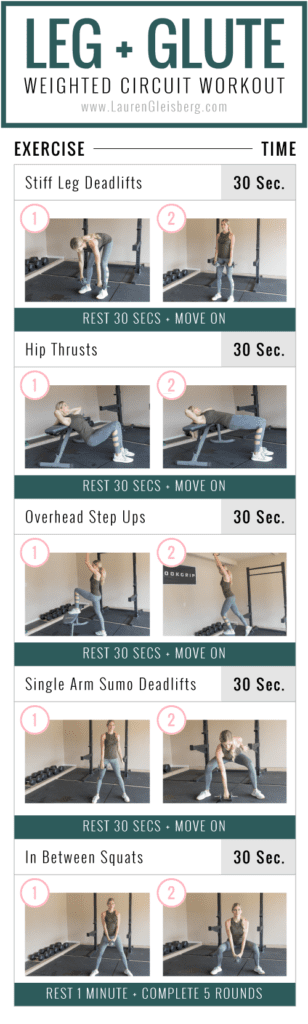
1. Hip Thrust
This is a top move for glute growth. Sit on the floor with your upper back against a bench, feet flat. Roll a barbell over your hips. Drive through your heels to lift your hips, squeezing your glutes at the top.
Why it’s great: Studies show hip thrusts activate the glutes more than squats. You can also safely use heavy weights.
2. Squats
Stand with feet shoulder-width apart, barbell on your upper back. Lower your hips back and down, keeping your chest up. Push through your heels to stand.
Tip: Go deep (thighs parallel or lower) for best glute engagement.
3. Romanian Deadlift
Hold a barbell or dumbbells. Keep a soft bend in your knees and hinge at your hips. Lower the weight down your legs until you feel a stretch in your hamstrings, then stand back up.
Why it’s great: Strongly works both glutes and hamstrings.
4. Bulgarian Split Squat
Stand a few feet in front of a bench. Place one foot behind you on the bench. Lower your hips until your front thigh is parallel to the floor. Press back up.
Tip: Lean forward slightly to target the glutes more.
5. Glute Bridge
Like the hip thrust but performed on the floor. Lie on your back, feet flat, knees bent. Lift your hips as high as possible, squeezing your glutes.
Great for: Beginners and warm-ups.
6. Step-up
Step onto a bench or box with one foot. Drive through your heel to stand on the box, then step down.
Tip: Use a higher box for more glute activation.
7. Cable Kickback
Face a cable machine with an ankle strap. Kick your leg back and up, keeping your knee slightly bent.
Why it’s great: Pure glute isolation, especially for the upper glutes.
8. Lateral Band Walk
Place a resistance band around your legs, just above the knees. Step sideways, keeping tension on the band.
Targets: Gluteus medius and minimus, which help stabilize your hips.
9. Clamshell
Lie on your side with knees bent and feet together. Open your top knee as high as possible, then lower back down.
Tip: Add a band for more resistance.
10. Single-leg Deadlift
Stand on one leg, holding a dumbbell in the opposite hand. Hinge forward, extending your free leg behind you. Return to standing.
Benefits: Improves balance and glute stability.
Credit: laurengleisberg.com
How To Structure Your Glute Workout
Your weekly plan should include 2–3 dedicated glute sessions. Here’s how to organize each workout for best results.
Warm-up
Warming up is not optional. It prepares your muscles, increases blood flow, and helps prevent injury.
- 5–10 minutes of light cardio (walking, cycling)
- Dynamic stretches (leg swings, hip circles)
- Glute activation drills (bodyweight glute bridges, banded clamshells)
Main Workout
Use 5–6 exercises per session, mixing heavy compound and lighter isolation moves. Aim for 3–4 sets of each exercise.
- Compound exercises: 6–10 reps per set (focus on strength and growth)
- Isolation exercises: 12–20 reps per set (focus on muscle burn and shape)
Cool Down
End with gentle stretching to keep your hips flexible and reduce soreness.
Sample Complete Glute Workouts
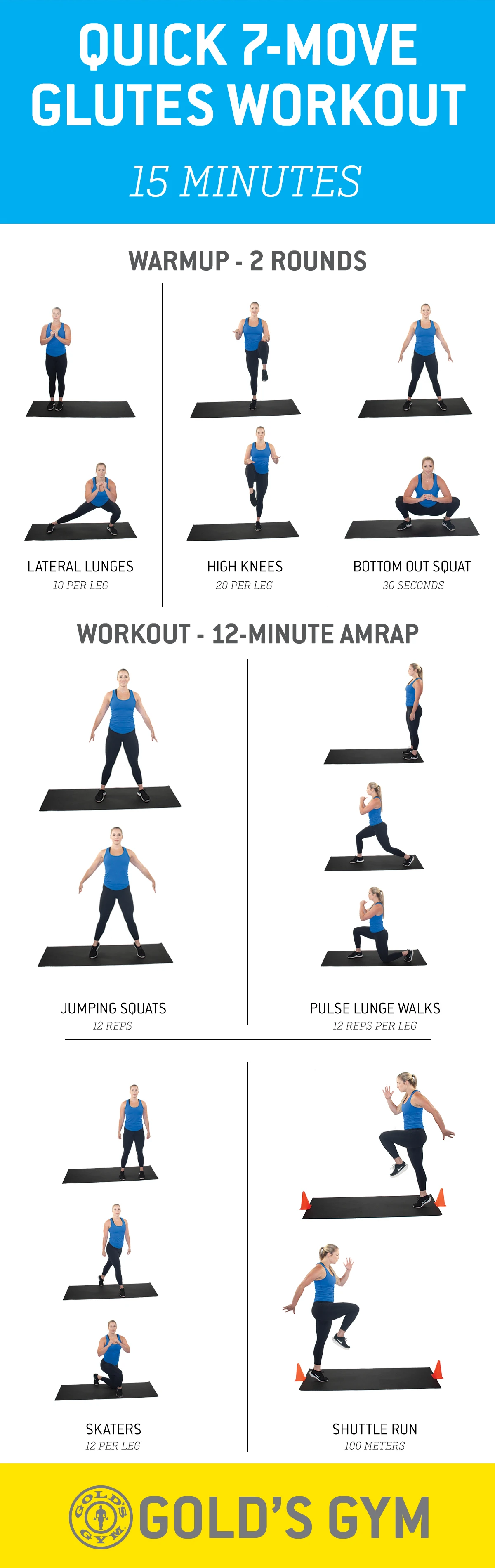
Here are two sample routines: one for beginners, one for advanced lifters. Adjust weights and reps to match your level.
Beginner Glute Workout
- Bodyweight Glute Bridge – 3 sets of 15 reps
- Goblet Squat (hold a dumbbell at chest) – 3 sets of 12 reps
- Lateral Band Walk – 3 sets of 20 steps
- Step-Up – 3 sets of 10 reps each leg
- Clamshell – 3 sets of 15 reps each side
Rest 60–90 seconds between sets.
Advanced Glute Workout
- Barbell Hip Thrust – 4 sets of 8 reps
- Back Squat – 4 sets of 8 reps
- Bulgarian Split Squat – 3 sets of 10 reps each leg
- Romanian Deadlift – 3 sets of 10 reps
- Cable Kickback – 3 sets of 15 reps each leg
- Banded Lateral Walk – 3 sets of 20 steps
Rest 90–120 seconds between compound sets, 60 seconds for isolation moves.
Comparison Of Key Glute Exercises
Not all glute exercises are equal. Here’s a side-by-side look at how popular moves compare for glute activation and difficulty.
| Exercise | Main Glute Activation | Secondary Muscles | Difficulty |
|---|---|---|---|
| Hip Thrust | Maximus | Hamstrings, Core | Medium–High |
| Back Squat | Maximus, Medius | Quads, Core | High |
| Bulgarian Split Squat | Maximus | Quads, Balance Muscles | High |
| Glute Bridge | Maximus | Hamstrings | Low–Medium |
| Lateral Band Walk | Medius, Minimus | Hip Flexors | Low |
Common Mistakes In Glute Training
Many people see slow or no progress because of a few common errors. Here’s how to avoid them:
1. Poor Form
Using your lower back or quads instead of your glutes reduces results and increases injury risk. Focus on hip movement, not just bending your knees.
2. Not Using Enough Resistance
Bodyweight moves are a good start but won’t build much muscle after a few weeks. Progress to dumbbells, barbells, or resistance bands.
3. Skipping Activation
If your glutes are “sleepy,” big lifts won’t help. Always include activation drills in your warm-up.
4. Neglecting Variety
Doing only squats or only bridges misses parts of the glute muscles. Use a range of exercises and angles.
5. Not Progressing
Glutes grow with challenge. Increase your weights, reps, or sets as you get stronger.
Pro tip: Take videos of your form, or ask a coach for feedback. Small changes can make a big difference.
Glute Workout Programming: How Often And How Much
How often should you train glutes? For most people, 2–3 focused sessions per week is best. This allows enough time for recovery and growth.
Volume matters: Research suggests 12–20 sets per week (across all glute exercises) is ideal for muscle growth. More is not always better—quality beats quantity.
Rest and recovery: Muscles grow when you rest, not just when you train. Give each glute muscle at least 48 hours to recover before hitting them hard again.
Example weekly split:
- Monday: Glute-focused workout
- Wednesday: Lower body (glute + hamstring focus)
- Friday: Full body or glute isolation
Advanced Tips For Glute Growth
Once you master the basics, use these strategies to break plateaus and maximize results.
1. Tempo Manipulation
Slow down the lowering phase (eccentric) of your exercises. For example, lower for 3–4 seconds and explode up.
2. Pause Reps
Pause for 2 seconds at the hardest part (top of a hip thrust or bridge). This increases time under tension.
3. Single-leg Variations
Single-leg moves create more muscle activation and fix strength imbalances.
4. Training Density
Reduce rest between sets or add supersets (two exercises back-to-back) to increase workout intensity.
5. Mini Bands
Add bands to squats, bridges, or clamshells for extra resistance and glute burn.
6. Vary Foot Position
Change your foot width and angle in squats or hip thrusts to hit different glute fibers.
Insight: Many advanced lifters chase heavier weights but ignore these smaller tweaks, which often spark new growth.
Glute Workout Equipment: What You Need
You don’t need a fancy gym to build great glutes, but some tools make it easier and more effective.
At Home
- Resistance bands (mini bands, long bands)
- Dumbbells or kettlebells
- Sturdy bench or chair (for step-ups, hip thrusts)
- Sliders (for hamstring curls and lunges)
At The Gym
- Barbell and weight plates
- Smith machine (for hip thrusts)
- Cable machine
- Leg press (for glute-focused presses)
- Bosu ball or stability ball (for bridges)
Tip: If you only have bodyweight, focus on higher reps, single-leg exercises, and slower tempo to keep workouts challenging.
Glute Activation: The Missing Link
Waking up your glutes before heavy training can double your results. Activation drills teach your body to use the right muscles and prevent your back or thighs from taking over.
Best activation drills:
- Banded glute bridges
- Monster walks (wide-step lateral walks)
- Donkey kicks
- Fire hydrants
Spend 5–8 minutes on these before your main workout.
Non-obvious insight: If you feel glute cramps or burning during activation, that’s a good sign. It means your muscles are finally working.

Credit: kujtesa.com
Real-world Results: Glute Training Transformations
Many people want proof that glute training works. Here are three examples of what’s possible:
- Athletes: Track runners and soccer players often use glute-heavy workouts to boost speed and power. Strong glutes help them sprint and change direction quickly.
- Everyday people: Office workers with back pain see relief after just a few weeks of glute-focused training, because strong glutes take pressure off the spine.
- Fitness models: Most credit hip thrusts, step-ups, and banded exercises for their glute shape—not just squats.
Nutrition For Glute Growth
You can’t build muscle without the right fuel. Eating for glute growth means:
- Getting enough protein: Aim for 0.7–1 gram per pound of body weight daily.
- Balanced carbs and fats: Carbs fuel your workouts; healthy fats support hormone balance.
- Staying hydrated: Muscles need water to recover and grow.
- Eating more calories: If you want bigger glutes, eat slightly more than you burn.
Practical tip: Focus on meals with lean protein, whole grains, nuts, eggs, and lots of vegetables.
Glute Training For Women Vs. Men
Both men and women benefit from glute training. However, women often want more shape and roundness, while men may focus on power and strength.
Here’s how goals and approaches compare:
| Focus | Women | Men |
|---|---|---|
| Shape/Roundness | High priority | Moderate priority |
| Strength/Power | Moderate priority | High priority |
| Exercise Selection | More isolation, higher reps | More compound, heavier weight |
| Frequency | 2–3 times per week | 2 times per week |
Key point: Both should use a mix of heavy and light exercises, and both benefit from strong, balanced glutes.
Tracking Progress: How To Know If Your Glutes Are Growing
Don’t just rely on the mirror. Use these methods to track real progress:
- Take measurements: Measure your hips/glutes every 2–4 weeks.
- Take progress photos: Same lighting, angle, and clothes.
- Track your weights/reps: If you’re lifting more, your muscles are likely growing.
- Feel: Are you noticing more muscle soreness or “glute pump” after workouts? That’s a good sign.
Non-obvious insight: Sometimes, jeans or shorts feel tighter in the glute area—this often means muscle growth, not fat gain.
Credit: www.goldsgym.com
Glute Workout For Home Vs. Gym
You can build strong glutes anywhere. Here’s a quick comparison:
| Factor | Home | Gym |
|---|---|---|
| Equipment | Bands, dumbbells, bodyweight | Barbells, machines, cables |
| Exercise Variety | Moderate | High |
| Max Resistance | Limited | Unlimited |
| Convenience | High | Low–Medium |
Tip: For best results, use heavier weights when possible. But even at home, you can make big changes with bands, single-leg moves, and consistency.
Stretching And Mobility For Healthy Glutes
Strong glutes need to move well. Add these stretches to your routine:
- Pigeon stretch: Targets the glutes and hips.
- Figure-four stretch: Lie on your back, cross one ankle over the opposite knee, and pull toward your chest.
- Hip flexor stretch: Opens the front of the hips; helps glutes activate better.
Hold each stretch for 20–30 seconds after your workout.
Recovery And Injury Prevention
Glute soreness is normal, but pain is not. Use these strategies to recover faster:
- Get enough sleep: Muscles repair during deep sleep.
- Foam roll: Roll out your glutes and hips to release tightness.
- Active recovery: Go for a walk or do gentle yoga on rest days.
- Listen to your body: If something hurts, rest and check your form.
Insight: Many glute injuries happen from doing too much too soon or using poor form. Progress slowly and focus on quality.
Resources For Glute Training
Want to learn more? Check out trusted resources for videos, research, and expert advice. The National Strength and Conditioning Association offers reliable information on exercise science: NSCA.
Frequently Asked Questions
How Long Does It Take To See Glute Growth?
Most people notice changes in 4–8 weeks with consistent, challenging workouts and good nutrition. Visible shape and size changes may take 3–6 months. Progress depends on genetics, effort, and consistency.
Can I Build Glutes Without Heavy Weights?
Yes, you can build glutes using bodyweight, bands, and light dumbbells—especially with single-leg exercises and slow tempo. However, heavier weights speed up growth and help build more muscle in the long run.
How Do I Know If I’m Working My Glutes Correctly?
You should feel a strong burn or “pump” in your glutes during and after exercises, not just in your legs or lower back. Soreness the next day is a good sign. If you don’t feel your glutes, check your form or add activation drills.
Should I Train Glutes Every Day?
No. Your glutes need time to recover and grow. Training 2–3 times a week with 48 hours between hard sessions is best for most people. Daily training can lead to overuse injuries.
What Is The Best Exercise For Glute Growth?
The barbell hip thrust is one of the best for overall glute growth because it provides high activation with less stress on the back and knees. Pair it with squats, deadlifts, and isolation moves for best results.
Building strong, functional glutes is possible for anyone with the right approach. Use a mix of exercises, focus on form, and stay consistent. Over time, you’ll notice not just a better shape, but improved strength, performance, and health.
