

Bodyweight Glute Workout
Strong glutes are more than just an aesthetic goal. They help you move better, support your lower back, and make everyday activities easier. If you want to build powerful glutes without gym equipment, a bodyweight glute workout can deliver impressive results. Many people think you need heavy weights to shape your glutes, but your own body can be a fantastic tool. This article shows you how to train your glutes anywhere, with clear exercises, practical tips, and routines for different fitness levels. Whether you are a beginner or looking for advanced options, you’ll find everything you need to sculpt, strengthen, and activate your glutes using only your bodyweight.
Why Bodyweight Glute Training Works
Bodyweight glute workouts use your own weight and gravity to create resistance. This makes them safe, flexible, and effective for almost everyone. You don’t need expensive equipment or gym access, so you can train at home, outdoors, or when traveling.
Glute muscles include the gluteus maximus, gluteus medius, and gluteus minimus. These muscles stabilize your hips, support your posture, and power movements like walking, running, and jumping. Bodyweight exercises target all parts of the glutes by focusing on hip extension, abduction, and rotation.
Unlike machines, bodyweight movements improve coordination and balance. They often involve other muscles, such as the core and hamstrings, which makes the workout more functional and complete. Also, bodyweight training reduces injury risk because you can control the movement and intensity.
Benefits Of Bodyweight Glute Workouts
A bodyweight glute workout offers several unique advantages:
- Convenience: Train anytime, anywhere, without equipment.
- Safety: Lower risk of injury, especially for beginners.
- Versatility: Many exercises and routines for all fitness levels.
- Functional strength: Improves balance, stability, and movement skills.
- Progressive overload: You can make exercises harder with tempo, reps, or variations.
- Accessibility: Suitable for all ages and backgrounds.
Research shows glute activation is possible even without weights. For example, studies found that single-leg glute bridges and step-ups activate glute muscles almost as much as weighted squats. This means you can gain strength and shape with just your body.
Anatomy Of The Glutes
Understanding your glutes helps you target them better. Here’s how the main glute muscles work:
- Gluteus Maximus: The largest muscle, responsible for hip extension (moving your leg behind you).
- Gluteus Medius: Located on the side of your hips, important for hip abduction (moving your leg to the side) and stabilizing your pelvis.
- Gluteus Minimus: The smallest glute muscle, also helps with hip stabilization.
Each muscle plays a role in walking, running, climbing stairs, and keeping your hips steady. Weak glutes can lead to back pain, knee issues, and poor posture. Activating all three is important for balanced strength.
| Glute Muscle | Main Function | Exercise Example |
|---|---|---|
| Gluteus Maximus | Hip Extension | Hip Thrust, Glute Bridge |
| Gluteus Medius | Hip Abduction, Stabilization | Side-Lying Leg Raise, Clamshell |
| Gluteus Minimus | Hip Internal Rotation, Stabilization | Single-Leg Balance |
Essential Bodyweight Glute Exercises
You don’t need fancy moves to build your glutes. These key exercises activate different parts of the glute muscles and can be combined for a full workout.
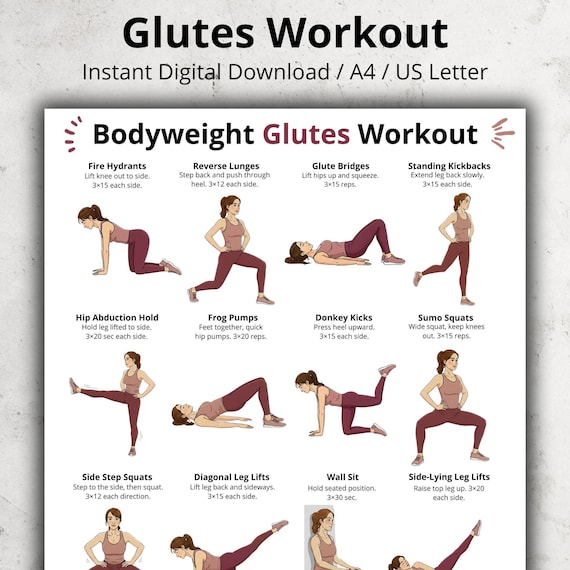
1. Glute Bridge
Lie on your back with knees bent and feet flat on the floor. Push through your heels, lift your hips up, and squeeze your glutes at the top. Lower down slowly. This classic move targets the gluteus maximus.
- Tip: Don’t arch your lower back. Focus on squeezing your glutes.
2. Single-leg Glute Bridge
This variation boosts intensity. Lift one leg off the ground and perform the bridge using the other leg. You’ll work one side at a time, improving balance and activation.
- Tip: Keep your raised leg straight and your hips level.
3. Hip Thrust (bodyweight)
Sit on the floor with your back against a bench or sturdy surface. Feet flat, knees bent. Push your hips up, squeeze your glutes, then lower. You can do this on the ground if you don’t have a bench.
- Tip: Pause at the top for extra activation.
4. Bulgarian Split Squat
Stand a few feet in front of a bench or step. Place one foot behind you on the bench. Lower your body until your front thigh is parallel to the ground. Push through your front heel to return. This move hits the gluteus maximus and medius.
- Tip: Keep your chest up and knee tracking over your toes.
5. Step-up
Find a sturdy box or step. Step up with one foot, drive through your heel, and bring the other leg up. Step down and repeat. Step-ups are great for glute activation and balance.
- Tip: Don’t push off with your trailing leg.
6. Side-lying Leg Raise
Lie on your side with legs straight. Lift your top leg up, keeping your hips stacked. Lower slowly. This move targets the gluteus medius.
- Tip: Point your toes slightly forward for more activation.
7. Clamshell
Lie on your side with knees bent. Keep your feet together and open your top knee. Close slowly. This exercise isolates the gluteus medius and minimus.
- Tip: Don’t let your hips roll backward.
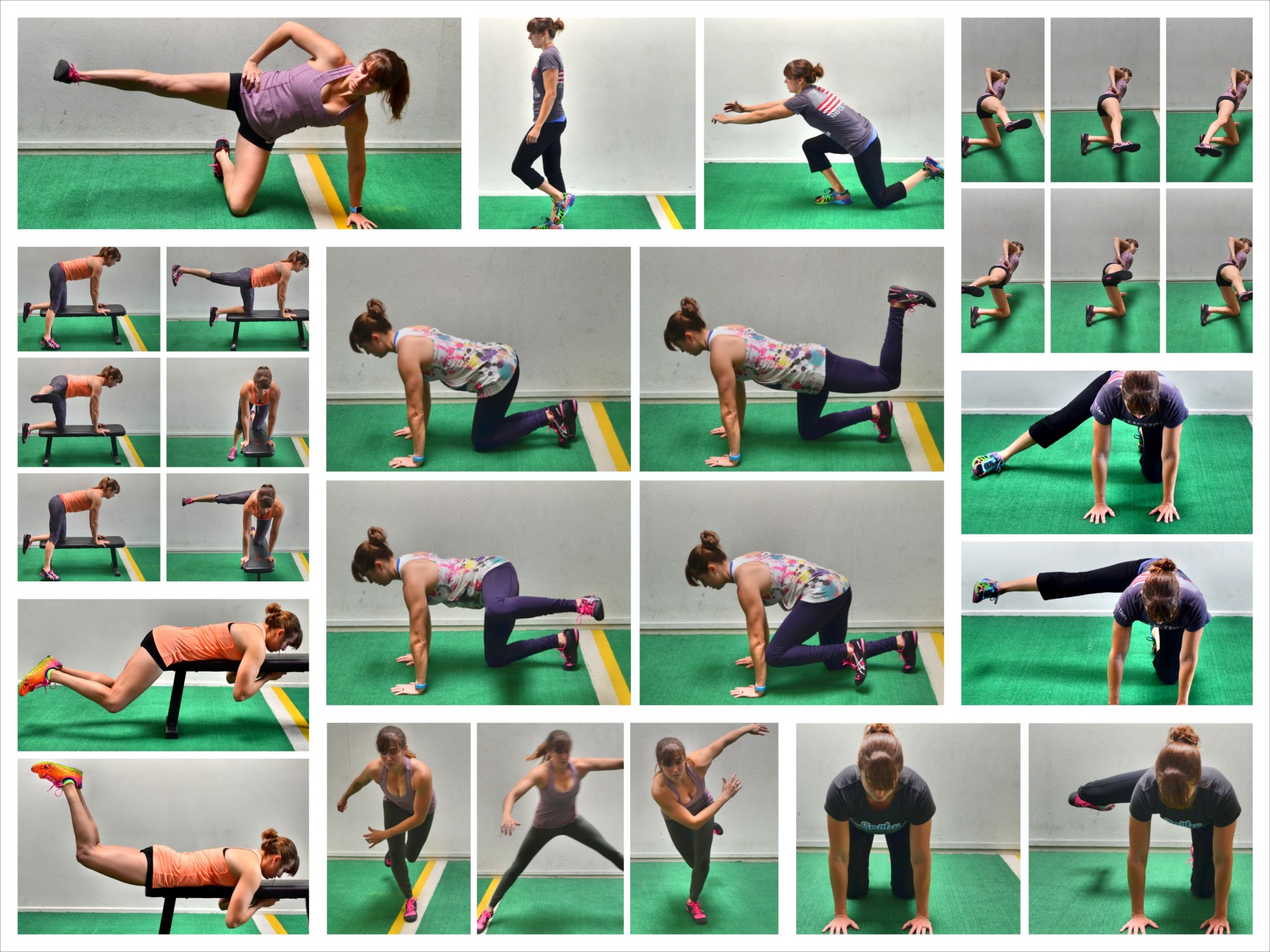
8. Donkey Kick
Start on all fours. Lift one leg up, keeping your knee bent, and push your heel toward the ceiling. Lower slowly. Donkey kicks are simple but effective for the gluteus maximus.
- Tip: Don’t arch your back or swing your leg.
9. Fire Hydrant
On all fours, lift one knee out to the side. Lower back down. This move works the gluteus medius and helps hip stability.
- Tip: Keep your elbows straight and hips steady.
10. Reverse Lunge
Step back with one leg, lower your knee to the ground, then return to standing. Reverse lunges activate the glutes while also training your quads and balance.
- Tip: Push through your front heel to stand.
11. Frog Pump
Lie on your back, bring soles of your feet together, knees apart. Push your hips up and squeeze your glutes. Frog pumps add variety and help with outer glute activation.
- Tip: Keep your shoulders relaxed.
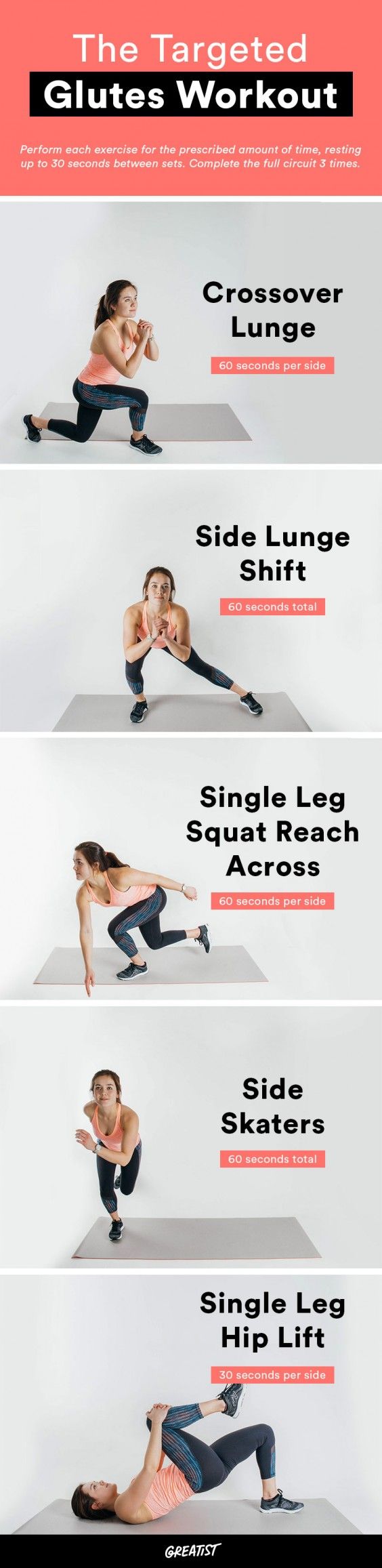
12. Curtsy Lunge
Step one leg behind and across your body, lower your knee toward the floor. Return to standing. This targets the gluteus medius and improves hip mobility.
- Tip: Keep your torso upright.
13. Squat
With feet shoulder-width apart, lower your body as if sitting in a chair. Stand back up. Squats are a compound move that hits glutes, quads, and core.
- Tip: Push through your heels and keep your knees tracking over your toes.
14. Single-leg Romanian Deadlift
Stand on one leg, hinge forward at your hips, and extend your other leg behind you. Return to standing. This move trains balance and the gluteus maximus.
- Tip: Keep your back straight and core tight.
15. Glute Bridge March
Start in a glute bridge. Lift one knee toward your chest, then switch sides. This increases difficulty and activates stabilizer muscles.
- Tip: Don’t let your hips drop as you march.
Credit: www.afvt.org
How To Structure A Bodyweight Glute Workout
To build strong glutes, you need a balanced routine. This means combining exercises that hit all parts of the glute muscles and vary in movement.
A good bodyweight glute workout includes:
- Warm-up: 5–10 minutes of light movement (walking, jogging, hip circles).
- Activation: 1–2 exercises to wake up your glutes (clamshells, donkey kicks).
- Strength: 3–6 main exercises for glute building (bridges, squats, lunges).
- Finisher: 1–2 moves for high reps or short rest (frog pumps, glute bridge march).
- Cool-down: 5 minutes of stretching (hip flexors, hamstrings, glutes).
Here’s a sample routine for beginners:
- Glute Bridge – 3 sets of 12 reps
- Clamshell – 3 sets of 15 reps per side
- Squat – 3 sets of 12 reps
- Donkey Kick – 3 sets of 12 reps per side
- Side-Lying Leg Raise – 2 sets of 15 reps per side
- Frog Pump – 2 sets of 20 reps
Rest 30–60 seconds between sets. Adjust reps and sets as you get stronger.
For intermediate or advanced trainees, you can add single-leg variations, increase reps, or use slower tempos. For example:
- Single-Leg Glute Bridge – 3 sets of 10 reps per side
- Bulgarian Split Squat – 3 sets of 10 reps per side
- Fire Hydrant – 3 sets of 15 reps per side
- Step-Up – 3 sets of 12 reps per side
Progression And Overload Without Weights
Progressive overload is key to building muscle. Even without weights, you can make your glute workout harder in several ways:
- Increase reps or sets: Add more repetitions or sets as you get stronger.
- Slow down: Use slower movement (4 seconds up, 4 seconds down) for more tension.
- Add holds: Pause at the top of each rep for 2–3 seconds.
- Try harder variations: Move from double-leg to single-leg exercises.
- Combine exercises: Do supersets (back-to-back moves) or circuits for extra challenge.
You can track your progress by noting reps, sets, and exercise difficulty. Aim to improve a little each week.
| Progression Method | Example | Effect |
|---|---|---|
| Increase Reps | Go from 12 to 20 reps | More endurance and strength |
| Tempo Training | 4 sec up, 4 sec down | More muscle tension |
| Single-Leg Variations | Single-leg bridge instead of double-leg | Higher activation and balance |
| Superset | Bridge + Squat with no rest | Greater fatigue and muscle pump |
Common Mistakes In Bodyweight Glute Workouts
Many people make simple mistakes that reduce glute activation or increase injury risk. Here are some to watch for:
- Poor form: Not keeping hips level, arching the back, or rushing reps.
- Skipping warm-up: Cold muscles don’t activate well. Always warm up first.
- Neglecting single-leg moves: Only doing double-leg exercises can leave one side weaker.
- Using momentum: Swinging legs or moving too fast reduces tension on the glutes.
- Not squeezing at the top: The glutes need full contraction for growth.
- Ignoring the mind-muscle connection: Focus mentally on the glutes during each rep.
- Lack of progression: Doing the same routine for months without changes leads to plateaus.
Correcting these can make a big difference in your results. One non-obvious tip: filming yourself can help you spot form errors you don’t feel during the workout.
Practical Tips For Maximum Glute Activation
If you want a bodyweight glute workout to be effective, use these practical tips:
- Push through your heels: This activates the glutes more than toes.
- Keep your core tight: Stabilizes the pelvis and protects your back.
- Pause at peak contraction: Hold for 2–3 seconds at the top of each rep.
- Use full range of motion: Don’t cut reps short; go all the way up and down.
- Focus on quality: 10 good reps are better than 20 sloppy ones.
- Mix up your routine: Change exercises, order, or tempo every few weeks.
- Track your progress: Write down your sets, reps, and variations.
- Stretch and recover: Give your muscles time to rebuild stronger.
Another insight: If you feel your quads or hamstrings working more than your glutes, adjust your foot position or slow down your reps. This helps shift the work back to the glutes.
Glute Activation Vs. Glute Strength
Some exercises activate the glutes, while others build strength. Activation moves like clamshells or donkey kicks are often used at the start of a workout. They wake up the muscles and improve mind-muscle connection.
Strength moves, like hip thrusts, bridges, or single-leg squats, use more resistance and build muscle. Both are important for a complete routine.
Mixing activation and strength exercises gives better results than just doing one type. For example, start with fire hydrants, then move to hip thrusts or split squats.
| Type | Exercise Example | Main Benefit |
|---|---|---|
| Activation | Clamshell, Donkey Kick | Wakes up glutes |
| Strength | Hip Thrust, Bulgarian Split Squat | Builds muscle |
Sample Bodyweight Glute Workout Plans
You can build your own routine, but here are example plans for different fitness levels:
Beginner Plan (3–4 Days Per Week)
- Glute Bridge: 3 x 12
- Clamshell: 3 x 15 per side
- Squat: 3 x 10
- Donkey Kick: 2 x 12 per side
- Frog Pump: 2 x 15
Rest 1 minute between sets. Stretch after.
Intermediate Plan (4–5 Days Per Week)
- Single-Leg Glute Bridge: 3 x 10 per side
- Bulgarian Split Squat: 3 x 12 per side
- Fire Hydrant: 3 x 15 per side
- Step-Up: 3 x 12 per side
- Side-Lying Leg Raise: 2 x 15 per side
Rest 45 seconds between sets. Add tempo or holds.
Advanced Plan (5–6 Days Per Week)
- Hip Thrust (Bodyweight): 4 x 15
- Single-Leg Romanian Deadlift: 3 x 10 per side
- Curtsy Lunge: 3 x 12 per side
- Glute Bridge March: 3 x 16 (8 per side)
- Frog Pump: 3 x 25
Rest 30–45 seconds between sets. Use supersets for extra challenge.
Glute Focus Circuit (any Level)
Do one round of each, no rest between moves:
- Glute Bridge x 15
- Side-Lying Leg Raise x 12 per side
- Squat x 15
- Donkey Kick x 12 per side
- Fire Hydrant x 12 per side
- Frog Pump x 20
Rest 2 minutes, repeat for 2–3 rounds.
Tracking Progress And Measuring Results
It’s important to track your progress to stay motivated. You can measure improvement in several ways:
- Reps and sets: Are you doing more over time?
- Form: Is your technique smoother and more controlled?
- Muscle size: Are your glutes firmer and rounder?
- Strength: Can you do harder variations?
- Performance: Is your balance and stability better?
Take progress photos every 4–6 weeks. Notice changes in shape or posture. If you feel stronger during daily activities, your glutes are improving.
Glute Training For Different Goals
Bodyweight glute workouts can help with:
- Muscle building: Use harder variations, more reps, and slow tempo.
- Fat loss: Combine glute exercises with cardio or circuits for higher calorie burn.
- Sports performance: Focus on moves that build power and stability (single-leg squats, step-ups).
- Injury prevention: Mix activation and balance exercises for hip stability.
You can adjust the routine based on your main goal. For muscle building, increase reps and focus on squeezing your glutes. For fat loss, do shorter rest and higher volume.
Credit: redefiningstrength.com
Combining Glute Training With Other Workouts
Glute training fits well with other routines. You can combine it with:
- Full-body workouts: Add glute moves to circuits or HIIT sessions.
- Core training: Pair glute bridges with planks or bird-dogs.
- Lower body days: Mix glute exercises with squats, lunges, or calf raises.
Don’t neglect recovery. Glute muscles need rest between sessions. Training them 3–6 times per week is enough for most people.
Glute Activation In Everyday Life
Strong glutes help with more than workouts. They support your hips and lower back during daily movements like climbing stairs, lifting objects, and standing up. Weak glutes can lead to poor posture and pain.
Simple ways to activate your glutes outside exercise:
- Walk with a focus on pushing through your heel.
- Stand up from a chair using your glutes instead of your back.
- Climb stairs by squeezing your glutes at each step.
Consistency matters. If you keep your glutes engaged during daily life, you’ll see faster results.
Nutrition For Glute Growth
Muscle building needs proper nutrition. For glute development:
- Protein: Helps repair and build muscle. Aim for 0.7–1 gram per pound of body weight.
- Healthy fats: Support hormone balance.
- Carbs: Provide energy for workouts.
Drink enough water and eat a balanced diet. If you want to learn more, check out Eat Right for expert nutrition advice.
Advanced Bodyweight Glute Variations
If basic moves feel easy, try these advanced options:
- Pistol Squat: A single-leg squat. Requires balance and strong glutes.
- Elevated Hip Thrust: Use a step or bench to increase range.
- Jump Squat: Add a jump at the top for power.
- Single-Leg Step-Up with Knee Drive: Step up and drive the opposite knee high.
These moves increase difficulty and challenge your glutes in new ways. Always master basic exercises before trying advanced ones.
How Often Should You Train Glutes?
Most people should train glutes 3–6 times per week. Beginners can start with 2–3 days, while advanced trainees may do more. The key is to listen to your body and allow rest for recovery.
Signs you need more rest:
- Muscle soreness lasts more than 2 days.
- Strength or performance drops.
- You feel tired or unmotivated.
It’s better to train consistently than to overdo it and get injured.
Stretching And Mobility For Glute Health
Stretching helps prevent tightness and improves mobility. After your glute workout, try:
- Hip flexor stretch: Kneel and shift forward.
- Piriformis stretch: Lie on your back, cross one ankle over the other knee, pull gently.
- Seated hamstring stretch: Sit with legs straight, reach forward.
Hold each stretch for 20–30 seconds. Flexibility helps your glutes work better and reduces injury risk.
Credit: greatist.com
The Science Behind Bodyweight Glute Training
Several studies show bodyweight moves can activate glutes as much as weighted exercises. For example, EMG tests found hip thrusts and single-leg glute bridges deliver high glute activation. Using proper form and full range of motion is more important than adding weight.
Another insight: Glute activation increases when you push through your heel and pause at peak contraction. Even small changes in technique can boost results.
If you’re curious about the science, you can read more at National Institutes of Health.
Frequently Asked Questions
How Long Does It Take To See Glute Results From Bodyweight Workouts?
Results depend on your consistency, genetics, and diet. Most people notice firmer glutes in 4–8 weeks if they train regularly and eat well. Visible shape changes can take a bit longer. Tracking progress with photos helps you see subtle improvements.
Can Bodyweight Glute Workouts Build Muscle Without Weights?
Yes, bodyweight glute workouts can build muscle if you use proper form, high reps, and harder variations. Progressive overload is key—make exercises tougher over time. Mixing activation and strength moves also helps.
How Can I Make Bodyweight Glute Exercises Harder?
You can slow down reps, pause at peak contraction, add single-leg moves, increase reps or sets, or combine exercises with little rest. Advanced variations like pistol squats or jump squats also boost difficulty.
What Should I Do If I Feel My Hamstrings More Than My Glutes?
Try pushing through your heels, keeping your core tight, and pausing at the top. Adjust your foot position or slow your reps. Choose exercises that isolate the glutes more, like frog pumps or clamshells.
Is It Safe To Do Bodyweight Glute Workouts Every Day?
Most people can train glutes daily if they use lower intensity and good form. For muscle growth, rest is important. 3–6 sessions per week with variety and recovery is ideal. If you feel pain, take extra rest.
Final Thoughts
A bodyweight glute workout is powerful, flexible, and accessible for everyone. You can build strong, shapely glutes without weights or gym access. The key is to use a mix of activation and strength moves, progress over time, and pay attention to form. With consistency and smart training, your glutes will support you in daily life and improve your athletic performance. Remember to fuel your body, stretch after workouts, and enjoy the process. Strong glutes start with dedication—your journey begins today.
