

Best Tricep Workout to Target All Heads for Maximum Growth
Best Tricep Workout To Target All Heads
Building strong, defined triceps is not just about looking good. The tricep muscle is crucial for pushing movements, arm stability, and overall upper body strength. If you want bigger arms, you need to train your triceps well. But many people struggle to hit all three heads — long head, lateral head, and medial head. This article will guide you through the best tricep workout to target every part of the muscle, with practical advice, clear steps, and science-backed tips.
Whether you are a beginner or have years of experience, you will learn how to activate each head, choose effective exercises, and avoid common mistakes. By the end, you’ll understand how to build a balanced tricep routine that works for your goals.
Understanding The Triceps: Anatomy And Function
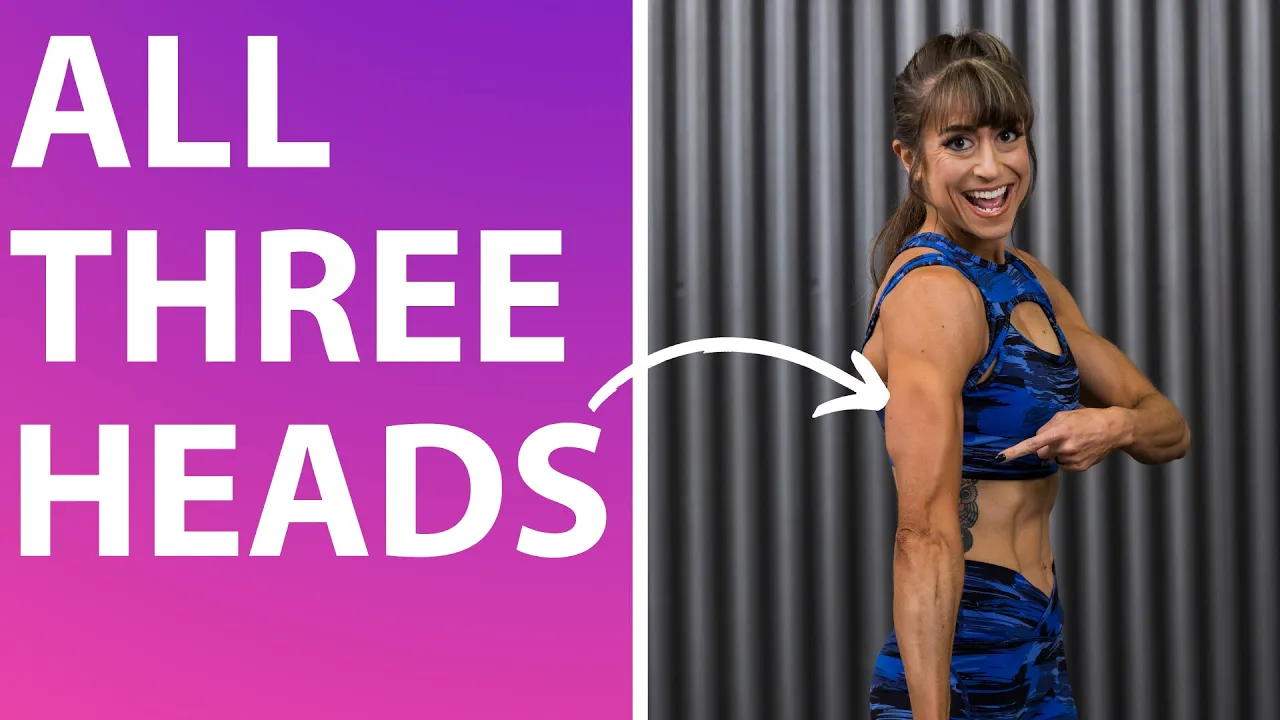
The triceps brachii is a three-headed muscle on the back of your upper arm. Each head plays a different role:
- Long head: Runs down the inside of your arm, biggest part of the triceps.
- Lateral head: Sits on the outer side, gives your arm a “horseshoe” shape.
- Medial head: Lies underneath, deepest part, helps stabilize your elbow.
The main job of the triceps is to extend your arm at the elbow. It also helps with shoulder movement and arm stability. Knowing this makes it easier to pick exercises that hit each head.
The long head is special because it crosses both the shoulder and elbow joints. This means it not only helps straighten your arm, but also helps move your upper arm backwards (shoulder extension). That’s why overhead movements feel different and stretch the muscle more.
The lateral head, meanwhile, is responsible for the “pop” or width you see on the side of the arm. The medial head, often ignored, is working in almost every tricep exercise, especially at the lockout (straightening) phase, and helps with controlled movements.
How Each Head Is Activated
Different exercises stress each head based on arm angle and grip. For example:
- Overhead moves stretch and activate the long head.
- Pushdowns and close-grip presses hit the lateral head.
- Any movement where the elbow stays close to the body targets the medial head.
The position of your hands and elbows makes a big difference. For instance, turning your palms up (supinated grip) can shift work to the medial head. If your elbows move away from your body, the long head gets more involved.
When you lock your elbows at your sides and push downward, you hit the lateral head harder.
Many gym-goers only do basic presses or pushdowns. This leaves some parts of the triceps undertrained. To build full arms, you must include exercises for all three heads.
Key Principles For An Effective Tricep Workout
Before jumping into exercises, let’s cover some core principles:
- Variety matters: Use different angles and grips to reach all heads.
- Form first: Quality reps are better than heavy weights with bad form.
- Progressive overload: Gradually increase weight or reps for growth.
- Frequency: Train triceps 2-3 times per week for best results.
- Recovery: Allow 48 hours between tricep sessions to avoid overuse.
If you want to train like advanced athletes, mix up your exercise order and tools. For example, use dumbbells one day, cables the next. This small change can make your muscles adapt and grow faster.
Many people only use heavy presses. But studies show that mixing compound and isolation exercises leads to better muscle activation. Research also suggests that doing both multi-joint and single-joint exercises helps you reach all muscle fibers, not just the biggest ones.
For example, pairing close-grip bench press with a cable overhead extension gives you both strength and muscle detail.
Common Beginner Mistakes
- Using only one exercise (like pushdowns)
- Skipping overhead moves
- Using too much weight and swinging arms
- Ignoring the full range of motion
Beginners often believe they need to lift as heavy as possible for big arms. But swinging weights, cutting the range short, or rushing reps makes the triceps do less work. Another common mistake is copying advanced bodybuilders’ routines without building a foundation first.
Instead, focus on learning proper technique, then add weight and variety over time.
Avoiding these mistakes will help you get the most out of your tricep workouts.

Credit: www.youtube.com
Best Exercises To Target All Tricep Heads
To build complete triceps, you need exercises that stress each head. Here’s a breakdown of the most effective moves for each part.
Targeting The Long Head
The long head is the biggest part of your triceps. It’s activated most when your arms are overhead.
- Overhead Tricep Extension (Dumbbell or Cable)
- Sit or stand with a dumbbell or cable behind your head.
- Extend your arms upward, then lower slowly.
- Focus on a deep stretch at the bottom.
Using a cable keeps constant tension. Dumbbells let you use both arms or one at a time. If you have shoulder issues, use lighter weights and slow reps.
- EZ-Bar Overhead Extension
- Use an EZ-bar for easier grip.
- Keep elbows close and extend overhead.
- Great for people with wrist discomfort.
The angled bar reduces wrist pain, so you can focus on the muscle. Try seated or standing versions for variety.
- Skullcrusher (Lying Tricep Extension)
- Lie on a bench, lower barbell or dumbbells to forehead.
- Keep elbows tight, extend arms.
- Works both long and lateral heads.
You can use a flat or decline bench. Decline benches increase long head stretch. Always control the descent to avoid hitting your face.
Hitting The Lateral Head
The lateral head adds width and definition to your upper arm. Exercises with elbows tucked and palms facing down target it best.
- Tricep Pushdown (Cable with Straight Bar)
- Stand tall, elbows close to sides.
- Push bar down, squeeze at bottom.
- Keep wrists straight.
For more tension, try a rope attachment at the end and spread it apart. This can increase the peak contraction.
- Diamond Push-Up
- Hands form a diamond shape under chest.
- Lower body, press up, focus on triceps.
- Bodyweight option, great for home workouts.
If regular diamond push-ups are too hard, elevate your hands on a bench or lower your knees. If too easy, add a backpack with weight.
- Close-Grip Bench Press
- Grip bar slightly inside shoulder-width.
- Lower to chest, press up.
- Works lateral and medial heads.
Don’t grip too close or you’ll strain your wrists. Keep elbows at 45 degrees to your body for safety and power.
Activating The Medial Head
The medial head is smaller but important for elbow stability.
- Reverse Grip Pushdown
- Use cable, palms face up.
- Elbows close, push down.
- Isolates medial head.
Go lighter than normal pushdowns, and focus on squeezing at the bottom.
- Kickback (Dumbbell or Cable)
- Lean forward, elbow bent.
- Extend arm backward, squeeze triceps.
- Keep upper arm still.
For more control, try single-arm kickbacks on a bench. Cable kickbacks give constant tension, making them harder.
- Bench Dip
- Hands on bench behind you.
- Lower body, press up.
- Targets all heads, especially medial.
To increase difficulty, place feet on another bench or add weight to your lap. Keep shoulders down and chest lifted to protect joints.
Sample Exercise Selection Table
To help you see which exercises activate each tricep head, here’s a quick comparison.
| Exercise | Long Head | Lateral Head | Medial Head |
|---|---|---|---|
| Overhead Extension | High | Medium | Low |
| Tricep Pushdown | Low | High | Medium |
| Skullcrusher | High | Medium | Medium |
| Kickback | Low | Medium | High |
| Close-Grip Bench Press | Medium | High | Medium |
| Bench Dip | Medium | Medium | High |
This table makes it easy to build a routine that covers every part of the triceps. Switch up your exercises every 6–8 weeks to keep making progress.
Building The Best Tricep Workout Routine
Let’s put together a routine that covers all heads. You can adjust sets and reps based on your fitness level.
Example Routine For Balanced Triceps
- Overhead Dumbbell Extension – 3 sets x 10-12 reps
- Tricep Pushdown – 3 sets x 12-15 reps
- Skullcrusher – 3 sets x 10-12 reps
- Diamond Push-Up – 3 sets x 12-15 reps
- Reverse Grip Pushdown – 2 sets x 12-15 reps
- Kickback – 2 sets x 15 reps
Rest 60-90 seconds between sets. Focus on slow, controlled reps and full range of motion.
You can perform this routine twice a week, or split the exercises between two different days if you have less time. For example, do overhead extensions, pushdowns, and skullcrushers on Day 1, and diamond push-ups, reverse grip pushdowns, and kickbacks on Day 2.
Adjusting The Workout For Your Goals
- Muscle growth (hypertrophy): Use 8-12 reps, moderate weight.
- Strength: Use 4-8 reps, heavier weight, more rest.
- Endurance: Use 15+ reps, lighter weight, shorter rest.
If you are short on time, focus on compound moves like close-grip bench press and dips. For more isolation, add overhead extensions and pushdowns.
For those interested in shaping the triceps (not just growing them), you can finish your session with a high-rep “burnout” set. For example, do as many reps as possible with light weight or just your bodyweight (like bench dips or push-ups) at the end.
Advanced Tips For Better Results
- Start with compound exercises: These use more muscles, boost strength.
- Finish with isolation moves: These target specific heads, improve detail.
- Vary grip and angle: Change bar, handle, or body position every few weeks.
- Use slow negatives: Lower weight slowly to build muscle faster.
Try “pause reps” at the bottom or top of a movement to increase time under tension. For example, pause for one second at the bottom of a pushdown before pressing back up.
Most beginners overlook the power of slow reps and grip changes. Both can boost muscle activation and growth.
Two non-obvious tips:
- Don’t lock your elbows aggressively at the top of every rep. Stop just short to keep tension on the muscle and protect your joints.
- If you do both triceps and chest on the same day, train the larger muscle (chest) first for better performance and less fatigue.
Weekly Training Split Example
To prevent overtraining, plan your week like this:
| Day | Workout |
|---|---|
| Monday | Chest + Triceps |
| Wednesday | Back + Biceps |
| Friday | Shoulders + Triceps |
This split lets you train triceps twice a week, with enough recovery.
If you prefer full-body workouts, do one or two tricep exercises at the end of each session. Just make sure you’re not overworking your elbows.

Credit: www.youtube.com
Exercise Technique: How To Maximize Activation
Doing the right exercises is good, but technique is everything. Poor form leads to injury and wasted effort.
How To Do Tricep Pushdown Correctly
- Stand upright, feet shoulder-width.
- Grip straight bar, elbows close to sides.
- Push bar down using triceps, not shoulders.
- Pause and squeeze at bottom.
- Slowly return to start.
Imagine your upper arms pinned to your sides. If your elbows move forward, your shoulders take over and the triceps work less.
Overhead Extension Tips
- Keep elbows pointed forward, not outward.
- Don’t arch back.
- Lower weight until you feel stretch, but don’t force.
- Use a spotter for heavy sets.
If you feel your shoulders working too much, lighten the weight and focus on your triceps doing the lifting.
Skullcrusher Safety
- Keep elbows steady, don’t flare out.
- Lower bar just above forehead.
- Don’t use too much weight.
- Use an EZ-bar for wrist comfort.
If you have elbow pain, try switching to dumbbells or use a neutral grip. Always warm up your elbows before heavy sets.
Diamond Push-up Details
- Hands close, forming a diamond.
- Keep body straight, don’t let hips sag.
- Lower chest to hands, press up.
- If too hard, do on knees.
To make these harder, slow down the lowering phase or pause at the bottom. Don’t bounce up and down.
Many people rush reps or swing arms. Slow, controlled movement gives better results and keeps elbows safe.
How To Progress: Tracking Your Tricep Gains
Progress is key to building muscle. Here’s how to measure and improve your triceps.
Tracking Strength And Size
- Log your workouts: Write down sets, reps, weight.
- Take arm measurements: Every 4 weeks, measure upper arm relaxed and flexed.
- Check form with photos or video: Helps spot mistakes.
Muscle changes are slow, so don’t get discouraged. Compare photos monthly, not daily.
Signs You’re Progressing
- You lift heavier weights with good form.
- Your arms look fuller and more defined.
- You feel stronger in push movements.
Also, if everyday tasks (like pushing a door) feel easier, that’s progress.
Beginners often miss the importance of tracking. Without data, you won’t know what’s working.
Another subtle sign of progress: You “feel” your triceps more during exercises. This mind-muscle connection is a good indicator you’re training correctly.
When To Change Routine
- Plateau for more than 2 weeks
- Bored or losing motivation
- Poor recovery or sore joints
Change exercises, reps, or grip to keep muscles growing.
If your progress slows, try reducing total volume for a week (deload) to let your body recover, then ramp up again.
Credit: redefiningstrength.com
Nutrition And Recovery For Tricep Growth
Training is half the battle. Nutrition and rest are just as important.
Protein For Muscle Repair
Aim for 1.2 to 1.6 grams of protein per kg of body weight daily. Sources include:
- Chicken, fish, eggs
- Greek yogurt
- Protein shakes
If you’re vegetarian, use beans, lentils, tofu, or plant-based protein powders.
Carbs And Fats
Carbs give energy for workouts. Fats help with hormone health.
- Choose whole grains, fruits, and vegetables.
- Use olive oil, nuts, and avocado for healthy fats.
Don’t cut carbs too low, or your strength and recovery may drop.
Hydration
Drink at least 2 liters of water a day. Muscles need water to function and recover.
Hydration also keeps joints safe and prevents cramps during high-rep sets.
Sleep And Recovery
Sleep is vital for muscle repair. Aim for 7-9 hours each night. Rest days are important — don’t train triceps every day.
Stretch your triceps and shoulders gently after each workout to improve flexibility and reduce soreness.
Supplement Basics
Supplements are not magic, but can help:
- Creatine: Boosts strength, safe for most people.
- Whey protein: Easy way to hit protein goals.
- Fish oil: Supports joint health.
Always check with your doctor before starting new supplements.
If you have joint pain, collagen supplements or turmeric may help, but focus on whole foods first.
Comparing Tricep Workout Approaches
Many fitness programs use different approaches to triceps. Let’s compare some popular routines.
| Approach | Exercise Type | Frequency | Best For |
|---|---|---|---|
| Bodybuilding | Compound + Isolation | 2-3x/week | Muscle Size |
| Powerlifting | Heavy Compound | 1-2x/week | Strength |
| CrossFit | Functional Moves | Varies | Endurance |
| Calisthenics | Bodyweight | 2-4x/week | Definition, Mobility |
Bodybuilding routines are best for balanced growth. Powerlifting focuses on strength, sometimes missing smaller heads. Calisthenics improves muscle definition and joint health.
If you like variety, combine methods. For example, use bodyweight moves on some days and weights on others. This keeps training fun and prevents boredom.
Common Questions And Misconceptions
Many people get confused about tricep training. Let’s clear up some myths.
“will Heavy Weights Make My Triceps Grow Faster?”
Heavy weights help, but only if you use good form and full range of motion. Too much weight can cause injuries and limit muscle activation.
You do not need to max out every session. Consistent effort matters more than lifting the heaviest possible weight.
“do I Need Special Machines For Tricep Training?”
No. Dumbbells, cables, and bodyweight moves are enough. Machines can help, but basics work well.
Sometimes simple tools (like resistance bands) work just as well, especially for home training or beginners.
“can I Train Triceps Every Day?”
No. Muscles need rest. Overtraining can lead to injury and slow progress. Stick to 2-3 times per week.
Rest lets your muscles repair and grow. Remember: more is not always better.
“do Push-ups Build Big Triceps?”
Push-ups help, but diamond or close-grip push-ups work triceps more. Mix with other exercises for best results.
Standard push-ups hit the chest too much. For better tricep growth, combine different types.
“how Long Until I See Results?”
Most people notice changes in strength in 2-4 weeks. Visible muscle growth takes 8-12 weeks with regular training, good nutrition, and recovery.
Genetics, age, and training history affect your speed. Stay patient and trust the process.
Frequently Asked Questions
What Is The Most Effective Exercise For All Tricep Heads?
There is no single “best” exercise. Overhead extensions target the long head; pushdowns hit the lateral head; kickbacks stress the medial head. Combining these in a routine gives the best results.
How Many Sets Should I Do For Triceps?
Most people see progress with 9–12 sets per week. Split across 2–3 sessions. More is not always better — focus on quality.
If you’re more advanced, you might go up to 15–18 sets per week, but increase slowly and watch for signs of overtraining.
Is It Better To Train Triceps With Chest Or Separately?
Training triceps with chest (like after bench press) is common. It saves time and works both muscles. But training triceps separately lets you focus more and use fresh energy. Try both and see what feels best.
Some people find their triceps are too tired after chest to train them hard. If so, switch the order or train on another day.
Can Women Use The Same Tricep Workout?
Yes, the exercises work for both men and women. Women may want lighter weights or higher reps, but the routine is the same.
Don’t be afraid to lift heavier if your form is solid. Triceps won’t get “bulky” without very intense training and diet.
Where Can I Find More Research About Tricep Training?
For more science-backed information, visit the National Strength and Conditioning Association website. They offer detailed studies and expert advice.
Final Thoughts On Building Complete Triceps
Strong, defined triceps are key to a powerful upper body. To build all three heads, use a mix of overhead, pushdown, and close-grip moves. Focus on form, track progress, and support your training with good nutrition and rest.
Most people miss out by repeating the same exercise or ignoring technique. By following this guide, you’ll train smarter, avoid injuries, and see real results. The secret is balance — target every head, use variety, and stay consistent.
With this approach, your triceps will not only look better but perform better in every part of life — from sports to daily activities. Start your journey today, and enjoy the progress you earn with each session.
