

Ab And Glute Workout: Sculpt a Strong Core and Booty Fast
Ab And Glute Workout
Building strong abs and glutes is not just about looking fit. These muscle groups are key for body strength, balance, and everyday movements. Whether you sit at a desk, play sports, or simply want a healthier body, working your core and glutes is essential. Many people focus on these areas for aesthetics, but the benefits go far beyond appearance. Improved posture, fewer injuries, and better performance in daily tasks all start with a solid foundation in your abs and glutes.
There’s a lot of misinformation and shortcuts online. Some promise results in a week, or claim you need fancy equipment. The truth is, anyone can build strong abs and glutes with the right exercises, smart planning, and consistent effort. This guide gives you everything you need to know, from exercise selection to tips for faster progress.
With real-life examples and simple explanations, you’ll learn how to train these areas effectively—no matter your fitness level.
Why Abs And Glutes Matter
The abs (abdominal muscles) are your body’s core. They help keep your spine stable, support your organs, and allow you to bend, twist, and move safely. Weak abs can lead to back pain, poor posture, and even injuries during simple activities. The glutes—gluteus maximus, medius, and minimus—are the largest muscle group in your body. They power movements like walking, running, squatting, and jumping. Strong glutes protect your lower back, stabilize your hips, and improve your athletic performance.
Many beginners miss one important insight: you don’t have to train abs and glutes separately. When you do compound movements (like squats or planks), both muscle groups work together. This means you can save time and get better results by combining exercises. Another overlooked tip: having strong abs and glutes makes other workouts easier. You lift heavier, run faster, and recover quicker.
Anatomy Of Abs And Glutes
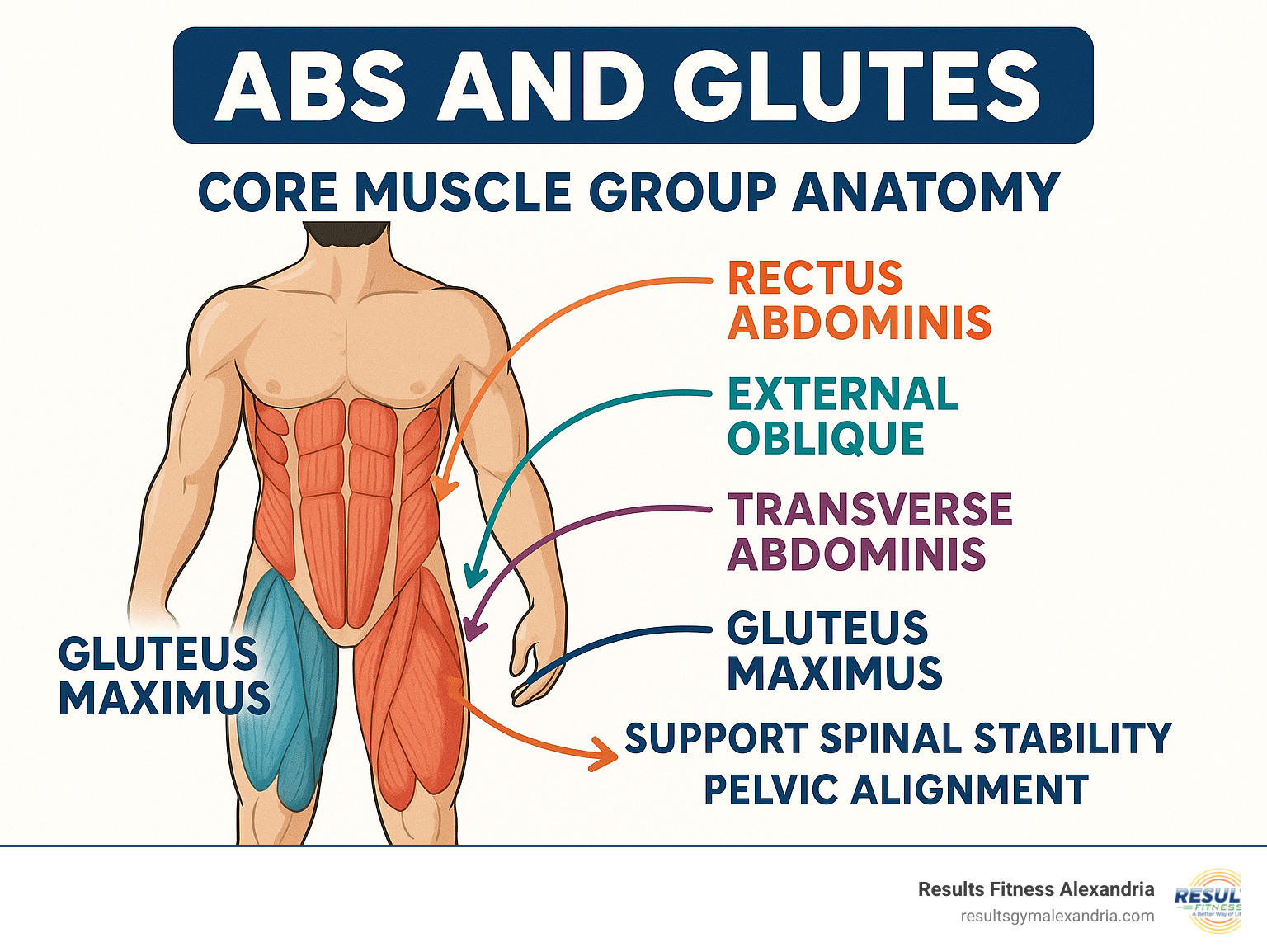
Understanding the muscle groups helps you target them better. Your abs include:
- Rectus abdominis: The “six-pack” muscle. Helps you bend forward.
- Transverse abdominis: Deep muscle that stabilizes your spine.
- Obliques: On the sides. Help with twisting and bending sideways.
The glutes are made of:
- Gluteus maximus: The main muscle for hip extension and power.
- Gluteus medius: On the side. Stabilizes your pelvis.
- Gluteus minimus: Under the medius. Helps with hip movement.
When you train these areas, you improve not just strength, but stability and movement quality. It’s important to work all parts—not just the visible “six-pack” or the largest glute muscle.
The Science Behind Abs And Glute Training
Strength training works by breaking down muscle fibers. As your body repairs these fibers, they grow stronger. For abs and glutes, studies show that progressive overload (increasing resistance or reps over time) is the key to growth. This doesn’t mean you need heavy weights—bodyweight exercises can be very effective, especially for beginners.
Research also shows that compound exercises trigger more muscle activation than isolation movements. For example, a squat works your glutes, but also engages your abs to stabilize your body. Planks hit both areas at once. Another insight: muscles need rest to grow. Training abs and glutes every day can actually slow progress. Aim for 2-3 sessions per week, with rest in between.
Key Exercises For Abs And Glutes
Choosing the right exercises is critical. Here are some of the most effective movements:
- Plank: Targets core, including transverse abdominis and glutes.
- Glute bridge: Focuses on gluteus maximus and core stability.
- Squat: Works glutes, abs, and legs.
- Deadlift: Engages glutes, abs, and lower back.
- Bicycle crunches: Targets rectus abdominis and obliques.
- Lunges: Activates glutes, core, and legs.
- Side plank: Hits obliques and gluteus medius.
- Mountain climbers: Works abs and glutes with cardio.
- Hip thrust: Strong glute activation, with core involvement.
- Russian twists: Focuses on obliques and stabilizing muscles.
Beginners often miss that form matters more than weight. Doing a plank with proper alignment is better than holding for longer with bad posture. Another tip: vary your routine. Changing exercises keeps muscles challenged and prevents plateaus.
Sample Ab And Glute Workout Routine
Here’s a routine you can follow at home or the gym. It combines compound and isolation moves, and covers all major muscles.
Warm-up (5-10 minutes):
- Jumping jacks or light jogging
- Dynamic stretches (leg swings, hip circles)
Main Workout:
- Plank – 3 sets x 30 seconds
- Squats – 3 sets x 15 reps
- Glute bridges – 3 sets x 20 reps
- Bicycle crunches – 3 sets x 20 reps (10 per side)
- Lunges – 3 sets x 10 reps per leg
- Side plank – 3 sets x 20 seconds per side
- Hip thrusts – 3 sets x 15 reps
- Mountain climbers – 3 sets x 30 seconds
Cool-down (5 minutes):
- Static stretches for hips, lower back, and abs
If you’re a beginner, start with fewer sets or shorter times. As you get stronger, add more sets or increase the challenge. Always focus on good form over speed or weight.
Bodyweight Vs. Weighted Training
You can train abs and glutes with just your body weight. Exercises like planks, glute bridges, and lunges are effective for all levels. For faster progress, you can add weights (dumbbells, kettlebells, resistance bands).
Let’s compare the two methods:
| Training Type | Benefits | Drawbacks |
|---|---|---|
| Bodyweight | Easy to start, low risk of injury, can be done anywhere. | May plateau after a few months, harder to increase resistance. |
| Weighted | Faster muscle growth, more variation, adjustable resistance. | Needs equipment, higher risk if form is poor, not always portable. |
A smart approach is to start with bodyweight moves. Once you can perform them easily, add resistance. For example, hold a dumbbell during squats or use a band for hip thrusts.
Credit: resultsgymalexandria.com
Common Mistakes And How To Avoid Them
Even experienced people make errors that slow progress or cause injuries. Here are some mistakes to watch for:
- Rushing reps: Speed reduces muscle activation and increases injury risk.
- Poor form: Arching your back in planks or squats puts stress on your spine.
- Neglecting warm-up: Skipping warm-ups leads to stiff muscles and higher injury chances.
- Overtraining: Training every day without rest weakens muscles.
- Ignoring nutrition: Muscles need protein and healthy carbs to grow.
To avoid these, focus on slow, controlled movements, always warm up, and rest between sessions. Make sure your diet supports your goals with enough protein (about 0.7–1 gram per pound of body weight), healthy fats, and complex carbs.
How To Progress And Challenge Yourself
Muscles adapt quickly. To keep improving, you must progress your workouts. Here’s how:
- Increase reps or sets each week.
- Add resistance (weights, bands).
- Try harder variations (single-leg glute bridges, plank with leg lift).
- Shorten rest between sets.
Another non-obvious insight: tracking your workouts helps. Write down your exercises, sets, reps, and resistance. This makes it easier to see progress and adjust your routine.

Credit: www.youtube.com
Nutrition For Abs And Glutes
Exercise alone won’t show results if your diet isn’t right. Building muscle and losing fat requires a balanced approach:
- Protein: Essential for muscle repair. Good sources include chicken, eggs, fish, beans, and tofu.
- Healthy fats: Needed for hormone balance and joint health. Try avocados, nuts, olive oil.
- Carbohydrates: Fuel workouts. Choose whole grains, sweet potatoes, fruits.
Hydration is often forgotten. Water keeps muscles working efficiently and helps recovery. Avoid processed foods, sugary drinks, and excessive alcohol, as they slow muscle growth and add fat.
How Often Should You Train Abs And Glutes?
Training frequency depends on your fitness level and goals. Most experts recommend 2-3 sessions per week for each muscle group, with at least one rest day in between. For more advanced athletes, 3-4 times per week can work if you vary intensity and exercises.
Here’s an example schedule:
| Day | Workout Focus |
|---|---|
| Monday | Abs + Glutes |
| Wednesday | Abs + Glutes |
| Friday | Abs + Glutes |
On rest days, focus on stretching, light cardio, or other muscle groups. This prevents burnout and supports recovery.
Training At Home Vs. Gym
You can get great results at home, but gyms offer more equipment and variation. At home, use your body weight, resistance bands, or household items (like a backpack filled with books). In the gym, you can use machines, barbells, and heavier weights.
Let’s compare:
| Location | Pros | Cons |
|---|---|---|
| Home | Convenient, free, no travel needed, flexible timing. | Limited equipment, harder to progress, distractions. |
| Gym | More equipment, trainers available, social motivation. | Cost, travel time, busy during peak hours. |
Choose what fits your lifestyle. Consistency matters more than location.
Variations For Different Fitness Levels
Every person starts at a different level. Here are options for beginners, intermediate, and advanced:
Beginners:
- Modified planks (on knees)
- Bodyweight squats
- Glute bridges without weights
Intermediate:
- Full planks
- Weighted lunges
- Hip thrusts with resistance band
Advanced:
- Plank with leg lift
- Barbell squats
- Single-leg hip thrusts
If you find an exercise too easy or too hard, adjust the variation. Listen to your body and avoid pain (not just muscle fatigue).
How To Avoid Plateaus
A plateau means your progress stalls. This happens when your body gets used to your routine. To break plateaus:
- Change exercises every 4–6 weeks.
- Increase weight or resistance.
- Adjust rep range (try lower reps with heavier weight or higher reps with lighter weight).
- Mix in new movement patterns (like lateral lunges or decline planks).
Another tip: focus on mind-muscle connection. Think about the muscles working during each rep. Studies show this improves activation and results.
Recovery And Injury Prevention
Recovery is as important as training. Muscles grow during rest, not during exercise. To speed recovery:
- Sleep 7–9 hours per night.
- Stretch after workouts.
- Use foam rollers to release tight muscles.
- Eat protein-rich meals post workout.
Watch for signs of injury (sharp pain, swelling, loss of movement). Stop training and consult a professional if these appear. It’s better to rest than risk long-term damage.
Real-life Examples And Success Stories
Many people achieve great results with abs and glute training. For example, Sarah, a beginner, started with bodyweight exercises at home. In three months, she improved her posture, reduced back pain, and noticed firmer muscles. John, an athlete, added hip thrusts and planks to his routine and saw faster sprint times and fewer injuries.
The biggest lesson: progress takes time. Consistency and smart choices matter more than “magic” workouts or supplements.
Combining Cardio And Strength
Some believe that only strength training builds muscle, but cardio can help too. Activities like running, cycling, or HIIT burn fat and improve endurance. When you combine cardio with strength, you get better overall fitness.
Here’s how to mix both:
- Do strength training first, then finish with 10–20 minutes of cardio.
- Try circuit workouts (move quickly from one exercise to another).
- Use exercises like mountain climbers or burpees, which build strength and cardio.
Don’t overdo cardio if your goal is muscle growth. Two or three short sessions per week are enough.
Equipment For Abs And Glutes
While you don’t need fancy equipment, some tools can help:
- Resistance bands: Cheap, portable, and increase difficulty.
- Dumbbells: Add weight for squats, lunges, and hip thrusts.
- Stability ball: Makes planks and bridges more challenging.
- Foam roller: Helps recovery and prevents injuries.
If you’re unsure what to buy, start with resistance bands. They are affordable and can be used for many exercises.
Tips For Staying Motivated
Sticking to a routine can be tough. Here are practical ways to stay motivated:
- Set clear goals (“I want to do 20 squats with good form”).
- Track progress with a workout log or app.
- Join a friend or group for accountability.
- Celebrate small wins (like increasing reps or holding a plank longer).
- Change your routine every few weeks to keep it interesting.
Remember, motivation comes and goes. Discipline is what gets results.

Credit: www.knowinggodintheword.org
The Role Of Genetics
Some people worry that genetics limit their progress. While genes do play a role, everyone can improve their abs and glutes with effort. Genetics affect muscle shape and how quickly you see changes, but training, diet, and lifestyle are more important.
A non-obvious insight: even if you don’t get a “six-pack” or very round glutes, you can still build strength, prevent injuries, and feel better.
Frequently Asked Questions
How Long Does It Take To See Results From Ab And Glute Workouts?
Most people notice changes in strength and endurance within 4–6 weeks. Visible muscle definition may take longer, especially if you have extra body fat. Consistency, good nutrition, and rest are key. Don’t expect overnight results—real progress takes time and effort.
Can I Train Abs And Glutes Every Day?
Training these muscles every day is not recommended. Muscles need rest to recover and grow. Aim for 2–3 sessions per week, with at least one day off between workouts. Overtraining increases injury risk and slows progress.
What Should I Eat To Support Ab And Glute Growth?
Eat plenty of protein (chicken, eggs, fish, beans), healthy fats (avocado, olive oil, nuts), and complex carbs (whole grains, fruits). Hydrate well and avoid processed foods. Nutrition is as important as exercise for muscle growth.
Are Abs And Glutes Important For Sports Performance?
Yes, strong abs and glutes improve performance in almost every sport. They help with running, jumping, changing direction, and reduce injury risk. Many athletes focus on these areas to boost speed, power, and stability.
Where Can I Find More Information About Effective Ab And Glute Workouts?
For in-depth research and exercise guides, check NASM Exercise Library. This resource offers videos, tips, and science-based advice.
Building strong abs and glutes is a journey, not a quick fix. With the right exercises, smart progression, and healthy habits, anyone can achieve lasting results. Focus on quality, stay consistent, and enjoy the benefits—not just in how you look, but in how you move and feel every day.
