

Best Glute And Leg Workout: Sculpt Stronger, Leaner Legs Fast
Best Glute And Leg Workout
If you want a strong, balanced, and attractive lower body, focusing on your glutes and legs is essential. These muscles do more than help you look good in jeans—they support almost every movement you make, from walking to running and even sitting. Strong glutes and legs protect your knees and back, boost athletic performance, and help you burn more calories even at rest.
But with so many exercises online, it's easy to feel lost or overwhelmed. Which ones are truly effective? How do you build a workout that delivers real results, whether you are a beginner or already fit? This guide covers everything you need: the most effective exercises, how to structure your workouts, common mistakes, and tips to maximize your gains.
Why Focus On Glutes And Legs?
The gluteus maximus, hamstrings, quadriceps, and calves are among the largest muscles in your body. Training them has several benefits:
- Burns more calories: Larger muscles use more energy.
- Improves posture: Strong glutes and legs help stabilize your hips and spine.
- Enhances athletic performance: Most sports depend on leg power.
- Reduces injury risk: Balanced lower body muscles protect your joints.
Neglecting these muscles can lead to weakness, poor movement, and even pain in your back, hips, or knees. A balanced approach keeps you healthy and active.
Anatomy Of The Glutes And Legs
Understanding your muscles helps you train smarter. Here’s a quick breakdown:
- Gluteus maximus: Main buttock muscle; responsible for hip extension and outward rotation.
- Gluteus medius and minimus: Smaller glute muscles; stabilize your pelvis, important for single-leg movements.
- Quadriceps: Front thigh muscles; straighten your knee, crucial for squats and lunges.
- Hamstrings: Back thigh muscles; bend your knee and extend your hip.
- Adductors: Inner thigh; help bring your legs together.
- Calves (gastrocnemius and soleus): Back of the lower leg; help you rise on your toes and push off when walking or running.
Each exercise works some muscles more than others. Combining different moves ensures balanced growth.
Key Principles For Glute And Leg Growth
To get the most from your workouts, follow these principles:
- Progressive overload: Gradually increase weight, reps, or difficulty so your muscles keep adapting.
- Good form: Quality beats quantity. Proper technique reduces injury and boosts results.
- Variety: Use different exercises and angles to hit all muscle fibers.
- Consistency: Train your lower body at least 1-2 times per week for steady progress.
- Rest and recovery: Muscles need time to repair. Allow at least 48 hours before working the same muscle group again.
Many people forget that muscles grow during rest, not during exercise. Don’t skip sleep or recovery days.
Essential Glute And Leg Exercises
Some exercises stand out for their effectiveness. Here are the top moves for building strong glutes and legs:
1. Squats
Squats are often called the "king of leg exercises." They target the quads, glutes, and hamstrings.
- Stand with feet shoulder-width apart.
- Lower your hips as if sitting in a chair.
- Keep your chest up and knees out.
- Push through your heels to stand.
Variants: Goblet squat, front squat, sumo squat, Bulgarian split squat.
2. Deadlifts
Deadlifts build the hamstrings, glutes, and lower back.
- Stand with feet hip-width apart.
- Grip the bar (or dumbbells) in front of you.
- Keep your back straight, hinge at the hips, and lower the weight.
- Drive your hips forward to return to standing.
Variants: Romanian deadlift, stiff-leg deadlift, sumo deadlift.
3. Lunges
Lunges challenge balance and work each leg individually.
- Step forward with one foot.
- Lower until both knees are bent at 90 degrees.
- Push back to the starting position.
Variants: Walking lunge, reverse lunge, curtsy lunge.
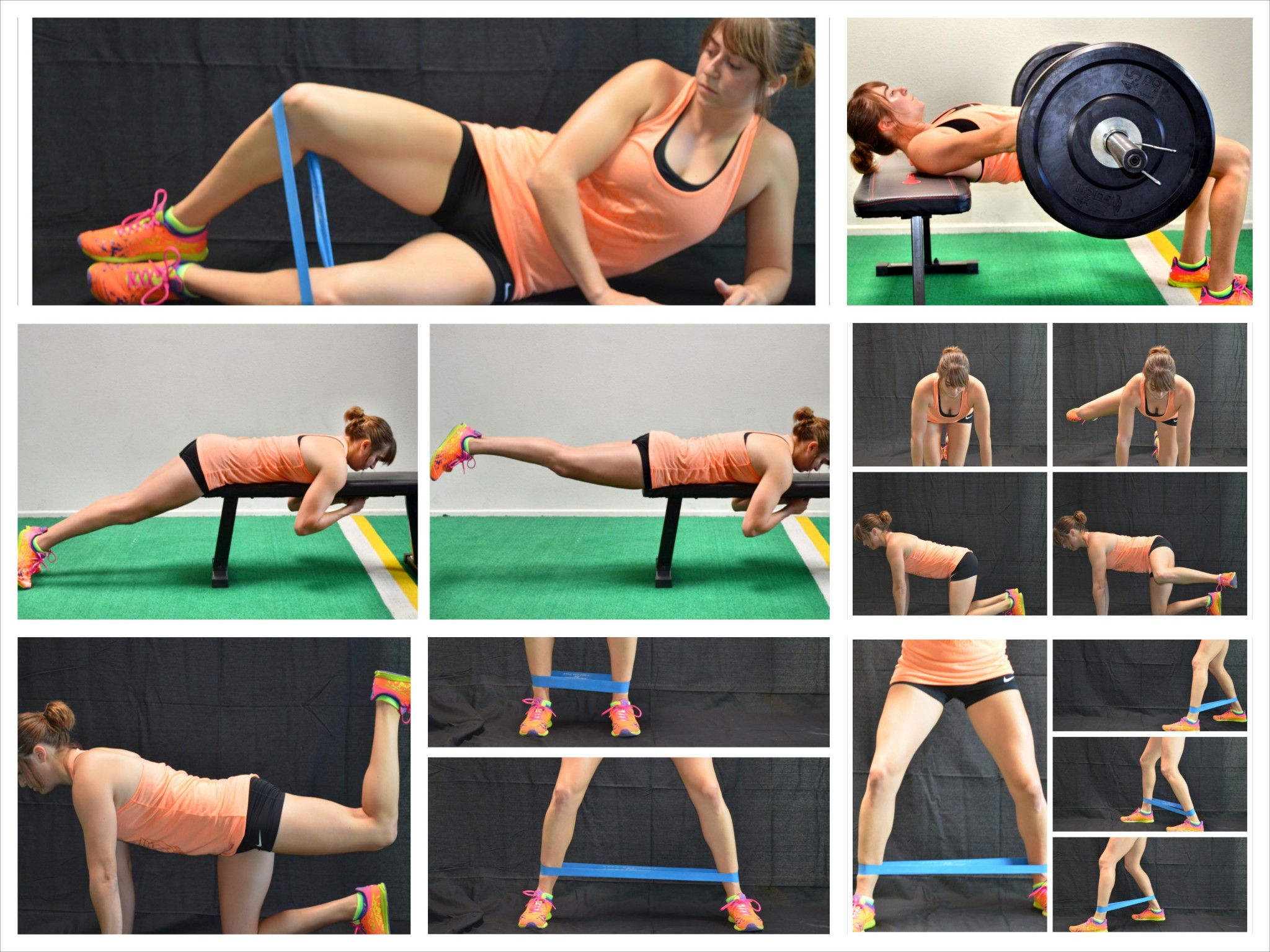
4. Hip Thrusts
Hip thrusts are a glute isolation exercise.
- Sit on the ground with your upper back on a bench.
- Roll a barbell over your hips.
- Push through your heels and lift your hips.
- Squeeze your glutes at the top.
Variants: Single-leg hip thrust, glute bridge.
5. Step-ups
Step-ups target the quads and glutes.
- Stand in front of a bench or box.
- Step up with one foot, pushing through your heel.
- Bring the other foot up, then step down.
Add dumbbells for extra resistance.
6. Leg Press
The leg press machine provides a safe way to lift heavy.
- Sit in the machine with feet shoulder-width on the platform.
- Lower the platform until knees are at 90 degrees.
- Push back to the starting position.
Adjust foot placement to hit different muscles.
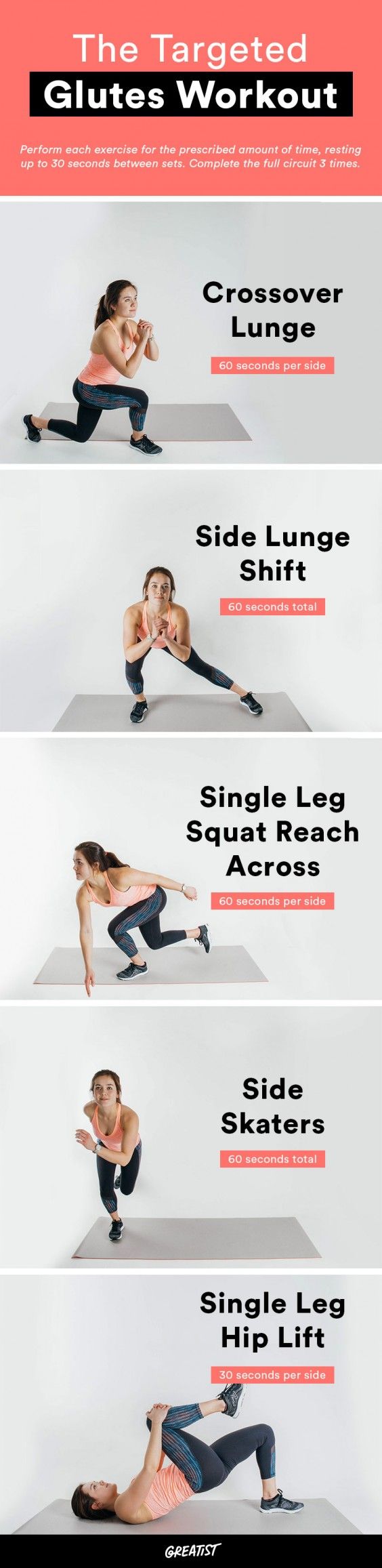
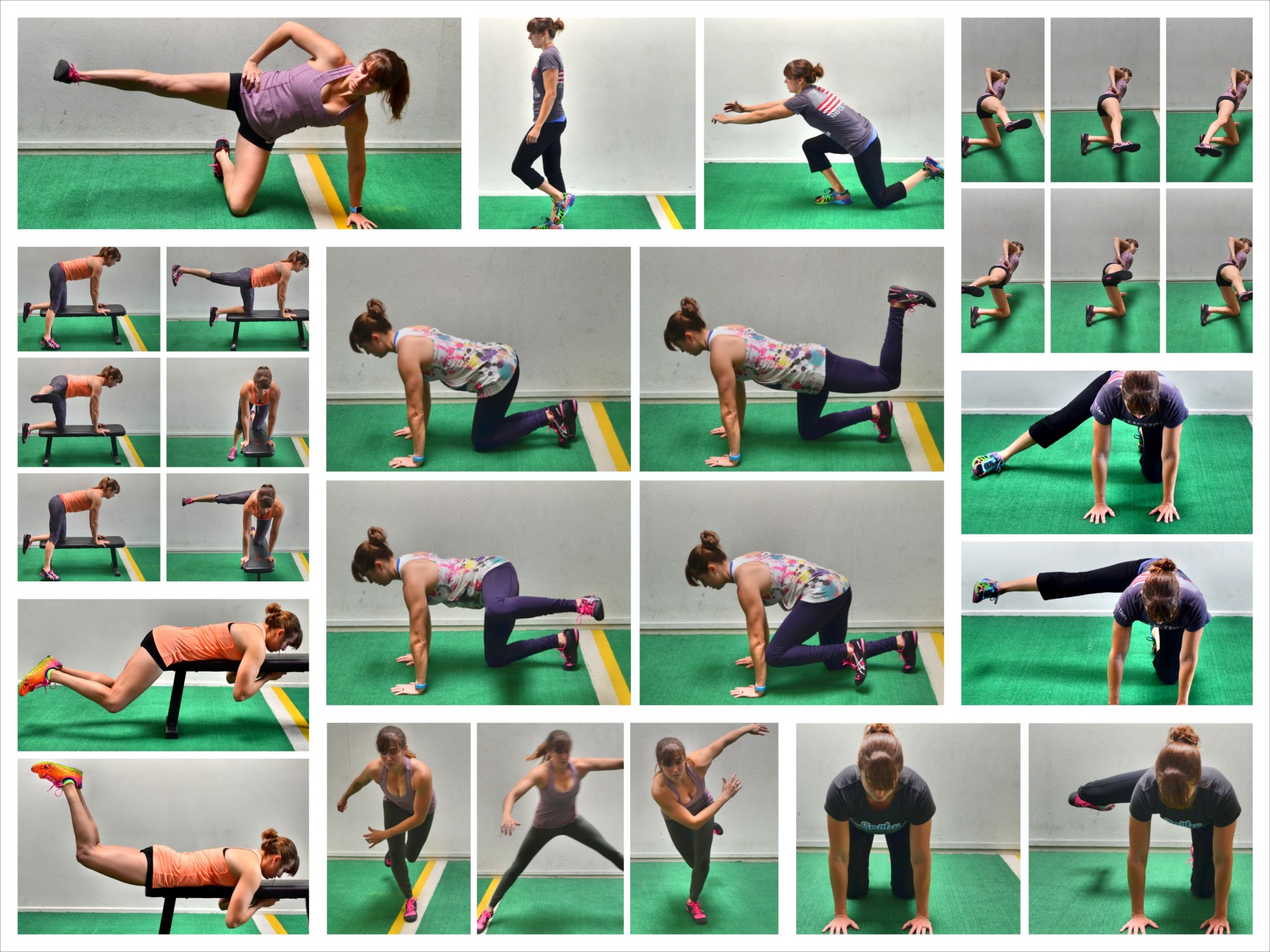
7. Glute Kickbacks
This exercise isolates the gluteus maximus.
- Start on hands and knees.
- Lift one leg back and up, keeping the knee bent.
- Squeeze at the top, then lower.
Use ankle weights or cables for more resistance.
8. Calf Raises
Don’t forget the calves.
- Stand with feet hip-width apart.
- Raise your heels as high as possible.
- Lower slowly.
Try single-leg calf raises for more intensity.
9. Lateral Band Walks
Great for the gluteus medius (side glutes).
- Place a resistance band above your knees.
- Stand with knees slightly bent.
- Step side to side, keeping tension on the band.
Helps with hip stability and injury prevention.
10. Hamstring Curls
Hamstring curls isolate the back of your thigh.
- Use a lying or seated hamstring curl machine.
- Curl your heels towards your glutes.
- Lower with control.
Can also use a stability ball for home workouts.
Sample Glute And Leg Workout Routine
You can build a solid workout by combining these exercises. Here’s an example routine for most fitness levels:
- Barbell Back Squat: 4 sets x 8-10 reps
- Romanian Deadlift: 3 sets x 10-12 reps
- Walking Lunges: 3 sets x 12 reps per leg
- Hip Thrust: 3 sets x 10-15 reps
- Leg Press: 3 sets x 10-12 reps
- Calf Raises: 3 sets x 15-20 reps
Rest: 60-90 seconds between sets
Tip: Always warm up with 5-10 minutes of light cardio and dynamic stretches. For beginners, start with bodyweight exercises and lower sets. Adjust weights so the last 2 reps are challenging but doable with good form.
Glute And Leg Exercise Comparison
Not all exercises hit the same muscles equally. Here’s a comparison to help you pick the best for your goals:
| Exercise | Primary Muscles | Secondary Muscles | Best For |
|---|---|---|---|
| Squat | Quads, Glutes | Hamstrings, Core | Overall strength & size |
| Hip Thrust | Glutes | Hamstrings, Core | Glute isolation |
| Deadlift | Hamstrings, Glutes | Lower back, Core | Posterior chain, power |
| Lunge | Quads, Glutes | Hamstrings, Calves | Balance & unilateral strength |
| Calf Raise | Calves | None | Calf development |
Advanced Glute And Leg Training Strategies
For those who want to take their training further, consider these strategies:
1. Tempo Training
Controlling the speed of each phase increases muscle tension. Example: Lower for 3 seconds, pause, then lift in 1 second.
2. Supersets
Pair two exercises with no rest. For example, do squats followed by lunges. This saves time and increases intensity.
3. Unilateral Training
Single-leg moves (like Bulgarian split squats) fix muscle imbalances and improve balance.
4. Mind-muscle Connection
Focus on feeling the working muscle. Studies show this boosts muscle activation, especially for the glutes.
5. Partial Reps And Pulses
After full reps, add short, quick movements at the hardest part of the exercise. This can create extra burn and growth.
6. Resistance Bands
Bands add tension at the top of movements, great for glute activation. Try using bands with squats or hip thrusts.
Example Advanced Workout
For experienced lifters, an advanced routine may look like this:
- Barbell Hip Thrust: 4 sets x 8 reps (3-second hold at top)
- Bulgarian Split Squat: 3 sets x 10 reps per leg (slow lowering)
- Sumo Deadlift: 3 sets x 8 reps
- Superset: Lateral Band Walk + Glute Kickback: 3 sets x 15 steps + 15 reps
- Seated Leg Curl: 3 sets x 12 reps
- Standing Calf Raise: 4 sets x 15 reps
Rest as needed, but keep intensity high.
Credit: www.fondation-enovos.lu
How To Structure Your Glute And Leg Workouts
How you organize your training matters as much as the exercises. Here are three common approaches:
1. Full-body Workouts
Do 1-2 lower body exercises per session, 2-3 times per week. Good for beginners or busy people.
2. Upper/lower Split
Train lower body one day, upper body another. Allows for more volume per muscle group. Example schedule:
- Monday: Lower
- Tuesday: Upper
- Thursday: Lower
- Friday: Upper
3. Glute-focused Split
If glute growth is your main goal, dedicate a day just for glutes and supporting muscles.
Key tip: Don’t train the same muscle group hard on back-to-back days. Muscles need time to recover.
Common Glute And Leg Training Mistakes
Small mistakes can slow your progress or lead to injury. Here are the most common ones:
- Poor form: Rounding the back during deadlifts or letting knees cave in during squats can cause injury.
- Neglecting glute activation: Many people have "sleepy glutes." Warm up with bridges or band walks before heavy training.
- Too much weight, too soon: Progress slowly to avoid injury and ensure good technique.
- Not using full range of motion: Partial reps limit muscle growth. Go as low as your mobility allows.
- Ignoring single-leg exercises: Bilateral (two-leg) moves are great, but single-leg exercises fix imbalances and build stability.
- Skipping calves and adductors: Balanced training prevents injuries and improves appearance.
- Not changing workouts: Your body adapts after a few weeks. Switch exercises, sets, or reps to keep progressing.
How To Progress: Sets, Reps, And Weight
Knowing how many sets and reps to do makes your workout more effective.
- Hypertrophy (muscle growth): 3-5 sets of 8-15 reps per exercise
- Strength: 4-6 sets of 4-8 reps, heavier weight
- Endurance: 2-3 sets of 15-25 reps, lighter weight
Increase weight when you can complete all sets and reps with good form. Track your progress in a notebook or app.
Here’s a sample progression plan:
| Week | Sets | Reps | Weight |
|---|---|---|---|
| 1-2 | 3 | 10 | Light |
| 3-4 | 4 | 10-12 | Moderate |
| 5-6 | 4 | 12 | Increase by 5-10% |
Not every week will be perfect. Listen to your body and adjust as needed.
Nutrition For Glute And Leg Growth
Exercise is only half the battle. Your muscles need proper fuel to grow and recover.
Protein
Protein builds and repairs muscles. Aim for 1.2-2 grams per kg of body weight daily. Good sources: chicken, fish, eggs, Greek yogurt, beans, and protein powders.
Carbohydrates
Carbs provide energy for hard workouts. Include whole grains, fruits, and vegetables in your meals.
Fats
Healthy fats support hormone function and joint health. Add nuts, seeds, avocados, and olive oil to your diet.
Hydration
Muscles work best when hydrated. Drink water throughout the day, not just during workouts.
Supplements
Not required, but helpful if you struggle to meet your needs. Whey protein, creatine, and a basic multivitamin are popular choices.
Insider tip: Many people forget about post-workout nutrition. A mix of protein and carbs within 1-2 hours after training can boost recovery.
Recovery: The Missing Key
You might be surprised, but muscle growth happens during rest, not just in the gym.
- Sleep: Aim for 7-9 hours per night.
- Active recovery: Light activity (walking, stretching) helps reduce soreness.
- Massage and foam rolling: These can improve blood flow and reduce tightness.
- Rest days: Take at least one full rest day each week.
Neglecting recovery can lead to overtraining, fatigue, and poor results.
Glute And Leg Workouts At Home (no Equipment)
No gym? No problem. You can build strong legs and glutes at home. Try this routine:
- Bodyweight Squats: 4 sets x 20 reps
- Reverse Lunges: 3 sets x 15 reps per leg
- Glute Bridges: 4 sets x 15 reps (add single-leg for more challenge)
- Wall Sit: 3 sets x 30-60 seconds
- Step-Ups (on chair): 3 sets x 12 reps per leg
- Calf Raises (on stair): 4 sets x 20 reps
Tip: Slow down each rep and add pauses to increase difficulty. Resistance bands are cheap and boost home workouts.
Real-world Results: What To Expect
With smart training and nutrition, most people see noticeable changes in 6-12 weeks. Early progress may feel slow, but stick with it.
- First month: Improved balance, better movement, less soreness.
- 2-3 months: Visible muscle tone, stronger lifts, clothes fit differently.
- 6 months: Major changes in shape and strength.
Remember: genetics, diet, and sleep all play a role. Don’t compare your progress to others—focus on your own journey.
Myths About Glute And Leg Training
Let’s clear up some common misunderstandings:
- Myth: Squats make your legs bulky.
Truth: Squats shape and strengthen; getting "bulky" is rare without heavy, long-term lifting and special diets.
- Myth: You must use heavy weights.
Truth: Bodyweight and resistance bands can build muscle, especially for beginners.
- Myth: Training legs once a week is enough.
Truth: Twice a week is more effective for most people.
- Myth: Cardio shrinks your glutes.
Truth: Reasonable cardio doesn’t hurt muscle gains if you eat enough.
- Myth: Spot-reducing fat works.
Truth: You can’t burn fat from just your legs or glutes; whole-body fat loss is needed.
Credit: www.afvt.org
How To Stay Motivated
Sticking to a glute and leg routine can be hard, especially when progress is slow. Here are some tips to keep going:
- Set clear goals: Whether it’s lifting a certain weight or fitting into your favorite jeans.
- Track progress: Take photos, log your workouts, or measure your legs and glutes.
- Find a workout buddy: Training with a friend adds accountability.
- Mix it up: Try new exercises, routines, or even music playlists.
- Celebrate small wins: Every extra rep or pound lifted is progress.
Motivation will come and go. Discipline and routine are what drive long-term success.
How Men And Women Build Glutes And Legs Differently
Both men and women can benefit from the same exercises, but there are some differences:
- Hormones: Men build muscle faster due to higher testosterone, but women’s glutes often respond very well to training.
- Goals: Women often focus on shape and tone; men may focus on strength and size.
- Training style: Both benefit from heavy and light days, as well as isolation moves.
A balanced routine works for everyone. Don’t fear weights—they won’t make you look "manly" unless you train like a professional bodybuilder.
Practical Tips For Faster Progress
- Film your form: Watching yourself helps spot mistakes you can’t feel.
- Warm up properly: Glute activation drills make your main exercises more effective.
- Change your stance: Wider or narrower feet change muscle emphasis.
- Use pauses: Hold at the bottom or top for 2 seconds to increase muscle tension.
- Get feedback: Ask a coach or experienced lifter for tips.
Pro insight: Many beginners overlook the mind-muscle connection. Simply thinking about your glutes as you lift can double muscle activation. Don’t rush your reps—feel each one.
Tracking Your Results
Knowing if your training works is key. Here’s how to track progress:
- Strength: Write down weights, sets, and reps.
- Appearance: Take photos every 4 weeks in the same lighting.
- Measurements: Use a tape measure around your hips, thighs, and calves.
- Performance: Note how you feel—stairs become easier, balance improves, soreness decreases.
Change doesn’t always show up on the scale. Focus on how you move and feel.
Credit: redefiningstrength.com
Safety Considerations
Training hard is important, but safety comes first.
- Warm up: 5-10 minutes of cardio and dynamic stretching.
- Start light: Master form before adding weight.
- Listen to your body: Pain is a warning—don’t push through sharp or unusual pain.
- Use a spotter: For heavy barbell lifts, especially as you get stronger.
- Footwear: Wear stable shoes for support.
If you have joint pain or a medical condition, consult a fitness professional or doctor before starting.
Frequently Asked Questions
How Often Should I Train My Glutes And Legs?
Most people see best results training glutes and legs 2 times per week. This gives enough stimulus for growth, with time for recovery. Beginners can start with once per week and build up.
Do I Need To Lift Heavy To Build Glutes And Legs?
Heavy weights are effective, but not required. You can make gains with bodyweight exercises, resistance bands, or lighter weights by doing more reps and focusing on good form and muscle tension.
How Long Does It Take To See Results?
Visible changes usually appear in 6-12 weeks with consistent training and nutrition. Strength and balance can improve sooner. Progress depends on your effort, genetics, and diet.
Can I Do Glute And Leg Workouts At Home Without Equipment?
Yes! Moves like bodyweight squats, lunges, glute bridges, and step-ups are very effective. Resistance bands add extra challenge. Focus on higher reps and slow, controlled movements.
What Should I Eat To Support Muscle Growth In Glutes And Legs?
Eat enough protein (like chicken, fish, eggs, beans), healthy carbs (oats, rice, fruits), and fats (nuts, seeds, olive oil). Drink water and consider a protein shake if you struggle to meet needs. For more on nutrition, check EatRight.org.
Building your best glutes and legs is a journey, not a sprint. Focus on steady progress, smart training, and good nutrition. In time, you’ll enjoy not only a stronger lower body but also better health and confidence.
