

Banded Glute Workout: Build Stronger, Rounder Glutes Fast
Banded Glute Workout: Build Stronger Glutes Anywhere
Strong glutes are more than just a fitness trend. They support your hips, stabilize your core, and improve how you move every day. But not everyone has time or access to heavy gym equipment. This is where resistance bands become a game-changer. With a simple loop band, you can target your glutes, challenge your muscles, and see results—at home, in the gym, or on the go.
Many people think resistance bands are only for beginners or rehab. In reality, they can make glute workouts harder than using bodyweight alone. Bands keep tension on your muscles, especially at the top of each movement. This helps you build shape, power, and stability.
Even advanced athletes use bands to fix muscle imbalances and boost their lifts.
This guide will show you how to get the most from a banded glute workout. You’ll learn what bands to use, how to do the best exercises, and how to plan your sessions for fast results. Whether you want to tone, grow, or strengthen your glutes, resistance bands are simple, effective, and flexible for any lifestyle.
Why Train Glutes With Resistance Bands?
Training your glutes with bands is different from using free weights or machines. Resistance bands provide a unique type of tension. Here are some key reasons they work so well:
- Constant tension: Bands create resistance through the whole movement, not just at the bottom or top. Your muscles stay active longer.
- Joint-friendly: Bands are gentler on your hips, knees, and back compared to heavy weights. This lowers injury risk.
- Increased muscle activation: Studies show bands can make your glutes work harder, especially during the “lockout” or top phase of each exercise.
- Versatility: You can change the angle, speed, and range of motion easily. This helps target all parts of your glutes.
- Convenience: Bands are light, cheap, and fit in a backpack or suitcase. You can train almost anywhere.
- Correct muscle imbalances: Many people have one glute stronger than the other. Bands help you focus on each side and fix these problems.
Non-obvious insight: Many people feel their legs working more than their glutes during squats or lunges. Adding a band above your knees forces your glutes to activate more, taking pressure off your quads.
Understanding The Glute Muscles
Before you start, it helps to know the three main glute muscles:
- Gluteus maximus: The largest. It gives shape and power to your backside. It extends your hip (moves your leg back) and helps you stand up from a squat.
- Gluteus medius: On the side of your hip. It moves your leg out to the side and keeps your pelvis stable when you walk.
- Gluteus minimus: Under the medius. It also helps stabilize your hip.
A balanced workout should hit all three. Many people train only the maximus, missing out on the benefits of a strong medius and minimus. Weakness here often leads to hip, knee, or lower back pain.
Credit: centr.com
Types Of Resistance Bands For Glute Workouts
Not all bands are the same. Choosing the right type makes your workout safer and more effective.
Common Resistance Band Types
| Band Type | Description | Best Use |
|---|---|---|
| Loop Bands | Flat, closed-loop bands, 12-16 inches long | Glute bridges, squats, lateral walks |
| Mini Bands | Shorter, lighter loops | Activation drills, beginners |
| Therapy Bands | Flat, long strips (not loops) | Rehab, stretching, gentle resistance |
| Tubing Bands | Round tubes with handles | Rows, presses, standing hip thrusts |
| Fabric Bands | Thick, non-slip, often wider | High-resistance glute work, comfort |
For most people, loop bands or fabric bands work best for glute training. They stay in place, provide enough resistance, and don’t roll up during exercise.
How To Choose The Right Resistance Level
Bands come in different strengths, usually color-coded. Too light, and you won’t feel your glutes working. Too heavy, and your form breaks down. For most glute exercises, medium to heavy bands are ideal.
Pro tip: If you’re new, start with a medium band. You can always add more reps or sets as you get stronger.
Essential Banded Glute Exercises
You don’t need a long list of moves. These exercises cover every part of your glutes. Each one can be made easier or harder by changing the band or position.
1. Banded Glute Bridge
Lie on your back, knees bent, feet flat. Place the band above your knees. Push through your heels, raise your hips, and squeeze your glutes at the top. Lower slowly.
Why it works: Adds resistance at the top, where the glutes work hardest. Great for all levels.
2. Banded Hip Thrust
Sit with your upper back on a bench, feet on the ground, band above knees. Drive hips up until your body forms a straight line. Hold and lower.
Why it works: Targets the maximus. Band keeps your knees out, activating more muscle.
3. Banded Lateral Walk
Stand, feet hip-width, band above your knees. Bend knees slightly. Step sideways, keeping tension on the band. Repeat both directions.
Why it works: Targets the medius and minimus, which stabilize your hips.
4. Banded Squat
With the band above your knees, squat as deep as you can, keeping knees out. Stand back up.
Why it works: The band fights knee collapse, forcing your glutes to work harder.
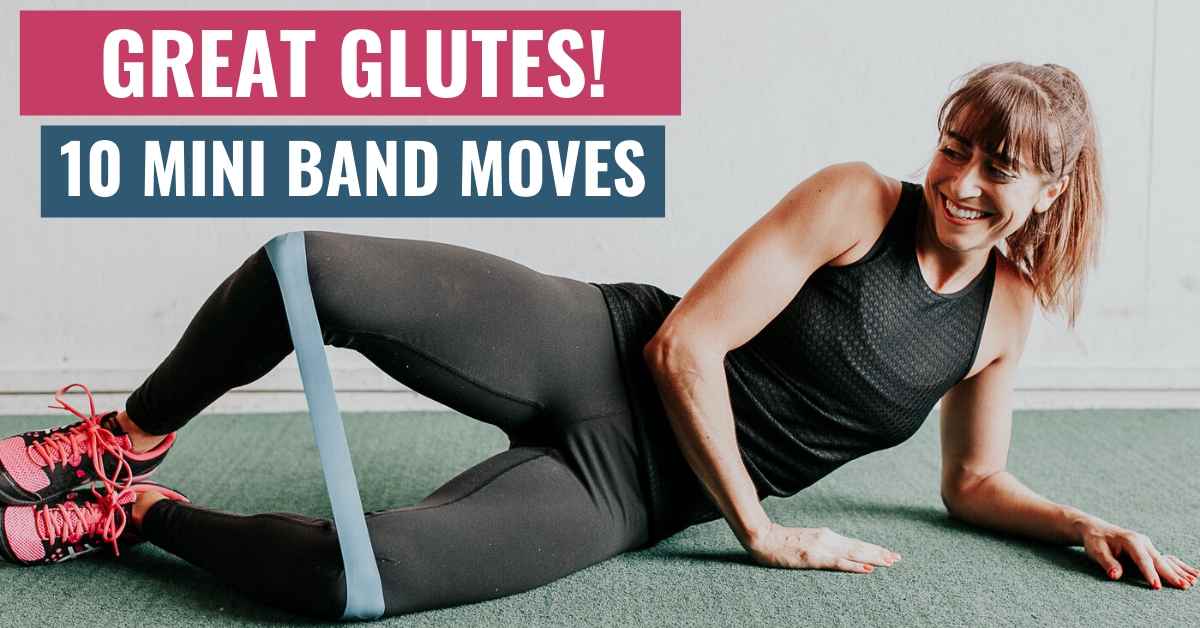
5. Banded Clamshell
Lie on your side, knees bent, band above knees. Open your top knee, keeping feet together. Lower with control.
Why it works: Perfect for hip stability and outer glute activation.
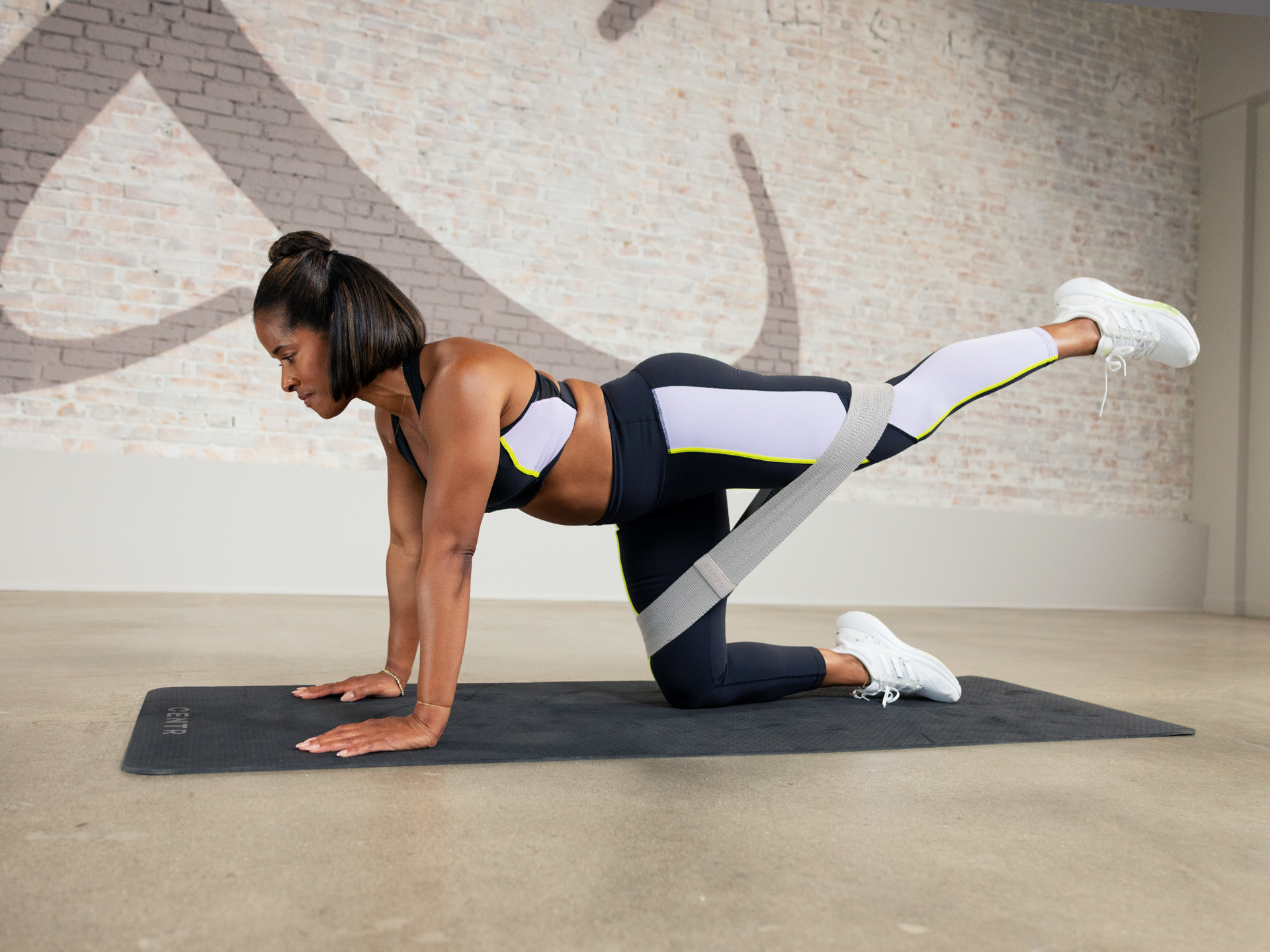
6. Banded Kickback
On hands and knees, band around thighs. Kick one leg straight back, squeeze glute, then switch.
Why it works: Isolates the glute maximus, helping shape and strengthen.
7. Banded Fire Hydrant
On all fours, band above knees. Lift one leg out to the side, keeping knee bent.
Why it works: Hits the side glutes, improves hip stability.
8. Banded Standing Abduction
Stand tall, band around ankles. Lift one leg out to the side, hold, and lower.
Why it works: Builds balance and targets smaller glute muscles.
9. Banded Frog Pump
Lie on your back, soles of feet together, knees out wide, band above knees. Push hips up and squeeze.
Why it works: Combines hip thrust and abduction for maximum burn.
10. Banded Reverse Lunge
Stand, band above knees. Step one foot back, lower knee, and push up.
Why it works: Adds stability and glute activation to a classic move.
Non-obvious insight: Most people rush through these moves. Slow, controlled reps—especially the “down” phase—activate the glutes more and reduce risk of knee pain.
Credit: redefiningstrength.com
Sample Banded Glute Workout Routines
Knowing the exercises is one thing. Putting them together for results is another. Here are three routines, each with a different goal.
Beginner Routine (20-25 Minutes)
Perfect for those new to bands or glute training.
- Banded Glute Bridge: 3 sets x 15 reps
- Banded Lateral Walk: 3 sets x 12 steps each way
- Banded Squat: 3 sets x 12 reps
- Banded Clamshell: 2 sets x 15 reps per side
Rest 45-60 seconds between sets.
Muscle Growth Routine (30-35 Minutes)
A bit more volume for those seeking shape and size.
- Banded Hip Thrust: 4 sets x 12 reps (pause at top)
- Banded Frog Pump: 3 sets x 20 reps
- Banded Kickback: 3 sets x 15 reps per leg
- Banded Fire Hydrant: 3 sets x 12 reps per leg
- Banded Standing Abduction: 2 sets x 15 reps per side
Rest 60-90 seconds between sets.
Glute Activation + Warmup (10-15 Minutes)
Use before heavy lifting or running.
- Banded Lateral Walk: 2 sets x 10 steps each way
- Banded Clamshell: 2 sets x 12 reps per side
- Banded Glute Bridge: 2 sets x 12 reps
- Banded Standing Abduction: 1 set x 15 reps per side
No rest between exercises; cycle through twice.
Pro tip: For best results, change your routine every 6-8 weeks. Add new exercises, change the order, or use a heavier band.
How To Progress Your Banded Glute Workout
Progression is the key to stronger, bigger glutes. Bands alone are enough for most people, but eventually your body adapts. Here’s how to keep improving:
- Increase resistance: Move to a thicker band or double up bands.
- Add reps or sets: More volume means more challenge.
- Slow down: Focus on the lowering (eccentric) phase.
- Pause at the top: Hold the peak contraction for 2-3 seconds.
- Try single-leg variations: Like single-leg glute bridges or single-leg hip thrusts.
- Shorten rest: Less rest means more work in less time.
Important: If you stop feeling your glutes during an exercise, check your form, not just the band resistance. Quality beats quantity.
Common Mistakes With Banded Glute Workouts
Even simple exercises can go wrong. Here’s what to avoid:
- Letting the band roll or slip: Use fabric bands or adjust band position to stay above the knees.
- Arching your back: Keep your core tight, especially during bridges and thrusts.
- Knees caving in: Push knees out against the band.
- Going too fast: Quick reps use momentum, not muscles.
- Not feeling the glutes: If you feel your quads or lower back, adjust your form or band.
Many people get discouraged if they don’t “feel the burn. ” Sometimes, glute activation takes practice. Filming yourself or using a mirror helps you check your technique.
How Banded Glute Workouts Compare To Free Weights
Is band training as good as using dumbbells or barbells? It depends on your goal, but for many people, bands offer surprising benefits.
| Factor | Resistance Bands | Free Weights |
|---|---|---|
| Muscle Activation | High for glutes, especially at peak contraction | High, but sometimes other muscles take over |
| Joint Stress | Low | Can be high if form is poor |
| Portability | Excellent | Poor |
| Progression Options | Limited by band strength | Unlimited (add weight) |
| Cost | Low | High |
| Stability Training | Excellent | Depends on exercise |
Key takeaway: Bands are perfect for muscle activation, injury prevention, and home workouts. Free weights are better for max strength and long-term muscle growth. The best plan combines both.

Credit: www.etsy.com
How Often Should You Do Banded Glute Workouts?
Frequency depends on your goals and current fitness level. For most people:
- 2-3 banded glute sessions per week is ideal for growth and strength.
- 1-2 sessions per week for maintenance or as a warmup.
- Daily short sessions (5-10 minutes) can help wake up weak glutes, especially if you sit a lot.
Make sure you allow at least one rest day between hard sessions for recovery.
Real-world example: Many athletes use banded glute activation before every lower-body workout. This helps prevent injury and improves squat and deadlift performance.
How To Warm Up Your Glutes Properly
A good warmup wakes up your glutes, increases blood flow, and protects your joints. Here’s a simple banded warmup:
- Banded Lateral Walks: 2 sets x 10 steps each way
- Banded Glute Bridges: 2 sets x 12 reps
- Banded Clamshells: 2 sets x 10 reps per side
Move slowly, focus on squeezing your glutes, and avoid pain.
How To Stretch And Cool Down After Glute Workouts
Stretching after training keeps your hips mobile and reduces soreness. Try these:
- Figure-four stretch: Lie on your back, cross one ankle over your opposite knee, pull toward your chest.
- Seated glute stretch: Sit, cross one leg over the other, twist gently toward your knee.
- Hip flexor stretch: Kneel, push hips forward to stretch the front of your hip.
Hold each stretch 20-30 seconds, breathing deeply.
Who Should Use Banded Glute Workouts?
Banded glute workouts are safe for almost everyone. They’re great for:
- Beginners: Easy to learn, low injury risk.
- Athletes: Improve sprinting, jumping, lifting.
- People with knee or back pain: Build strength without heavy loads.
- Anyone with limited space or time: Quick, effective, no gym needed.
- Seniors: Help prevent falls, improve balance.
Caution: If you have hip or knee injuries, check with a physical therapist or doctor before starting new exercises.
How Bands Help With Everyday Movement And Sports
Strong glutes do more than look good. They power many daily and sports movements:
- Walking and running: Glutes keep your hips level and absorb impact.
- Climbing stairs: You use your glutes with every step up.
- Lifting objects: Proper glute activation protects your back.
- Sports: Sprinting, jumping, kicking, and even swimming use glute power.
Weak glutes often lead to overuse injuries in your knees, hips, or back. Band training can prevent these problems by teaching you to use your glutes correctly.
How To Combine Banded Glute Workouts With Other Training
Bands fit easily into any routine. Here are some ways to combine them:
- As a warmup: Wake up your glutes before lifting or cardio.
- As a finisher: Burn out your glutes after a heavy session.
- On rest days: Gentle band work helps recovery and mobility.
- With cardio: Add short band circuits between walking, running, or cycling intervals.
Example combo: Do 2 sets each of banded lateral walks and bridges before your leg workout. Your squats will feel stronger and more stable.
How To Track Progress With Banded Glute Workouts
Tracking helps you see results and stay motivated. Here’s how:
- Write down reps, sets, and band strength after each workout.
- Take photos every few weeks to see shape changes.
- Note how you feel: More power in daily tasks, less pain, better posture.
- Test your strength: See if you can do more reps, slower reps, or harder bands.
Remember: Progress is not always about size. Feeling less pain, moving better, or standing taller are real wins.
Choosing The Best Bands For Glute Training
Not all bands are equal. Here’s what to look for:
- Material: Fabric bands last longer and don’t roll up like rubber bands.
- Width: Wider bands are more comfortable and stay in place.
- Resistance levels: Buy a set with light, medium, and heavy options.
- Brand reputation: Check reviews for durability and comfort.
Pro tip: Cheap rubber bands often snap or roll. Invest in a quality set for safety and better results.
When To Add Free Weights Or Machines
If you want bigger glutes or more power, combine bands with weights. Here’s when to add them:
- You can do 20+ reps with your heaviest band and still don’t feel challenged.
- Your goal is to lift heavier or grow significant muscle.
- You want variety to prevent boredom or plateaus.
Bands are always useful for warmups, activation, and correcting form. Even advanced lifters use them to boost results.
Banded Glute Workouts For Special Populations
Some groups need extra care or different approaches:
For Runners
Banded glute work prevents common injuries like IT band syndrome and runner’s knee. Focus on lateral walks, clamshells, and single-leg bridges.
For Older Adults
Bands build strength safely, improve balance, and help prevent falls. Start with lighter resistance and focus on form.
For People With Desk Jobs
Sitting all day shuts down your glutes. Short band sessions activate your muscles and improve posture. Try lateral walks and bridges daily.
Myths About Glute Training And Bands
Many people believe myths that slow progress. Here’s the truth:
- Myth: Bands are only for beginners.
Reality: Bands challenge even elite athletes, especially for activation.
- Myth: You can’t build muscle with bands.
Reality: Bands build strength and shape, especially for the glutes.
- Myth: You need heavy weights for results.
Reality: The key is tension and good form, not just heavy loads.
- Myth: More exercises mean better results.
Reality: Quality and consistency beat variety and volume.
Banded Glute Workouts And Fat Loss
Glute training alone doesn’t burn fat, but it helps. Here’s why:
- Stronger glutes mean more muscle. Muscle burns more calories, even at rest.
- Band workouts can be done as circuits, raising your heart rate and burning more energy.
- Better glute activation improves how you run, walk, or cycle, boosting your daily calorie burn.
For best results, combine glute training with healthy eating and overall activity.
Safety Tips For Banded Glute Workouts
Stay safe and get results with these tips:
- Check your bands for cracks before each session.
- Don’t overstretch bands—they can snap.
- Use controlled movements to avoid joint strain.
- Stop if you feel sharp pain (not the muscle burn).
- Warm up and cool down every session.
If you’re unsure about your form, consider working with a certified trainer or physical therapist.
Where To Learn More
If you want to dive deeper, check out this Wikipedia guide to resistance bands for more science and exercise ideas.
Frequently Asked Questions
What Is The Best Resistance Band For Glute Workouts?
The best bands are usually thick fabric loop bands. They stay in place, provide strong resistance, and don’t roll up during exercise. Choose a set with different strengths so you can progress as you get stronger.
How Long Does It Take To See Results From Banded Glute Workouts?
Most people notice better muscle tone and strength in 3-6 weeks if they train 2-3 times per week. Visible changes depend on your diet, genetics, and consistency. You may feel stronger or more stable even sooner.
Can I Build Bigger Glutes With Bands Only?
Yes, you can grow your glutes with bands, especially if you’re new to strength training. Focus on slow reps, progressive overload, and good nutrition. For advanced muscle growth, combine bands with free weights over time.
Are Banded Glute Exercises Safe For People With Knee Pain?
Banded glute moves are joint-friendly and often help reduce knee pain by strengthening weak muscles. Avoid exercises that cause pain, and keep your knees aligned with your feet. Always check with a healthcare provider if you have ongoing pain.
How Do I Know If I’m Targeting My Glutes During Banded Exercises?
You should feel a strong squeeze in your glutes at the top of each rep, not in your lower back or thighs. Slow down, check your form, and use a mirror if possible. If you still can’t feel your glutes, try lighter resistance and focus on mind-muscle connection.
Unlocking the power of banded glute workouts means more than just changing how you look. It’s about moving better, feeling stronger, and staying injury-free—no matter where you train. With the right exercises, good form, and steady progress, you can build glutes that work as good as they look.
