

At Home Leg And Glute Workout: Sculpt Stronger Lower Body Fast
At Home Leg And Glute Workout
Building strong legs and glutes doesn’t always mean spending hours at the gym. Many people think you need fancy machines or heavy weights for results, but that’s not true. You can train your lower body effectively with minimal equipment, or even just your body weight, right at home.
Whether you want to tone your legs, grow your glutes, or boost overall strength, this guide will show you how to achieve your goals with a practical, easy-to-follow home workout plan.
You’ll learn which exercises work best for your legs and glutes, how to set up a routine, and how to progress over time. This article covers tips for all fitness levels—from beginners to advanced. We’ll also look at common mistakes, how to avoid injury, and ways to stay motivated.
By the end, you’ll have a complete blueprint for a powerful leg and glute workout you can do at home, plus answers to the most frequent questions.
Why Train Legs And Glutes At Home?
Strong legs and glutes are the foundation for daily movement. They help you walk, climb stairs, lift objects, and support your body during other exercises. Training these muscles improves balance, posture, and athletic performance. A home workout saves time, money, and offers flexibility.
No travel, no gym fees, and you control your routine.
Many people worry home workouts are less effective than gym sessions. However, studies show bodyweight and resistance exercises can build muscle and strength just as well. The key is consistency and proper technique.
Leg and glute workouts at home can help:
- Reduce injury risk by strengthening muscles and joints
- Improve metabolism and help with fat loss
- Boost confidence and energy
- Shape and tone your lower body
Essential Leg And Glute Muscles
Before you start, it helps to know which muscles you’re training. The main lower body muscles include:
- Quadriceps: Front of the thigh, responsible for straightening the knee.
- Hamstrings: Back of the thigh, help bend the knee and extend the hip.
- Gluteus maximus: Largest buttock muscle, drives hip extension and power.
- Gluteus medius and minimus: Smaller glute muscles, stabilize hips and pelvis.
- Adductors: Inner thigh, pull legs together.
- Calves: Back of lower leg, help with pushing off during walking or running.
Most leg and glute exercises hit several muscles at once. For best results, use a mix of movements that target each group.

Credit: www.youtube.com
Key Equipment For Home Workouts
You can train legs and glutes with just your body weight. But simple tools can make your routine more effective and varied.
Here are the most useful items:
- Resistance bands: Add tension to squats, lunges, and glute bridges. Lightweight and affordable.
- Dumbbells or kettlebells: Increase the challenge for exercises like squats or step-ups.
- Yoga mat: Protects your knees and back during floor exercises.
- Chair or bench: Helps with single-leg movements like Bulgarian split squats.
If you’re just starting out, don’t worry about buying equipment right away. You can add these items as you progress.
How To Structure Your At Home Leg And Glute Workout
A balanced lower body workout should include:
- Warm-up: Prepares muscles, prevents injury.
- Compound exercises: Work multiple muscles at once.
- Isolation exercises: Target specific muscles (like glutes).
- Cool-down and stretching: Aids recovery and flexibility.
Aim for 2–3 leg and glute sessions per week, with at least one rest day between. Beginners can start with one session, then add more as they build strength.
Example Weekly Schedule
| Day | Activity |
|---|---|
| Monday | Leg & Glute Workout |
| Tuesday | Rest or Upper Body |
| Wednesday | Leg & Glute Workout |
| Thursday | Rest or Cardio |
| Friday | Leg & Glute Workout |
| Saturday | Rest or Light Activity |
| Sunday | Rest |
Adjust based on your fitness level and recovery needs.
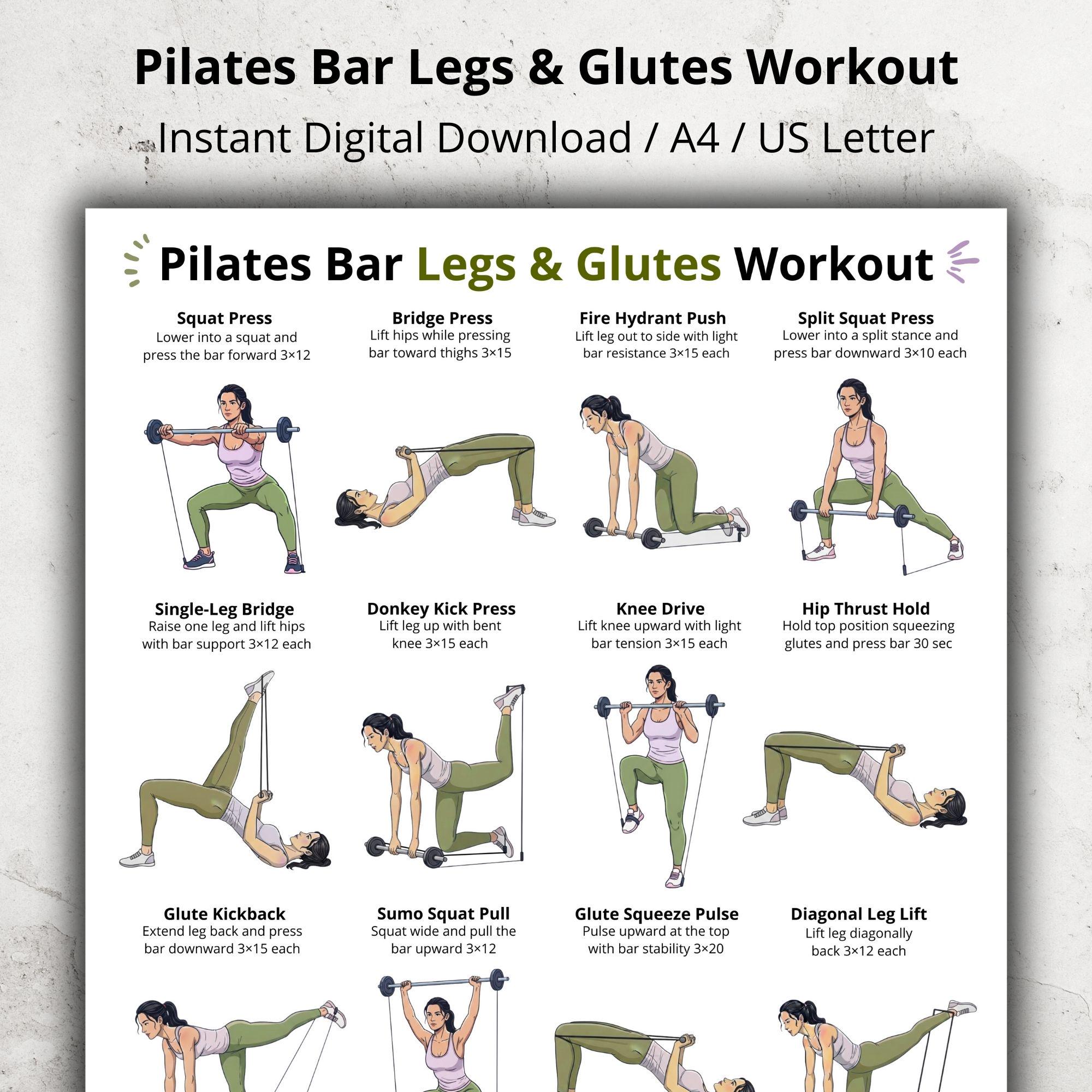
Credit: www.etsy.com
Effective Warm-up For Legs And Glutes
A proper warm-up reduces muscle stiffness and prepares you mentally. Spend 5–10 minutes on dynamic movements like:
- Jumping jacks
- Bodyweight squats
- Leg swings (forward and sideways)
- Walking lunges
This increases blood flow and activates the muscles you’ll be working.
Top At Home Leg And Glute Exercises
You don’t need a long list of exercises. Focus on quality and proper form. Here are the most effective moves:
1. Squats
The squat is the king of leg and glute training. It works your quads, glutes, hamstrings, and core.
- Stand with feet shoulder-width apart.
- Lower your hips back and down, keeping your chest up.
- Go as low as you can comfortably, then push through heels to stand.
Variations: Goblet squat (hold a weight), sumo squat (wider stance), resistance band squat.
2. Lunges
Lunges build balance and hit each leg individually.
- Step forward with one leg, lowering your body until both knees are bent at 90 degrees.
- Push back to standing and repeat with the other leg.
Variations: Reverse lunge, walking lunge, side lunge.
3. Glute Bridge
This targets your gluteus maximus.
- Lie on your back, knees bent, feet flat.
- Push through heels to lift hips, squeezing your glutes at the top.
- Lower and repeat.
Variations: Single-leg bridge, banded bridge, weighted bridge.
4. Bulgarian Split Squat
A powerful single-leg exercise.
- Stand in front of a chair or bench.
- Place one foot behind you on the bench.
- Lower your body, keeping front knee over ankle.
- Push through front foot to stand.
This move builds strength and stability.
5. Step-ups
Great for legs and glutes, plus balance.
- Stand in front of a sturdy chair or step.
- Step up with one foot, pressing through your heel.
- Step down and repeat with other leg.
Use dumbbells for more challenge.
6. Donkey Kicks
Targets glutes and hamstrings.
- Start on hands and knees.
- Kick one leg up and back, keeping knee bent.
- Lower and repeat.
Add a resistance band for extra tension.
7. Side-lying Clamshell
Works your gluteus medius.
- Lie on your side, knees bent.
- Keep feet together, lift top knee up.
- Lower and repeat.
Band around thighs increases difficulty.
8. Calf Raises
Don’t neglect your calves.
- Stand with feet hip-width apart.
- Rise up onto toes, then lower back down.
- Repeat for high reps.
Do single-leg calf raises for more intensity.

Credit: us.humankinetics.com
Sample At Home Leg And Glute Workout
Here’s a balanced routine for all levels. Adjust sets and reps based on your ability.
- Bodyweight Squats — 3 sets x 15 reps
- Reverse Lunges — 3 sets x 12 reps each leg
- Glute Bridges — 3 sets x 15 reps
- Bulgarian Split Squats — 3 sets x 10 reps each leg
- Step-Ups — 3 sets x 12 reps each leg
- Donkey Kicks — 3 sets x 15 reps each leg
- Side-Lying Clamshells — 3 sets x 15 reps each side
- Calf Raises — 3 sets x 20 reps
Rest 30–45 seconds between sets. If you’re advanced, increase sets or add weights.
How To Progress And Avoid Plateaus
Your body adapts quickly. To keep seeing results, you must challenge yourself.
Here’s how to progress:
- Increase reps or sets: If 15 reps feels easy, try 20.
- Add resistance: Use bands or dumbbells.
- Change exercise variations: Try single-leg or banded versions.
- Reduce rest time: Shorter breaks boost intensity.
Track your workouts. Write down sets, reps, and difficulty. This helps you see progress and stay motivated.
Example Progression Table
| Week | Squat Reps | Lunge Reps | Bridge Reps | Resistance |
|---|---|---|---|---|
| 1 | 15 | 12 | 15 | None |
| 2 | 18 | 14 | 18 | Band |
| 3 | 20 | 16 | 20 | Dumbbell |
Common Mistakes And How To Avoid Them
Many people don’t see results because of these errors:
- Poor form: Rushing through reps causes injury. Focus on technique.
- Skipping warm-up: Leads to muscle strains.
- Too little resistance: Muscles need challenge to grow.
- Neglecting single-leg movements: These build balance and fix strength imbalances.
- Inconsistent schedule: Results come from regular training.
Take videos or use a mirror to check your form. If you feel pain (not muscle fatigue), stop and adjust.
How To Stay Motivated With Home Workouts
Training at home can feel lonely or boring. Here are practical ways to stay motivated:
- Set clear goals: “I want to do 20 squats with perfect form.”
- Track progress: Use a notebook or app.
- Find a workout buddy: Even online, sharing progress helps.
- Change up routines: Try new exercises or music.
- Reward yourself: Celebrate milestones, like hitting a new personal best.
Benefits Beyond The Physical
Lower body training isn’t just about looks. Strong legs and glutes support your whole body. They make daily tasks easier, boost confidence, and help prevent falls as you age. Regular exercise can also improve mood, reduce stress, and sharpen your mind.
Nutrition Tips For Leg And Glute Gains
Exercise is only half the equation. To build muscle and recover, you need good nutrition.
- Protein: Helps repair and grow muscles. Aim for lean sources like chicken, eggs, or beans.
- Carbs: Fuel your workouts. Choose whole grains, fruits, and vegetables.
- Healthy fats: Support hormone balance and joint health.
- Water: Stay hydrated for energy and recovery.
If you want to build muscle, eat a little more than your daily needs. If your goal is toning, focus on balanced meals.
Glute Activation: Why It Matters
Many people don’t feel their glutes working during exercises. This is called “glute amnesia. ” Sitting too much causes the glutes to “switch off,” making other muscles overcompensate.
To fix this:
- Do glute activation drills before your main workout.
- Examples: Mini-band walks, hip abductions, glute bridges.
This wakes up the muscles and helps you get better results from your workout.
Advanced Variations For More Challenge
If you’re experienced, try these harder moves:
- Pistol squat: Single-leg squat, requires balance and strength.
- Single-leg Romanian deadlift: Works hamstrings and glutes.
- Jump squats: Add power and cardio.
- Hip thrusts: Use a bench and weights for extra resistance.
Mix these into your routine for variety and continued progress.
Training Tips For Beginners
Starting a new workout can be intimidating. Here are actionable tips:
- Focus on form, not speed or weight.
- Start with bodyweight only.
- Don’t skip rest days. Muscles need time to recover.
- Use a mirror or film yourself to check technique.
- If unsure, follow video tutorials from trusted sources.
Remember, even small improvements are progress.
Training Tips For Advanced Users
If you already have experience:
- Add resistance bands or weights to increase difficulty.
- Try slower reps (tempo training) for more muscle tension.
- Use supersets: Pair two exercises back-to-back without rest.
- Test single-leg moves to find and fix imbalances.
Set new goals, like improving squat depth or increasing reps.
At Home Leg And Glute Workout For Different Goals
Your routine can be adapted for different targets:
For Toning And Shaping
- Higher reps (15–20)
- Moderate rest (30 seconds)
- Focus on bodyweight and band exercises
For Strength And Growth
- Lower reps (8–12)
- Longer rest (60–90 seconds)
- Add dumbbells, kettlebells, or weighted backpack
For Endurance
- Circuit training: Move quickly between exercises
- Short rest (15–30 seconds)
- Include jumps and fast movements
For Athletic Performance
- Plyometrics (jump squats, box jumps)
- Balance moves (single-leg squats, step-ups)
Choose the approach that matches your goal.
Real-world Results And Data
Studies confirm home workouts can be as effective as gym routines. For example, a review published on National Institutes of Health found bodyweight exercises build muscle and strength, especially when combined with resistance bands or external weights.
People who stick to a 2–3 times weekly routine notice visible changes in 6–8 weeks. This includes stronger legs, firmer glutes, and improved endurance.
Home Workout Vs Gym: What’s The Difference?
Both approaches can deliver results. The main differences are equipment and environment.
| Factor | Home Workout | Gym Workout |
|---|---|---|
| Equipment | Limited (bodyweight, bands) | Wide variety (machines, weights) |
| Cost | Low (or free) | Gym fees |
| Convenience | High (any time, no travel) | Depends on location, hours |
| Privacy | High | Low |
| Progression | Can be slower if not adding resistance | Easy to increase weight |
You don’t need a gym for a strong, toned lower body.
How To Avoid Injury During Home Workouts
Safety is key. Follow these tips:
- Warm up before every session.
- Use proper form—don’t rush.
- Start small and increase difficulty slowly.
- Listen to your body. Sharp pain means stop.
- Stretch after workouts to keep muscles flexible.
If you have knee or back issues, modify movements or seek professional advice.
Practical Insights Most Beginners Miss
- Muscle-mind connection: Focus on feeling your glutes and legs work. This boosts muscle activation and results.
- Consistency beats intensity: Regular moderate workouts are better than rare, intense sessions.
- Progress isn’t always visible: Strength and endurance improve before you notice physical changes.
These insights help you stay patient and committed.
How To Measure Progress
Tracking progress keeps you motivated. Here’s how:
- Take photos every 2–4 weeks.
- Measure your thighs, hips, and calves with a tape.
- Record reps, sets, and weights used.
- Notice changes in daily activities (climbing stairs, carrying groceries).
Don’t rely only on the scale. Muscle weighs more than fat, so your shape may change even if weight stays the same.
Creating A Routine You’ll Stick To
The best workout is one you enjoy and can maintain. Tips:
- Pick exercises you like.
- Make workouts short and efficient (30–45 minutes).
- Schedule sessions at the same time each week.
- Mix routines to prevent boredom.
- Celebrate small wins.
If you miss a session, don’t give up. Get back on track next time.
Frequently Asked Questions
How Often Should I Do Leg And Glute Workouts At Home?
Most people benefit from 2–3 sessions per week, with at least one rest day between. Beginners can start with one session and gradually add more as strength improves. Recovery is important—listen to your body.
Can I Build Muscle With Just Bodyweight Exercises?
Yes, bodyweight exercises like squats, lunges, and glute bridges can build muscle, especially for beginners. As you get stronger, add resistance bands or weights to keep challenging your muscles.
What If I Don’t Feel My Glutes Working?
Try glute activation drills before your workout, like banded walks or hip abductions. Focus on squeezing your glutes during each movement. Adjust your form and slow down reps to improve muscle-mind connection.
How Long Does It Take To See Results?
Visible changes usually take 6–8 weeks with consistent training. Strength and endurance improvements can be noticed sooner. Progress depends on workout intensity, nutrition, and individual genetics.
Are Home Workouts Safe For People With Knee Or Back Pain?
Home workouts can be safe, but you should modify exercises and use proper form. Avoid deep squats or lunges if they cause pain. Consult a physical therapist or doctor if you have ongoing issues.
Building strong legs and glutes at home is simple and effective when you use the right exercises, stay consistent, and focus on good form. Whether your goal is toning, growth, or performance, you have everything you need to succeed—no gym required.
